Kirjojen hintavertailu. Mukana 12 595 353 kirjaa ja 12 kauppaa.

Kirjailija

Vine Deloria

Kirjat ja teokset yhdessä paikassa: 13 kirjaa, julkaisuja vuosilta 1983-2023, suosituimpien joukossa The World We Used to Live in. Vertaile teosten hintoja ja tarkista saatavuus suomalaisista kirjakaupoista.

13 kirjaa

Kirjojen julkaisuhaarukka 1983-2023.

The Indian Affair

The Indian Affair

Vine Deloria

Friendship Press, Inc
2023
pokkari
In The Indian Affair Deloria traces the history of broken treaties with the Indians, describing how they were swindled out of their rights and pulling no punches in naming indiviuals, agencies, and corporations that have participated. Christian communities aren't exempted from critique either. Deloria highlights the hard feelings that remain due to Christian complicity with Indian mistreatment and urges churches to do the "thousand little things" needed to heal the wounds left by the "Trail of Broken Promises".
C.G. Jung and the Sioux Traditions

C.G. Jung and the Sioux Traditions

Vine Deloria

FULCRUM PUBLISHING
2022
pokkari
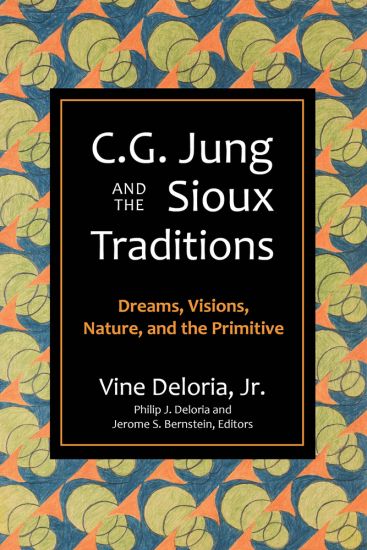
While visiting the United States, C. G. Jung visited the Taos Pueblo in New Mexico, where he spent several hours with Ochwiay Biano, Mountain Lake, an elder at the Pueblo. This encounter impacted Jung psychologically, emotionally, and intellectually, and had a sustained influence on his theories and understanding of the psyche. Dakota Sioux intellectual and political leader, Vine Deloria Jr., began a close study of the writings of C. G. Jung over two decades ago, but had long been struck by certain affinities and disjunctures between Jungian and Sioux Indian thought. He also noticed that many Jungians were often drawn to Native American traditions. This book, the result of Deloria's investigation of these affinities, is written as a measured comparison between the psychology of C. G. Jung and the philosophical and cultural traditions of the Sioux people. Deloria constructs a fascinating dialogue between the two systems that touches on cosmology, the family, relations with animals, visions, voices, and individuation.
Black Elk Speaks

Black Elk Speaks

John G. Neihardt; Vine Deloria

Bison Books
2014
pokkari
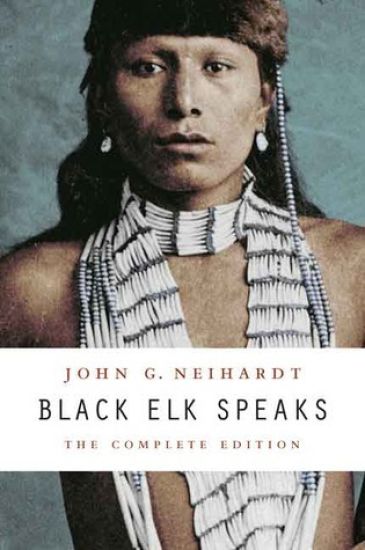
More than one million copies sold 2017 One Book One Nebraska selection“An American classic.”-Western Historical QuarterlyBlack Elk Speaks, the story of the Oglala Lakota visionary and healer Nicholas Black Elk (1863–1950) and his people during momentous twilight years of the nineteenth century, offers readers much more than a precious glimpse of a vanished time. Black Elk’s searing visions of the unity of humanity and Earth, conveyed by John G. Neihardt, have made this book a classic that crosses multiple genres. Whether appreciated as the poignant tale of a Lakota life, as a history of a Native nation, or as an enduring spiritual testament, Black Elk Speaks is unforgettable.Black Elk met the distinguished poet, writer, and critic John G. Neihardt in 1930 on the Pine Ridge Reservation in South Dakota and asked Neihardt to share his story with the world. Neihardt understood and conveyed Black Elk’s experiences in this powerful and inspirational message for all humankind. This complete edition features a new introduction by historian Philip J. Deloria and annotations of Black Elk’s story by renowned Lakota scholar Raymond J. DeMallie. Three essays by John G. Neihardt provide background on this landmark work along with pieces by Vine Deloria Jr., Raymond J. DeMallie, Alexis Petri, and Lori Utecht. Maps, original illustrations by Standing Bear, and a set of appendixes rounds out the edition.
Indians of the Pacific Northwest

Indians of the Pacific Northwest

Vine Deloria; Billy Frank; Steve (AFT) Pavlik

Fulcrum Inc.,US
2012
pokkari
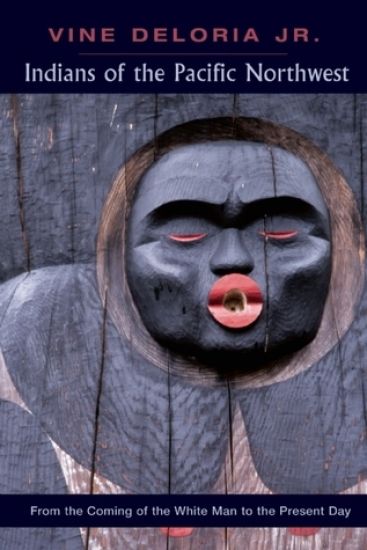
The Pacific Northwest was one of the most populated and prosperous regions for Native Americans before the coming of the white man. By the mid-1800s, measles and smallpox decimated the Indian population, and the remaining tribes were forced to give up their ancestral lands. Vine Deloria Jr., named one of the most influential religious thinkers in the world, tells the story of these tribes' fight for survival, one that continues today.Billy Frank Jr. was the first recipient of "Indian Country Today"'s American Indian Visionary Award.Steve Pavlik is a professor of Native American studies at Northwest Indian College.
Heart of the Rock

Heart of the Rock

Adam Fortunate Eagle; Tim Findley; Vine Deloria

University of Oklahoma Press
2008
nidottu
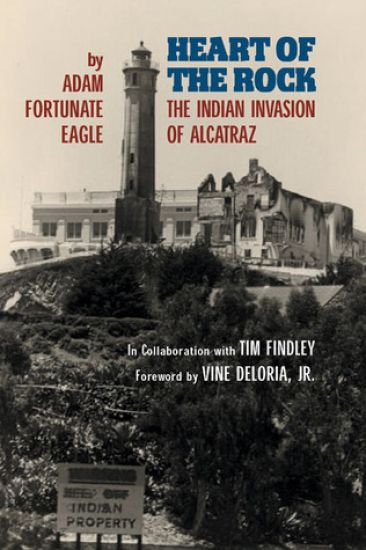
In 1969, Ricahrd Oakes and Adam Fortunate Eagle, then known as Adam Nordwall, instigated an invasion of Alcatraz by American Indians. From the mainland, Fortunate Eagle orchestrated the events, but they assumed an uncontrollable life of their own. Fortunate Eagle provides an intimate memoir of the occupation and the events leading up to it. Accompanied by a variety of photographs capturing the people, places, and actions involved, Heart of the Rock brings these turbulent times vividly to life.From the start, public support was strong. Money poured in from around the country. Sausalito sailors and their ""navy"" transported supplies and people to the island. San Fransisco restaurants sent Thanksgiving dinner. A school was started; chores and responsibilities were shared by everyone. Alcatraz became home, and American Indians of all tribes became a family.But the occupation lasted two years, and Oakes, who had become it spokesman, left after his stepdaughter's death on the island. Memoranda from the White House recommended doing ""anything"" to turn the public against the occupation so it could be ended. Water and electricity were cut off, reports of conflict on the island began appearing in the press, and suspicious fires burned five buildings. Nevertheless, the occupation of Alcatraz remains what historian Vine Deloria, Jr. has called ""perhaps the most significant Indian action since the Little Bighorn.""
The Indian Reorganization Act

The Indian Reorganization Act

Vine Deloria

University of Oklahoma Press
2002
sidottu
In 1934, Commissioner of Indian Affairs John Collier began a series of ""congresses"" with American Indians to discuss his proposed federal bill for granting self-government to tribal reservations. For the first time, the reservation Indian was asked for input in the structuring of American Indian relations with federal and state government and law. In The Indian Reorganization Act, Vine Deloria, Jr., has compiled the actual historical records of those congresses.Deloria makes available important documents of the premier years of reform in federal Indian policy as well as the bill itself. A version of Collier's act eventually passed Congress, but in a less far-reaching form. Nevertheless, a new concept of self-government had emerged, one that now defines the federal government's approach to American Indian policy and that has changed forever the way American Indians define themselves.
Tribes, Treaties, and Constitutional Tribulations

Tribes, Treaties, and Constitutional Tribulations

Vine Deloria; David E. Wilkins

University of Texas Press
2000
pokkari
"Federal Indian law . . . is a loosely related collection of past and present acts of Congress, treaties and agreements, executive orders, administrative rulings, and judicial opinions, connected only by the fact that law in some form has been applied haphazardly to American Indians over the course of several centuries. . . . Indians in their tribal relation and Indian tribes in their relation to the federal government hang suspended in a legal wonderland."In this book, two prominent scholars of American Indian law and politics undertake a full historical examination of the relationship between Indians and the United States Constitution that explains the present state of confusion and inconsistent application in U.S. Indian law. The authors examine all sections of the Constitution that explicitly and implicitly apply to Indians and discuss how they have been interpreted and applied from the early republic up to the present. They convincingly argue that the Constitution does not provide any legal rights for American Indians and that the treaty-making process should govern relations between Indian nations and the federal government.
Documents of American Indian Diplomacy (2 volume set)

Documents of American Indian Diplomacy (2 volume set)

Vine Deloria; Raymond J. DeMallie

University of Oklahoma Press
1999
sidottu
Reproduced in this two-volume set are hundreds of treaties and agreements made by Indian nations - with, among others, the Continental Congress; England, Spain, and other foreign countries; the Republic of Texas and the Confederate States; railroad companies seeking rights-of-way across Indian land; and other Indian nations. Many were made with the United States but either remained unratified by Congress or were rejected by the Indians themselves after the Senate amended them. Many others are ""agreements"" made after U.S. treaty making with Indian tribes officially ended in 1871. These documents - augmented by chapter introductions that concisely set each type of treaty in its historical and political context - these documents effectively trace the evolution of American Indian diplomacy in the United States. This volume is the first major accessible compilation since Charles Kappler's 1904 Indian Affairs, Laws and Treaties. As a group, these documents highlight American Indians' roles as active agents in international diplomatic affairs.
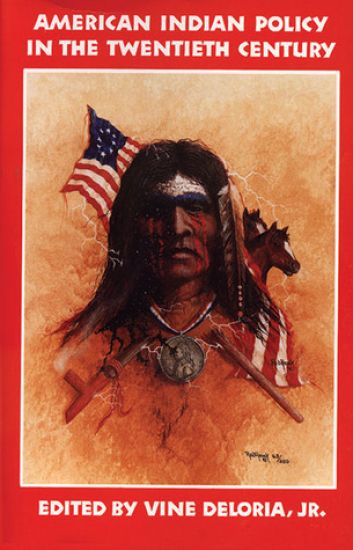
American Indian Policy in the Twentieth Century

American Indian Policy in the Twentieth Century

Vine Deloria

University of Oklahoma Press
1992
nidottu
Until now, books about American Indian Policy have dealt with laws and acts long since adopted and in effect. In American Indian Policy in the Twentieth Century, edited by Vine Deloria, Jr., a group of writers deals with present realities and future possibilities, taking the lead in encouraging discussion and further research into areas of concern to American Indians.Against the background of the larger field of Indian affairs, these authors suggest new ways of thinking about specific problems:Joyotpaul Chaudhuri - ""American Indian Policy: An Overview""Sharon O'Brien - ""Federal Indian Policies and the International Protection of Human Rights""Fred L. Ragsdale, Jr. - ""The Deception of Geography""Michael Lacy - ""The United States and American Indians: Political Relations""Daniel McCool - ""Indian Voting""Tom Holm - ""The Crisis in Tribal Government""David L. Vinje - ""Cultural Values and Economic Development on Reservations""Robert A. Nelson and Joseph F. Sheley - ""BIA Influence on Indian Self-Determination""Mary Wallace - ""The Supreme Court and Indian Water Rights""John Petoskey - ""Indians and the First Amendment""Vine Deloria, Jr. - ""The Evolution of Federal Indian Policy Making""The articles treat both historical problems and current issues that must be confronted if Indians are to move forward to stabilize their communities and protect their rights and resources. In part speculative, the book defines many of the factors that bear on the formation of policies at the federal level, and it discusses new institutions and legislation that can assist American Indians, enabling tribal members and other individuals to better understand their present status and draw reasonable conclusions about their future. This book will be of interest in several fields of study. History and law classes, short courses on Indian affairs, tribal governments and training programs, and state agencies that deal with Indians will find it of benefit, as well as the general reader interested in the welfare and future of American Indians.
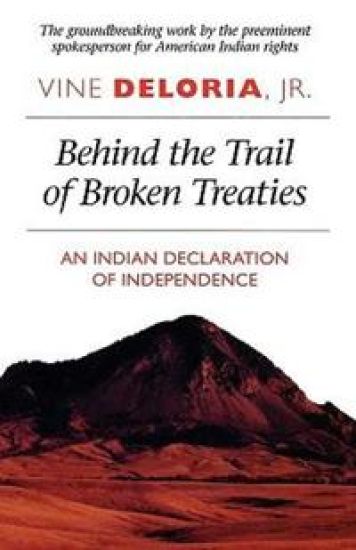
Behind the Trail of Broken Treaties

Behind the Trail of Broken Treaties

Vine Deloria

University of Texas Press
1985
pokkari
Originally published in 1974, just as the Wounded Knee occupation was coming to an end, Behind the Trail of Broken Treaties raises disturbing questions about the status of American Indians within the American and international political landscapes. Analyzing the history of Indian treaty relations with the United States, Vine Deloria presents population and land ownership information to support his argument that many Indian tribes have more impressive landholdings than some small members of the United Nations. Yet American Indians are not even accorded status within the UN's trust territories recognition process.A 2000 study published by the Annual Survey of International and Comparative Law recommends that the United Nations offer membership to the Iroquois, Cherokee, Navajo, and other Indian tribes. Ironically, the study also recommends that smaller tribes band together to form a confederation to seek membership-a suggestion nearly identical to the one the United States made to the Delaware Indians in 1778-and that a presidential commission explore ways to move beyond the Doctrine of Discovery, under which European nations justified their confiscation of Indian lands. Many of these ideas appear here in this book, which predates the 2000 study by twenty-six years. Thus, Behind the Trail of Broken Treaties anticipates recent events as history comes full circle, making the book imperative reading for anyone wishing to understand the background of the movement of American Indians onto the world political stage.In the quarter century since this book was written, Indian nations have taken great strides in demonstrating their claims to recognized nationhood. Together with Tribes, Treaties, and Constitutional Tribulations, by Deloria and David E. Wilkins, Behind the Trail of Broken Treaties highlights the historical events that helped bring these changes to fruition. At the conclusion of Behind the Trail of Broken Treaties, Deloria states: "The recommendations made in the Twenty Points and the justification for such a change as articulated in the book may well come to pass in our lifetime." Now we are seeing his statement come true.
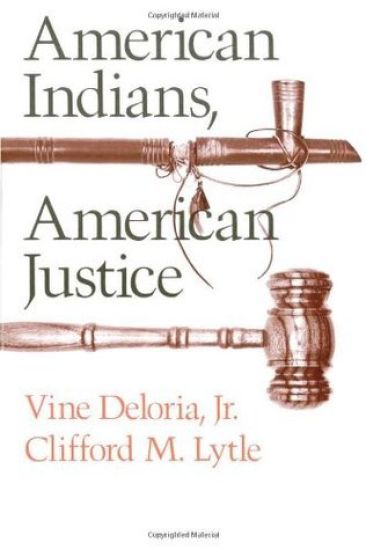
American Indians, American Justice

American Indians, American Justice

Vine Deloria; Clifford M. Lytle

University of Texas Press
1983
pokkari
Baffled by the stereotypes presented by Hollywood and much historical fiction, many other Americans find the contemporary American Indian an enigma. Compounding their confusion is the highly publicized struggle of the contemporary Indian for self-determination, lost land, cultural preservation, and fundamental human rights-a struggle dramatized both by public acts of protest and by precedent-setting legal actions. More and more, the battles of American Indians are fought-and won-in the political arena and the courts.American Indians, American Justice explores the complexities of the present Indian situation, particularly with regard to legal and political rights. It is the first book to present an overview of federal Indian law in language readably accessible to the layperson. Remarkably comprehensive, it is destined to become a standard sourcebook for all concerned with the plight of the contemporary Indian.Beginning with an examination of the historical relationship of Indians and the courts, the authors describe how tribal courts developed and operate today, and how they relate to federal and state governments. They define such key legal concepts as tribal sovereignty and Indian Country. By comparing and contrasting the workings of Indian and non-Indian legal institutions, the authors illustrate how Indian tribes have adapted their customs, values, and institutions to the demands of the modern world. Describing the activities of attorneys and Indian advocates in asserting and defending Indian rights, they identify the difficulties typically faced by Indians in the criminal and civil legal arenas and explore the public policy and legal rights of Indians as regards citizenship, voting rights, religious freedom, and basic governmental services.