Kirjojen hintavertailu. Mukana 12 499 202 kirjaa ja 12 kauppaa.

Kirjailija

Vivek V. Ranade

Kirjat ja teokset yhdessä paikassa: 6 kirjaa, julkaisuja vuosilta 2011-2022, suosituimpien joukossa Hydrodynamic Cavitation. Vertaile teosten hintoja ja tarkista saatavuus suomalaisista kirjakaupoista.

6 kirjaa

Kirjojen julkaisuhaarukka 2011-2022.

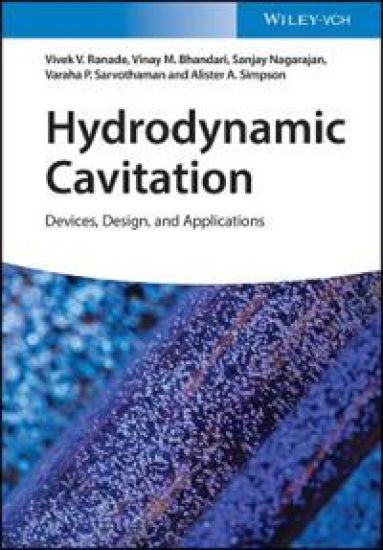
Hydrodynamic Cavitation

Hydrodynamic Cavitation

Vivek V. Ranade; Vinay M. Bhandari; Sanjay Nagarajan; Varaha P. Sarvothaman; Alister T. Simpson

Wiley-VCH Verlag GmbH
2022
sidottu
Hydrodynamic Cavitation A systematic introduction to critical technologies and applications of hydrodynamic cavitation In Hydrodynamic Cavitation: Devices, Design, and Applications, a distinguished team of researchers delivers an authoritative discussion of key aspects of hydrodynamic cavitation, including the design, characterization, and modeling of the devices. The book offers discussions of state-of-the-art applications of the technology, including the disinfection of water, wastewater treatment, biomass processing, and many other industrial applications. In addition to expansive case studies, the book provides an up-to-date exploration of emerging innovations and future applications of the technology. Readers will also find: A thorough introduction to hydrodynamic cavitation devices, including those based on axial and rotational flowsAn in-depth examination of the experimental characterization of cavitation devices and computational modelsComprehensive explorations of the applications of hydrodynamic cavitation, including the disinfection of water and wastewater treatmentAccessible discussions of industrial applications of hydrodynamic cavitation Perfect for chemical and process engineers, water chemists, mechanical engineers, and food chemists, Hydrodynamic Cavitation will also earn a place in the libraries of food and environmental technologists.
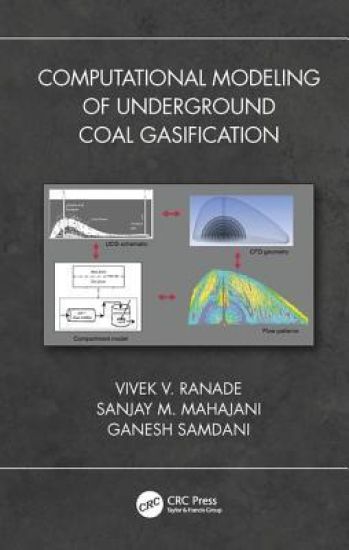
Computational Modeling of Underground Coal Gasification

Computational Modeling of Underground Coal Gasification

Vivek V. Ranade; Sanjay M Mahajani; Ganesh Arunkumar Samdani

CRC Press
2019
sidottu
The book deals with development of comprehensive computational models for simulating underground coal gasification (UCG). It starts with an introduction to the UCG process and process modelling inputs in the form of reaction kinetics, flow patterns, spalling rate, and transport coefficient that are elaborated with methods to generate the same are described with illustrations. All the known process models are reviewed, and relative merits and limitations of the modeling approaches are highlighted and compared. The book describes all the necessary steps required to determine the techno-economic feasibility of UCG process for a given coal reserve, through modeling and simulation.
Computational Modeling of Pulverized Coal Fired Boilers

Computational Modeling of Pulverized Coal Fired Boilers

Vivek V. Ranade; Devkumar F. Gupta

CRC Press
2017
nidottu
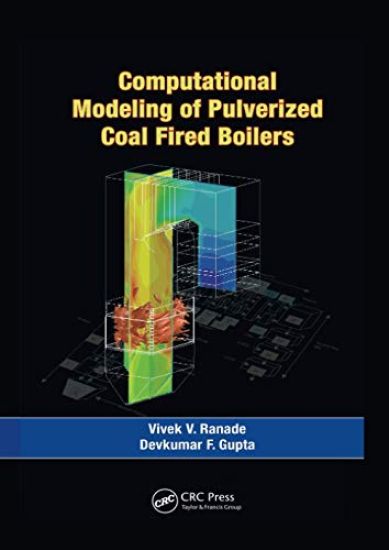
Harness State-of-the-Art Computational Modeling Tools Computational Modeling of Pulverized Coal Fired Boilers successfully establishes the use of computational modeling as an effective means to simulate and enhance boiler performance. This text factors in how computational flow models can provide a framework for developing a greater understanding of the underlying processes in PC boilers. It also provides a detailed account of the methodology of computational modeling of pulverized coal boilers, as well as an apt approach to modeling complex processes occurring in PC boilers in a manageable way.Connects Modeling with Real-Life ApplicationsRestricted to the combustion side of the boiler (the authors assume some prior background of reaction engineering and numerical techniques), the book describes the individual aspects of combustion and heat recovery sections of PC boilers that can be used to further improve the design methodologies, optimize boiler performance, and solve practical boiler-related problems. The book provides guidelines on implementing the material in commercial CFD solvers, summarizes key points, and presents relevant case studies. It can also be used to model larger boilers based on conventional, super-critical, or ultra-super critical technologies as well as based on oxy-fuel technologies.Consisting of six chapters, this functional text:Provides a general introductionExplains the overall approach and methodologyExplores kinetics of coal pyrolysis (devolatilization) and combustion and methods of its evaluationPresents computational flow modeling approach to simulate pulverized coal fired boiler Covers modeling aspects from formulation of model equations to simulation methodologyDetermines typical results obtained with computational flow modelsDiscusses the phenomenological models or reactor network modelsIncludes practical applications of computational modelingComputational Modeling of Pulverized Coal Fired Boilers explores the potential of computational models for better engineering of pulverized coal boilers, providing an ideal resource for practicing engineers working in utility industries. It also benefits boiler design companies, industrial consultants, R & D laboratories, and engineering scientists/research students.
Computational Modeling of Pulverized Coal Fired Boilers

Computational Modeling of Pulverized Coal Fired Boilers

Vivek V. Ranade; Devkumar F. Gupta

Apple Academic Press Inc.
2014
sidottu
Harness State-of-the-Art Computational Modeling Tools Computational Modeling of Pulverized Coal Fired Boilers successfully establishes the use of computational modeling as an effective means to simulate and enhance boiler performance. This text factors in how computational flow models can provide a framework for developing a greater understanding of the underlying processes in PC boilers. It also provides a detailed account of the methodology of computational modeling of pulverized coal boilers, as well as an apt approach to modeling complex processes occurring in PC boilers in a manageable way.Connects Modeling with Real-Life ApplicationsRestricted to the combustion side of the boiler (the authors assume some prior background of reaction engineering and numerical techniques), the book describes the individual aspects of combustion and heat recovery sections of PC boilers that can be used to further improve the design methodologies, optimize boiler performance, and solve practical boiler-related problems. The book provides guidelines on implementing the material in commercial CFD solvers, summarizes key points, and presents relevant case studies. It can also be used to model larger boilers based on conventional, super-critical, or ultra-super critical technologies as well as based on oxy-fuel technologies.Consisting of six chapters, this functional text:Provides a general introductionExplains the overall approach and methodologyExplores kinetics of coal pyrolysis (devolatilization) and combustion and methods of its evaluationPresents computational flow modeling approach to simulate pulverized coal fired boiler Covers modeling aspects from formulation of model equations to simulation methodologyDetermines typical results obtained with computational flow modelsDiscusses the phenomenological models or reactor network modelsIncludes practical applications of computational modelingComputational Modeling of Pulverized Coal Fired Boilers explores the potential of computational models for better engineering of pulverized coal boilers, providing an ideal resource for practicing engineers working in utility industries. It also benefits boiler design companies, industrial consultants, R & D laboratories, and engineering scientists/research students.
Industrial Wastewater Treatment, Recycling and Reuse

Industrial Wastewater Treatment, Recycling and Reuse

Vivek V. Ranade; Vinay M. Bhandari

Butterworth-Heinemann Ltd
2014
sidottu
Industrial Wastewater Treatment, Recycling and Reuse is an accessible reference to assist you when handling wastewater treatment and recycling. It features an instructive compilation of methodologies, including advanced physico-chemical methods and biological methods of treatment. It focuses on recent industry practices and preferences, along with newer methodologies for energy generation through waste. The book is based on a workshop run by the Indus MAGIC program of CSIR, India. It covers advanced processes in industrial wastewater treatment, applications, and feasibility analysis, and explores the process intensification approach as well as implications for industrial applications. Techno-economic feasibility evaluation is addressed, along with a comparison of different approaches illustrated by specific case studies. Industrial Wastewater Treatment, Recycling and Reuse introduces you to the subject with specific reference to problems currently being experienced in different industry sectors, including the petroleum industry, the fine chemical industry, and the specialty chemicals manufacturing sector.
Trickle Bed Reactors

Trickle Bed Reactors

Vivek V. Ranade; Raghunath Chaudhari; Prashant R. Gunjal

Elsevier Science Ltd
2011
nidottu
This book provides a hybrid methodology for engineering of trickle bed reactors by integrating conventional reaction engineering models with state-of-the-art computational flow models. The content may be used in several ways and at various stages in the engineering process: it may be used as a basic resource for making appropriate reactor engineering decisions in practice; as study material for a course on reactor design, operation, or optimization of trickle bed reactors; or in solving practical reactor engineering problems. The authors assume some background knowledge of reactor engineering and numerical techniques.