Kirjojen hintavertailu. Mukana 12 595 353 kirjaa ja 12 kauppaa.

Kirjailija

Vivian E. Thomson

Kirjat ja teokset yhdessä paikassa: 5 kirjaa, julkaisuja vuosilta 2009-2017, suosituimpien joukossa Sophisticated Interdependence in Climate Policy. Vertaile teosten hintoja ja tarkista saatavuus suomalaisista kirjakaupoista.

5 kirjaa

Kirjojen julkaisuhaarukka 2009-2017.

Climate of Capitulation

Climate of Capitulation

Vivian E. Thomson

MIT Press
2017
sidottu
How power is wielded in environmental policy making at the state level, and how to redress the ingrained favoritism toward coal and electric utilities.The United States has pledged to the world community a reduction in greenhouse gas emissions by 26-28 percent below 2005 levels in 2025. Because much of this reduction must come from electric utilities, especially coal-fired power plants, coal states will make or break the U.S. commitment to emissions reduction. In Climate of Capitulation, Vivian Thomson offers an insider's account of how power is wielded in environmental policy making at the state level. Thomson, a former member of Virginia's State Air Pollution Control Board, identifies a "climate of capitulation" in state government-a deeply rooted favoritism toward coal and electric utilities in states' air pollution policies.Thomson narrates three cases involving coal and air pollution from her time on the Air Board. She illuminates the overt and covert power struggles surrounding air pollution limits for a coal-fired power plant just across the Potomac from Washington, for a controversial new coal-fired electrical generation plant in coal country, and for coal dust pollution from truck traffic in a country hollow. Thomson links Virginia's climate of capitulation with campaign donations that make legislators politically indebted to coal and electric utility interests, a traditionalistic political culture tending to inertia, and a part-time legislature that depended on outside groups for information and bill drafting. Extending her analysis to fifteen other coal-dependent states, Thomson offers policy reforms aimed at mitigating the ingrained biases toward coal and electric utilities in states' air pollution policy making.

Sophisticated Interdependence in Climate Policy
With the US as the world’s most prominent climate change outlaw, international pressure will not impel domestic action. The key to a successful global warming solution lies closer to home: in state–federal relations. Thomson proposes an innovative climate policy framework called “sophisticated interdependence.” This model is based on her lucid analysis of economic and political forces affecting climate change policy in selected US states, as well as on comparative descriptions of programs in Germany and Brazil, two powerful federal democracies whose policies are critical in the global climate change arena.
Sophisticated Interdependence in Climate Policy
With the US as the world’s most prominent climate change outlaw, international pressure will not impel domestic action. The key to a successful global warming solution lies closer to home: in state–federal relations. Thomson proposes an innovative climate policy framework called “sophisticated interdependence.” This model is based on her lucid analysis of economic and political forces affecting climate change policy in selected US states, as well as on comparative descriptions of programs in Germany and Brazil, two powerful federal democracies whose policies are critical in the global climate change arena.
Garbage in, Garbage Out

Garbage in, Garbage Out

Vivian E. Thomson

University of Virginia Press
2009
sidottu
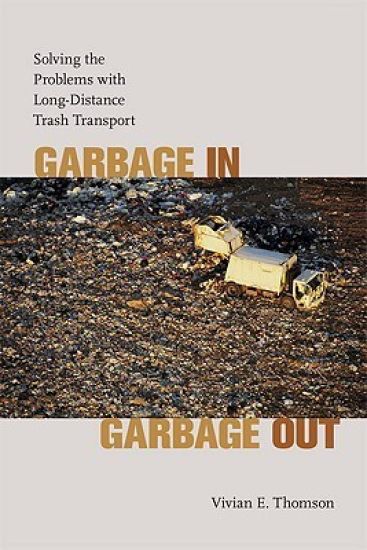
Your garbage is going places you'd never imagine. What used to be sent to the local dump now may move hundreds of miles by truck and barge to its final resting place. Virtually all forms of pollution migrate, subjected to natural forces such as wind and water currents. The movement of garbage, however, is under human control. Its patterns of migration reveal much about power sharing among state, local, and national institutions, about the Constitution's protection of trash transport as a commercial activity, and about competing notions of social fairness. In ""Garbage In, Garbage Out"", Vivian Thomson looks at Virginia's status as the second-largest importer of trash in the United States and uses it as a touchstone for exploring the many controversies around trash generation and disposal. Political conflicts over waste management have been felt at all levels of government. Local governments who want to manage their own trash have fought other local governments hosting huge landfills that depend on trash generated hundreds of miles away. State governments have tried to avoid becoming the dumping grounds for cities hundreds of miles away. The constitutional questions raised in these battles have kept interstate trash transport on Congress' agenda since the early 1990s. Whether the resulting legislative proposals actually address our most critical garbage-related problems, however, remains in question. Thomson sheds much-needed light on these problems. Within the context of increased interstate trash transport and the trend toward privatization of waste management, she examines the garbage issue from a number of perspectives - including considering the links between environmental justice and trash management, offering a critical evaluation of the theoretical and empirical relationship between economic growth and environmental improvement, and highlighting the ways in which waste management practices in the United States differ from those in the European Union and Japan. Thomson then provides specific, substantive recommendations for our own policy makers. Everything eventually becomes trash. As we explore the long, often surprising, routes our garbage takes, we begin to understand that it is something more than a mere nuisance that regularly 'disappears' from our curbside. Rather, trash generation and management reflect patterns of consumption, political choices over whether garbage is primarily pollution or commerce, the social distribution of environmental risk, and how our daily lives compare with those of our counterparts in other industrialized nations.
Garbage in, Garbage Out

Garbage in, Garbage Out

Vivian E. Thomson

University of Virginia Press
2009
nidottu
Your garbage is going places you'd never imagine. What used to be sent to the local dump now may move hundreds of miles by truck and barge to its final resting place. Virtually all forms of pollution migrate, subjected to natural forces such as wind and water currents. The movement of garbage, however, is under human control. Its patterns of migration reveal much about power sharing among state, local, and national institutions, about the Constitution's protection of trash transport as a commercial activity, and about competing notions of social fairness. In ""Garbage In, Garbage Out"", Vivian Thomson looks at Virginia's status as the second-largest importer of trash in the United States and uses it as a touchstone for exploring the many controversies around trash generation and disposal. Political conflicts over waste management have been felt at all levels of government. Local governments who want to manage their own trash have fought other local governments hosting huge landfills that depend on trash generated hundreds of miles away. State governments have tried to avoid becoming the dumping grounds for cities hundreds of miles away. The constitutional questions raised in these battles have kept interstate trash transport on Congress' agenda since the early 1990s. Whether the resulting legislative proposals actually address our most critical garbage-related problems, however, remains in question. Thomson sheds much-needed light on these problems. Within the context of increased interstate trash transport and the trend toward privatization of waste management, she examines the garbage issue from a number of perspectives - including considering the links between environmental justice and trash management, offering a critical evaluation of the theoretical and empirical relationship between economic growth and environmental improvement, and highlighting the ways in which waste management practices in the United States differ from those in the European Union and Japan. Thomson then provides specific, substantive recommendations for our own policy makers. Everything eventually becomes trash. As we explore the long, often surprising, routes our garbage takes, we begin to understand that it is something more than a mere nuisance that regularly 'disappears' from our curbside. Rather, trash generation and management reflect patterns of consumption, political choices over whether garbage is primarily pollution or commerce, the social distribution of environmental risk, and how our daily lives compare with those of our counterparts in other industrialized nations.