Kirjojen hintavertailu. Mukana 12 390 323 kirjaa ja 12 kauppaa.

Kirjailija

Vivien Law

Kirjat ja teokset yhdessä paikassa: 6 kirjaa, julkaisuja vuosilta 1982-2006, suosituimpien joukossa Nation-building in the Post-Soviet Borderlands. Vertaile teosten hintoja ja tarkista saatavuus suomalaisista kirjakaupoista.

6 kirjaa

Kirjojen julkaisuhaarukka 1982-2006.

Nation-building in the Post-Soviet Borderlands

Nation-building in the Post-Soviet Borderlands

Graham Smith; Vivien Law; Andrew Wilson; Annette Bohr; Edward Allworth

Cambridge University Press
1998
pokkari
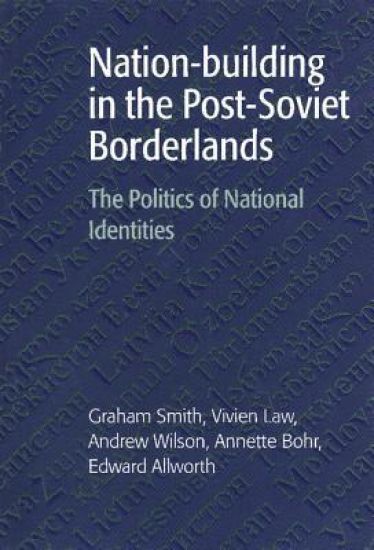
This book examines how national and ethnic identities are being reforged in the post-Soviet borderland states. The first chapter provides a conceptual and theoretical context for examining national identities, drawing in particular upon post-colonial theory. The rest of the book is divided into three parts. In Part I, the authors examine how national histories of the borderland states are being rewritten especially in relation to new nationalising historiographies, around myths of origin, homeland, and descent. Part II explores the ethnopolitics of group boundary construction and how such a politics has led to nationalising policies of both exclusion and inclusion. Part III examines the relationship between nation-building and language, especially with regard to how competing conceptions of national identity have informed the thinking of both political decision-takers and nationalising intellectuals, and the consequences for ethnic minorities. Such perspectives on nation-building are illustrated with substantive studies drawn from the Baltic states, Ukraine, and Belarus, Transcaucasia, and Central Asia.
Nation-building in the Post-Soviet Borderlands

Nation-building in the Post-Soviet Borderlands

Graham Smith; Vivien Law; Andrew Wilson; Annette Bohr; Edward Allworth

Cambridge University Press
1998
sidottu
This book examines how national and ethnic identities are being reforged in the post-Soviet borderland states. The first chapter provides a conceptual and theoretical context for examining national identities, drawing in particular upon post-colonial theory. The rest of the book is divided into three parts. In Part I, the authors examine how national histories of the borderland states are being rewritten especially in relation to new nationalising historiographies, around myths of origin, homeland, and descent. Part II explores the ethnopolitics of group boundary construction and how such a politics has led to nationalising policies of both exclusion and inclusion. Part III examines the relationship between nation-building and language, especially with regard to how competing conceptions of national identity have informed the thinking of both political decision-takers and nationalising intellectuals, and the consequences for ethnic minorities. Such perspectives on nation-building are illustrated with substantive studies drawn from the Baltic states, Ukraine, and Belarus, Transcaucasia, and Central Asia.
Wisdom, Authority and Grammar in the Seventh Century

Wisdom, Authority and Grammar in the Seventh Century

Vivien Law

Cambridge University Press
2006
pokkari
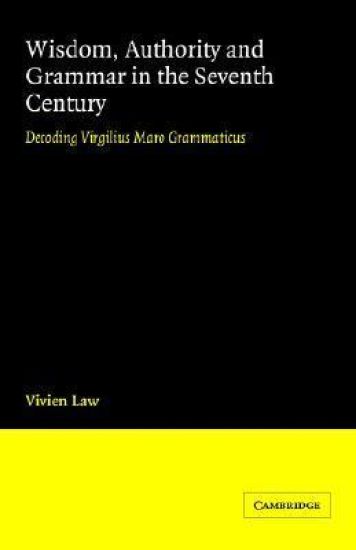
The works of the seventh-century writer Virgilius Maro Grammaticus are among the most puzzling medieval texts to survive. Ostensibly a pair of grammars, they swarm with hymns, riddles, invented words and imaginary writers. Conventionally interpreted either as a benighted barbarian's unfortunate attempt to write a 'proper' grammar, or as a parody of the pedantic excesses of the ancient grammatical tradition, these texts have long been in need of an alternative reading. Why should a grammarian attack the very notion of authority, thereby destabilizing his own position? The search for an answer leads us via patristic exegesis and medieval wisdom literature to the tantalizingly ill-documented reaches of heterodox initiatory traditions. Vivien Law's book opens important new perspectives on the intellectual life of the early Middle Ages and on the decoding of medieval literature in general.
The History of Linguistics in Europe

The History of Linguistics in Europe

Vivien Law

Cambridge University Press
2003
sidottu
This authoritative and wide-ranging book, first published in 2003, examines the history of western linguistics over a 2000-year timespan, from its origins in ancient Greece up to the crucial moment of change in the Renaissance that laid the foundations of modern linguistics. Some of today's burning questions about language date back a long way: in 1400 BC Plato was asking how words relate to reality. Other questions go back just a few generations, such as our interest in the mechanisms of language change, or in the social factors that shape the way we speak. Vivien Law explores how ideas about language over the centuries have changed to reflect changing modes of thinking. A survey chapter brings the coverage of the book up to the present day. Classified bibliographies and chapters on research resources and the qualities the historian of linguistics needs to develop, provide the reader with the tools to go further.
Wisdom, Authority and Grammar in the Seventh Century

Wisdom, Authority and Grammar in the Seventh Century

Vivien Law

Cambridge University Press
1995
sidottu
The works of the seventh-century writer Virgilius Maro Grammaticus are among the most puzzling medieval texts to survive. Ostensibly a pair of grammars, they swarm with hymns, riddles, invented words, and imaginary writers. Conventionally interpreted either as a benighted barbarian’s unfortunate attempt to write a ‘proper’ grammar, or as a parody of the pedantic excesses of the ancient grammatical tradition, these texts have long been in need of a new reading. Why should a grammarian attack the very notion of authority, thereby destabilising his own position? The search for an answer leads us via patristic exegesis and medieval wisdom literature to the tantalisingly ill-documented reaches of heterodox initiatory traditions. Vivien Law’s book opens important new perspectives on the intellectual life of the early middle ages and on the decoding of medieval literature in general.
Insular Latin Grammarians

Insular Latin Grammarians

Vivien Law

The Boydell Press
1982
sidottu
The adaptation of Late Latin grammars from the schools of the Roman Empire for use in a foreign Christian society culminated in the British Isles in the 7th and 8th centuries in the development of two distinct types of grammar designed respectively for elementary and for more advanced students. These works, whether they take the form of elaborate commentaries on the classical grammarians, or of simple collections of paradigms, reflect the reading and intellectual preoccupations of their authors, the first teachers in the West to face the problem of large-scale formal foreign-language teaching. The influence of the Insular grammarians extended far beyond their own time: their works,taken to the Continent by Irish and Anglo-Saxon missionaries, shaped both the latinity and the pedagogical technique of their pupils the Carolingians, and their influencein foreign-language teaching has persisted until our own time.