

Kirjailija
Vladimir Ilich Lenin
Kirjat ja teokset yhdessä paikassa: 52 kirjaa, julkaisuja vuosilta 2002-2026, suosituimpien joukossa The Great Initiative. Vertaile teosten hintoja ja tarkista saatavuus suomalaisista kirjakaupoista.
52 kirjaa
Kirjojen julkaisuhaarukka 2002-2026.







Imperialism the Highest Stage of Capitalism
Vladimir Ilich Lenin
SANAGE PUBLISHING HOUSE LLP
2022
sidottu
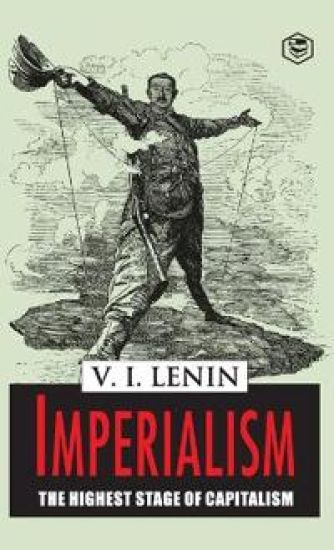
Imperialism, the Highest Stage of Capitalism by Vladimir Lenin, describes the function of financial capital in generating profits from imperialist colonialism as the final stage of capitalist development to ensure greater profits. The essay is a synthesis of Lenin's modifications and developments of economic theories that Karl Marx formulated in Das Kapital (1867). Lenin's influential analysis remains highly relevant in comprehending the historical context of the foreign and domestic policy in the United States and other major nations.

Imperialism the Highest Stage of Capitalism
Vladimir Ilich Lenin; Vladimir I Lenin
Martino Fine Books
2021
sidottu

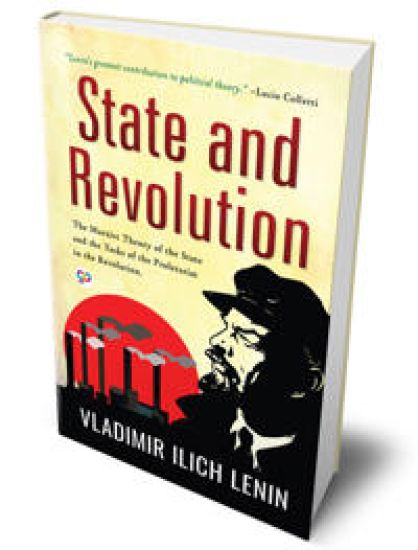
Lenin wrote 'State and Revolution' in 1917, while he was hiding from the Russian secret police. The book describes the inherent nature of the State as a tool for class oppression, a creation born of one social class's desire to control all other social classes. Drawing on detailed quotes from Karl Marx and Friedrick Engels, Lenin lays down a Marxist view of the state, describes how a working-class revolution will overthrow it, and goes further in showing how social democracy is not enough-even in democratic republics such as those enjoyed by many western countries today, the ruling class is still in control of society, and will never relinquish power. According to Lenin, a Communist revolution is the only remedy for class struggle. This work by Lenin is important to communist thinking and the Marxist concept of the state which is clearly and concisely expressed in this book. Without doubt this is a classic work and will give the reader important concepts in the theory of Marxist-Leninism.
One of the most profound works of modern literature, 'Notes from Underground' (first published in 1864) remains a cultural and literary masterpiece. Fyodor Dostoyevsky is best known for his psychological works of fiction. His characters and plots all carry psychosomatic troubles and problems that help make the stories more relatable to the reader. In these pages Dostoevsky unflinchingly examines the dark, mysterious depths of the human heart. In this work, we follow the unnamed narrator of the story, who, disillusioned by the oppression and corruption of the society in which he lives, withdraws from that society into the underground. This "Underground Man" is one of the first genuine antiheroes in European literature. Those who are familiar with his works will immediately recognize the novel's richly complex philosophical, political, and psychological themes.
Imperialism the Highest Stage of Capitalism
Vladimir Ilich Lenin
SANAGE PUBLISHING HOUSE LLP
2021
nidottu
Imperialism, the Highest Stage of Capitalism by Vladimir Lenin, describes the function of financial capital in generating profits from imperialist colonialism as the final stage of capitalist development to ensure greater profits. The essay is a synthesis of Lenin's modifications and developments of economic theories that Karl Marx formulated in Das Kapital (1867). Lenin's influential analysis remains highly relevant in comprehending the historical context of the foreign and domestic policy in the United States and other major nations.
Among the most influential political and social forces of the twentieth century, modern communism rests firmly on philosophical, political, and economic underpinnings developed by Vladimir Ilyich Ulyanov, later known as Lenin. The State and Revolution is Lenin's most significant work, in which he totally rejects the institutions of Western democracy and presents his vision of the final perfection of Communism. For anyone who seeks to understand the twentieth century, capitalism, the Russian revolution, and the role of Communism in the tumultuous political and social movements that have shaped the modern world, this book offers unparalleled insight and understanding.

Echo Point Books & Media's enhanced edition of Lenin's State and Revolution is the only version that includes an index of the contents of this classic (for hardcover edition with an index, search for ISBN 1635618924). Created from a combination of sophisticated proprietary software and editorial review, our unique (copyrighted) index is a valuable addition to this important work. As every experienced reader knows, an index is a helpful resource for more efficient, insightful reading, and a useful aid for research. Lenin's Original Work on Class-based RevolutionIn 1917, in the midst of two revolutions, Vladimir Ilich Lenin fled Russia for fear of persecution by the government. While in exile, he began work on one of his most important works, State and Revolution, an attempt to resurrect the purity of Marx's and Engels's socialist teachings, which Lenin claimed were subsumed and weakened by reformists who reduced the "great revolutionaries" into "harmless icons." In State and Revolution, Lenin posits that the traditional role of the state in society is to maintain the control of the powerful, thus enabling the rich to exploit the poor. Because the ruling class will never willingly give up their political influence, social democracy-including parliamentary elections-is a false promise, and only results in a new crop of rich overlords lining up to "repress and crush the people." The sole way to bring true freedom and self-determination to all citizens, and throw off the "yoke of capitalism," is through Communist revolution-to "smash the state." As a result, the state would "wither away," and its bureaucrats would perform the will of the proletariat. This seminal work provides a practical application of socialist principles and it has greatly influenced theories of global capitalist development. Italian philosopher Lucio Colletti called State and Revolution "Lenin's greatest contribution to political theory." To deepen your understanding of Lenin's arguments in State and Revolution, you may also wish to read his treatise on the relationship between capitalism and colonialism; Imperialism: The Highest Stage of Capitalism. Enhanced edition with index published by Echo Point Books (hardcover ISBN 1635617278; paperback ISBN 1635617197).

"State and Revolution" describes the role of the State in society, the necessity of proletarian revolution, and the theoretic inadequacies of social democracy in achieving revolution. It describes the inherent nature of the State as a tool for class oppression, a creation born of one social class's desire to control all other social classes. Whether a dictatorship or a democracy, the State remains in the control of the ruling class. Even in a democratic capitalist republic, the ruling class will never willingly relinquish political power, maintaining it via various strategies. Hence, according to this view, communist revolution is the sole remedy for the abolition of the state.
"State and Revolution" describes the role of the State in society, the necessity of proletarian revolution, and the theoretic inadequacies of social democracy in achieving revolution. It describes the inherent nature of the State as a tool for class oppression, a creation born of one social class's desire to control all other social classes. Whether a dictatorship or a democracy, the State remains in the control of the ruling class. Even in a democratic capitalist republic, the ruling class will never willingly relinquish political power, maintaining it via various strategies. Hence, according to this view, communist revolution is the sole remedy for the abolition of the state.