

Kirjailija
Vladimir Sergeyevich Solovyov
Kirjat ja teokset yhdessä paikassa: 19 kirjaa, julkaisuja vuosilta 1915-2025, suosituimpien joukossa Pis'ma. Vertaile teosten hintoja ja tarkista saatavuus suomalaisista kirjakaupoista.
19 kirjaa
Kirjojen julkaisuhaarukka 1915-2025.


Ḟ. M. Dostoevskiĭ, kak propovi͡ednik khristianskago vozrozhdenĭi͡a
Vladimir Sergeyevich Solovyov
Creative Media Partners, LLC
2016
pokkari

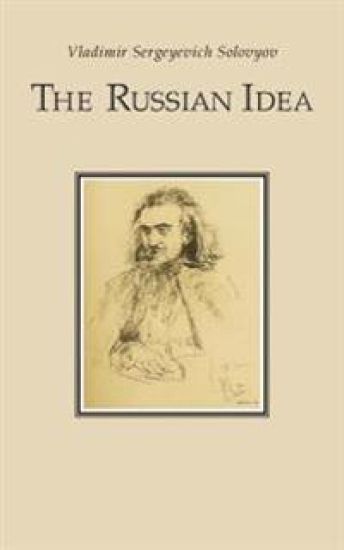
The Russian Idea
Vladimir Sergeyevich Solovyov
Createspace Independent Publishing Platform
2015
nidottu
Written in French in 1888, The Russian Idea contains elements of ideas that Solovyov developed more extensively in his much larger work Russia and the Universal Church. In The Russian Idea, Solovyov seeks to answer the question: What is the role and function that God has in mind for Russia as being integrated into all of humanity and especially as being integrated into the Mystical Body of Christ on Earth? "The idea of a nation is not what it thinks of itself in time, but instead what God thinks of it in eternity." Remarkably perceptive and insightful, trenchant and charitable, Solovyov remains pertinent today.

War and Christianity: From the Russian Point of View
Vladimir Sergeyevich Solovyov
Literary Licensing, LLC
2014
nidottu
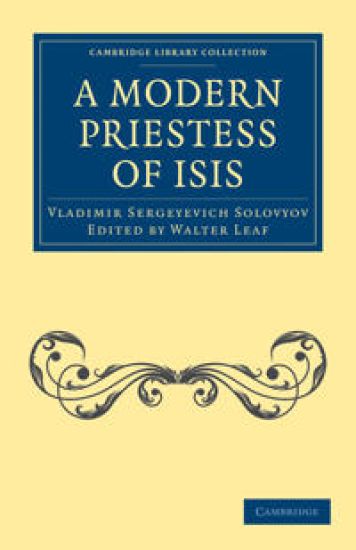
This book by the Russian novelist Vsevolod Sergeyevich Solovyov (1849–1903), translated and abridged by Walter Leaf (1852–1927) and published in 1895, reflects on the life of Madame Helena Blavatsky (1831–1891), co-founder of the theosophy movement in the United States. Originally published over eight months in literary magazine Russy Vyestnik ('Russian Messenger'), the book considers the controversy that engulfed Blavatsky in her final years over displays of her 'phenomena'. Solovyov was living in Paris in 1884 and researching spiritualist literature when he met Blavatsky (whose work was known in Russia), but he became disillusioned with both her and her movement. Leaf, a classical scholar and fellow of Trinity College, Cambridge, undertook the translation for the Council of the Society for Psychical Research, which had investigated Blavatsky's work. This account now provides a window on to the life of one of Europe's most controversial nineteenth-century spiritual leaders.
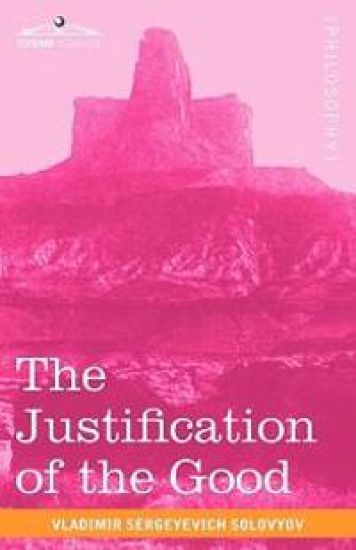
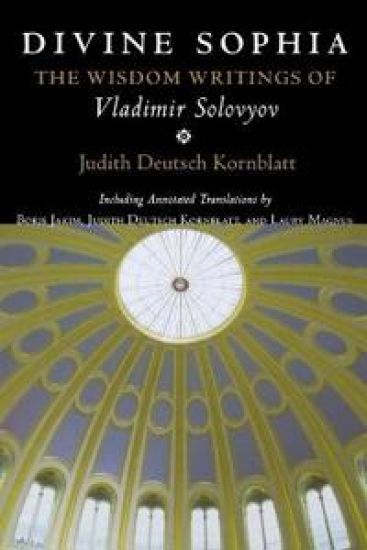
Solovyov's wisdom writings captivated several generations of poets and philosophers during the pre- and postrevolutionary periods in Russia and abroad. In particular, his Sophiology had a profound influence on such major figures of Russia's Silver Age as Alexander Blok, Andrei Belyi, Pavel Florensky, and Sergei Bulgakov. The founder of modern Russian philosophy, Vladimir Solovyov (1853-1900) is widely considered its greatest practitioner. Together with Dostoevsky and Tolstoy, he is one of the towering intellectual figures in late-nineteenth-century Russia, and his diverse writings influenced much of the non-Marxist tradition of twentieth-century Russian thought. Philosopher, journalist, poet, and playwright, Solovyov was also a mystic who claimed to have had three visions of Divine Sophia. This personification of wisdom with golden hair and a radiant aura echoes both the eternal feminine and the world soul. Rooted in Christian and Jewish mysticism, Eastern Orthodox iconography, Greek philosophy, and European romanticism, the Sophiology that suffuses Solovyov's philosophical and artistic works is both intellectually sophisticated and profoundly inspiring. Judith Deutsch Kornblatt brings together key texts from Solovyov's writings about Sophia: poetry, fiction, drama, and philosophy, all extensively annotated and some available in English for the first time (with assistance from the translators Boris Jakim and Laury Magnus). In the comprehensive introductory essay that encompasses the book's first half, Kornblatt establishes the historical, philosophical, religious, and literary context of Solovyov's Sophiology, emphasizing its connection to contemporaneous religious and philosophical thought as well as other social and cultural trends in Europe and the United States-for example, Solovyov's reactions to his changing world ran parallel to and sometimes intersected with those of Darwin, Nietzsche, and William James. Sophiology is once again finding enthusiasts both in Russia and among seekers around the world. The definitive introduction to Solovyov's wisdom and its profound impact on Russian thought and culture, Divine Sophia makes Solovyov's mystical visions and literary "re-visions" of Sophia accessible to scholars and lay readers alike.
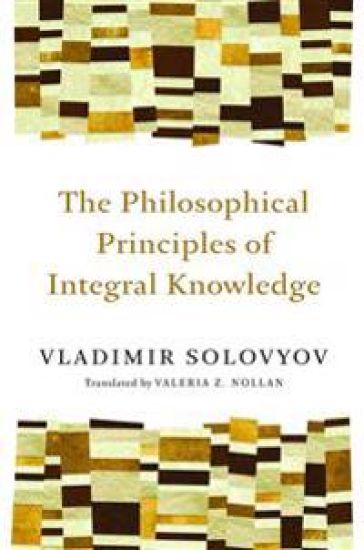
Philosophical Principles of Integral Knowledge
Vladimir Sergeyevich Solovyov
William B Eerdmans Publishing Co
2008
nidottu
Russian philosopher Vladimir Solovyov was an intriguing figure whose religious path took him from Russian Orthodoxy to nihilism and subsequently Roman Catholicism, and finally back to Russian Orthodoxy. The Philosophical Principles of Integral Knowledge is the earliest elaboration of the major ideas that occupied Solovyov throughout his life. Completed when he was only twenty-four, this wide-ranging, poetry-sprinkled treatise critically examines Western civilization and religion, proposing in its place a new model for faith and survivability, the integral spiritual knowledge attained by the Russian nation. / As a whole, Solovyov's philosophy offers a powerful defense of religion in both mystical and logical terms. Translator Valeria Z. Nollan skillfully brings out the nuances of Solovyov's rigorous writing in this first-ever English translation of his Philosophical Principles of Integral Knowledge.
The Religious Poetry of Vladimir Solovyov
Vladimir Sergeyevich Solovyov; Sergius Bulgakov
Angelico Press
2008
sidottu
The Religious Poetry of Vladimir Solovyov
Vladimir Sergeyevich Solovyov; Boris Jakim; Sergius Bulgakov
Angelico Press/Semantron
2008
nidottu



Vladimir Solovyov's philosophical classic explores the nature of war and battle in human society, and the potential manifestations of the Antichrist foreseen in Christian texts.Taking the form of a dialogue between several participants, Solovyov explores a series of philosophical ideas. At times lively freeform conversation sparkling with wit and insight, at times making intensive use of the Socratic method of questioning, Solovyov's wide-ranging enquiries are intensely readable. Some of the conversationalists have little to no knowledge of philosophy; with this in mind, the book is made entertaining and plain-spoken, advancing deep ideas in a manner understandable.As one of Solovyov's final works prior to his death in 1900, the introduction represents the author's mature outlook, encompassing Western and Eastern religious and philosophic questions, plus a suspicion that East Asian nations were an imminent threat to Russia. This outlook proved somewhat accurate with the outbreak of war between Russia and Japan in 1904-1905, in which Japan emerged victorious.Questions include whether war is an inevitability given human nature, the geopolitics of the day, and how to recognize manifestations of good and evil in the world. Perhaps most distinctive however is the energetic and insightful concluding monologue on the Antichrist; incisive and stark in its portrayal, this tale offers a memorable finish.