Kirjojen hintavertailu. Mukana 12 595 353 kirjaa ja 12 kauppaa.
Kirjailija
Volker Grimm
Kirjat ja teokset yhdessä paikassa: 6 kirjaa, julkaisuja vuosilta 2005-2024, suosituimpien joukossa A Primer to Causal Reasoning About a Complex World. Vertaile teosten hintoja ja tarkista saatavuus suomalaisista kirjakaupoista.
This open access book is about causal thinking and the use of causal language, with a focus on introducing philosophical ideas about causation to students and researchers of Social-Ecological Systems (SES).
The essential textbook on agent-based modeling—now fully updated and expandedAgent-Based and Individual-Based Modeling has become the standard textbook on the subject for classroom use and self-instruction. Drawing on the latest version of NetLogo and fully updated with new examples, exercises, and an enhanced text for easier comprehension, this is the essential resource for anyone seeking to understand how the dynamics of biological, social, and other complex systems arise from the characteristics of the agents that make up these systems.Steven Railsback and Volker Grimm lead students stepwise through the processes of designing, programming, documenting, and doing scientific research with agent-based models, focusing on the adaptive behaviors that make these models necessary. They cover the fundamentals of modeling and model analysis, introduce key modeling concepts, and demonstrate how to implement them using NetLogo. They also address pattern-oriented modeling, an invaluable strategy for modeling real-world problems and developing theory.This accessible and authoritative book focuses on modeling as a tool for understanding real complex systems. It explains how to pose a specific question, use observations from actual systems to design models, write and test software, and more.A hands-on introduction that guides students from conceptual design to computer implementation to analysisFilled with new examples and exercises and compatible with the latest version of NetLogoIdeal for students and researchers across the natural and social sciencesWritten by two leading practitionersSupported by extensive instructional materials at www.railsback-grimm-abm-book.com
The essential textbook on agent-based modeling—now fully updated and expandedAgent-Based and Individual-Based Modeling has become the standard textbook on the subject for classroom use and self-instruction. Drawing on the latest version of NetLogo and fully updated with new examples, exercises, and an enhanced text for easier comprehension, this is the essential resource for anyone seeking to understand how the dynamics of biological, social, and other complex systems arise from the characteristics of the agents that make up these systems.Steven Railsback and Volker Grimm lead students stepwise through the processes of designing, programming, documenting, and doing scientific research with agent-based models, focusing on the adaptive behaviors that make these models necessary. They cover the fundamentals of modeling and model analysis, introduce key modeling concepts, and demonstrate how to implement them using NetLogo. They also address pattern-oriented modeling, an invaluable strategy for modeling real-world problems and developing theory.This accessible and authoritative book focuses on modeling as a tool for understanding real complex systems. It explains how to pose a specific question, use observations from actual systems to design models, write and test software, and more.A hands-on introduction that guides students from conceptual design to computer implementation to analysisFilled with new examples and exercises and compatible with the latest version of NetLogoIdeal for students and researchers across the natural and social sciencesWritten by two leading practitionersSupported by extensive instructional materials at www.railsback-grimm-abm-book.com
Meta-X is a user-friendly computer program that allows students, teachers, and researchers to perform a metapopulation viability analysis i.e. to assess the extinction risk of (meta)populations on discrete, partially isolated patches of habitat, in a comfortable way. The CD comes with an extensive handbook which explains the basic concept of the program and takes you on a guided tour through a model experiment. It further provides the necessary scientific background on both metapopulation dynamics and population viability analysis. A special feature of Meta-X is that it supports comparative analyses of alternative scenarios. This predestines Meta-X to serve as an aid for decision making in conservation management and landscape planning. Furthermore, handbook and software together provide an invaluable help in research and teaching.
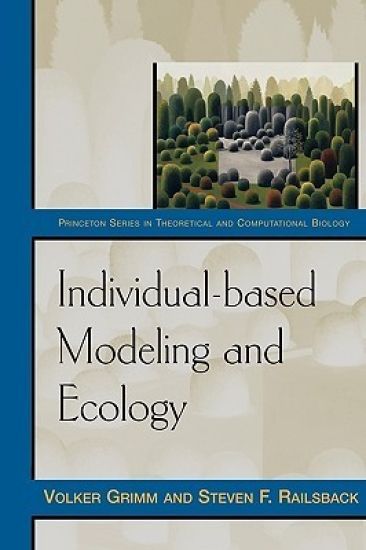
Individual-based models are an exciting and widely used new tool for ecology. These computational models allow scientists to explore the mechanisms through which population and ecosystem ecology arises from how individuals interact with each other and their environment. This book provides the first in-depth treatment of individual-based modeling and its use to develop theoretical understanding of how ecological systems work, an approach the authors call "individual-based ecology." Grimm and Railsback start with a general primer on modeling: how to design models that are as simple as possible while still allowing specific problems to be solved, and how to move efficiently through a cycle of pattern-oriented model design, implementation, and analysis. Next, they address the problems of theory and conceptual framework for individual-based ecology: What is "theory"? That is, how do we develop reusable models of how system dynamics arise from characteristics of individuals? What conceptual framework do we use when the classical differential equation framework no longer applies? An extensive review illustrates the ecological problems that have been addressed with individual-based models. The authors then identify how the mechanics of building and using individual-based models differ from those of traditional science, and provide guidance on formulating, programming, and analyzing models. This book will be helpful to ecologists interested in modeling, and to other scientists interested in agent-based modeling.