Kirjojen hintavertailu. Mukana 12 514 792 kirjaa ja 12 kauppaa.

Kirjailija

Volker Meja

Kirjat ja teokset yhdessä paikassa: 6 kirjaa, julkaisuja vuosilta 1995-2018, suosituimpien joukossa Karl Mannheim and the Crisis of Liberalism. Vertaile teosten hintoja ja tarkista saatavuus suomalaisista kirjakaupoista.

6 kirjaa

Kirjojen julkaisuhaarukka 1995-2018.

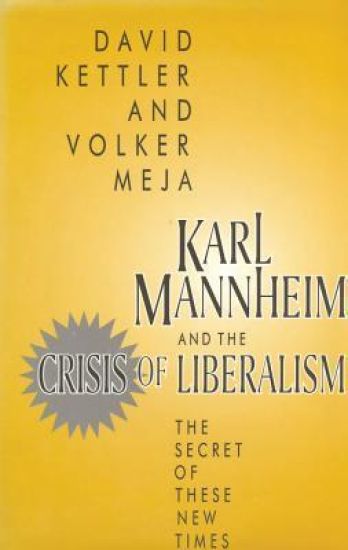
Karl Mannheim and the Crisis of Liberalism

Karl Mannheim and the Crisis of Liberalism

David Kettler; Volker Meja

Routledge
2018
nidottu
To reflect on Karl Mannheim is to address fundamental issues of political enlightenment Mannheim's driving determination "was to learn as a sociologist by close observation the secret (even if it is infernal) of these new times." Mannheim's aim was "to carry liberal values forward." His problem remains irresistible to reflective people at the end of the twentieth century. Mannheim attempted to link social thinking to political emancipation despite overwhelming evidence against the connection. Karl Mannheim and the Crisis of Liberalism is a sympathetic biography of Mannheim's paradoxicalaand paradigmatica'project. The book covers a wide range of European and American thought, including Mannheim's dealings with Georg Lukacs and Oscar Jszi in Budapest; with Alfred Weber, Leopold von Wiese, Franz Neumann, Paul Tillich, Adolph Loewe, and his students in Weimar Germany; with Louis Wirth, Edward Shils, and other major figures in American sociology; and with social analysts and religious thinkers in England. The analysis is informed by dilemmas of history and theory, science and rhetoric, freedom and technical controlathe themes of liberalism. Kettler and Meja carefully depict each stage of Mannheim's life as a sociologist and explore his influence on leading social thinkers. Karl Mannheim and the Crisis of Liberalism combines significant biographical information with insightful sociological theory. It will be a vital resource for historians, sociologists, and political theorists.

Karl Mannheim and the Legacy of Max Weber

Karl Mannheim and the Legacy of Max Weber

David Kettler; Colin Loader; Volker Meja

Routledge
2016
nidottu
This book focuses on the important work of Karl Mannheim by demonstrating how his theoretical conception of a reflexive sociology took shape as a collaborative empirical research programme. The authors show how contemporary work along these lines can benefit from the insights of Mannheim and his students into both morphology and genealogy. It returns Mannheim's sociology of knowledge inquiries into the broader context of a wider project in historical and cultural sociology, whose promising development was disrupted and then partially obscured by the expulsion of Mannheim's intellectual generation. This inspired volume will appeal to sociologists concerned with the contemporary relevance of his work, and who are prepared for a fresh look at Weimar sociology and the legacy of Max Weber.
Karl Mannheim and the Legacy of Max Weber

Karl Mannheim and the Legacy of Max Weber

David Kettler; Colin Loader; Volker Meja

Ashgate Publishing Limited
2008
sidottu
This book focuses on the important work of Karl Mannheim by demonstrating how his theoretical conception of a reflexive sociology took shape as a collaborative empirical research programme. The authors show how contemporary work along these lines can benefit from the insights of Mannheim and his students into both morphology and genealogy. It returns Mannheim's sociology of knowledge inquiries into the broader context of a wider project in historical and cultural sociology, whose promising development was disrupted and then partially obscured by the expulsion of Mannheim's intellectual generation. This inspired volume will appeal to sociologists concerned with the contemporary relevance of his work, and who are prepared for a fresh look at Weimar sociology and the legacy of Max Weber.
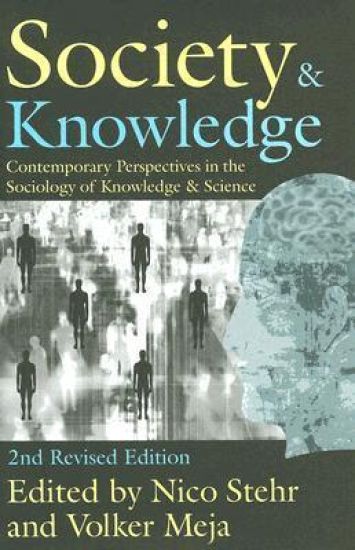
Society and Knowledge

Society and Knowledge

Volker Meja

AldineTransaction
2005
nidottu
The sociology of knowledge is generally seen as part of the sociology of cultural products. Along with the sociology of science, it explores the social character of science and in particular the social production of scientific knowledge. Knowledge in all its varieties is of crucial importance in social, political, and economic relations in modern society. Yet new realities, the editors argue in their introduction to this second edition, require a new perspective.In the past half century, the social role of knowledge has changed profoundly. The natural attitude toward scientific knowledge in science that assigned a special status to science's knowledge claims has lost its dominance, and the view that all knowledge is socially constructed has gained general acceptance. Science increasingly influences the political agenda in modern societies. Consequently, a new political field has emerged: knowledge politics.These fourteen essays by social scientists, philosophers, and historians cover fundamental issues, theoretical perspectives, knowledge and power, and empirical studies. Eight of the fourteen contributions were part of the first edition of Society and Knowledge, published in 1984, and most of these have been updated and revised for this new edition. Included in this edition are six new contributions by Robert K. Merton, Steve Fuller, Dick Pels, Nico Stehr, Barry Schwartz, and Michael Lynch.This second, revised edition builds on its predecessor in presenting cutting-edge theoretical and empirical efforts to transform the sociology of knowledge. Professionals, policymakers, and graduate students in the fields of sociology, political science, and social science will find this volume of interest and importance.
Society and Knowledge

Society and Knowledge

Volker Meja

Transaction Publishers
2005
sidottu
The sociology of knowledge is generally seen as part of the sociology of cultural products. Along with the sociology of science, it explores the social character of science and in particular the social production of scientific knowledge. Knowledge in all its varieties is of crucial importance in social, political, and economic relations in modern society. Yet new realities, the editors argue in their introduction to this second edition, require a new perspective.In the past half century, the social role of knowledge has changed profoundly. The natural attitude toward scientific knowledge in science that assigned a special status to science's knowledge claims has lost its dominance, and the view that all knowledge is socially constructed has gained general acceptance. Science increasingly influences the political agenda in modern societies. Consequently, a new political field has emerged: knowledge politics.These fourteen essays by social scientists, philosophers, and historians cover fundamental issues, theoretical perspectives, knowledge and power, and empirical studies. Eight of the fourteen contributions were part of the first edition of Society and Knowledge, published in 1984, and most of these have been updated and revised for this new edition. Included in this edition are six new contributions by Robert K. Merton, Steve Fuller, Dick Pels, Nico Stehr, Barry Schwartz, and Michael Lynch.This second, revised edition builds on its predecessor in presenting cutting-edge theoretical and empirical efforts to transform the sociology of knowledge. Professionals, policymakers, and graduate students in the fields of sociology, political science, and social science will find this volume of interest and importance.
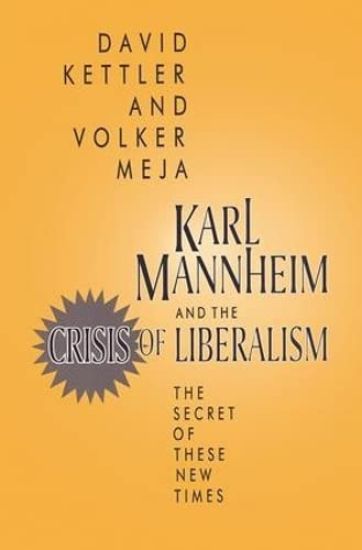
Karl Mannheim and the Crisis of Liberalism

Karl Mannheim and the Crisis of Liberalism

David Kettler; Volker Meja

Transaction Publishers
1995
sidottu
To reflect on Karl Mannheim is to address fundamental issues of political enlightenment Mannheim's driving determination "was to learn as a sociologist by close observation the secret (even if it is infernal) of these new times." Mannheim's aim was "to carry liberal values forward." His problem remains irresistible to reflective people at the end of the twentieth century. Mannheim attempted to link social thinking to political emancipation despite overwhelming evidence against the connection. Karl Mannheim and the Crisis of Liberalism is a sympathetic biography of Mannheim's paradoxicalaand paradigmatica'project. The book covers a wide range of European and American thought, including Mannheim's dealings with Georg Lukacs and Oscar Jszi in Budapest; with Alfred Weber, Leopold von Wiese, Franz Neumann, Paul Tillich, Adolph Loewe, and his students in Weimar Germany; with Louis Wirth, Edward Shils, and other major figures in American sociology; and with social analysts and religious thinkers in England. The analysis is informed by dilemmas of history and theory, science and rhetoric, freedom and technical controlathe themes of liberalism. Kettler and Meja carefully depict each stage of Mannheim's life as a sociologist and explore his influence on leading social thinkers. Karl Mannheim and the Crisis of Liberalism combines significant biographical information with insightful sociological theory. It will be a vital resource for historians, sociologists, and political theorists.