Kirjojen hintavertailu. Mukana 12 595 353 kirjaa ja 12 kauppaa.

Kirjailija

Volker Pantenburg

Kirjat ja teokset yhdessä paikassa: 4 kirjaa, julkaisuja vuosilta 2012-2025, suosituimpien joukossa Einfachheit ohne Vereinfachung. Vertaile teosten hintoja ja tarkista saatavuus suomalaisista kirjakaupoista.

4 kirjaa

Kirjojen julkaisuhaarukka 2012-2025.

Starting Places

Starting Places

Bernard Eisenschitz; Robert Kramer; Roberto Turigliatto; Volker Pantenburg

Synema Gesellschaft Fur Film u. Medien
2025
nidottu
In summer 1997, French film critic and historian Bernard Eisenschitz met with Robert Kramer three times to speak in detail about Kramer's life and work, covering thirty years of filmmaking. The exchange between friends starts with his early, activist years and his involvement with the Newsreel Collective, considers essential films like Ice (1969) and Milestones (1975), and traces Kramer's orientation towards Europe and relocation to France in the late 1970s. Going back and forth between Europe, the USA, Portugal, and Vietnam, Kramer was consistently able to work and make films like Doc's Kingdom (1987), Route One/USA (1989), and Starting Place (1993). He passed away in 1999. The conversation was published in French in 2001 as Points de départ. More than 20 years later, Starting Places: A Conversation with Robert Kramer makes this illuminating account of a "mid-Atlantic" filmmaker available in its original language for the first time. The book is complemented by three of Kramer's essays from the 1980s and 1990s and an updated bibliography and filmography.

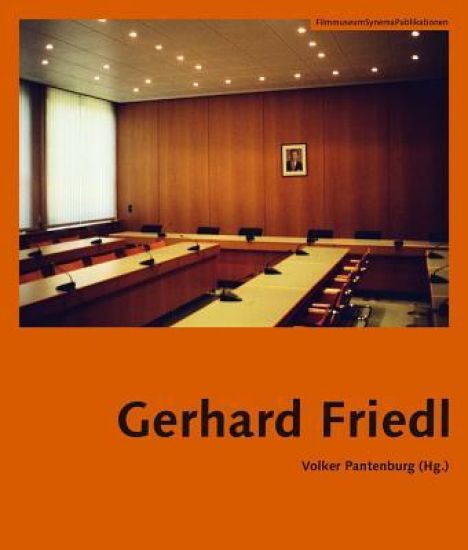
Gerhard Friedl German–language Edition – Ein Arbeitsbuch

Gerhard Friedl German–language Edition – Ein Arbeitsbuch

Volker Pantenburg

Synema Gesellschaft Fur Film u. Medien
2019
nidottu
Austrian director Gerhard Benedikt Friedl (1967–2009) left a small but singular oeuvre. His two films Knittelfeld: A Town Without a History (1997) and Wolff von Amerongen—Did He Commit Bankruptcy Offenses? (2004) are formally rigorous documentary investigations that combine an erratic voice-over commentary with patient observational camera movements. Informed by his studies of philosophy, consciously building on work by James Benning, Straub/Huillet, and others, Friedl invented a unique method of exposing the conjunction of politics, history, and violence in twentieth-century European capitalism. After the critical acclaim of Wolff von Amerongen, the filmmaker embarked on a project investigating the history of the workers’ struggle in the United States, but decided to abandon it after a research trip to the historical locations convinced him of the difficulties in finding any remaining echoes of this historic movement. Traces of the project can be discerned in his final work, Shedding Details (2009), codirected by artist Laura Horelli.This book sheds light on the work behind Friedl’s films. It combines working process documentation, including photographs, project drafts, and excerpts from his correspondence, with conversations with close collaborators. At the same time, the juxtaposed material traces the path from Friedl’s first short films made at the University of Television and Film Munich (HFF) to several unfinished projects undertaken around the time of his premature death. In addition, it republishes the articles Friedl wrote as a film and art critic and highlights his work as a film teacher and occasional curator.The volume contains contributions by Gerhard Friedl; conversations with Rudolf Barmettler, Ivette Löcker, Laura Horelli, and others; as well as an introductory essay by editor Volker Pantenburg.
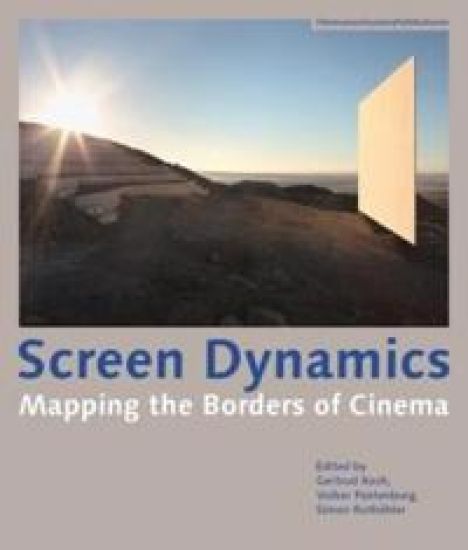
Screen Dynamics – Mapping the Borders of Cinema

Screen Dynamics – Mapping the Borders of Cinema

Gertrud Koch; Volker Pantenburg; Simon Rothohler; Simon Rothöhler

Synema Gesellschaft Fur Film u. Medien
2012
nidottu
From moving images on the Internet to giant IMAX displays: The number of screens in the public and private sphere has increased significantly during the last two decades. While this is often taken to indicate the "death of cinema," this volume attempts to reconsider the limits and specifics of film and the traditional movie theater. It analyzes notions of spectatorship, the relationship between cinema and the "uncinematic," the contested place of installation art in the history of experimental cinema, and the characteristics of the high definition image. Further contributions discuss the ways in which cinema interacts with other arts and media such as theater and television. Contributors include Raymond Bellour, Victor Burgin, Vinzenz Hediger, Tom Gunning, Ute Holl, Ekkehard Knörer, Thomas Morsch, Jonathan Rosenbaum and the editors.