
Kirjailija
Volker Ullrich
Kirjat ja teokset yhdessä paikassa: 30 kirjaa, julkaisuja vuosilta 2003-2026, suosituimpien joukossa Helmuth James von Moltke. Vertaile teosten hintoja ja tarkista saatavuus suomalaisista kirjakaupoista.
30 kirjaa
Kirjojen julkaisuhaarukka 2003-2026.

El Fracaso de la República de Weimar / Germany 1923: Hyperinflation, Hitler's Putsch, and Democracy in Crisis
Volker Ullrich
Taurus
2026
nidottu
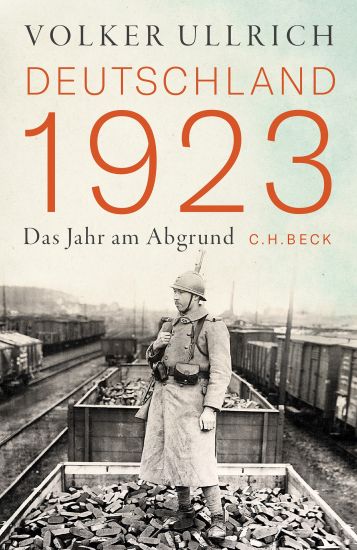
Con la ca da de la Rep blica de Weimar comprendimos que las democracias son fr giles. En un abrir y cerrar de ojos pueden desaparecer las libertades que parecen firmemente conquistadas. Pocos acontecimientos hist ricos ilustran la fragilidad de la democracia de una manera tan evidente como el que se relata en El fracaso de la Rep blica de Weimar, uno de los mayores dramas de la historia mundial, que el prestigioso historiador alem n Volker Ullrich explica como nunca antes se ha contado: de una forma v vida, emocionante y tan minuciosamente contextualizada que los paralelismos con la actualidad emergen de manera sorprendente. Es cierto que el nacimiento de la rep blica se hab a producido en un contexto desfavorable: el Imperio alem n hab a sufrido una aplastante derrota y el pa s tuvo que aceptar las dur simas condiciones del Tratado de Versalles, a las que se sum una interminable sucesi n de crisis econ micas (solo interrumpidas por una fase de aparente estabilizaci n a mediados de los a os veinte). Pero, a pesar de todas las penurias por las que transit , la reci n esbozada primera democracia alemana no naci predestinada a un final estrepitoso: desde la fase fundacional de la rep blica hasta enero de 1933 hubo repetidas oportunidades de marcar un rumbo diferente. Por qu no se logr ? Entonces, igual que ahora, la realidad de un pa s depend a de las acciones concretas de los individuos. En cada p gina de este apasionante libro, Ullrich nos lanza un recordatorio urgente: est en nuestras manos que la democracia triunfe o fracase. ENGLISH DESCRIPTION From the New York Times best-selling historian comes a gripping account of the crisis of the Weimar Republic, when hyperinflation and political upheaval threatened to unravel a new experiment in democracy. As the great Austrian writer Stefan Zweig confided in his autobiography, written in exile, "I have a pretty thorough knowledge of history, but never, to my recollection, has it produced such madness in such gigantic proportions." He was referring to the situation in Germany in 1923. It was a "year of lunacy," defined by hyperinflation, a political system on the verge of collapse, and separatist movements that threatened Germany's territorial integrity. Most significantly, Adolf Hitler launched his infamous Beer Hall Putsch in Munich―a failed coup that nonetheless drew international attention and demonstrated the Nazis' ruthless determination to seize power. In Germany 1923, award-winning historian Volker Ullrich draws on letters, memoirs, newspaper articles, and other sources from the time to present a captivating new history of those explosive twelve months. The crisis began when the French invaded the Ruhr Valley in January to force Germany to pay the reparations it owed under the Treaty of Versailles, which had ended the Great War. For years, German leaders had embraced inflationary policies to finance the costs of defeat, and, as Ullrich demonstrates, the invasion utterly destroyed the value of the German mark. Before the war, the exchange rate was 4.2 marks to the dollar. By November 20, 1923, a dollar was worth an incomprehensible 4.2 trillion marks, and a loaf of bread cost 200 billion. Facing the abyss, many ordinary Germans called for a national messiah. Among the figures to vie for that role was Hitler, a thirty-four-year-old veteran who possessed a uniquely malevolent personal magnetism. Although the Nazi coup in November was put down and Hitler arrested, the putsch showed just how tenuous the first German democracy, the Weimar Republic, was at its core. As Ullrich's panoramic narrative reveals, other Germans responded to the successive crises by launching a cultural revolution: 1923 witnessed the emergence of a multitude of new movements, from Dada to Bauhaus, and of such iconoclasts as Bertolt Brecht, George Grosz, and Franz Kafka. Yet most observers were amazed that the Weimar Republic was able to survive, and the more astute realized that the feral undercurrents unleashed could lead to much worse. Publishing a century after that fateful year, Germany 1923 is a riveting chronicle of one of the most challenging times any modern democracy has faced, one with haunting parallels to our own political moment


Democracies are fragile. Freedoms that seem secure can be lost. Few historical periods illustrate this as clearly as the Weimar Republic. Fateful Hours tells one of the greatest dramas in world history: the failure of Germany's first democracy, culminating in the horrific rise of the Third Reich.The Weimar Republic was born under an inauspicious star. Germany resoundingly lost the First World War and was hobbled by harsh conditions imposed by the Treaty of Versailles. Continual crises--hyperinflation, violence, and political instability--shook the republic, only letting up during a brief period of stability in the 1920s. But the first German democracy was not always destined for failure. Historian Volker Ullrich proves that there were many opportunities to lay the tracks differently, from the founding phase through Hitler's election in 1933. Ultimately, the republic's fate depended on the choices of individuals. Thus, this history carries an urgent reminder: It is up to us whether democracy lives or dies.
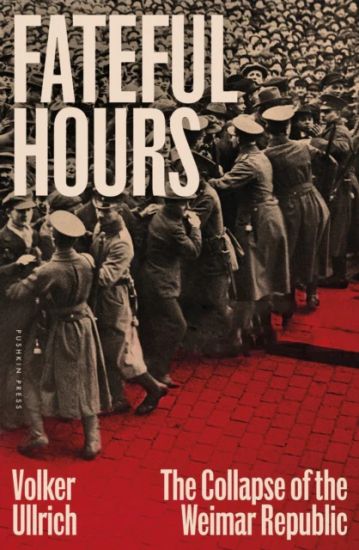
Democracies are fragile. Freedoms that seem secure can be lost. Few historical events illustrate this as vividly as the failure of the Weimar Republic. Fateful Hours tells one of the greatest dramas in world history: the failure of Germany's first democracy, culminating in the horrific rise of the Third Reich. But this tragedy was not inevitable. In this gripping new book, celebrated historian Volker Ullrich charts the many failed alternatives and missed opportunities that contributed to German democracy's collapse. In an immersive style that takes us to the heart of political power, Ullrich argues that, right up until January 1933, history was open - just as in the present, it is up to us whether democracy lives or dies.

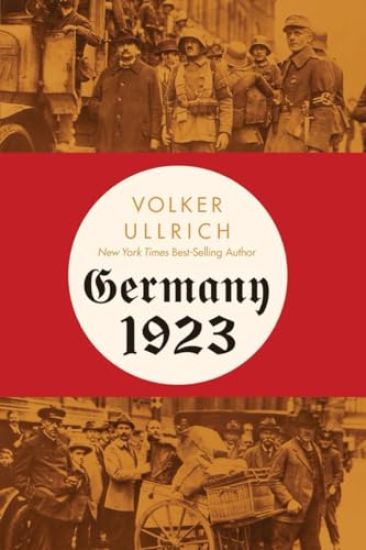
As the great Austrian writer Stefan Zweig confided in his autobiography, written in exile, “I have a pretty thorough knowledge of history, but never, to my recollection, has it produced such madness in such gigantic proportions.” He was referring to the situation in Germany in 1923. It was a “year of lunacy”, defined by hyperinflation, a political system on the verge of collapse and separatist movements that threatened Germany’s territorial integrity. Most significantly, Adolf Hitler launched his infamous Beer Hall Putsch in Munich—a failed coup that nonetheless drew international attention and demonstrated the Nazis’ ruthless determination to seize power. In Germany 1923, award-winning historian Volker Ullrich draws on letters, memoirs, newspaper articles and other sources from the time to present a captivating new history of those explosive twelve months. The crisis began when the French invaded the Ruhr Valley in January to force Germany to pay the reparations it owed under the Treaty of Versailles, which had ended the Great War. For years, German leaders had embraced inflationary policies to finance the costs of defeat, and, as Ullrich demonstrates, the invasion utterly destroyed the value of the German mark. Before the war, the exchange rate was 4.2 marks to the dollar. By 20 November 1923, a dollar was worth an incomprehensible 4.2 trillion marks and a loaf of bread cost 200 billion. Facing the abyss, many ordinary Germans called for a national messiah. Among the figures to vie for that role was Hitler, a thirty-four-year-old veteran who possessed a uniquely malevolent personal magnetism. Although the Nazi coup in November was put down and Hitler arrested, the putsch showed just how tenuous the first German democracy, the Weimar Republic, was at its core. As Ullrich’s panoramic narrative reveals, other Germans responded to the successive crises by launching a cultural revolution: 1923 witnessed the emergence of a multitude of new movements, from Dada to Bauhaus, and of such iconoclasts as Bertolt Brecht, George Grosz and Franz Kafka. Yet most observers were amazed that the Weimar Republic was able to survive, and the more astute realised that the feral undercurrents unleashed could lead to much worse. Publishing a century after that fateful year, Germany 1923 is a riveting chronicle of one of the most challenging times any modern democracy has faced, one with haunting parallels to our own political moment.

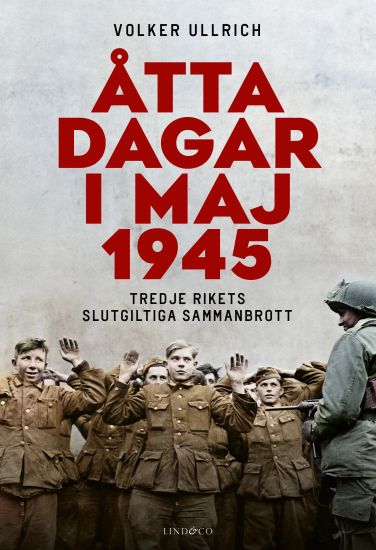
"Hans fantastiska forskningsarbete gör att han lyckas väl; han använder med föredömlig källkritisk medvetenhet dagböcker och brev i hög utsträckning. Det skapar möjligheten att växla framställningens perspektiv från det stora till det lilla, och ge en röst åt människorna som var verkliga tidsvittnen. Det gör framställningen levande och djup." Btj, betyg 5/51 maj 1945. Världen vet ännu inte att Tredje rikets sista vecka har inletts. Hitler är död, men kriget är inte över. Tyskland slits mellan terror och hopp, krig och fred. Medan den nya Führern, admiral Dönitz, flyttar regeringen till den lilla staden Flensburg avancerar de allierade styrkorna. Berlin kapitulerar. Raketforskaren Wernher von Braun arresteras och sångerskan Marlene Dietrich söker efter sin syster i Bergen-Belsen. Många ledande nazister är fortfarande på fri fot, vilda rykten är i svang om ett sista slag i Alperna eller att västmakterna ska förklara krig mot Sovjetunionen. Miljoner soldater, fångar, slavarbetare och traumatiserade familjer inser att kriget är förlorat, men på vilket sätt striderna ska upphöra är oklart. Självmordstalen ökar lavinartat och ett oräkneligt antal kvinnor våldtas, samtidigt inleds de sista dödsmarscherna och koncentrationsläger befrias. Den internationella bästsäljaren Åtta dagar i maj 1945 är ett panorama över denna dramatiska tid.VOLKER ULLRICH är tysk historiker och journalist. Han har tidigare bland annat skrivit biografier över Bismarck och Napoleon. Hans biografi över Hitler blev en bästsäljare i Tyskland."gripande, oklanderligt researchad" Wall Street Journal "utomordentlig [...] beundransvärt koncis." The Times "en slagkraftig skildring som är en verklig bladvändare" Financial Times "ett fullpackat dramatiskt pussel" Spiegel Bestseller "en smart och eftertänksam krönikör" Süddeutsche Zeitung "Ett upplysande perspektivskifte"Die Welt

The great Austrian writer Stefan Zweig confided in his autobiography: “I have a pretty thorough knowledge of history, but never, to my recollection, has it produced such madness in such gigantic proportions.” He was referring to Germany in 1923, a “year of lunacy,” defined by hyperinflation, violence, a political system on the verge of collapse, the rise of Adolf Hitler and the Nazi Party and separatist movements threatening to rip apart the German nation. Most observers found it miraculous that the Weimar Republic—the first German democracy—was able to survive, though some of the more astute realised that the feral undercurrents unleashed that year could lead to much worse. Now, a century later, best-selling author Volker Ullrich draws on letters, memoirs, newspaper articles and other sources to present a riveting chronicle of one of the most difficult years any modern democracy has ever faced—one with haunting parallels to our own political moment.

Eight Days in May: The Final Collapse of the Third Reich
Volker Ullrich
Liveright Publishing Corporation
2023
nidottu
In a bunker deep below Berlin's Old Reich Chancellery, Adolf Hitler and his new bride, Eva Braun, took their own lives just after 3:00 p.m. on April 30, 1945--Hitler by gunshot to the temple, Braun by ingesting cyanide. But the F hrer's suicide did not instantly end either Nazism or the Second World War in Europe. Far from it: the eight days that followed were among the most traumatic in modern history, witnessing not only the final paroxysms of bloodshed and the frantic surrender of the Wehrmacht, but the total disintegration of the once-mighty Third Reich.In Eight Days in May, the award-winning historian and Hitler biographer Volker Ullrich draws on an astonishing variety of sources, including diaries and letters of ordinary Germans, to narrate a society's descent into Hobbesian chaos. In the town of Demmin in the north, residents succumbed to madness and committed mass suicide. In Berlin, Soviet soldiers raped German civilians on a near-unprecedented scale. In Nazi-occupied Prague, Czech insurgents led an uprising in the hope that General George S. Patton would come to their aid but were brutally put down by German units in the city. Throughout the remains of Third Reich, huge numbers of people were on the move, creating a surrealistic tableau: death marches of concentration-camp inmates crossed paths with retreating Wehrmacht soldiers and groups of refugees; columns of POWs encountered those of liberated slave laborers and bombed-out people returning home. A taut, propulsive narrative, Eight Days in May takes us inside the phantomlike regime of Hitler's chosen successor, Admiral Karl D nitz, revealing how the desperate attempt to impose order utterly failed, as frontline soldiers deserted and Nazi Party fanatics called on German civilians to martyr themselves in a last stand against encroaching Allied forces. In truth, however, the post-Hitler government represented continuity more than change: its leaders categorically refused to take responsibility for their crimes against humanity, an attitude typical not just of the Nazi elite but also of large segments of the German populace. The consequences would be severe. Eight Days in May is not only an indispensable account of the Nazi endgame, but a historic work that brilliantly examines the costs of mass delusion.
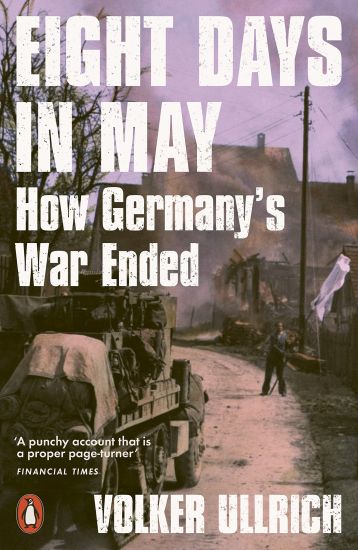
'Superb' David Aaronovitch, The Times 'A punchy account that is a proper page-turner' Financial Times 'The last days of the Third Reich have often been told, but seldom with the verve, perception and elegance of Volker Ullrich's rich narrative' Richard Overy, author of The Bombing War 1 May 1945. The world did not know it yet, but the final week of the Third Reich's existence had begun. Hitler was dead, but the war had still not ended. Everything had both ground to a halt and yet remained agonizingly uncertain. Volker Ullrich's remarkable book takes the reader into a world torn between hope and terror, violence and peace. Ullrich describes how each day unfolds, with Germany now under a new Führer, Admiral Dönitz, based improbably in the small Baltic town of Flensburg. With Hitler dead, Berlin in ruins and the war undoubtedly lost, the process by which the fighting would end remained horrifyingly unclear. Many major Nazis were still on the loose, wild rumours continued to circulate about a last stand in the Alps and the Western allies falling out with the Soviet Union. All over Europe, millions of soldiers, prisoners, slave labourers and countless exhausted, grief-stricken and often homeless families watched and waited for the war's end. Eight Days in May is the story of people, in Erich Kästner's striking phrase, stuck in 'the gap between no longer and not yet'. 'A fast-paced, brilliant recounting of the turbulent last days of the Third Reich, with all the energy and chaos of a Jackson Pollock canvas' Helmut Walser Smith, author of Germany: A Nation in its Time
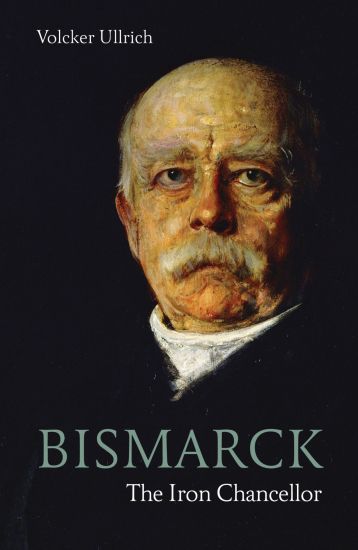
Otto von Bismarck (1815-98) has gone down in history as the Iron Chancellor, a reactionary and militarist whose 1871 unification of Germany set Europe down the path of disaster to World War I. But as Volker Ullrich shows in this new edition of his accessible biography, the real Bismarck was far more complicated than the stereotype. A leading historian of nineteenth- and twentieth-century history, Ullrich demonstrates that the "Founder of the Reich" was in fact an opponent of liberal German nationalism. After the wars of 1866 and 1870, Bismarck spent the rest of his career working to preserve peace in Europe and protect the empire he had created. Despite his reputation as an enemy of socialism, he introduced comprehensive health and unemployment insurance for German workers. Far from being a "man of iron and blood," Bismarck was in fact a complex statesman who was concerned with maintaining stability and harmony far beyond Germany's newly unified borders. Comprehensive and balanced, Bismarck shows us the post-reunification value of looking anew at this monumental figure's role in European history
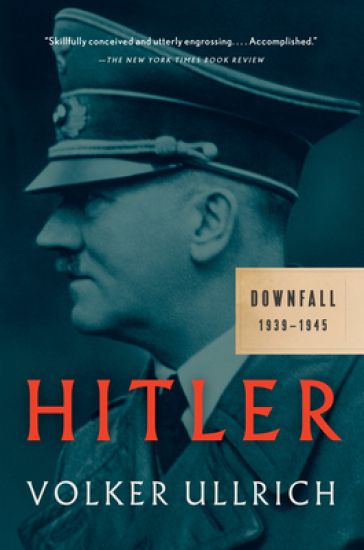
A riveting account of the dictator's final years, when he got the war he wanted but led his nation, the world, and himself to catastrophe--from the author of Hitler: Ascent "Skillfully conceived and utterly engrossing." --The New York Times Book Review In the summer of 1939, Hitler was at the zenith of his power. Having consolidated political control in Germany, he was at the helm of a newly restored major world power, and now perfectly positioned to realize his lifelong ambition: to help the German people flourish and to exterminate those who stood in the way. Beginning a war allowed Hitler to take his ideological obsessions to unthinkable extremes, including the mass genocide of millions, which was conducted not only with the aid of the SS, but with the full knowledge of German leadership. Yet despite a series of stunning initial triumphs, Hitler's fateful decision to invade the Soviet Union in 1941 turned the tide of the war in favor of the Allies. Now, Volker Ullrich, author of Hitler: Ascent 1889-1939, offers fascinating new insight into Hitler's character and personality. He vividly portrays the insecurity, obsession with minutiae, and narcissistic penchant for gambling that led Hitler to overrule his subordinates and then blame them for his failures. When he ultimately realized the war was not winnable, Hitler embarked on the annihilation of Germany itself in order to punish the people who he believed had failed to hand him victory. A masterful and riveting account of a spectacular downfall, Ullrich's rendering of Hitler's final years is an essential addition to our understanding of the dictator and the course of the Second World War.
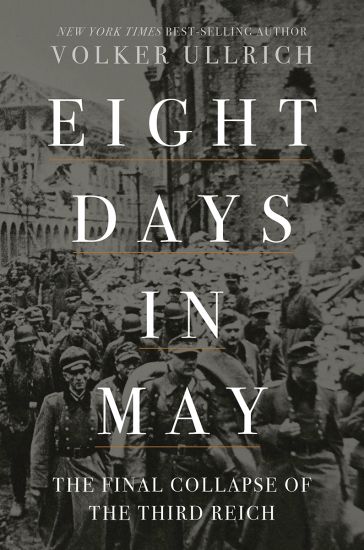
Eight Days in May: The Final Collapse of the Third Reich
Volker Ullrich
Liveright Publishing Corporation
2021
sidottu
In a bunker deep below Berlin's Old Reich Chancellery, Adolf Hitler and his new bride, Eva Braun, took their own lives just after 3:00 p.m. on April 30, 1945--Hitler by gunshot to the temple, Braun by ingesting cyanide. But the F hrer's suicide did not instantly end either Nazism or the Second World War in Europe. Far from it: the eight days that followed were among the most traumatic in modern history, witnessing not only the final paroxysms of bloodshed and the frantic surrender of the Wehrmacht, but the total disintegration of the once-mighty Third Reich.In Eight Days in May, the award-winning historian and Hitler biographer Volker Ullrich draws on an astonishing variety of sources, including diaries and letters of ordinary Germans, to narrate a society's descent into Hobbesian chaos. In the town of Demmin in the north, residents succumbed to madness and committed mass suicide. In Berlin, Soviet soldiers raped German civilians on a near-unprecedented scale. In Nazi-occupied Prague, Czech insurgents led an uprising in the hope that General George S. Patton would come to their aid but were brutally put down by German units in the city. Throughout the remains of Third Reich, huge numbers of people were on the move, creating a surrealistic tableau: death marches of concentration-camp inmates crossed paths with retreating Wehrmacht soldiers and groups of refugees; columns of POWs encountered those of liberated slave laborers and bombed-out people returning home. A taut, propulsive narrative, Eight Days in May takes us inside the phantomlike regime of Hitler's chosen successor, Admiral Karl D nitz, revealing how the desperate attempt to impose order utterly failed, as frontline soldiers deserted and Nazi Party fanatics called on German civilians to martyr themselves in a last stand against encroaching Allied forces. In truth, however, the post-Hitler government represented continuity more than change: its leaders categorically refused to take responsibility for their crimes against humanity, an attitude typical not just of the Nazi elite but also of large segments of the German populace. The consequences would be severe. Eight Days in May is not only an indispensable account of the Nazi endgame, but a historic work that brilliantly examines the costs of mass delusion.
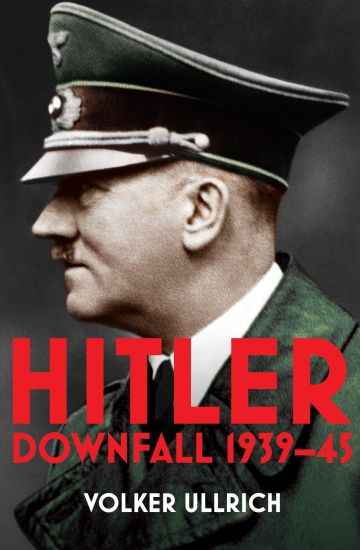
'Meticulous... Probably the most disturbing portrait of Hitler I have ever read' Dominic Sandbrook, Sunday TimesBy the summer of 1939 Hitler was at the zenith of his power. Yet despite initial triumphs in the early stages of war, the Führer's fortunes would turn dramatically as the conflict raged on. Realising that victory was lost, and with Soviet troops closing in on his Berlin bunker, Hitler committed suicide in April 1945; one week later, Nazi Germany surrendered. His murderous ambitions had not only annihilated his own country, but had cost the lives of millions across Europe. In the final volume of this landmark biography, Volker Ullrich argues that the very qualities - and the defects - that accounted for Hitler's popularity and rise to power were what brought about his ruin. A keen strategist and meticulous military commander, he was also a deeply insecure gambler who could be shaken by the smallest setback, and was quick to blame subordinates for his own disastrous mistakes.Drawing on a wealth of new sources and scholarship, this is the definitive portrait of the man who dragged the world into chaos.