Kirjojen hintavertailu. Mukana 12 390 323 kirjaa ja 12 kauppaa.

Kirjailija

Vrinda Narain

Kirjat ja teokset yhdessä paikassa: 3 kirjaa, julkaisuja vuosilta 2001-2026, suosituimpien joukossa Towards a Critical Multiculturalism. Vertaile teosten hintoja ja tarkista saatavuus suomalaisista kirjakaupoista.

3 kirjaa

Kirjojen julkaisuhaarukka 2001-2026.

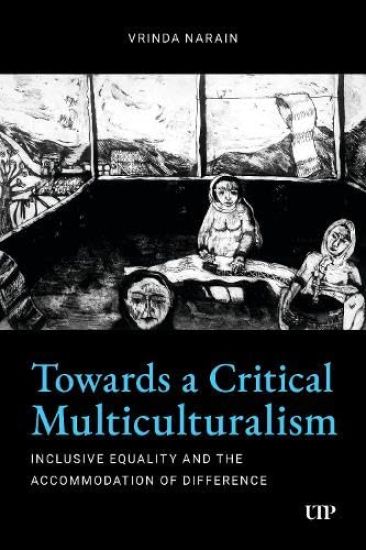
Towards a Critical Multiculturalism

Towards a Critical Multiculturalism

Vrinda Narain

UNIVERSITY OF TORONTO PRESS
2026
sidottu
What happens when a nation founded on multicultural ideals begins to see cultural difference as a problem to be managed, rather than a value to be celebrated? This book challenges the core assumptions of Canada’s multiculturalism policy and its reliance on “reasonable accommodation.” Instead of fostering genuine inclusion, these frameworks often reinforce the dominance of the majority culture, positioning minority groups as outsiders who must conform, adapt, or be merely tolerated. Drawing on feminist constitutionalism, intersectionality, and critical race theory, the author exposes how these dynamics most acutely impact those at the intersections of multiple forms of marginalization – especially Muslim women. The book powerfully critiques how feminist ideals are sometimes appropriated by populist narratives to justify Islamophobic and anti-immigration policies, all while claiming to defend liberal values. Through incisive analysis of landmark legal cases, this book reveals how the legal system can perpetuate structural inequalities under the guise of neutrality and reasonableness. Essential reading for anyone interested in social justice, law, or Canadian society, this book invites readers to rethink what true multiculturalism means – and what is at stake when it is reduced to a tool for managing, rather than embracing, diversity.
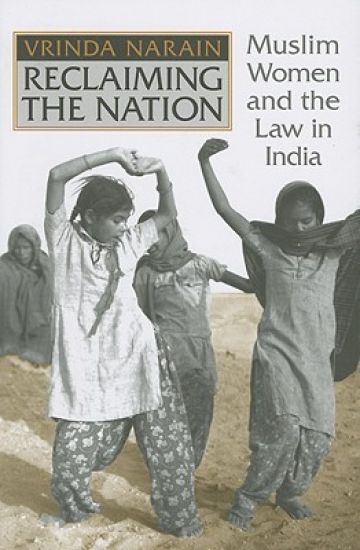
Reclaiming the Nation

Reclaiming the Nation

Vrinda Narain

University of Toronto Press
2008
sidottu
Living in pluralist India has had critical consequences for Muslim women who are expected to follow a determined and strict code of conduct. The impact of this contradiction is most evident in the continuing denial of gender equality within the family, as state regulation of gender roles in the private sphere ultimately affects the status of women in the public sphere. Reclaiming the Nation examines the relationship between gender and nation in post-colonial India through the lens of marginalized Muslim women. Drawing on feminist legal theory, postcolonial feminist theory, and critical race theory, Vrinda Narain explores the idea of citizenship as a potential vehicle for the emancipation of Muslim women. Citizenship, Narain argues, opens the possibility for Indian women to reclaim a sense of selfhood free from imposed identities. In promoting the hybridity of culture and the modernity of tradition, Narain shows how oppositional categories such as public versus private, Muslim versus feminist, and Western versus Indian have been used to deny women equal rights. A timely account of the struggle for liberation within a restrictive religious framework, Reclaiming the Nation is an insightful look at gender, nationhood, and the power of self-determination.
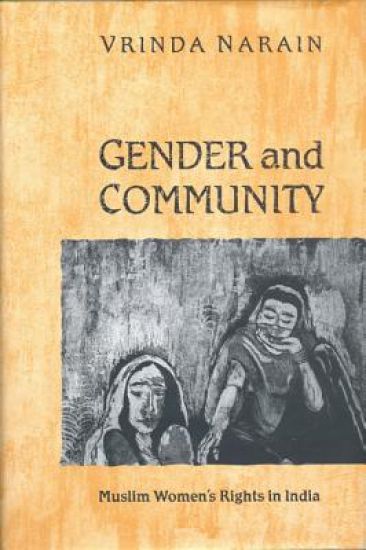
Gender and Community

Gender and Community

Vrinda Narain

University of Toronto Press
2001
sidottu
In India, the legal status of Muslim women within the family is a topic of considerable controversy and debate. It is a complex issue that has implications for matters of not only gender justice, but also religious freedom, minority rights, and state policy regarding the accommodation of difference. Whereas the Constitution of India guarantees equality rights to all women, irrespective of religious affiliation, Muslim personal law, argues Vrinda Narain, explicitly discriminates on the basis of an individual's sex and religion. Narain begins with an analysis of the historical development and contemporary expression of Muslim personal law within a constitutional framework and examines the assertion that women's rights are a divisive force preventing the evolution of larger collective rights. She contends that an interrogation of the dominant religious ideology is necessary to prevent legislation from binding Muslim women to an essentialist notion of identity, thereby denying them the possibility of challenging Muslim tradition. Eloquently written and substantially researched, Gender and Community combines feminist analysis, post-colonial and critical race theory with legal analysis to critically assess issues of gender equality, minority rights and the accommodation of difference. It offers a fresh look at the conceptualization of women as the markers of cultural community in Muslim India and advocates a perspective that seeks to unite the recognition of women's rights with respect for group integrity. These issues are significant not only for Muslim women in India, but also in the broader context of cultural diversity in pluralist democracies and the choices to be made by states in accommodating difference.