Kirjojen hintavertailu. Mukana 12 390 323 kirjaa ja 12 kauppaa.
Kirjailija
W. Bradford Wilcox
Kirjat ja teokset yhdessä paikassa: 5 kirjaa, julkaisuja vuosilta 2004-2016, suosituimpien joukossa Whither the Child?. Vertaile teosten hintoja ja tarkista saatavuus suomalaisista kirjakaupoista.
Birth rates are falling and fertility rates are well below replacement levels. At the same time, the economic crisis has forced governments to scale back public spending, reduce child support, and raise the retirement age, causing immense social conflict. Taking a step outside the disciplinary comfort zone, Whither the Child? asks how demography affects individuals and society. What does it feel like to live in a low fertility world? What are the consequences? Is there even a problem - economically, culturally and morally? No other book confronts so many dimensions of the low fertility issue and none engage with the thorny issues of child psychology, parenting, family, and social policy that are tackled head-on here.
Birth rates are falling and fertility rates are well below replacement levels. At the same time, the economic crisis has forced governments to scale back public spending, reduce child support, and raise the retirement age, causing immense social conflict. Taking a step outside the disciplinary comfort zone, Whither the Child? asks how demography affects individuals and society. What does it feel like to live in a low fertility world? What are the consequences? Is there even a problem - economically, culturally and morally? No other book confronts so many dimensions of the low fertility issue and none engage with the thorny issues of child psychology, parenting, family, and social policy that are tackled head-on here.
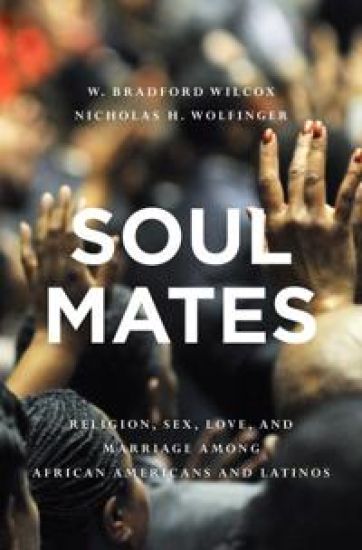
In 1994, David Hernandez, a small-time drug-dealer in Spanish Harlem, got out of the drug business and turned his life over to God. After he joined Victory Chapel - a vibrant Bronx-based Pentecostal church - he saw his life change in many ways: today he is a member of the NYPD, married, the father of three, and still an active member of his church. David Hernandez is just one of the many individuals whose stories inform Soul Mates, which draws on both broad national surveys and in-depth interviews to paint a detailed portrait of the largely positive influence exercised by churches on relationships and marriage among African Americans and Latinos. Soul Mates shines a much-needed spotlight on the lives of strong and happy minority couples. They find that both married and unmarried minority couples who attend church together are significantly more likely to enjoy happy relationships than black and Latino couples who do not regularly attend. Churches serving these communities, the authors argue, promote a code of decency, encompassing hard work, temperance, and personal responsibility, that benefits black and Latino families. Drawing on a wide range of sources, Wilcox and Wolfinger provide a compelling look at faith and family life among blacks and Latinos. The book offers a wealth of critical insight into the effect of religion on minority relationships, as well as the unique economic and cultural challenges facing African American and Latino families in twenty-first-century America.
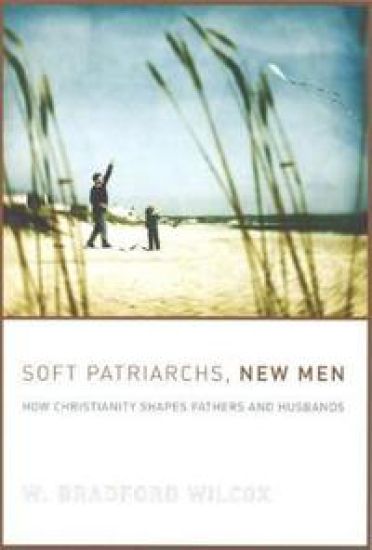
In the wake of ever-changing family values, how have the stances of evangelical and mainline Protestant churches toward marriage and parenting influenced the husbands and fathers that fill their pews? To answer that question this work examines the ideologies produced by Protestant churches since the 1950s. According to W. Bradford Wilcox there are fundamental differences between the family ideologies offered by evangelical and mainline churches. But these do not translate into large differences in family behavior between evangelical and mainline Protestant men who are married with children. Mainline Protestant men, he contends, are "new men" who take a more egalitarian approach to the division of household labor than their conservative peers and a more involved approach to parenting than men with no religious affiliation. Evangelical Protestant men, meanwhile, are "soft patriarchs" - not as authoritarian as some would expect and given to being more emotional and dedicated to their wives and children than both their mainline and secular counterparts. Thus, Wilcox contends that religion domesticates men in ways that make them more responsive to the aspirations and needs of their immediate families.
In the wake of ever-changing family values, how have the stances of evangelical and mainline Protestant churches toward marriage and parenting influenced the husbands and fathers that fill their pews? To answer that question this work examines the ideologies produced by Protestant churches since the 1950s. According to W. Bradford Wilcox there are fundamental differences between the family ideologies offered by evangelical and mainline churches. But these do not translate into large differences in family behavior between evangelical and mainline Protestant men who are married with children. Mainline Protestant men, he contends, are "new men" who take a more egalitarian approach to the division of household labor than their conservative peers and a more involved approach to parenting than men with no religious affiliation. Evangelical Protestant men, meanwhile, are "soft patriarchs" - not as authoritarian as some would expect and given to being more emotional and dedicated to their wives and children than both their mainline and secular counterparts. Thus, Wilcox contends that religion domesticates men in ways that make them more responsive to the aspirations and needs of their immediate families.