Kirjojen hintavertailu. Mukana 12 595 353 kirjaa ja 12 kauppaa.

Kirjailija

W. E. B. Du Bois

Kirjat ja teokset yhdessä paikassa: 280 kirjaa, julkaisuja vuosilta 1899-2026, suosituimpien joukossa The Souls of Black Folk: Introduction by Arnold Rampersad. Vertaile teosten hintoja ja tarkista saatavuus suomalaisista kirjakaupoista.

Mukana myös kirjoitusasut: W E B Du Bois, W.E.B. Du Bois, W.E.B Du Bois

280 kirjaa

Kirjojen julkaisuhaarukka 1899-2026.

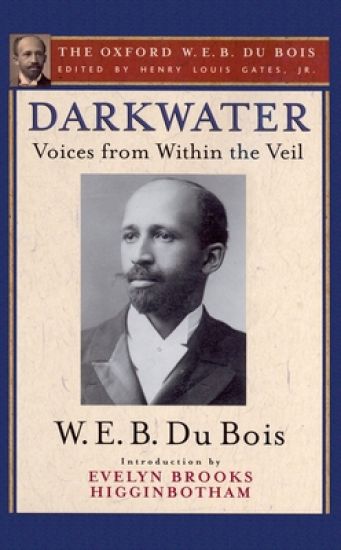
Darkwater (The Oxford W. E. B. Du Bois)

Darkwater (The Oxford W. E. B. Du Bois)

W. E. B. Du Bois

Oxford University Press Inc
2016
sidottu
W. E. B. Du Bois was a public intellectual, sociologist, and activist on behalf of the African American community. He profoundly shaped black political culture in the United States through his founding role in the NAACP, as well as internationally through the Pan-African movement. Du Bois's sociological and historical research on African-American communities and culture broke ground in many areas, including the history of the post-Civil War Reconstruction period. Du Bois was also a prolific author of novels, autobiographical accounts, innumerable editorials and journalistic pieces, and several works of history. Considered a sequel to Du Bois's wildly popular The Souls of Black Folks, Darkwater revisits many of the same themes with a more militant edge, even revising previously published essays and poems to include in this newer volume. Published in 1920, Darkwater focuses on the political climate following World War I. In ten carefully crafted chapters, Du Bois explores the important issues of that period- labor, capital, politics, gender, education, and international relations-in tandem with an overarching theme of race. Blending lyrical autobiography with political thoughts and even poetry, Du Bois makes a powerful, forceful argument regarding race and the color line. With a series introduction by editor Henry Louis Gates, Jr., and an introduction by Evelyn Brooks Higginbotham, this edition is essential for anyone interested in African American history.
Black Folk Then and Now (The Oxford W.E.B. Du Bois)

Black Folk Then and Now (The Oxford W.E.B. Du Bois)

W. E. B. Du Bois; Wilson J. Moses

Oxford University Press Inc
2014
nidottu
W. E. B. Du Bois was a public intellectual, sociologist, and activist on behalf of the African American community. He profoundly shaped black political culture in the United States through his founding role in the NAACP, as well as internationally through the Pan-African movement. Du Bois's sociological and historical research on African-American communities and culture broke ground in many areas, including the history of the post-Civil War Reconstruction period. Du Bois was also a prolific author of novels, autobiographical accounts, innumerable editorials and journalistic pieces, and several works of history. In Black Folk Then and Now, W. E. B. Du Bois embarks on a mission to correct the omissions, misinterpretations, and deliberate lies he detected in previous depictions of black history. An exemplary revisionist exploration of history and sociology, this essay reflects Du Bois's lifelong mission to bring to light the truths of Black history and expose the African peoples' noble heritage. W. E. B. Du Bois writes extensively about the color line, which he believed at the time of publication to be the defining problem of the twentieth century. In 1946, following the Holocaust, Du Bois revised his arguments, reshaping them into the narrative we find in The World and Africa. With a series introduction by editor Henry Louis Gates, Jr., and an introduction by Wilson Moses, this edition is essential for anyone interested in African American history.
Graphic Classics Volume 22: African-American Classics

Graphic Classics Volume 22: African-American Classics

Langston Hughes; Zora Neale Hurston; W.E.B. Du Bois; Jean Toomer; Paul Laurence Dunbar; Alice Dunbar Nelson; Charles W. Chesnutt; Claude McKay; Florence Lewis Bentley; Frances E.W. Harper

Eureka Productions
2012
nidottu
African-American Classics presents great stories and poems from America"s earliest Black writers, illustrated by contemporary African-American artists. Featured are "Two Americans" by Florence Lewis Bentley, "The Goophered Grapevine" by Charles W. Chesnutt, "Becky" by Jean Toomer, two short plays by Zora Neale Hurston, and six more tales of humor and tragedy. Also featured are eleven poems, including Langston Hughes" "Danse Africaine" and "The Negro", plus Paul Laurence Dunbar"s "Sympathy" ("I know why the caged bird sings...")
The Souls of Black Folk: Introduction by Arnold Rampersad
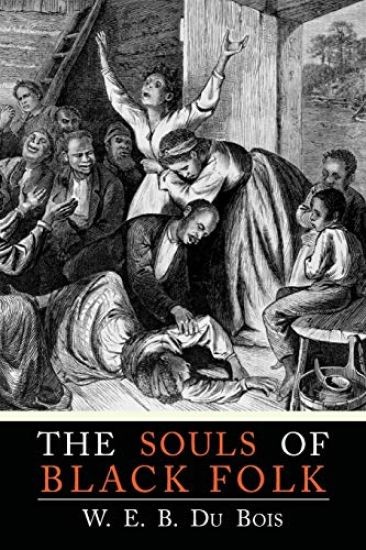
The Souls of Black Folk isboth a groundbreaking work of sociology and an influential cornerstone of African-American literature. From the moment it was published in 1903, this unique and stirring blend of history, essay, fiction, and memoir set the terms of the conversation about race in America and established W. E. B. Du Bois's enduring reputation as poet, prophet, and scholar. Du Bois famously named "the problem of the color line" that still haunts us today and diagnosed the "double consciousness" of a people forced to live behind a veil. In raising that veil, his book makes an impassioned claim for the power and potential of black culture, the accomplishments of its art, the depths of its spirituality, and its capacity for grandeur in thought and expression. With the lyricism of his prose and the ease with which he moves from the immediacy of journalism and sociology to the permanence of literature, Du Bois transforms a profound historical dilemma into the matter of art. But more importantly, by tracing the tragic past that led to the inequities of the present, he outlined the way forward in the struggle for freedom. It is a testament to his prescience that after more than a century his masterpiece retains its relevance and uncompromising power.
W. E. B. Du Bois: International Thought

W. E. B. Du Bois: International Thought

W. E. B. Du Bois

Cambridge University Press
2022
pokkari
W. E. B. Du Bois was one of the most significant American political thinkers of the twentieth century. This volume collects 24 of his essays and speeches on international themes, spanning the years 1900-1956. These key texts reveal Du Bois's distinctive approach to the problem of empire and demonstrate his continued importance in our current global context. The volume charts the development of Du Bois's anti-imperial thought, drawing attention to his persistent concern with the relationship between democracy and empire and illustrating the divergent inflections of this theme in the context of a shifting geopolitical terrain; unprecedented political crises, especially during the two world wars; and new opportunities for transnational solidarity. With a critical introduction and extensive editorial notes, W.E.B. Du Bois: International Thought conveys both the coherence and continuity of Du Bois's international thought across his long life and the tremendous range and variety of his preoccupations, intellectual sources, and interlocutors.
W. E. B. Du Bois: International Thought

W. E. B. Du Bois: International Thought

W. E. B. Du Bois

Cambridge University Press
2022
sidottu
W. E. B. Du Bois was one of the most significant American political thinkers of the twentieth century. This volume collects 24 of his essays and speeches on international themes, spanning the years 1900-1956. These key texts reveal Du Bois's distinctive approach to the problem of empire and demonstrate his continued importance in our current global context. The volume charts the development of Du Bois's anti-imperial thought, drawing attention to his persistent concern with the relationship between democracy and empire and illustrating the divergent inflections of this theme in the context of a shifting geopolitical terrain; unprecedented political crises, especially during the two world wars; and new opportunities for transnational solidarity. With a critical introduction and extensive editorial notes, W.E.B. Du Bois: International Thought conveys both the coherence and continuity of Du Bois's international thought across his long life and the tremendous range and variety of his preoccupations, intellectual sources, and interlocutors.
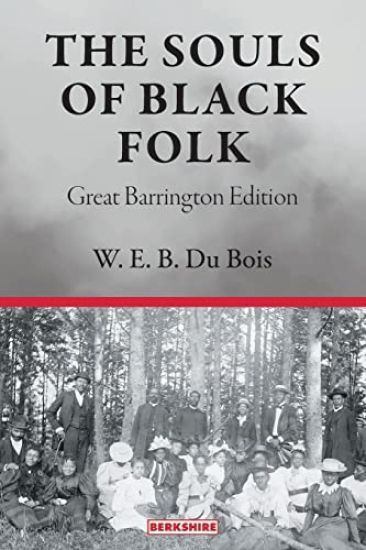
The Souls of Black Folk

The Souls of Black Folk

W E B Du Bois

Berkshire Publishing Group
2022
pokkari
The Souls of Black Folk is a founding text of the US civil rights movement, an inspiring work of literature and advocacy by a young man who drew on his own experience as a child in Great Barrington, Massachusetts, a teacher in the hills of Tennessee, a father grieving after the death of his baby son. It is a book compiled in haste but nonetheless a command performance. The fourteen vivid essays are political, philosophical, historical, and personal. The first three explore the history of slavery, following by six chapters of sociological analysis in Du Bois's resonant prose. The remainder of the book is replete with stories that show different facets of the Black experience and explain Du Bois's statement that "the problem of the twentieth century is the problem of the color-line." More than a century later, The Souls of Black Folk inspires us to find the courage and imagination to solve that problem in the twenty-first century.
W.E.B. Du Bois: Black Reconstruction (LOA #350)

W.E.B. Du Bois: Black Reconstruction (LOA #350)

W.E.B. Du Bois; Eric Foner; Henry Louis Gates

The Library of America
2021
sidottu
A collector's edition of the landmark study that changed our understanding of the Civil War's aftermath and the legacy of racism in America Upon publication in 1935, W.E.B. Du Bois's Black Reconstruction offered a revelatory new assessment of Reconstruction--and of American democracy itself. One of the towering African American thinkers and activists of the twentieth century, Du Bois brought all his intellectual powers to bear on America's post-Civil War era of political reorganization, a time when African American progress was met with a white supremacist backlash and ultimately yielded to the consolidation of the unjust social order underpinning Jim Crow. Black Reconstruction is a pioneering, exemplary work of revisionist scholarship that, in the wake of censorship toward Du Bois's characterization of Reconstruction by the Encyclopaedia Britannica, was written to debunk influential historians whose racist ideas and emphases had disfigured the historical record. The chief witness in Reconstruction, the emancipated slave himself, writes Du Bois, has been almost barred from court. His written Reconstruction record has been largely destroyed and nearly always neglected. In setting the record straight Du Bois produced what Eric Foner has called an indispensable book, a magisterial work of detached scholarship that is also imbued with passionate outrage. Here presented in a handsome hardcover edition, with an illuminating editor's introduction and an authoritative text, Black Reconstruction is joined, for the first time in a single volume with important writings that trace his thinking throughout his career about Reconstruction and its centrality in understanding American democracy.
W. E. B. Du Bois and The Souls of Black Folk

W. E. B. Du Bois and The Souls of Black Folk

W. E. B. Du Bois

Createspace Independent Publishing Platform
2018
nidottu
Souls of Black Folk is a classic work of American literature by W. E. B. Du Bois. It is a seminal work in the history of sociology, and a cornerstone of African-American literary history. The book, published in 1903, contains several essays on race, some of which the magazine Atlantic Monthly had previously published. To develop this work, Du Bois drew from his own experiences as an African American in the American society. Outside of its notable relevance in African-American history, The Souls of Black Folk also holds an important place in social science as one of the early works in the field of sociology. In "The Souls of Black Folk", Du Bois coined the term "double consciousness", which is the idea that black people must have two fields of vision at all times. They must be conscious of how they view themselves, as well as being conscious of how the world views them.
The Autobiography of W. E. B. Du Bois (The Oxford W. E. B. Du Bois)
W. E. B. Du Bois was a public intellectual, sociologist, and activist on behalf of the African American community. He profoundly shaped black political culture in the United States through his founding role in the NAACP, as well as internationally through the Pan-African movement. Du Bois's sociological and historical research on African-American communities and culture broke ground in many areas, including the history of the post-Civil War Reconstruction period. Du Bois was also a prolific author of novels, autobiographical accounts, innumerable editorials and journalistic pieces, and several works of history. Published posthumously in 1968, The Autobiography of W. E. B. Du Bois is his last and most complete autobiography. Covering his life over almost a century of living in America, it's the closest thing we have to a true autobiography of this important scholar and activist. The book, broken up into three parts, delves into the 90-year-old Du Bois's thoughts on everything from his relationship with sex to his storied association with the NAACP to his political persecution during the Cold War years to his many travels abroad. As Du Bois writes, he takes the reader on a journey to "view my life as frankly and fully as I can." With a series introduction by editor Henry Louis Gates, Jr., and an introduction by Werner Sollors, this edition is essential for anyone interested in African American history.
The Gift of Black Folk (The Oxford W. E. B. Du Bois)

The Gift of Black Folk (The Oxford W. E. B. Du Bois)

W. E. B. Du Bois

Oxford University Press Inc
2016
sidottu
W. E. B. Du Bois was a public intellectual, sociologist, and activist on behalf of the African American community. He profoundly shaped black political culture in the United States through his founding role in the NAACP, as well as internationally through the Pan-African movement. Du Bois's sociological and historical research on African-American communities and culture broke ground in many areas, including the history of the post-Civil War Reconstruction period. Du Bois was also a prolific author of novels, autobiographical accounts, innumerable editorials and journalistic pieces, and several works of history. Published in 1924 in response to growing racial tensions, W. E. B. Du Bois's The Gift of Black Folk explores the contributions African Americans have made to American society, detailing the importance of racial diversity to the United States. Writing for a general audience, Du Bois employs a sweeping scope for his argument, covering the European discovery of America to the twentieth century. In doing so he works to prove that through African Americans' struggle for freedom and equality, they have most fully realized the goal of democracy. With a series introduction by editor Henry Louis Gates, Jr., and an introduction by Glenda Carpio, this edition is essential for anyone interested in African American history.

The Souls of Black Folk (The Oxford W. E. B. Du Bois)

The Souls of Black Folk (The Oxford W. E. B. Du Bois)

W. E. B. Du Bois; Arnold Rampersad

Oxford University Press Inc
2014
nidottu
W. E. B. Du Bois was a public intellectual, sociologist, and activist on behalf of the African American community. He profoundly shaped black political culture in the United States through his founding role in the NAACP, as well as internationally through the Pan-African movement. Du Bois's sociological and historical research on African-American communities and culture broke ground in many areas, including the history of the post-Civil War Reconstruction period. Du Bois was also a prolific author of novels, autobiographical accounts, innumerable editorials and journalistic pieces, and several works of history. "Herein lie buried many things which if read with patience may show the strange meaning of being black here in the dawning of the Twentieth Century." More than one hundred years after its first publication in 1903, The Souls of Black Folk remains possibly the most important book ever penned by a black American. This collection of previously published essays and one short story, on topics varying from history to sociology to music to religion, expounds on the African American condition and life behind the "Veil," the world outside of the white experience in America. This important collection holds a mirror up to the face of black America, revealing its complete form, slavery, Jim Crow, and all. With a series introduction by editor Henry Louis Gates, Jr., and an introduction by Arnold Rampersad, this edition is essential for anyone interested in African American history.

Black Reconstruction in America (The Oxford W. E. B. Du Bois)

Black Reconstruction in America (The Oxford W. E. B. Du Bois)

W. E. B. Du Bois; David Levering Lewis

Oxford University Press Inc
2014
nidottu
W. E. B. Du Bois was a public intellectual, sociologist, and activist on behalf of the African American community. He profoundly shaped black political culture in the United States through his founding role in the NAACP, as well as internationally through the Pan-African movement. Du Bois's sociological and historical research on African-American communities and culture broke ground in many areas, including the history of the post-Civil War Reconstruction period. Du Bois was also a prolific author of novels, autobiographical accounts, innumerable editorials and journalistic pieces, and several works of history. Black Reconstruction in America tells and interprets the story of the twenty years of Reconstruction from the point of view of newly liberated African Americans. Though lambasted by critics at the time of its publication in 1935, Black Reconstruction has only grown in historical and literary importance. In the 1960s it joined the canon of the most influential revisionist historical works. Its greatest achievement is weaving a credible, lyrical historical narrative of the hostile and politically fraught years of 1860-1880 with a powerful critical analysis of the harmful effects of democracy, including Jim Crow laws and other injustices. With a series introduction by editor Henry Louis Gates, Jr., and an introduction by David Levering Lewis, this edition is essential for anyone interested in African American history.

The Autobiography of W. E. B. Du Bois (The Oxford W. E. B. Du Bois)

The Autobiography of W. E. B. Du Bois (The Oxford W. E. B. Du Bois)

W. E. B. Du Bois; Werner Sollors

Oxford University Press Inc
2014
nidottu
W. E. B. Du Bois was a public intellectual, sociologist, and activist on behalf of the African American community. He profoundly shaped black political culture in the United States through his founding role in the NAACP, as well as internationally through the Pan-African movement. Du Bois's sociological and historical research on African-American communities and culture broke ground in many areas, including the history of the post-Civil War Reconstruction period. Du Bois was also a prolific author of novels, autobiographical accounts, innumerable editorials and journalistic pieces, and several works of history. Published posthumously in 1968, The Autobiography of W. E. B. Du Bois is his last and most complete autobiography. Covering his life over almost a century of living in America, it's the closest thing we have to a true autobiography of this important scholar and activist. The book, broken up into three parts, delves into the 90-year-old Du Bois's thoughts on everything from his relationship with sex to his storied association with the NAACP to his political persecution during the Cold War years to his many travels abroad. As Du Bois writes, he takes the reader on a journey to "view my life as frankly and fully as I can." With a series introduction by editor Henry Louis Gates, Jr., and an introduction by Werner Sollors, this edition is essential for anyone interested in African American history.
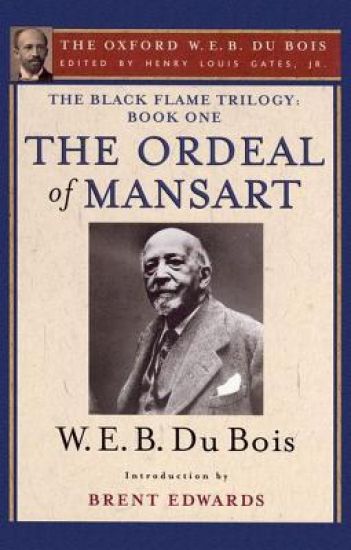
The Ordeal of Mansart (The Oxford W. E. B. Du Bois)

The Ordeal of Mansart (The Oxford W. E. B. Du Bois)

W. E. B. Du Bois; Brent Hayes Edwards

Oxford University Press Inc
2014
nidottu
W. E. B. Du Bois was a public intellectual, sociologist, and activist on behalf of the African American community. He profoundly shaped black political culture in the United States through his founding role in the NAACP, as well as internationally through the Pan-African movement. Du Bois's sociological and historical research on African-American communities and culture broke ground in many areas, including the history of the post-Civil War Reconstruction period. Du Bois was also a prolific author of novels, autobiographical accounts, innumerable editorials and journalistic pieces, and several works of history. Du Bois called his epic Black Flame trilogy a fiction of interpretation. It acts as a representative biography of African American history by following one man, Manuel Mansart, from his birth in 1876 until his death. The Black Flame attempts to use this historical fiction of interpretation to recast and revisit the African American experience. Readers will appreciate The Black Flame trilogy as a clear articulation of Du Bois's perspective at the end of his life. The first book in this profound trilogy, The Ordeal of Mansart, chronicles Mansart's early life during the time of Reconstruction through his involvement in black education in Atlanta. Written with lyrical, vivid prose and with accurate historical context, The Ordeal of Mansart offers readers a peek into African American life and struggle through the lens of Mansart's humble life. With a series introduction by editor Henry Louis Gates, Jr., and an introduction by Brent Hayes Edwards, this edition is essential for anyone interested in African American literature.