
Kirjailija
W. H. Auden
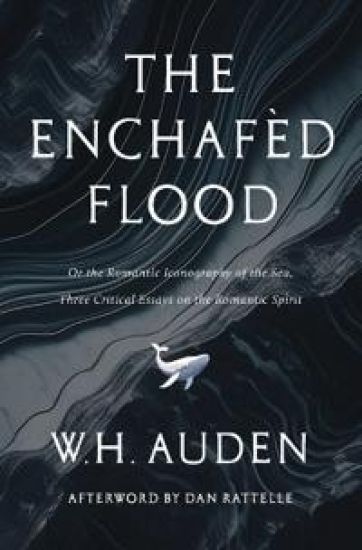
Kirjat ja teokset yhdessä paikassa: 48 kirjaa, julkaisuja vuosilta 1977-2026, suosituimpien joukossa The Enchafèd Flood. Vertaile teosten hintoja ja tarkista saatavuus suomalaisista kirjakaupoista.
Mukana myös kirjoitusasut: W.H. Auden, W H Auden
48 kirjaa
Kirjojen julkaisuhaarukka 1977-2026.
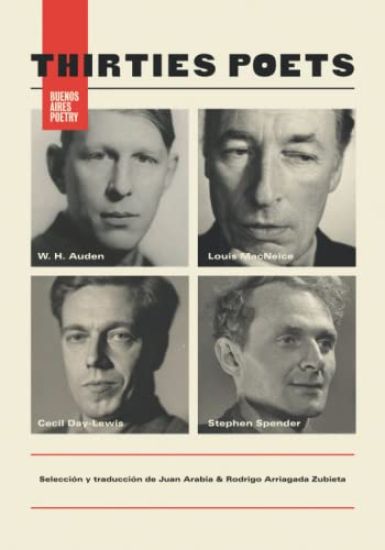
Se llam Thirties (as como Auden Group y War Generation...) a un conjunto de poetas ingleses de la d cada del 30 (W. H. Auden, Louis MacNeice, Cecil Day-Lewis, Stephen Spender, entre otros), que asumi un rol activo frente a la contingencia de una sociedad en crisis, con variables colectivas dram ticas y urgentes. Este grupo era, por un lado, ep gono de la Primera Guerra Mundial, con su r mora de cerca de diez millones de muertos; por el otro, antesala de la Segunda, con sus siguientes millones de vidas por cobrar."Los Thirties" autores que hicieron propaganda de una poes a al servicio del socialismo La burgues a tiene que esperar un poco de dolor, una penitencia ].A. T. Tolley, en The poetry of the Thirties, sencillamente dec a hacia 1975: "Un cambio que est asociado en los nuevos poetas de los a os treinta: la aparici n de una preocupaci n por temas pol ticos".Para una mayor indagaci n cr tica, se recomienda tanto el libro de Tolley (London: Gollancz, 1975), as como el estudio de Desmond Ernest Stewart: Poets of the thirties, London, Routledge & K. Paul, 19692.Hoy en d a, sin embargo, estas conexiones pueden despreciarse. En un homenaje a Louis MacNeice, Auden escribi "Desde un punto de vista literario, el v nculo period stico contempor neo de los nombres de Auden, Day-Lewis, MacNeice, Spender, es y siempre fue absurdo". Y Day-Lewis, en su autobiograf a (The buried day), fue a n m s enf tico: "Aunque Auden, Spender, MacNeice y yo nos conocemos personalmente desde mediados de los a os treinta, ninguno de nosotros ni siquiera hab a conocido a los otros tres hasta despu s de la publicaci n de New Signatures (...). No sab amos que ramos un movimiento hasta que los cr ticos nos dijeron que lo ramos".Sin embargo, no s lo una poca los se ala. Adem s de pasar por la Universidad de Oxford, estos poetas sintieron la obligaci n social de preocuparse por los asuntos p blicos, adoptando de esta forma una dicci n m s cercana para todos, adecuada a la experiencia y representaciones que el mundo le proporcionaba a sus s bditos.Adem s, tanto Day-Lewis (que le dedica a Auden su libro The Magnetic Mountain, as como el poema "Epilogue: For W. H. Auden") como MacNeice (en "Postcript to Iceland: for W. H. Auden") as como Spender (en "One More New Bocthed Beginning", donde recuerda a MacNeice) comparten algo m s que una etiqueta de la cr tica, que se hace notoriamente visible en sus trabajos po ticos: la autorreferencialidad de un espec fico proyecto.Dicho de otro modo, estos poetas (pese a sus individualidades) estaban inmersos dentro de una interacci n mucho m s amplia, como bien anota Desmond Ernest Stewart en materia de industria cultural: "Faber & Faber lideraron el campo en la publicaci n de muchos de los principales poetas, dramaturgos, arquitectos y cineastas de los a os treinta, hasta tal punto que Faber & Faber mismo podr a ser considerado como parte del fen meno de los a os 30. En cierto modo, esto fue un desarrollo sorprendente, ya que las opiniones pol ticas de los escritores en muchos casos deben haber ido directamente en contra de las creencias pol ticas de T. S. Eliot, la influencia literaria dominante en Faber & Faber durante este per odo, y de Geoffrey Faber, el fundador de la firma".Si bien la lista podr a haber sido m s inclusiva, por ejemplo Tolley recuerda a otros poetas de Oxford, como Rex Warner, Norman Cameron o John Betjeman, "the big four", forjan una metaliteratura, capaz de ser le da o analizada en conjunto.
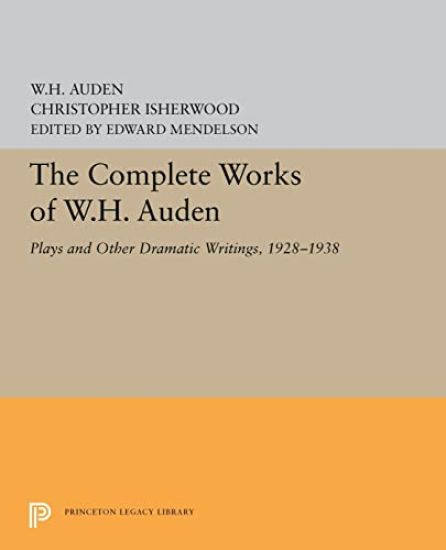
The Complete Works of W.H. Auden
W. H. Auden; Christopher Isherwood
PRINCETON UNIVERSITY PRESS
2019
sidottu
This volume contains Auden and Christopher Isherwood's dramatic extravaganzas The Dog Beneath the Skin, the Ascent of F 6, and On the Frontier. It also includes the two versions of Paid on Both Sides--which are so different as to constitute two works--and Auden's satiric revue The Dance of Death. Two plays appear in print for the first time, Auden and Isherwood's The Enemies of a Bishop and Auden's The Chase. Also included are Auden's prose and verse written for doucmentary films, a cabaret sketch, and an unpublished radio script. Many of the texts include poems by the young Auden that have never been published before. The extensive historical and textual notes trace the complex history of the production and revision of these plays, including full texts and rewritten scenes.During the years when these works were created, Auden moved from a "poetry of isolation" to more expansive and public writing. After he left Oxford at age twenty-one, during the summer of 1928, he wrote the tragicomic charade Paid on Both Sides. During the next ten years, until he left England for America, he created the increasingly ambitious works for stage, film, and broadcast that appear in this volume. The most important of these plays were written in collaboration with Isherwood. As the world political situation worsened, Isherwood and Auden's style combined the energy of popular entertainment with the urgency of sacramental ritual.Edard Mendelson is Professor of English and Comparative Literature at Columbia University and the author of Early Auden (Viking). He is the editor of two volumes of Aduen's poetry, Collected Poems (Random House) and The English Auden (Random House).Originally published in 1988.The Princeton Legacy Library uses the latest print-on-demand technology to again make available previously out-of-print books from the distinguished backlist of Princeton University Press. These editions preserve the original texts of these important books while presenting them in durable paperback and hardcover editions. The goal of the Princeton Legacy Library is to vastly increase access to the rich scholarly heritage found in the thousands of books published by Princeton University Press since its founding in 1905.
The Complete Works of W.H. Auden
W. H. Auden; Christopher Isherwood
Princeton University Press
2019
pokkari
This volume contains Auden and Christopher Isherwood's dramatic extravaganzas The Dog Beneath the Skin, the Ascent of F 6, and On the Frontier. It also includes the two versions of Paid on Both Sides--which are so different as to constitute two works--and Auden's satiric revue The Dance of Death. Two plays appear in print for the first time, Auden and Isherwood's The Enemies of a Bishop and Auden's The Chase. Also included are Auden's prose and verse written for doucmentary films, a cabaret sketch, and an unpublished radio script. Many of the texts include poems by the young Auden that have never been published before. The extensive historical and textual notes trace the complex history of the production and revision of these plays, including full texts and rewritten scenes.During the years when these works were created, Auden moved from a "poetry of isolation" to more expansive and public writing. After he left Oxford at age twenty-one, during the summer of 1928, he wrote the tragicomic charade Paid on Both Sides. During the next ten years, until he left England for America, he created the increasingly ambitious works for stage, film, and broadcast that appear in this volume. The most important of these plays were written in collaboration with Isherwood. As the world political situation worsened, Isherwood and Auden's style combined the energy of popular entertainment with the urgency of sacramental ritual.Edard Mendelson is Professor of English and Comparative Literature at Columbia University and the author of Early Auden (Viking). He is the editor of two volumes of Aduen's poetry, Collected Poems (Random House) and The English Auden (Random House).Originally published in 1988.The Princeton Legacy Library uses the latest print-on-demand technology to again make available previously out-of-print books from the distinguished backlist of Princeton University Press. These editions preserve the original texts of these important books while presenting them in durable paperback and hardcover editions. The goal of the Princeton Legacy Library is to vastly increase access to the rich scholarly heritage found in the thousands of books published by Princeton University Press since its founding in 1905.
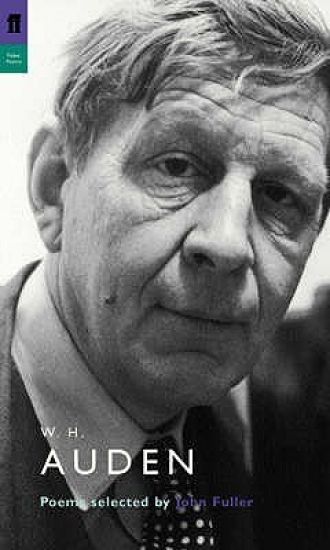
W. H. Auden was born in York in 1907. His first full-length collection, Poems, was published by T. S. Eliot at Faber and Faber in 1930. The many volumes he published thereafter included poetry, plays, essays and libretti, and his ceaseless experimentation, consummate craftsmanship and originality established him as one of the most influential poets of the twentieth century. He died in 1973.
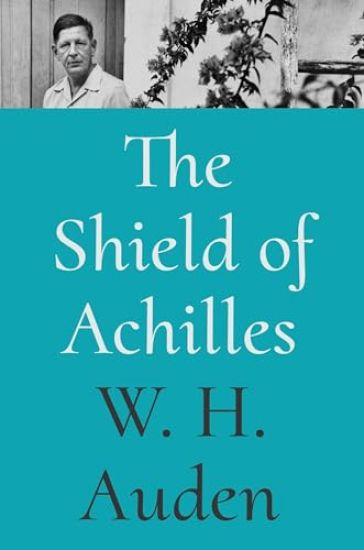
Back in print for the first time in decades, Auden’s National Book Award–winning poetry collection, in a critical edition that introduces it to a new generation of readers The Shield of Achilles, which won the National Book Award in 1956, may well be W. H. Auden’s most important, intricately designed, and unified book of poetry. In addition to its famous title poem, which reimagines Achilles’s shield for the modern age, when war and heroism have changed beyond recognition, the book also includes two sequences—“Bucolics” and “Horae Canonicae”—that Auden believed to be among his most significant work. Featuring an authoritative text and an introduction and notes by Alan Jacobs, this volume brings Auden’s collection back into print for the first time in decades and offers the only critical edition of the work. As Jacobs writes in the introduction, Auden’s collection “is the boldest and most intellectually assured work of his career, an achievement that has not been sufficiently acknowledged.” Describing the book’s formal qualities and careful structure, Jacobs shows why The Shield of Achilles should be seen as one of Auden’s most central poetic statements—a richly imaginative, beautifully envisioned account of what it means to live, as human beings do, simultaneously in nature and in history.
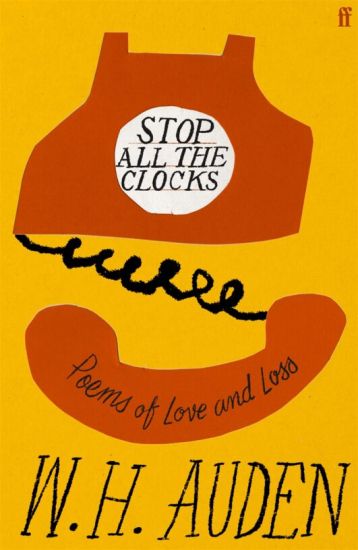
Stop All the Clocks presents a selection of his best known, most lucid poems, poems that pitch human frailty against a persisting desire for love and belonging. Here are the anxieties that beset our waking and sleeping hours: the delirium of desire, the torture of unrequited love, the trauma of loss and displacement.
Back in print for the first time in decades, Auden’s National Book Award–winning poetry collection, in a critical edition that introduces it to a new generation of readersThe Shield of Achilles, which won the National Book Award in 1956, may well be W. H. Auden’s most important, intricately designed, and unified book of poetry. In addition to its famous title poem, which reimagines Achilles’s shield for the modern age, when war and heroism have changed beyond recognition, the book also includes two sequences—“Bucolics” and “Horae Canonicae”—that Auden believed to be among his most significant work. Featuring an authoritative text and an introduction and notes by Alan Jacobs, this volume brings Auden’s collection back into print for the first time in decades and offers the only critical edition of the work.As Jacobs writes in the introduction, Auden’s collection “is the boldest and most intellectually assured work of his career, an achievement that has not been sufficiently acknowledged.” Describing the book’s formal qualities and careful structure, Jacobs shows why The Shield of Achilles should be seen as one of Auden’s most central poetic statements—a richly imaginative, beautifully envisioned account of what it means to live, as human beings do, simultaneously in nature and in history.
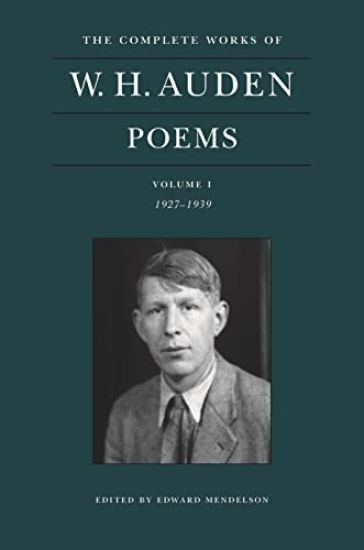
The Complete Works of W. H. Auden: Poems, Volume I
W. H. Auden
PRINCETON UNIVERSITY PRESS
2022
sidottu
The first of two volumes of the eagerly anticipated first complete edition of Auden’s poems—including some that have never been published beforeW. H. Auden (1907–1973) is one of the greatest poets of the twentieth century, and his reputation has only grown since his death. Published on the hundredth anniversary of the year in which he began to write poetry, this is the first of two volumes of the first complete edition of Auden’s poems. Edited, introduced, and annotated by renowned Auden scholar Edward Mendelson, this definitive edition includes all the poems Auden wrote for publication, in their original texts, and all his later revised versions, as well as poems and songs he never published, some of them printed here for the first time.This volume traces the development of Auden’s early career, and contains all the poems, including juvenilia, that he published or submitted for publication, from his first printed work, in 1927, at age twenty, through the poems he wrote during his first months in America, in 1939, when he was thirty-two. The book also includes poems that Auden wrote during his adult career with the expectation that he might publish them, but which he never did; song lyrics that he wrote to be set to music by Benjamin Britten, but which he never put into print; and verses that he wrote for magazines at schools where he was teaching.The main text presents the poems in their original published versions. The notes include the extensive revisions that he made to his poems over the course of his career, and provide explanations of obscure references.The second volume of this edition, Poems, Volume 2: 1940–1973, is also available.
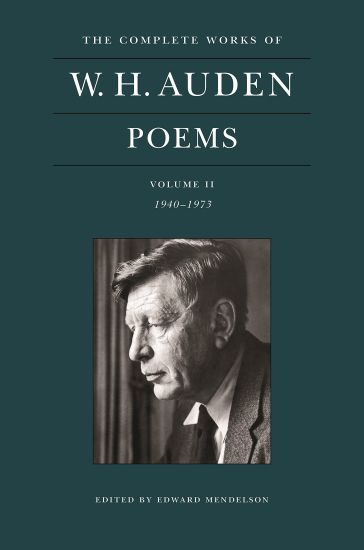
The Complete Works of W. H. Auden: Poems, Volume II
W. H. Auden
PRINCETON UNIVERSITY PRESS
2022
sidottu
The second of two volumes of the eagerly anticipated first complete edition of Auden’s poems—including some that have never been published beforeW. H. Auden (1907–1973) is one of the greatest poets of the twentieth century, and his reputation has only grown since his death. Published on the hundredth anniversary of the year in which he began to write poetry, this is the second volume of the first complete edition of Auden’s poems. Edited, introduced, and annotated by renowned Auden scholar Edward Mendelson, this definitive edition includes all the poems Auden wrote for publication, in their original texts, and all his later revised versions, as well as poems and songs he never published, some of them printed here for the first time.This volume follows Auden as a mature artist, containing all the poems that he published or submitted for publication from 1940 until his death in 1973, at age sixty-six. This includes all his poetry collections from this period, from The Double Man (1941) through Epistle to a Godson (1972). The volume also features an edited version of his incomplete, posthumous book Thank You, Fog, as well as his self-designated “posthumous” poems.The main text presents the poems in their original published versions. The notes include the extensive revisions that he made to his poems over the course of his career, and provide explanations of obscure references.The first volume of this edition, Poems, Volume I: 1927–1939, is also available.
“Sens-Plastique has now been a companion of mine for nearly 20 years, and so far as I am concerned, Malcolm de Chazal is much the most original and interesting French writer to emerge since the war.” –W.H. Auden After seeing an azalea looking at him in the Curepipe Botanic Gardens (and realizing that he himself was becoming a flower), Malcolm de Chazal began composing what would eventually become his unclassifiable masterpiece, Sens-Plastique, which would take its final form in 1948. Containing over 2,000 aphorisms, axioms and allegories, the book was immediately hailed as a work of genius by André Breton, Francis Ponge, Jean Dubuffet and Georges Braque. Embraced by the Surrealists as one of their own, Chazal chose to avoid all literary factions and steadfastly anchored himself in his solitary life as a bachelor mystic on the island nation of Mauritius, where he would proceed to write books and paint for the rest of his life. Sens-Plastique employs a strange humor and an alchemical sensibility to offer up an utterly original world vision that unifies neo-science, philosophy and poetry into a new form of writing. Mapping every human body part, facial expression and emotion onto the natural kingdom through subconscious thinking, Chazal presents a world in which humankind is not just made in the image of God, but Nature is made in the image of humankind: a sensual, synesthetic world in which everything in the universe, be it animal, vegetable, mineral or human, employs a spiritual copula. Malcolm de Chazal (1902–81) was a Mauritian writer and painter. Forsaking a career in the sugar industry, he spent the majority of his life in a solitary, mystical pursuit of the continuity between man and nature.
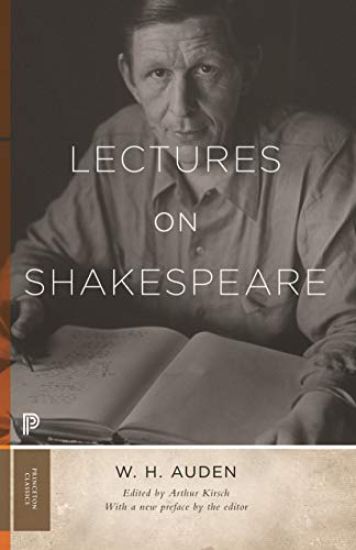
From one of the great modern writers, the acclaimed lectures in which he draws on a lifetime of experience to take the measure of Shakespeare's plays and sonnets "W. H. Auden, poet and critic, will conduct a course on Shakespeare at the New School for Social Research beginning Wednesday. Mr. Auden . . . proposes to read all Shakespeare's plays in chronological order." So the New York Times reported on September 27, 1946, giving notice of a rare opportunity to hear one of the century's great poets discuss at length one of the greatest writers of all time. Reconstructed by Arthur Kirsch, these lectures offer remarkable insights into Shakespeare's plays and sonnets while also adding immeasurably to our understanding of Auden.
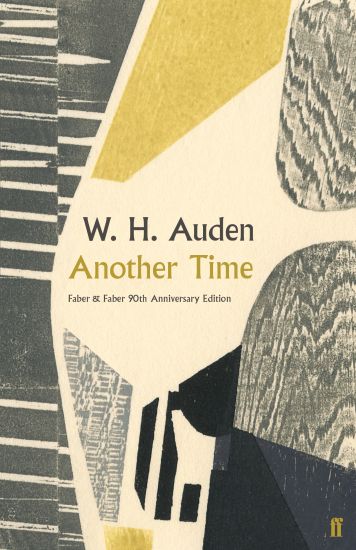
Another Time was the first volume that Auden published after his departure to America with Christopher Isherwood in January 1939. It was dedicated to Chester Kallman. The poems, some of which date from the early thirties, are about people, places and the intellectual climate of the times, and they show greater variety of tone and technique than in any previous book of Auden's. Some of his most famous and often quoted (or misquoted) lines appear in their original form, including the text of two poems in particular - 'Spain 1937' and 'September 1,1939' - that he later altered or repudiated.This beautifully designed edition forms part of a series of ten titles celebrating Faber's publishing over the decades.
In the summer of 1936, W. H. Auden and Louis MacNeice visited Iceland on commission to write a travel book, but found themselves capturing concerns on a scale that were far more international. 'Though writing in a "holiday" spirit,' commented Auden, 'its authors were all the time conscious of a threatening horizon to their picnic - world-wide unemployment, Hitler growing everyday more powerful and a world-war more inevitable.' The result is the remarkable Letters from Iceland, a collaboration in poetry and prose, reportage and correspondence, published in 1937 with the Spanish Civil War newly in progress, beneath the shadow of looming world war.
When The Orators was originally published in 1932 it was described by Poetry Review as 'something as important as the appearance of Mr Eliot's poems fifteen years ago'. A long poem written in both prose and verse, it was a powerful addition to the canon of modernist poetry.
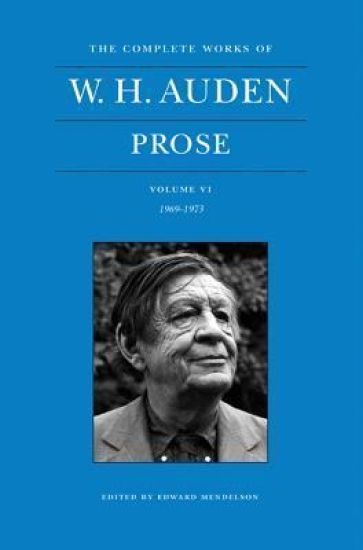
The Complete Works of W. H. Auden: Prose, Volume VI
W. H. Auden
PRINCETON UNIVERSITY PRESS
2015
sidottu
This sixth and final volume of W. H. Auden's prose displays a great writer's mind in its full maturity of wisdom, learning, and emotional and moral intelligence. It contains the full text of the only book that he regarded as an autobiography, A Certain World, in which he portrayed himself by selecting and commenting on writings by others that most affected him throughout his life. It also features late essays and reviews that in many cases present lightly disguised autobiographies, among them the most detailed account of his sexuality, in "Papa Was a Wise Old Sly-Boots." The appendixes gather lectures and public talks that are otherwise unpublished or unavailable. Edward Mendelson's comprehensive notes provide biographical and historical explanations of obscure references. The text includes corrections and revisions that Auden marked in personal copies of his work and that are published here for the first time.
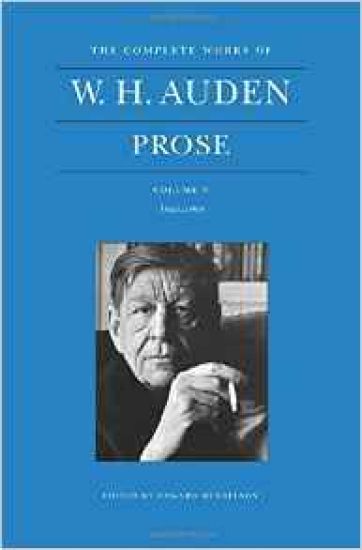
The Complete Works of W. H. Auden: Prose, Volume V
W. H. Auden
PRINCETON UNIVERSITY PRESS
2015
sidottu
This fifth volume of W. H. Auden's prose displays a great writer's mind in its full maturity of wisdom, learning, and emotional and moral intelligence. It contains his most personally revealing essays, the ones in which he wrote for the first time about the full history of his family life, his sexuality, and the development of his moral and religious beliefs. Among these works are the lightly disguised autobiographies that appear in long essays on the Protestant mystics and on Shakespeare's sonnets. The book also features the full text of his T. S. Eliot Memorial Lectures, Secondary Worlds, and many unpublished or unavailable lectures and speeches. Edward Mendelson's introduction and comprehensive notes provide biographical and historical explanations of obscure references. The text includes corrections and revisions that Auden marked in personal copies of his work and that are published here for the first time.
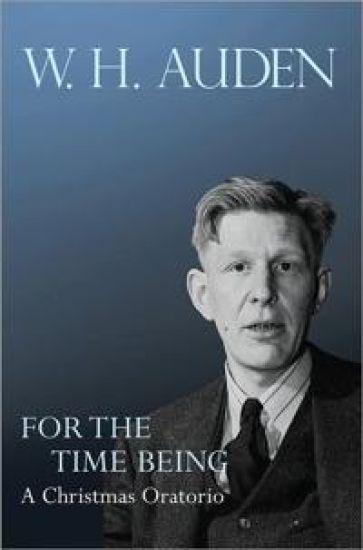
For the Time Being is a pivotal book in the career of one of the greatest poets of the twentieth century. W. H. Auden had recently moved to America, fallen in love with a young man to whom he considered himself married, rethought his entire poetic and intellectual equipment, and reclaimed the Christian faith of his childhood. Then, in short order, his relationship fell apart and his mother, to whom he was very close, died. In the midst of this period of personal crisis and intellectual remaking, he decided to write a poem about Christmas and to have it set to music by his friend Benjamin Britten. Applying for a Guggenheim grant, Auden explained that he understood the difficulty of writing something vivid and distinctive about that most cliched of subjects, but welcomed the challenge. In the end, the poem proved too long and complex to be set by Britten, but in it we have a remarkably ambitious and poetically rich attempt to see Christmas in double focus: as a moment in the history of the Roman Empire and of Judaism, and as an ever-new and always contemporary event for the believer. For the Time Being is Auden's only explicitly religious long poem, a technical tour de force, and a revelatory window into the poet's personal and intellectual development. This edition provides the most accurate text of the poem, a detailed introduction by Alan Jacobs that explains its themes and sets the poem in its proper contexts, and thorough annotations of its references and allusions.
Auden's electrifying, enigmatic and extraordinarily influential debut collection was published by Faber in 1930, and simply entitled Poems. For the second edition (1933) he omitted seven items and added new poems in their place. Available again for the first time since 1950, this reissue follows the text of the second edition.
In the early 1950s Auden began planning a prose volume that would bring together some of his published essays, lectures, and reviews, together with newly-written notes and aphorisms. In 1956 he was elected Professor of Poetry at Oxford, and The Dyer's Hand appeared in 1962, combining earlier material with revised versions of many of his Oxford lectures: The result is one of Auden's most original works, his only book of prose devised as a single cohesive work about disparate subjects, and containing - as he remarked at the time - 'all the autobiography I am willing to make public'.'Speaking for myself, the questions which interest me most when reading a poem are two. The first is technical: "Here is a verbal contraption. How does it work?" The second is, in the broadest sense, moral: "What kind of a guy inhabits this poem? What is his notion of the good life or the good place? His notion of the Evil One? What does he conceal from the reader? What does he conceal even from himself?" - W. H. Auden (inaugural lecture as Professor of Poetry at Oxford, June 1956)