Kirjojen hintavertailu. Mukana 12 152 606 kirjaa ja 12 kauppaa.

Kirjailija

W.H. Inmon

Kirjat ja teokset yhdessä paikassa: 8 kirjaa, julkaisuja vuosilta 2001-2019, suosituimpien joukossa Database Design: Know It All. Vertaile teosten hintoja ja tarkista saatavuus suomalaisista kirjakaupoista.

Mukana myös kirjoitusasut: W. H. Inmon, W H Inmon

8 kirjaa

Kirjojen julkaisuhaarukka 2001-2019.

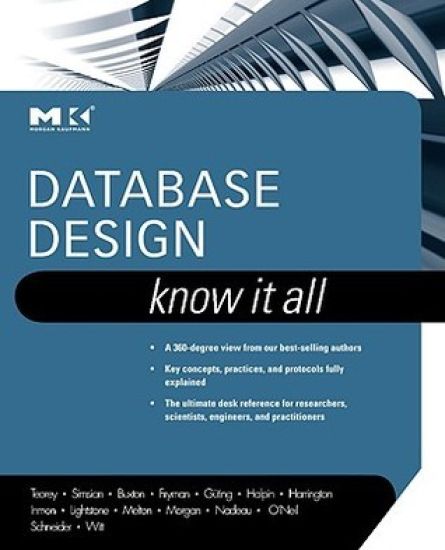
Database Design: Know It All

Database Design: Know It All

Toby J. Teorey; Tony Morgan; Thomas P. Nadeau; Bonnie O'Neil; Elizabeth O'Neil; Patrick O'Neil; Markus Schneider; Graeme Simsion; Graham Witt; Stephen Buxton; Lowell Fryman; Ralf Hartmut Güting; Terry Halpin; Jan L. Harrington; W.H. Inmon; Sam S. Lightstone; Jim Melton

Morgan Kaufmann Publishers In
2008
sidottu
This book brings all of the elements of database design together in a single volume, saving the reader the time and expense of making multiple purchases. It consolidates both introductory and advanced topics, thereby covering the gamut of database design methodology ? from ER and UML techniques, to conceptual data modeling and table transformation, to storing XML and querying moving objects databases. The proposed book expertly combines the finest database design material from the Morgan Kaufmann portfolio. Individual chapters are derived from a select group of MK books authored by the best and brightest in the field. These chapters are combined into one comprehensive volume in a way that allows it to be used as a reference work for those interested in new and developing aspects of database design. This book represents a quick and efficient way to unite valuable content from leading database design experts, thereby creating a definitive, one-stop-shopping opportunity for customers to receive the information they would otherwise need to round up from separate sources.
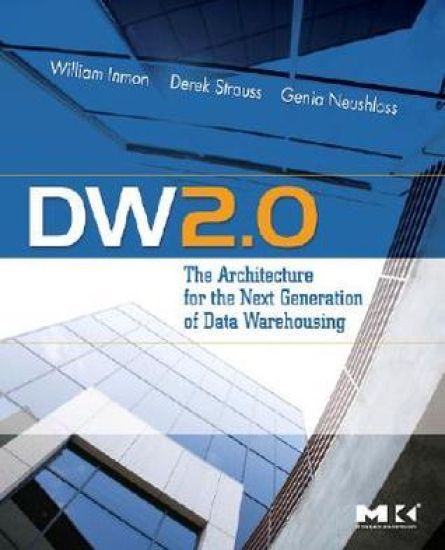
DW 2.0: The Architecture for the Next Generation of Data Warehousing

DW 2.0: The Architecture for the Next Generation of Data Warehousing

W.H. Inmon; Derek Strauss; Genia Neushloss

Morgan Kaufmann Publishers In
2008
nidottu
DW 2.0: The Architecture for the Next Generation of Data Warehousing is the first book on the new generation of data warehouse architecture, DW 2.0, by the father of the data warehouse. The book describes the future of data warehousing that is technologically possible today, at both an architectural level and technology level. The perspective of the book is from the top down: looking at the overall architecture and then delving into the issues underlying the components. This allows people who are building or using a data warehouse to see what lies ahead and determine what new technology to buy, how to plan extensions to the data warehouse, what can be salvaged from the current system, and how to justify the expense at the most practical level. This book gives experienced data warehouse professionals everything they need in order to implement the new generation DW 2.0. It is designed for professionals in the IT organization, including data architects, DBAs, systems design and development professionals, as well as data warehouse and knowledge management professionals.
Data Architecture: A Primer for the Data Scientist

Data Architecture: A Primer for the Data Scientist

W.H. Inmon; Daniel Linstedt; Mary Levins

Academic Press Inc
2019
nidottu
Over the past 5 years, the concept of big data has matured, data science has grown exponentially, and data architecture has become a standard part of organizational decision-making. Throughout all this change, the basic principles that shape the architecture of data have remained the same. There remains a need for people to take a look at the "bigger picture" and to understand where their data fit into the grand scheme of things. Data Architecture: A Primer for the Data Scientist, Second Edition addresses the larger architectural picture of how big data fits within the existing information infrastructure or data warehousing systems. This is an essential topic not only for data scientists, analysts, and managers but also for researchers and engineers who increasingly need to deal with large and complex sets of data. Until data are gathered and can be placed into an existing framework or architecture, they cannot be used to their full potential. Drawing upon years of practical experience and using numerous examples and case studies from across various industries, the authors seek to explain this larger picture into which big data fits, giving data scientists the necessary context for how pieces of the puzzle should fit together.
Data Architecture: A Primer for the Data Scientist

Data Architecture: A Primer for the Data Scientist

W.H. Inmon; Daniel Linstedt

Morgan Kaufmann Publishers In
2014
nidottu
Today, the world is trying to create and educate data scientists because of the phenomenon of Big Data. And everyone is looking deeply into this technology. But no one is looking at the larger architectural picture of how Big Data needs to fit within the existing systems (data warehousing systems). Taking a look at the larger picture into which Big Data fits gives the data scientist the necessary context for how pieces of the puzzle should fit together. Most references on Big Data look at only one tiny part of a much larger whole. Until data gathered can be put into an existing framework or architecture it can’t be used to its full potential. Data Architecture a Primer for the Data Scientist addresses the larger architectural picture of how Big Data fits with the existing information infrastructure, an essential topic for the data scientist. Drawing upon years of practical experience and using numerous examples and an easy to understand framework. W.H. Inmon, and Daniel Linstedt define the importance of data architecture and how it can be used effectively to harness big data within existing systems. You’ll be able to: Turn textual information into a form that can be analyzed by standard tools. Make the connection between analytics and Big Data Understand how Big Data fits within an existing systems environment Conduct analytics on repetitive and non-repetitive data
Building the Unstructured Data Warehouse

Building the Unstructured Data Warehouse

W H Inmon; Krish Krishnan

Technics Publications LLC
2011
sidottu
Learn essential techniques from data warehouse legend Bill Inmon on how to build the reporting environment your business needs now! Answers for many valuable business questions hide in text. How well can your existing reporting environment extract the necessary text from email, spreadsheets, and documents, and put it in a useful format for analytics and reporting? Transforming the traditional data warehouse into an efficient unstructured data warehouse requires additional skills from the analyst, architect, designer, and developer. This book will prepare you to successfully implement an unstructured data warehouse and, through clear explanations, examples, and case studies, you will learn new techniques and tips to successfully obtain and analyse text. Master these ten objectives: Build an unstructured data warehouse using the 11-step approach; Integrate text and describe it in terms of homogeneity, relevance, medium, volume, and structure; Overcome challenges including blather, the Tower of Babel, and lack of natural relationships; Avoid the Data Junkyard and combat the "Spiders Web"; Reuse techniques perfected in the traditional data warehouse and Data Warehouse 2.0, including iterative development; Apply essential techniques for textual Extract, Transform, and Load (ETL) such as phrase recognition, stop word filtering, and synonym replacement; Design the Document Inventory system and link unstructured text to structured data; Leverage indexes for efficient text analysis and taxonomies for useful external categorisation; Manage large volumes of data using advanced techniques such as backward pointers; Evaluate technology choices suitable for unstructured data processing, such as data warehouse appliances.
Business Metadata: Capturing Enterprise Knowledge

Business Metadata: Capturing Enterprise Knowledge

W.H. Inmon; Bonnie O'Neil; Lowell Fryman

Morgan Kaufmann Publishers In
2007
nidottu
Business Metadata: Capturing Enterprise Knowledge is the first book that helps businesses capture corporate (human) knowledge and unstructured data, and offer solutions for codifying it for use in IT and management. Written by Bill Inmon, one of the fathers of the data warehouse and well-known author, the book is filled with war stories, examples, and cases from current projects. It includes a complete metadata acquisition methodology and project plan to guide readers every step of the way, and sample unstructured metadata for use in self-testing and developing skills. This book is recommended for IT professionals, including those in consulting, working on systems that will deliver better knowledge management capability. This includes people in these positions: data architects, data analysts, SOA architects, metadata analysts, repository (metadata data warehouse) managers as well as vendors that have a metadata component as part of their systems or tools.
Building the Data Warehouse

Building the Data Warehouse

W. H. Inmon

Hungry Minds Inc,U.S.
2005
nidottu
Building the Data Warehouse provides a high-level, conceptual overview of the major components of data warehouse systems, as well as the core approaches used to design and build data warehouses. In this 4th edition, the author covers the latest developments in data warehousing, often developments he himself pioneered. New chapters cover: * Methods for handling unstructured data in a data warehouse. * Storing data across multiple storage media * The pros and cons of relational vs. multidimensional design * Measuring return on investment in planning data warehouse projects * Advanced topics, including data monitoring and testing As with previous editions, the book also continues to provide complete coverage of all of the fundamental concepts of data warehousing, including: * Key data warehouse components. * Methods for data warehouse design. * Technologies for loading, indexing, and managing data. * Data warehouse migration strategies. * Data warehousing and ERP systems.
Corporate Information Factory

Corporate Information Factory

W. H. Inmon; Claudia Imhoff; Ryan Sousa

John Wiley Sons Inc
2001
nidottu
The "father of data warehousing" incorporates the latest technologies into his blueprint for integrated decision support systems Today's corporate IT and data warehouse managers are required to make a small army of technologies work together to ensure fast and accurate information for business managers. Bill Inmon created the Corporate Information Factory to solve the needs of these managers. Since the First Edition, the design of the factory has grown and changed dramatically. This Second Edition, revised and expanded by 40% with five new chapters, incorporates these changes. This step-by-step guide will enable readers to connect their legacy systems with the data warehouse and deal with a host of new and changing technologies, including Web access mechanisms, e-commerce systems, ERP (Enterprise Resource Planning) systems. The book also looks closely at exploration and data mining servers for analyzing customer behavior and departmental data marts for finance, sales, and marketing.