Kirjojen hintavertailu. Mukana 12 318 285 kirjaa ja 12 kauppaa.

Kirjailija

W.N. Herbert

Kirjat ja teokset yhdessä paikassa: 5 kirjaa, julkaisuja vuosilta 2000-2025, suosituimpien joukossa Collaborative Poetry Translation. Vertaile teosten hintoja ja tarkista saatavuus suomalaisista kirjakaupoista.

Mukana myös kirjoitusasut: W. N. Herbert

5 kirjaa

Kirjojen julkaisuhaarukka 2000-2025.

Collaborative Poetry Translation

Collaborative Poetry Translation

W.N. Herbert; Francis R. Jones; Fiona Sampson

TAYLOR FRANCIS LTD
2025
nidottu
This volume provides an account of collaborative poetry translation in practice. The book focuses on the 'poettrio' method as a case study. This process brings together the source-language poet, the target-language poet, and a language advisor serving as a bilingual mediator between the two. Drawing on data from over 100 hours of recorded footage and interviews, Collaborative Poetry Translation offers both qualitative and quantitative analyses of the method in practice, exploring such issues as poem selection, translation strategies, interaction between participants, and the balancing act between the different cultures at play. A final chapter highlights both the practical and research implications for practices of collaborative translation. This innovative work is situated in an interdisciplinary framework of collaborative translation, poetry translation, poetry and creative writing, and it addresses concerns ranging from the ethnography of collaboration to contemporary publishing practice. It will be of interest to students, scholars, and specialists in translation studies, comparative literature, literary studies, and creative writing, as well as creative practitioners.
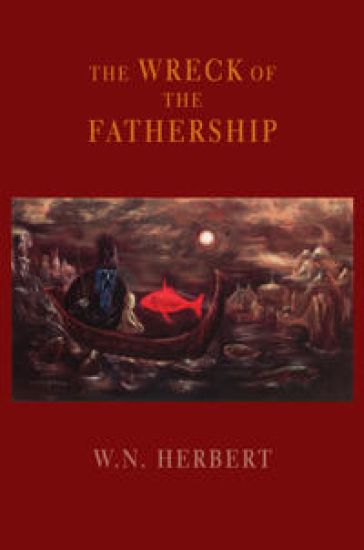
The Wreck of the Fathership

The Wreck of the Fathership

W.N. Herbert

Bloodaxe Books Ltd
2020
nidottu
Being appointed Dundee Makar (or City Laureate) implied that Bill Herbert might settle into middle age. He rented a ?at overlooking Broughty Ferry harbour to write about his home town in both its native tongues. Then within six months his much-loved father died, and that civic idyll was thrown into crisis. Personal and political roles collided as referenda for Scottish independence and EU membership, then the US elections, signalled that the post-war liberal value system was very much in crisis. This is his Dundonian Book of the Dead, in which he explores both his own grief and the encroachment of a new intolerance. His town’s de?ning modern disaster – the loss in 1959 of the lifeboat Mona with all hands – becomes a symbol for a world turned upside down. But while patriarchy ?ounders in a storm of its own undoing, his absurd alter ego, William McGonagall, brings his unique tragedian’s eye to bear on both the city’s and our society’s efforts to right itself. The comic and the tragic become catastrophe’s ?otsam and jetsam, and the image of the overturned boat is re?ected in the very structure of this book, with a keel-hauling of Dundee Doldrums for its climax – poems which resist any stasis of the imagination. The crew of this latter-day Ship of Fools include Captain Beefheart, the cannibal clan of the Den?ends, and a lion, while the passenger list features the surrealist Leonora Carrington, various Jesuses, and the ghastly Imperator Trumpo. Its voyages to alternative futures and pasts echo those of Herbert’s merchantman father, while, in a manner that matches Bill Senior’s later trade of precision engineer, it ?ts together a dynamic range of forms with an intense focus on the metamorphic and redemptive energies of language.
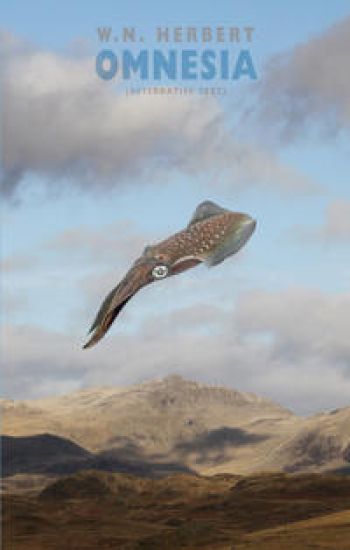
Omnesia (alternative text)

Omnesia (alternative text)

W. N. Herbert

Bloodaxe Books Ltd
2013
nidottu
'Omnesia' is Bill Herbert's melding of omniscience and amnesia, the modern condition of thinking we can know everything about our world but, in actuality, retaining dangerously little. This doubly impressive new collection - published in twin editions, the alternative text and the remix - approaches and evades such flawed totality. Neither the alternative text nor the remix is the primary text. They are two variations, doppelgangers haunted by the idea of a whole neither can embody or know. Readers can read either or both versions. Booksellers can stock either or both. Only the literary prize judges will have to read both in order to shortlist either or both as one. For the past seven years Herbert has wandered from the Turkic west of China to the barrios of Venezuela; from Tomsk, the 'Athens of Siberia', to the heat of Hargeisa, capital of Somaliland, an unacknowledged country. These are travels to translate and, in more than one sense, to be translated; brief encounters with poets and poetics outside the Eurocentric norm; looking-glass meetings, omnesiac pilgrimage. Along the fracture lines between east and west in the Balkans, Greece, and in Jerusalem, across the cultural gaps that mark the north and south of the British Isles, Herbert teases out, through tensions between lyric and satire, English and Scots, formalism and experiment, what it is we hope to mean by home, integrity, or authenticity. Herbert's Omnesia is riven by the anxiety of incompletion: it is two variations desiring to be one theme; doppelgangers haunted by the idea of a whole neither can embody or know. Which one are you reading?
A Balkan Exchange

A Balkan Exchange

W.N. Herbert

Arc Publications
2007
nidottu
Love StoryThey played games with each other –he with her head,she with his legs.Then he gave back her head,a little worn out,and she – I'm not surewhat she did with his legs,this is as much as I know.Kristin Dimitrova (translated by Andy Croft)This anthology is the result of an exciting cross-cultural 'experiment' in which four well-known British poets who live and work in the North-East of England – Andy Croft, Mark Robinson, Linda France and W. N. Herbert – worked collaboratively with four leading young Bulgarian poets – Kristin Dimitrova, Georgi Gospodinov, Nadya Radulova and the male poet who goes under the name of 'VBV'. On a number of visits to Bulgaria, and working in a totally unfamiliar cultural environment on the very edge of Europe (the 'Near East'), the British poets got to know, and began to translate, the work of their Bulgarian counterparts. The Bulgarians visited Newcastle, embarking upon a relationship with the home-territories of the British poets (the 'North East'). The eight poets painstakingly refined their translations of the Bulgarian poems and the British poets contributed their own poems about visiting Bulgaria – not touristic notes but rather maps of the type of engagement found in the translations. "It seemed to me", W. N. Herbert writes, "that this project was as much about an encounter between people and places as it was about an encounter with texts. It was about the collisions and interactions of cultures, not just the friendships formed but the shifts in our historical imaginations."
Strong Words

Strong Words

W. N. Herbert; Matthew Hollis

Bloodaxe Books Ltd
2000
nidottu
Poetry has never been so rigorous and diverse, nor has its audience been so numerous and engaged. Strong words? Not if the poets are right. As Ezra Pound wrote: 'You would think anyone wanting to know about poetry would go to someone who knew something about it.' That's exactly what Bloodaxe has done with this judicious and comprehensive selection of British, Irish and American manifestos by some of modern poetry's finest practitioners. Opening the 20th century account with Ezra Pound, W.B. Yeats and T.S. Eliot, the book moves through key later figures including W.H. Auden, Ted Hughes, Stevie Smith and Dylan Thomas. America is richly represented too, from Robert Frost and William Carlos Williams to the influential New England poets Robert Lowell, Elizabeth Bishop and Sylvia Plath. Strong Words then brings the issues fully up to date with over 30 specially commissioned statements from contemporary writers including Seamus Heaney, Andrew Motion, Simon Armitage, Selima Hill, Paul Muldoon and Douglas Dunn, amounting to a new overview of the poetry being written at the start of the 21st century. For poets and readers, for critics, teachers and students of creative writing and contemporary poetry, this is essential reading. As well as representing many of the most important poets of the last hundred years, Strong Words also charts many different stances and movements, from Modernism to Postmodernism, from Futurism to the future theories of poetry. This landmark book champions the continuing dialogue of these voices, past and present, exploring the strongest form that words can take: the poem.