Kirjojen hintavertailu. Mukana 12 591 573 kirjaa ja 12 kauppaa.

Kirjailija

W. Phillips Shively

Kirjat ja teokset yhdessä paikassa: 8 kirjaa, julkaisuja vuosilta 1995-2025, suosituimpien joukossa The Craft of Political Research. Vertaile teosten hintoja ja tarkista saatavuus suomalaisista kirjakaupoista.

Mukana myös kirjoitusasut: W. Phillips Shively

8 kirjaa

Kirjojen julkaisuhaarukka 1995-2025.

The Craft of Political Research

The Craft of Political Research

W. Phillips Shively; James W. Endersby

TAYLOR FRANCIS LTD
2025
nidottu
The Craft of Political Research is a nontechnical introduction to research design and analysis in political science, emphasizing the choices we make when we design a research project and analyze its results. The book’s approach centers on asking an interesting research question, then designing inquiry to eliminate as many alternative explanations as possible.How do we develop theory, and what constitutes a good research question? How do we operationalize measures and gather evidence to answer a question? How do we analyze our data? Students are introduced to such topics as multidimensional concepts, levels of measurement, validity, reliability, random and non-random measurement error, sampling, case selection, causality, experimental and quasi-experimental design, statistical inference, and regression and correlation analysis. Throughout, the emphasis is on understanding the “back story” of analysis—why do we measure in a particular way, why do we choose one design as against another, why do we conduct our analysis as we do.Emphasizing the internal logic of research methods, the greatest strength of the book is its clarity and the broad range of political science examples provided. It works at a conceptual level, seeking an understanding of the principles that underlie techniques and the reasons why we choose them.New to this edition:New and revised examples from the US, UK, Canada, Latin America, and Africa among others, and updated international data from organizations such as the World Bank and the United Nations.Separate chapters on causality and research design, with more discussion of each component of the political science research processNew section on indexes and scales that reviews ways to improve reliability and validity of measures by combining several variablesNew sections reviewing collection of publicly available data including downloadable sources of quantitative dataNew material on internet surveys and other contemporary techniques used in political science research.
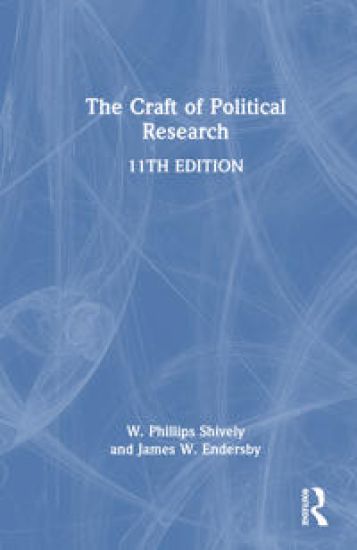
The Craft of Political Research

The Craft of Political Research

W. Phillips Shively; James W. Endersby

TAYLOR FRANCIS LTD
2025
sidottu
The Craft of Political Research is a nontechnical introduction to research design and analysis in political science, emphasizing the choices we make when we design a research project and analyze its results. The book’s approach centers on asking an interesting research question, then designing inquiry to eliminate as many alternative explanations as possible.How do we develop theory, and what constitutes a good research question? How do we operationalize measures and gather evidence to answer a question? How do we analyze our data? Students are introduced to such topics as multidimensional concepts, levels of measurement, validity, reliability, random and non-random measurement error, sampling, case selection, causality, experimental and quasi-experimental design, statistical inference, and regression and correlation analysis. Throughout, the emphasis is on understanding the “back story” of analysis—why do we measure in a particular way, why do we choose one design as against another, why do we conduct our analysis as we do.Emphasizing the internal logic of research methods, the greatest strength of the book is its clarity and the broad range of political science examples provided. It works at a conceptual level, seeking an understanding of the principles that underlie techniques and the reasons why we choose them.New to this edition:New and revised examples from the US, UK, Canada, Latin America, and Africa among others, and updated international data from organizations such as the World Bank and the United Nations.Separate chapters on causality and research design, with more discussion of each component of the political science research processNew section on indexes and scales that reviews ways to improve reliability and validity of measures by combining several variablesNew sections reviewing collection of publicly available data including downloadable sources of quantitative dataNew material on internet surveys and other contemporary techniques used in political science research.
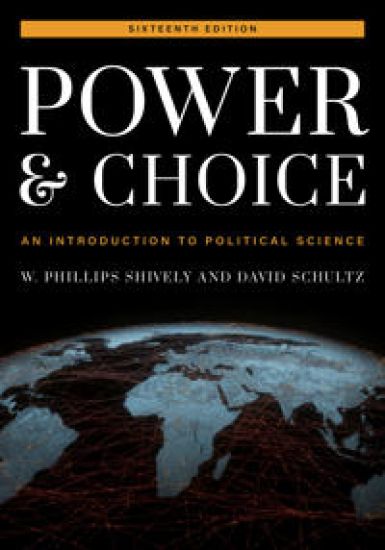
Power and Choice

Power and Choice

W. Phillips Shively; David Schultz

BLOOMSBURY PUBLISHING PLC
2022
nidottu
Power & Choice offers an in-depth look into the nuances of politics through the analysis of collective choices for a group or state through the use of power. Organized topically and using extended case examples from around the world, Power & Choice provides undergraduate students with a clear and engaging introduction to political science and comparative politics. The 16th Edition has been updated to address the issues raised by the covid-19 pandemic, as well as the impact the Trump and Biden presidencies have had so far upon the world and its democracies, including challenges in states such as Hungary where illiberal democracy and nationalism are on the rise. The authors have also included discussion of the impact of the death of George Floyd upon race relations in America, and how issues such as growing inequality are impacting politics. This edition adds examination of women’s economic development and the rising importance of LGBTQ issues globally.
Power & Choice: An Introduction to Political Science (Int'l Ed)
This program provides a general, comparative introduction to the major concepts and themes of political science. The title of the book, Power & Choice, indicates a subsidiary theme that recurs at intervals. We may view politics as (1) the use of power or (2) the production of a public choice. Often one or the other is heavily emphasized in approaching the subject. Marxism emphasizes politics as the use of power, while pluralism and much formal modeling work emphasize the emergence of public choices.
Power & Choice: An Introduction to Political Science

Power & Choice: An Introduction to Political Science

W. Phillips Shively

McGraw-Hill Professional
2013
nidottu
This program provides a general, comparative introduction to the major concepts and themes of political science. The title of the book, Power & Choice, indicates a subsidiary theme that recurs at intervals. We may view politics as (1) the use of power or (2) the production of a public choice. Often one or the other is heavily emphasized in approaching the subject. Marxism emphasizes politics as the use of power, while pluralism and much formal modeling work emphasize the emergence of public choices.
The Craft of Political Research

The Craft of Political Research

W. Phillips Shively

Longman Inc
2012
nidottu
The Craft of Political Research immerses readers not only in how political scientists work but also in how ideas produce research questions and guide the selection of research methods.Emphasizing the internal logic of research methods and the collaborative nature of the research process, this slender text explores the design behind interesting questions, problems in measurement and analysis, and key statistical methods. Brief and inexpensive to include in any course, The Craft of Political Research’s elegant explanations inspire a big picture understanding of how political scientists explain political reality and encourage students to create their own inventive, original, and bold research work. Features include: Focuses on the big picture of how good research leads to good theories instead of just what research method to use. Provides concise and accessible coverage of key topics, including the nature of research, research design, sampling, statistical analysis, ethics, and more. Includes detailed examples of classic and contemporary political science research to give students models for their own original research.
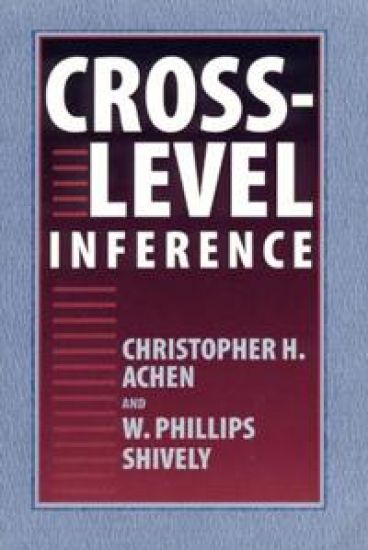
Cross-Level Inference

Cross-Level Inference

Christopher H. Achen; W. Phillips Shively

University of Chicago Press
1995
nidottu
In the last few years, new disputes have erupted over the use of group averages from census areas or voting districts to draw inferences about individual social behaviour. Social scientists, policy analysts and historians often have little choice about using this kind of data, but statistical analysis of them is fraught with pitfalls. The recent debates have led to a new menu of choices for the applied researcher. This volume explains why older methods like ecological regression so often fail, and it examines the promising new techniques for cross-level inference. Experts in statistical analysis of aggregate data, Christopher H. Achen and W. Phillips Shively, contend that cross-level inference makes unusually strong demands on substantive knowledge, so that no one method, such as Goodman's ecological regression, will fit all situations. Criticizing Goodman's model and some recent attempts to replace it, the authors argue for a range of alternate techniques, including extensions of cross-tabular, regression analysis and unobservable variable estimators.
Cross-Level Inference

Cross-Level Inference

Christopher H. Achen; W. Phillips Shively

University of Chicago Press
1995
sidottu
In the last few years, new disputes have erupted over the use of group averages from census areas or voting districts to draw inferences about individual social behaviour. Social scientists, policy analysts and historians often have little choice about using this kind of data, but statistical analysis of them is fraught with pitfalls. The recent debates have led to a new menu of choices for the applied researcher. This volume explains why older methods like ecological regression so often fail, and it examines the promising new techniques for cross-level inference. Experts in statistical analysis of aggregate data, Christopher H. Achen and W. Philips Shively, contend that cross-level inference makes unusually strong demands on substantive knowledge, so that no one method, such as Goodman's ecological regression, will fit all situations. Criticizing Goodman's model and some recent attempts to replace it, the authors argue for a range of alternate techniques, including extensions of cross-tabular, regression analysis and unobservable variable estimators.