Kirjojen hintavertailu. Mukana 12 145 622 kirjaa ja 12 kauppaa.

Kirjailija

Wade Davis

Kirjat ja teokset yhdessä paikassa: 20 kirjaa, julkaisuja vuosilta 2007-2025, suosituimpien joukossa Magdalena. Vertaile teosten hintoja ja tarkista saatavuus suomalaisista kirjakaupoista.

20 kirjaa

Kirjojen julkaisuhaarukka 2007-2025.

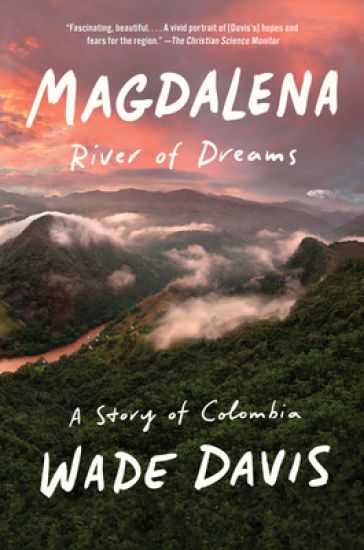
Magdalena

Magdalena

Wade Davis

Vintage
2021
pokkari
A captivating new book from Wade Davis - winner of the Samuel Johnson Prize for Into the Silence - that brings vividly to life the story of the great Río Magdalena, illuminating Colombia's complex past, present, and future.For Wade Davis, Colombia was the first country that captured his heart and gave him license to be free. Here, he tells of his travels on the mighty Magdalena, the river that made possible the nation. Along the way, he finds a people who have overcome years of conflict precisely because of their character, informed by an enduring spirit of place, and a deep love of their remarkable land.Braiding together memoir, history and journalism, Magdalena is at once an absorbing adventure through a spectacular landscape and a kaleidoscopic picture of Colombia as it stands on the verge of a new period of peace.'Outstanding... Davis tells epic tales of passion, violence and ambition with tremendous narrative verve' Sunday Times, Books of the Year'A wonderful evocation of a lifetime's travel in Colombia' Spectator, Books of the Year
One River

One River

Wade Davis

Vintage
2014
pokkari
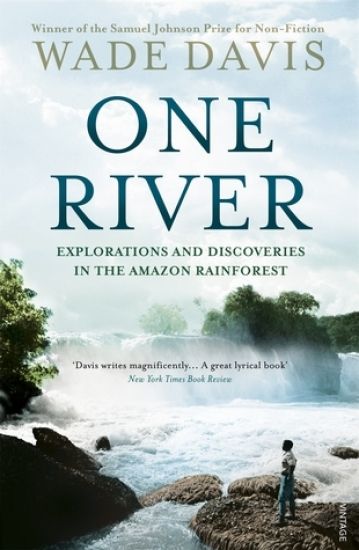
In 1941, Richard Evans Schultes took a leave of absence from Harvard University and disappeared into the Northern Amazon of Colombia. The world's leading authority on the hallucinogens and medicinal plants of the region, he returned after twelve years of travelling through South America in a dug-out canoe.
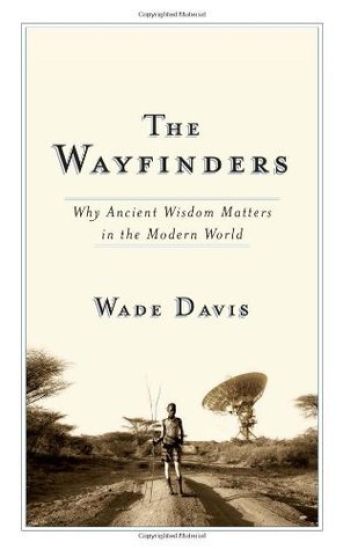
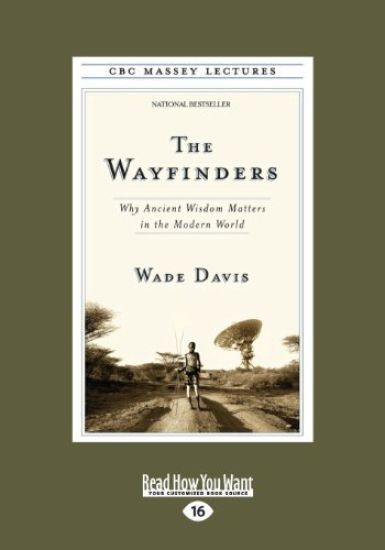
The Wayfinders

The Wayfinders

Wade Davis

House of Anansi Press Ltd ,Canada
2009
pokkari
Every culture is a unique answer to a fundamental question: What does it mean to be human and alive? In The Wayfinders, renowned anthropologist, winner of the prestigious Samuel Johnson Prize, and National Geographic Explorer-in-Residence Wade Davis leads us on a thrilling journey to celebrate the wisdom of the world's indigenous cultures. In Polynesia we set sail with navigators whose ancestors settled the Pacific ten centuries before Christ. In the Amazon we meet the descendants of a true lost civilization, the Peoples of the Anaconda. In the Andes we discover that the earth really is alive, while in Australia we experience Dreamtime, the all-embracing philosophy of the first humans to walk out of Africa. We then travel to Nepal, where we encounter a wisdom hero, a Bodhisattva, who emerges from forty-five years of Buddhist retreat and solitude. And finally we settle in Borneo, where the last rainforest nomads struggle to survive. Understanding the lessons of this journey will be our mission for the next century. For at risk is the human legacy -- a vast archive of knowledge and expertise, a catalogue of the imagination. Rediscovering a new appreciation for the diversity of the human spirit, as expressed by culture, is among the central challenges of our time.
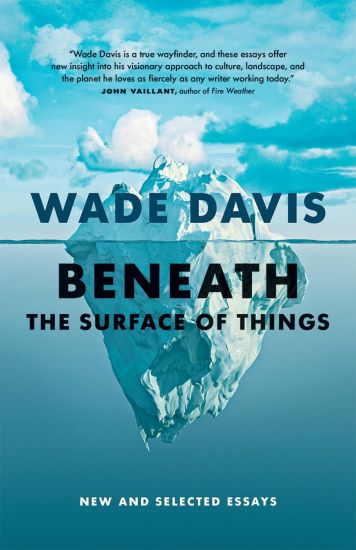
Beneath the Surface of Things

Beneath the Surface of Things

Wade Davis

GREYSTONE BOOKS,CANADA
2025
nidottu
“Wade Davis is a true wayfinder, and these essays offer new insight into his visionary approach to culture, landscape, and the planet he loves as fiercely as any writer working today.”—John Vaillant, author of Fire WeatherA timely and eclectic collection from one of the foremost thinkers of our time, “a powerful, penetrating and immensely knowledgeable writer” (The Guardian).The essays in this collection came about during the unhurried months when one who had traveled incessantly was obliged to stay still, even as events flared on all sides in a world that never stops moving. Wade Davis brings his unique cultural perspective to such varied topics as the demonization of coca, the sacred plant of the Inca; the Great War and the birth of modernity; the British conquest of Everest; the endless conflict in the Middle East; reaching beyond climate fear and trepidation; on the meaning of the sacred. His essay, “The Unraveling of America,” first published in Rolling Stone, attracted five million readers and generated 362 million social media impressions. Media interest in the story was sustained over many weeks, with interview requests coming in from 23 countries.The anthropological lens, as Davis demonstrates, reveals what lies beneath the surface of things, allowing us to see, and to seek, the wisdom of the middle way, a perspective of promise and hope that all of the essays in this collection aspire to convey.“Wade Davis has a gift for saying the unsayable. He’s a fearless explorer in the intellectual world, as in the physical. His refusal to embrace conventional wisdom on climate change, for example, and instead think through the issue for himself, is a model of independent thinking. Even when I disagree with Wade, as with some of his bleak comments about the United States, I’m grateful for his voice. We usually live on the surface of ideas when we talk about issues such as war and racism; Wade takes us far deeper.”—David Ignatius, columnist and associate editor, Washington Post
Beneath the Surface of Things

Beneath the Surface of Things

Wade Davis

GREYSTONE BOOKS,CANADA
2024
sidottu
“Wade Davis is a true wayfinder, and these essays offer new insight into his visionary approach to culture, landscape, and the planet he loves as fiercely as any writer working today.”—John Vaillant, author of Fire WeatherA timely and eclectic collection from one of the foremost thinkers of our time, “a powerful, penetrating and immensely knowledgeable writer” (The Guardian).The essays in this collection came about during the unhurried months when one who had traveled incessantly was obliged to stay still, even as events flared on all sides in a world that never stops moving. Wade Davis brings his unique cultural perspective to such varied topics as the demonization of coca, the sacred plant of the Inca; the Great War and the birth of modernity; the British conquest of Everest; the endless conflict in the Middle East; reaching beyond climate fear and trepidation; on the meaning of the sacred. His essay, “The Unraveling of America,” first published in Rolling Stone, attracted five million readers and generated 362 million social media impressions. Media interest in the story was sustained over many weeks, with interview requests coming in from 23 countries.The anthropological lens, as Davis demonstrates, reveals what lies beneath the surface of things, allowing us to see, and to seek, the wisdom of the middle way, a perspective of promise and hope that all of the essays in this collection aspire to convey.“Wade Davis has a gift for saying the unsayable. He’s a fearless explorer in the intellectual world, as in the physical. His refusal to embrace conventional wisdom on climate change, for example, and instead think through the issue for himself, is a model of independent thinking. Even when I disagree with Wade, as with some of his bleak comments about the United States, I’m grateful for his voice. We usually live on the surface of ideas when we talk about issues such as war and racism; Wade takes us far deeper.”—David Ignatius, columnist and associate editor, Washington Post
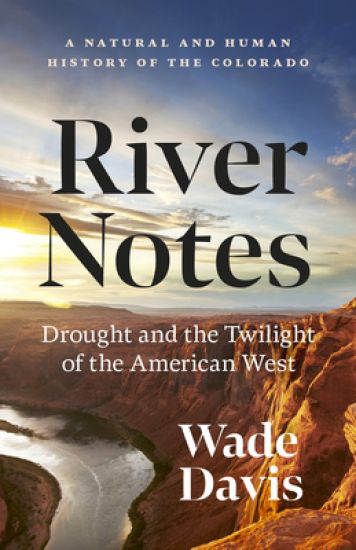
River Notes

River Notes

Wade Davis

GREYSTONE BOOKS,CANADA
2023
pokkari
At a time when the Colorado River and all those who depend on it are in peril, this urgent book offers "both a love song and a paean of regret to America's most spectacular river" (Denver Post) and "a plea to save [it] before it’s too late" (The Wall Street Journal).From bestselling author, long-time former National Geographic Explorer, and anthropologist Wade Davis comes the story of America’s Nile: how it once flowed freely and how human intervention has left it near exhaustion, altering the water temperature, volume, local species, and shoreline of the river Theodore Roosevelt once urged us to "leave it as it is."Plugged by no fewer than twenty-five dams, the Colorado is the world’s most regulated river drainage, providing most of the water supply of Las Vegas, Tucson, and San Diego, and much of the power and water of Los Angeles and Phoenix, cities that are home to more than 25 million people. If it ceased flowing, the water held in its reservoirs might hold out for three to four years, but after that it would be necessary to abandon most of southern California and Arizona, and much of Colorado, New Mexico, Utah and Wyoming. For the entire American Southwest, the Colorado is indeed the river of life, which makes it all the more tragic and ironic that by the time it approaches its final destination, it has been reduced to a shadow upon the sand, its delta dry and deserted, its flow a toxic trickle seeping into the sea.Yet despite more than a century of human interference, Davis writes, the splendor of the Colorado lives on in the river’s remaining wild rapids, quiet pools, and sweeping canyons. The story of the Colorado River is the human quest for progress and its inevitable effects—and an opportunity to learn from past mistakes and foster the rebirth of America’s most iconic waterway. A beautifully told story of historical adventure and natural beauty, River Notes is a fascinating journey down the river and through mankind’s complicated and destructive relationship with one of its greatest natural resources.Published in Partnership with the David Suzuki Institute.
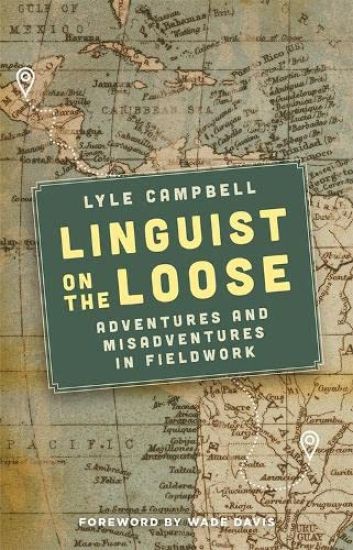
Linguist on the Loose

Linguist on the Loose

Lyle Campbell; Wade Davis

EDINBURGH UNIVERSITY PRESS
2021
sidottu
A vivid memoir of life in the field that highlights the importance of documenting indigenous languages Lyle Campbell's linguistic fieldwork has taken him to numerous countries, sometimes in challenging circumstances. It has led to exciting discoveries including a new language in southeastern Guatemala, a unique speech sound, unknown in any other language, in the Nivacle language of Paraguay and Argentina, and unusual and unique features in several other languages. Along the way, he has experienced dangers and challenges, the joys and excitement of fieldwork, and encountered first-hand the importance of collaborating with indigenous groups to help document and revitalise their languages.Written with humour, heart, and a clear dedication to endangered languages and their speakers, Lyle's vivid memoir is a lesson not only on life in the field but on the importance of language documentation. With so many of the world's languages being lost at an alarming rate, this remains the most compelling and urgent task for linguists now and into the future.
Linguist on the Loose

Linguist on the Loose

Lyle Campbell; Wade Davis

EDINBURGH UNIVERSITY PRESS
2021
nidottu
A vivid memoir of life in the field that highlights the importance of documenting indigenous languages Lyle Campbell's linguistic fieldwork has taken him to numerous countries, sometimes in challenging circumstances. It has led to exciting discoveries including a new language in southeastern Guatemala, a unique speech sound, unknown in any other language, in the Nivacle language of Paraguay and Argentina, and unusual and unique features in several other languages. Along the way, he has experienced dangers and challenges, the joys and excitement of fieldwork, and encountered first-hand the importance of collaborating with indigenous groups to help document and revitalise their languages.Written with humour, heart, and a clear dedication to endangered languages and their speakers, Lyle's vivid memoir is a lesson not only on life in the field but on the importance of language documentation. With so many of the world's languages being lost at an alarming rate, this remains the most compelling and urgent task for linguists now and into the future.
Magdalena: River of Dreams: A Story of Colombia
A captivating new book from Wade Davis--award-winning, best-selling author and National Geographic Explorer-in-Residence for more than a decade--that brings vividly to life the story of the great R o Magdalena, illuminating Colombia's complex past, present, and future Travelers often become enchanted with the first country that captures their hearts and gives them license to be free. For Wade Davis, it was Colombia. Now in a masterly new book, Davis tells of his travels on the mighty Magdalena, the river that made possible the nation. Along the way, he finds a people who have overcome years of conflict precisely because of their character, informed by an enduring spirit of place, and a deep love of a land that is home to the greatest ecological and geographical diversity on the planet. Only in Colombia can a traveler wash ashore in a coastal desert, follow waterways through wetlands as wide as the sky, ascend narrow tracks through dense tropical forests, and reach verdant Andean valleys rising to soaring ice-clad summits. Both a corridor of commerce and a fountain of culture, the wellspring of Colombian music, literature, poetry, and prayer, the Magdalena has served in dark times as the graveyard of the nation. And yet, always, it returns as a river of life. At once an absorbing adventure and an inspiring tale of hope and redemption, Magdalena Braids together memoir, history, and journalism to tell the epic story of Colombia.
Wade Davis Photographs

Wade Davis Photographs

Wade Davis

National Geographic Society
2018
sidottu
A fascinating photographic journey to indigenous cultures around the world by renowned anthropologist Wade Davis. Anthropologist and best-selling author Wade Davis has traveled the world, befriending indigenous peoples on every continent and engaging in their spiritual lives and practices. To him, no culture is primitive--every daily habit, every ritual, every ceremony expresses the human genius. In this book he takes us into the heart of 20 different world cultures, from the ancient salt mines of the Sahara to the icy world of the Inuit, from the pastoral nomads of Mongolia to the dreaming Aboriginals of Australia. Through sensitive text and revealing photos, enter what Davis calls our "ethnosphere": the extraordinary matrix of cultures thriving on this planet.
Into Africa

Into Africa

Frans Lanting; Wade Davis

Earth Aware Editions
2017
sidottu
Journey Into Africa through the lens of National Geographic photographer Frans Lanting, whose images have created an enduring vision of Africa's diverse landscapes and wildlife. Experience the wonders of wild Africa as seen through the eyes of master photographer Frans Lanting, whose images have created an enduring vision of the continent's primeval natural heritage--and what is at stake in the twenty-first century. Lanting's images feature some of the most celebrated landscapes on Earth, from the sweeping vistas of the Serengeti Plains and the water wilderness of the Okavango Delta to the enchanting deserts of Namibia, the bewildering jungles of the Congo, and the otherworldly island of Madagascar. During many journeys over the past three decades, Lanting has documented Africa's iconic animals--elephants, rhinos, giraffes, lions, leopards, and cheetahs--as well as its endangered primates, including gorillas, chimpanzees, bonobos, and lemurs. His personal stories express the deep understanding and sense of mission that make his work stand out as a unique tribute to the continent's wildlife and wild places. This book is based on Frans Lanting's landmark exhibition, Into Africa, which was produced as a partnership with the Smithsonian's National Museum of Natural History and the National Geographic Society, with support from the World Wildlife Fund.
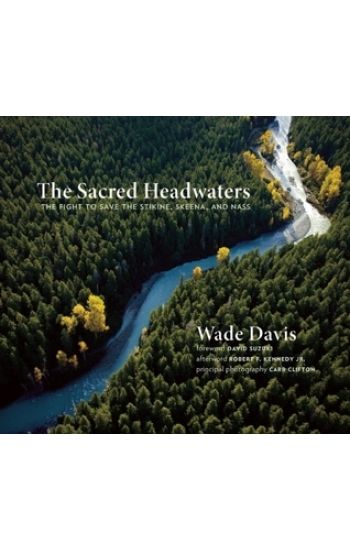
The Sacred Headwaters

The Sacred Headwaters

Wade Davis; Robert F. Kennedy Jr.; David Suzuki

Greystone Books,Canada
2015
pokkari
In a rugged knot of mountains in the remote reaches of northern British Columbia lies a spectacularly beautiful valley known to the First Nations as the Sacred Headwaters. There, on the southern edge of the Spatsizi Wilderness, the Serengeti of North America, are born in remarkably close proximity three of the continent's most important salmon rivers--the Stikine, the Skeena, and the Nass. Now, against the wishes of all First Nations, the government of British Columbia has opened the Sacred Headwaters to industrial development. In particular, Imperial Metals proposes an open-pit copper and gold mine, called the Red Chris mine, processing 30,000 tons of ore a day, and Royal Dutch Shell wants to extract coal bed methane gas from an anthracite deposit across an enormous tenure of close to a million acres. The Sacred Headwaters is both a celebration of one of the most extraordinary regions in North America and a call to arms to preserve it for future generations. A remarkable collection of photographs taken by members of the International League of Conservation Photographers stunningly portray the beauty and diversity of the ecologically diverse region. The eloquent and compelling text by Wade Davis, which describes the unparalleled beauty and grandeur of the region, the threats to it from industrial development, and the response of native groups and other inhabitants of the area, is complemented by the voices of the Tahltan elders. The inescapable message is that no amount of methane gas can compensate for the sacrifice of a place that could be the Sacred Headwaters of all North Americans and indeed of all peoples of the world.
Tracks in the Amazon

Tracks in the Amazon

Gary Neeleman; Rose Neeleman; Wade Davis

University of Utah Press,U.S.
2013
nidottu
When construction of the Madeira-Mamoré Railroad began in 1867, Bolivia had lost its war with Chile, causing it to become landlocked and unable to ship its minerals and other products from the Pacific Coast. Since Bolivia needed to find a way to move products from the Atlantic Coast, the government decided a railroad should be built around the Madeira River—which originates in Bolivia and travels almost 2,000 miles through Brazil to the Amazon—facilitating shipment to foreign markets via the Amazonian waterway. Completion of the railroad was initially stalled by lack of funding, but the project was resurrected in the early twentieth century and completed in 1912. Intended as an integral piece of the rubber export industry, the railroad became unnecessary once the world supply of rubber moved from Brazil to Asia.Although there have been many brief chronicles and writings about the Madeira-Mamoré Railroad over the years, most barely scratch the surface of this incredible story. Of particular import in Tracks in the Amazon are the photographs—which until now have rarely been seen—taken by Dana Merrill, a New York photographer hired to document the construction of the railroad. It also includes reproductions of the Porto Velho Marconigram, an English-language newspaper written for and by the American expatriates who lived in the construction headquarters at Porto Velho. Because this unique railroad traversed the densest tropical jungle on earth, more than 10,000 workers lost their lives laying the first five miles of track. The images and descriptions of the life of the workers on the railroad illustrate the challenges of working in the jungles—the unforgiving climate, malaria and yellow fever bearing mosquitoes, and the threat of wild animals—which made conditions for the workers next to impossible.
River Notes

River Notes

Wade Davis

Island Press
2012
sidottu
Plugged by no fewer than twenty-five dams, the Colorado is the world's most regulated river, providing most of the water supply of Las Vegas, Tucson, and San Diego, and much of the power and water of Los Angeles and Phoenix. If the river ceased flowing, it would soon be necessary to abandon many of the largest cities in the West. The Colorado is indeed a river of life, which makes it all the more tragic that when it approaches the sea, it has been reduced to a toxic trickle, its delta dry and deserted. In a blend of history, science, and personal observation, acclaimed author Wade Davis tells the story of America's Nile, from its legendary history to the human intervention that has left it transformed and near exhaustion. The story of the Colorado River is the human quest for progress and its inevitable if unintended effects - and an opportunity to learn from past mistakes and foster the rebirth of America's most iconic waterway. A beautifully told story of historical adventure and natural beauty, "River Notes" is a fascinating journey down the river and through mankind's complicated and destructive relationship with one of its greatest natural resources.
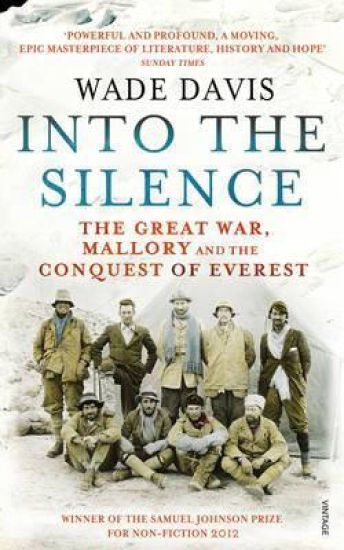
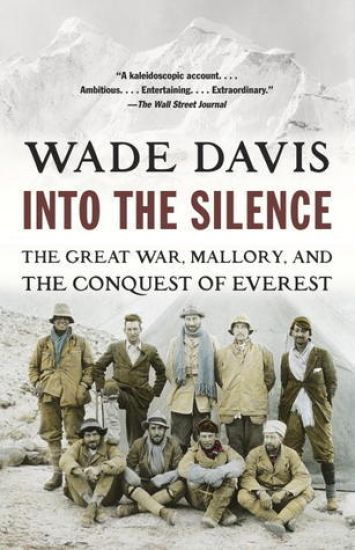
Into The Silence

Into The Silence

Wade Davis

Vintage
2012
pokkari
WINNER OF THE 2012 SAMUEL JOHNSON PRIZEA monumental work of history, biography and adventure - the First World War, Mallory and Mount Everestâ??The price of life is deathâ?? For Mallory, as for all of his generation, death was but â??a frail barrier that men crossed, smiling and gallant, every dayâ??.
Into the Silence: The Great War, Mallory, and the Conquest of Everest
The definitive story of the British adventurers who survived the trenches of World War I and went on to risk their lives climbing Mount Everest. On June 6, 1924, two men set out from a camp perched at 23,000 feet on an ice ledge just below the lip of Everest's North Col. George Mallory, thirty-seven, was Britain's finest climber. Sandy Irvine was a twenty-two-year-old Oxford scholar with little previous mountaineering experience. Neither of them returned. Drawing on more than a decade of prodigious research, bestselling author and explorer Wade Davis vividly re-creates the heroic efforts of Mallory and his fellow climbers, setting their significant achievements in sweeping historical context: from Britain's nineteen-century imperial ambitions to the war that shaped Mallory's generation. Theirs was a country broken, and the Everest expeditions emerged as a powerful symbol of national redemption and hope. In Davis's rich exploration, he creates a timeless portrait of these remarkable men and their extraordinary times.
The Mythic Modern

The Mythic Modern

Travis Price; Wade Davis

Oro Editions
2012
sidottu
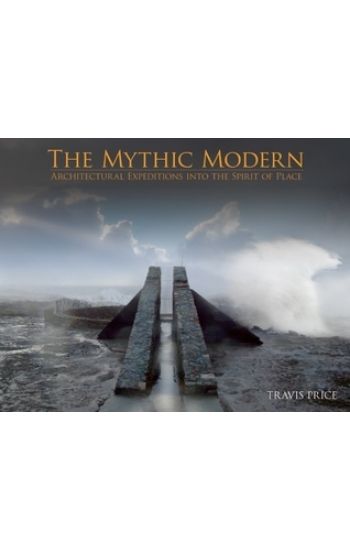
"The Mythic Modern" offers an significant antidote to the perception of the American abroad, chronicling a remarkable fifteen years of design-build expeditions in extraordinary locales all over the globe by an international team of architecture students focused on exploring, not exploiting, the local cultures, mythologies, and metaphors and leaving astonishing, affecting structures in their wake. Led by Travis Price, FAIA, who, since his early days in the Green movement has been sensitive to both the eco- and ethnospheres, these excursions find in their designs a balance of the tribal and the modern, the mythic and the practical, the place and its spirit. This lavishly illustrated book takes a critical look at the preservation of authenticity and character in a contemporary design language, along the way telling wild tales of the adventures of building these installations, with illuminating anecdotes and quotes, followed by the back-story of their conception, metaphors, planning, and design.
Shadows in the Sun

Shadows in the Sun

Wade Davis

Island Press
2010
pokkari
Wade Davis has been called 'a rare combination of scientist, scholar, poet and passionate defender of all of life's diversity'. In "Shadows in the Sun", he brings all of those gifts to bear on a fascinating examination of indigenous cultures and the interactions between human societies and the natural world. Ranging from the British Columbian wilderness to the jungles of the Amazon and the polar ice of the Arctic Circle, "Shadows In The Sun" is a testament to a world where spirits still stalk the land and seize the human heart. Its essays and stories, though distilled from travels in widely separated parts of the world, are fundamentally about landscape and character, the wisdom of lives drawn directly from the land, the hunger of those who seek to rediscover such understanding, and the consequences of failure.
Light at the Edge of the World

Light at the Edge of the World

Wade Davis

Greystone Books,Canada
2007
nidottu
For more than 30 years, renowned anthropologist Wade Davis has traveled the globe, studying the mysteries of sacred plants and celebrating the world's traditional cultures. His passion as an ethnobotanist has brought him to the very center of indigenous life in places as remote and diverse as the Canadian Arctic, the deserts of North Africa, the rain forests of Borneo, the mountains of Tibet, and the surreal cultural landscape of Haiti. In Light at the Edge of the World, Davis explores the idea that these distinct cultures represent unique visions of life itself and have much to teach the rest of the world about different ways of living and thinking. As he investigates the dark undercurrents tearing people from their past and propelling them into an uncertain future, Davis reiterates that the threats faced by indigenous cultures endanger and diminish all cultures.