Kirjojen hintavertailu. Mukana 12 595 353 kirjaa ja 12 kauppaa.

Kirjailija

Wajid Hassan Minhass

Kirjat ja teokset yhdessä paikassa: 2 kirjaa, julkaisuja vuosilta 2016-2018, suosituimpien joukossa Microfluidic Very Large Scale Integration (VLSI). Vertaile teosten hintoja ja tarkista saatavuus suomalaisista kirjakaupoista.

2 kirjaa

Kirjojen julkaisuhaarukka 2016-2018.

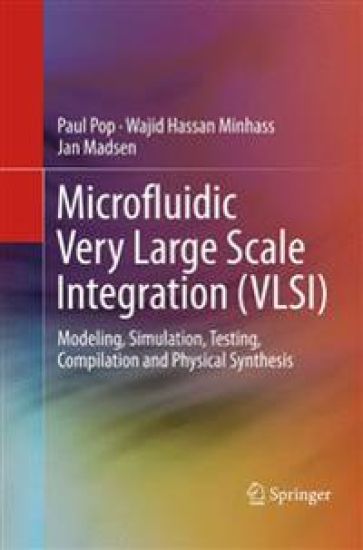
Microfluidic Very Large Scale Integration (VLSI)

Microfluidic Very Large Scale Integration (VLSI)

Paul Pop; Wajid Hassan Minhass; Jan Madsen

Springer International Publishing AG
2018
nidottu
This book presents the state-of-the-art techniques for the modeling, simulation, testing, compilation and physical synthesis of mVLSI biochips. The authors describe a top-down modeling and synthesis methodology for the mVLSI biochips, inspired by microelectronics VLSI methodologies. They introduce a modeling framework for the components and the biochip architecture, and a high-level microfluidic protocol language. Coverage includes a topology graph-based model for the biochip architecture, and a sequencing graph to model for biochemical application, showing how the application model can be obtained from the protocol language. The techniques described facilitate programmability and automation, enabling developers in the emerging, large biochip market.
Microfluidic Very Large Scale Integration (VLSI)

Microfluidic Very Large Scale Integration (VLSI)

Paul Pop; Wajid Hassan Minhass; Jan Madsen

Springer International Publishing AG
2016
sidottu
This book presents the state-of-the-art techniques for the modeling, simulation, testing, compilation and physical synthesis of mVLSI biochips. The authors describe a top-down modeling and synthesis methodology for the mVLSI biochips, inspired by microelectronics VLSI methodologies. They introduce a modeling framework for the components and the biochip architecture, and a high-level microfluidic protocol language. Coverage includes a topology graph-based model for the biochip architecture, and a sequencing graph to model for biochemical application, showing how the application model can be obtained from the protocol language. The techniques described facilitate programmability and automation, enabling developers in the emerging, large biochip market.