Kirjailija
Walter Bagehot
Kirjat ja teokset yhdessä paikassa: 180 kirjaa, julkaisuja vuosilta 1966-2026, suosituimpien joukossa Lombard Street- A Description Of The Money Market (1882). Vertaile teosten hintoja ja tarkista saatavuus suomalaisista kirjakaupoista.
180 kirjaa
Kirjojen julkaisuhaarukka 1966-2026.
Lombard Street is Walter Bagehot's famous explanation of the England central banking system established during the 19th century. At the time Bagehot wrote, the United Kingdom was at the peak of its influence. The Bank of England in London, was one of the most powerful institutions in the world. Working as an economist at the time, Walter Bagehot sets about explaining how the British government and the Bank of England interact. Leading on from this, he explains how the Bank of England and other banks - the Joint-Stock and Private banking companies - do the business of finance. Bagehot is not afraid to admit that life at the bank is usually quite boring, albeit punctuated by short periods of sudden excitement. The sudden boom of a market, or sudden fluctuations in the credit system, can create an excited demand for money. The eruption of an economic depression, which Bagehot aptly notes is rapidly contagious around different sectors of the economy, can also make working in the bank a lot less tedious.

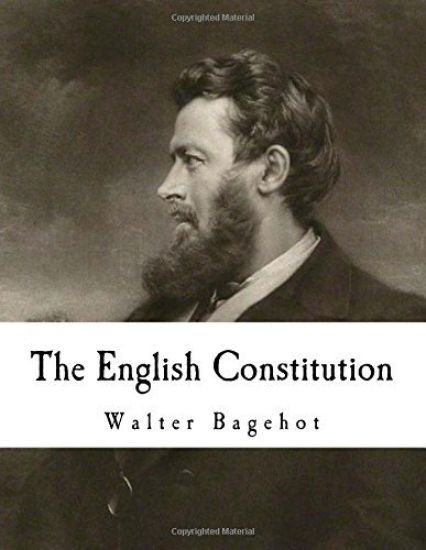
The English Constitution: The Constitution of the United Kingdom
Walter Bagehot
Createspace Independent Publishing Platform
2018
nidottu
The English Constitution by Walter Bagehot. The English Constitution is a book by Walter Bagehot. First serialised in The Fortnightly Review between 15 May 1865 and 1 January 1867, and later published in book form in the latter year. It explores the constitution of the United Kingdom, specifically the functioning of Parliament and the British monarchy, and the contrasts between British and American government. The book became a standard work which was translated into several languages. There is a great difficulty in the way of a writer who attempts to sketch a living Constitution-a Constitution that is in actual work and power. The difficulty is that the object is in constant change. An historical writer does not feel this difficulty: he deals only with the past; he can say definitely, the Constitution worked in such and such a manner in the year at which he begins, and in a manner in such and such respects different in the year at which he ends; he begins with a definite point of time and ends with one also. But a contemporary writer who tries to paint what is before him is puzzled and a perplexed: what he sees is changing daily. He must paint it as it stood at some one time, or else he will be putting side by side in his representations things which never were contemporaneous in reality.
A Practical Plan for Assimilating the English and American Money as a Step towards a Universal Money
Walter Bagehot
Hansebooks
2018
nidottu
Lombard Street: A Description of the Money Market by Walter Bagehot. I venture to call this Essay 'Lombard Street, ' and not the 'Money Market, ' or any such phrase, because I wish to deal, and to show that I mean to deal, with concrete realities. A notion prevails that the Money Market is something so impalpable that it can only be spoken of in very abstract words, and that therefore books on it must always be exceedingly difficult. But I maintain that the Money Market is as concrete and real as anything else; that it can be described in as plain words; that it is the writer's fault if what he says is not clear. In one respect, however, I admit that I am about to take perhaps an unfair advantage. Half, and more than half, of the supposed 'difficulty' of the Money Market has arisen out of the controversies as to 'Peel's Act, ' and the abstract discussions on the theory on which that act is based, or supposed to be based. But in the ensuing pages I mean to speak as little as I can of the Act of 1844; and when I do speak of it, I shall deal nearly exclusively with its experienced effects, and scarcely at all, if at all, with its refined basis
The Works of Walter Bagehot
Richard H. Hutton; Walter Bagehot; Forrest Morgan
Hansebooks
2018
nidottu
The Works of Walter Bagehot
Richard H. Hutton; Walter Bagehot; Forrest Morgan
Hansebooks
2018
nidottu
The Works of Walter Bagehot
Richard H. Hutton; Walter Bagehot; Forrest Morgan
Hansebooks
2018
nidottu
The Works of Walter Bagehot
Richard H. Hutton; Walter Bagehot; Forrest Morgan
Hansebooks
2018
nidottu
The Works and Life of Walter Bagehot
Walter Bagehot; Russell Barrington
Creative Media Partners, LLC
2018
pokkari
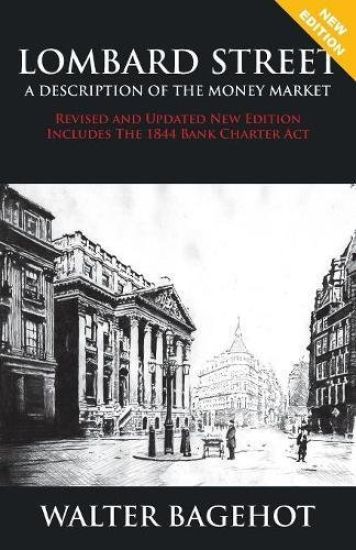
LOMBARD STREET - Revised and Updated New Edition, Includes The 1844 Bank Charter Act
Walter Bagehot
White Crane Publishing
2017
pokkari
A financial classic, Lombard Street continues to be widely read by those with a professional interest in the finance and banking industry'--more than a century after its first publication in 1873. Lombard's author, Walter Bagehot (1826 - 1877), was one of the most influential journalists of the mid-Victorian period and wrote extensively about literature, government and economic affairs. Bagehot was an economist, political analyst and editor-in-chief of The Economist. Among his voluminous writings, his most reputable offerings are the two books, The English Constitution and this publication, Lombard Street. Lombard Street: A Description of the Money Market, started life in 1858 as a series of articles that Bagehot wrote for The Economist. It was rewritten twice and revised with extensive labor and care before finally being published in 1873. Lombard Street is thus a departure into economic and financial studies, applying keen observation and analysis of the business of banking. Bagehot dissected the Bank of England's foundations, economic incentives, goals, and functions. It might perhaps not be too much to say that the theory of a one-reserve system of banking, and how to work it, originated in Lombard Street and the articles that were its foundation. Subsequently, the constitutions of most national Central Banks were reinvented and forever changed as a consequence. The U.S. Federal Reserve and the International Monetary Fund (IMF) have since been influenced by the enduring independent thought and extraordinary clarity provided by Bagehot in this famous book. This new edition has been completely re-typeset, correcting many editorial issues inherent within the original print. Additionally, we have also included the 1844 Bank Charter as it was in-acted at the time, referred to in the text as "Peel's Act" and at times, "Act of 1844," as we feel this may be of some benefit to the reader.
Lombard Street: A Description of the Money Market
Walter Bagehot
Createspace Independent Publishing Platform
2017
nidottu
Lombard Street: A Description of the Money Market by Walter Bagehot. I venture to call this Essay 'Lombard Street, ' and not the 'Money Market, ' or any such phrase, because I wish to deal, and to show that I mean to deal, with concrete realities. A notion prevails that the Money Market is something so impalpable that it can only be spoken of in very abstract words, and that therefore books on it must always be exceedingly difficult. But I maintain that the Money Market is as concrete and real as anything else; that it can be described in as plain words; that it is the writer's fault if what he says is not clear. In one respect, however, I admit that I am about to take perhaps an unfair advantage. Half, and more than half, of the supposed 'difficulty' of the Money Market has arisen out of the controversies as to 'Peel's Act, ' and the abstract discussions on the theory on which that act is based, or supposed to be based. But in the ensuing pages I mean to speak as little as I can of the Act of 1844; and when I do speak of it, I shall deal nearly exclusively with its experienced effects, and scarcely at all, if at all, with its refined basis
The English Constitution by Walter Bagehot. The English Constitution is a book by Walter Bagehot. First serialised in The Fortnightly Review between 15 May 1865 and 1 January 1867, and later published in book form in the latter year. It explores the constitution of the United Kingdom, specifically the functioning of Parliament and the British monarchy, and the contrasts between British and American government. The book became a standard work which was translated into several languages. There is a great difficulty in the way of a writer who attempts to sketch a living Constitution
The son of a Somerset-based banker, Walter Bagehot (1826–77) studied classics and philosophy at University College London and later qualified as a barrister, but gave up the law to join the family business. Expansive in his intellectual appetites, he wrote across an array of subjects, including politics, finance, science and literature. From 1861 until his death, he edited The Economist. In this classic 1867 publication, comprising essays that had previously appeared in the Fortnightly Review, Bagehot sought to present the 'living reality' of how Britain was governed at that time. His analysis is remembered for its distinction between the 'dignified' and 'efficient' parts of the constitution, with the institution of the monarchy perceived as embodying the former quality and inspiring deference among the masses. Bagehot's assessments have been much studied and debated ever since. His book on the contemporary money market, Lombard Street (1873), is also reissued in this series.
The Works of Walter Bagehot
Walter Bagehot; Richard Holt Hutton; Forrest Morgan
Hansebooks
2017
pokkari