Kirjojen hintavertailu. Mukana 12 595 353 kirjaa ja 12 kauppaa.

Kirjailija

Walter Benjamin

Kirjat ja teokset yhdessä paikassa: 259 kirjaa, julkaisuja vuosilta 1971-2026, suosituimpien joukossa Charles Baudelaire. Vertaile teosten hintoja ja tarkista saatavuus suomalaisista kirjakaupoista.

259 kirjaa

Kirjojen julkaisuhaarukka 1971-2026.

Charles Baudelaire

Charles Baudelaire

Walter Benjamin

Verso Books
2023
nidottu
Walter Benjamin, one of the foremost cultural commentators and theorists of this century, is perhaps best known for his analyses of the work of art in the modern age and the philosophy of history. Yet it was through his study of the social and cultural history of the late nineteenth-century Paris, examined particularly in relation to the figure of the great Parisian lyric poet Charles Baudelaire, that Benjamin tested and enriched some of his core concepts and themes. Contained within these pages are, amongst other insights, his notion of the flaneur, his theory of memory and remembrance, his assessment of the utopian Fourier and his reading of the modernist movement.
Glasarkitektur

Glasarkitektur

Paul Scheerbart; Walter Benjamin; Bruno Taut

Bokförlaget Faethon
2016
sidottu
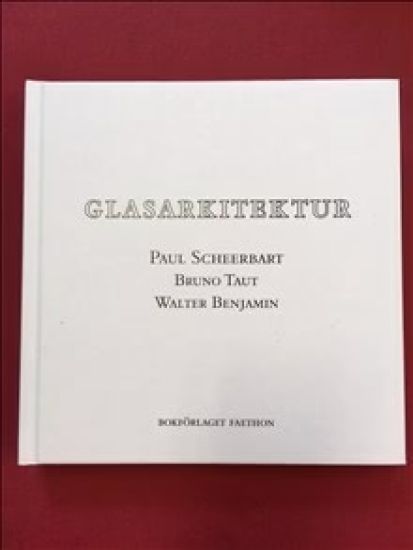
"Vi lever fo?r det mesta i slutna rum. De bildar den miljo? ur vilken va?r kultur va?xer fram.Va?r kultur a?r till viss del en produkt av va?r arkitektur. Om vi vill lyfta upp va?r kultur till en ho?gre niva? sa? a?r vi pa? gott och ont tvungna att omvandla va?r arkitektur. Och detta kommer bara att vara mo?jligt om vi tar bort det slutna fra?n de rum vi lever i." Sa? inleds Paul Scheerbarts manifest "Glasarkitektur" fra?n 1914. Scheer­bart pla?derar fo?r glasets kapacitet att fullsta?ndigt revolutionera inte bara byggnadskonsten utan hela den ma?nskliga tillvaron. Om tegelarkitekturen ersa?tts av glasarkitektur skulle jorden bli "som insvept i en kla?dnad av briljanter och emalj. Man kan inte ens fo?resta?lla sig denna ha?rlighet. [...] Vi skulle ha ett paradis pa? jorden och inte beho?va ska?da la?ngtansfullt mot paradiset i himlen." I denna volym presenteras Scheerbarts visiona?ra text fo?r fo?rsta ga?ngen pa? svenska i o?versa?ttning av Sven­-Olov Wallenstein, som ocksa? har skrivit ett utfo?rligt efterord. Texten a?tfo?ljs av Bruno Tauts "Glaskedje­ brev", da?r Scheerbarts glaside?er fo?renas med en utopisk arkitektur, och av Walter Benjamins Scheerbartinfluerade kortessa? "Erfarenhet och fattigdom".
Fronesis 2. Utopier

Fronesis 2. Utopier

Barbara Taylor; Norberto Bobbio; Jean Baudrillard; Michel Foucault; Charlotte Perkins Gilman; Walter Benjamin; William Morris; Frida Stéenhoff

Fronesis
2016
lehtivihko, moniste
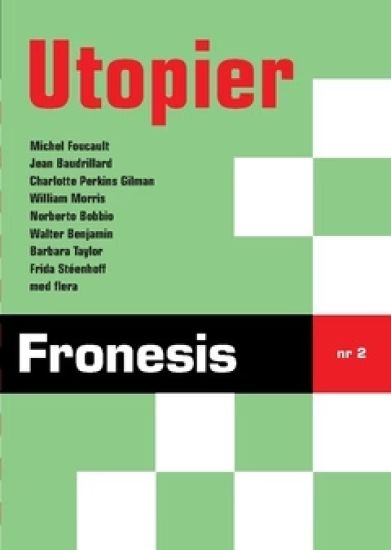
Berlinmurens fall tycktes markera slutet för den kommunistiska utopin, men samtidigt bars förändringen fram av en utopisk energi och drömmar om ett pluralistiskt samhälle utan förtryck. Det nya årtusendets inträde har samtidigt setts som inledningen på en ny tid, vilket gett näring till utopiska spekulationer. Fronesis nr 2 befinner sig i skärningspunkten mellan verklighet och utopi. Det handlar om den socialistiska idétraditionens förhållande till det utopiska tänkandet, om feministiska utopier, om det tidiga 1900-talets utopiska tanke om att skapa ”en ny människa” med mera. Innehåll i Fronesis nr 2 (138 sidor): Norberto Bobbio: Den förvridna utopins fall Petra Hall och Sara Winnfors: I glappet mellan möjligt och omöjligt Per Månson: Utopiernas död: Har socialismen någon framtid? Barbara Taylor: Den socialistiska feminismen: utopi eller vetenskap? Jakob Norberg: Inledning till Walter Benjamins ”Program för en proletär barnteater” Walter Benjamin: Program för en proletär barnteater Ulrika Holgersson: Frida Stéenhoffs feministiska utopi Frida Stéenhoff: Feminismens moral Jenny Lindblad: Herland – Den litterära feministiska utopin Charlotte Perkins Gilman: Våra förhållanden och deras Sara Winnfors: Arkitektur och makt Ur Acceptera-manifestet: Staden William Morris: Om den dekorativa konstens ursprung Michel Foucault: Rum, makt och kunskap Richard Saage: Reflektioner över den politiska utopins framtid Jean Baudrillard: I skuggan av millenniet, eller Det ovissa år 2000 Blå Tåget: Nyårsafton
The Correspondence of Walter Benjamin, 1910-1940

The Correspondence of Walter Benjamin, 1910-1940

Walter Benjamin

University of Chicago Press
2012
nidottu
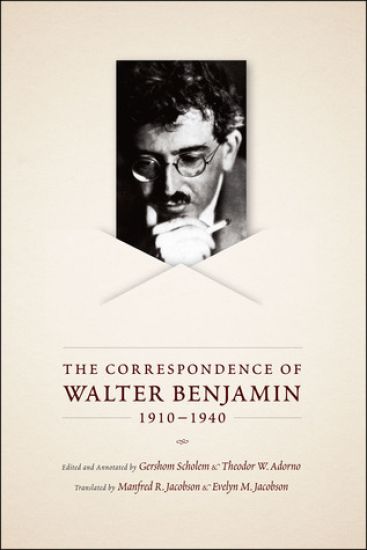
Called "the most important critic of his time" by Hannah Arendt, Walter Benjamin has only become more influential over the years, as his work has assumed a crucial place in current debates over the interactions of art, culture, and meaning. A "natural and extraordinary talent for letter writing was one of the most captivating facets of his nature," writes Gershom Scholem in his foreword to this volume; and Benjamin's correspondence reveals the evolution of some of his most powerful ideas, while also offering an intimate picture of Benjamin himself and the times in which he lived. Writing at length to Scholem and Theodor Adorno, and exchanging letters with Rainer Maria Rilke, Hannah Arendt, Max Brod, and Bertolt Brecht, Benjamin elaborates on his ideas about metaphor and language. He reflects on literary figures from Kafka to Karl Kraus, and expounds his personal attitudes toward such subjects as Marxism and French national character. Providing an indispensable tool for any scholar wrestling with Benjamin's work, "The Correspondence of Walter Benjamin" is a revelatory look at the man behind much of the twentieth century's most significant criticism.
Walter Benjamin: Selected Writings

Walter Benjamin: Selected Writings

Walter Benjamin

The Belknap Press
2006
nidottu
"Every line we succeed in publishing today...is a victory wrested from the powers of darkness." So wrote Walter Benjamin in January 1940. Not long afterward, he himself would fall prey to those powers, a victim of suicide following a failed attempt to flee the Nazis. However insistently the idea of catastrophe hangs over Benjamin's writings in the final years of his life, the "victories wrested" in this period nonetheless constitute some of the most remarkable twentieth-century analyses of the emergence of modern society. The essays on Charles Baudelaire are the distillation of a lifetime of thinking about the nature of modernity. They record the crisis of meaning experienced by a civilization sliding into the abyss, even as they testify to Benjamin's own faith in the written word.This volume ranges from studies of Baudelaire, Brecht, and the historian Carl Jochmann to appraisals of photography, film, and poetry. At their core is the question of how art can survive and thrive in a tumultuous time. Here we see Benjamin laying out an ethic for the critic and artist--a subdued but resilient heroism. At the same time, he was setting forth a sociohistorical account of how art adapts in an age of violence and repression. Working at the height of his powers to the very end, Benjamin refined his theory of the mass media that culminated in the final version of his essay "The Work of Art in the Age of Its Technological Reproducibility." Also included in this volume is his influential piece "On the Concept of History," completed just before his death. The book is remarkable for its inquiry into the nature of "the modern" (especially as revealed in Baudelaire), for its ideas about the transmogrification of art and the radical discontinuities of history, and for its examples of humane life and thought in the midst of barbarism. The entire collection is eloquent testimony to the indomitable spirit of humanity under siege.
Walter Benjamin: Selected Writings

Walter Benjamin: Selected Writings

Walter Benjamin

The Belknap Press
2005
nidottu
In the frenzied final years of the Weimar Republic, amid economic collapse and mounting political catastrophe, Walter Benjamin emerged as the most original practicing literary critic and public intellectual in the German-speaking world. Volume 2 of the Selected Writings is now available in paperback in two parts.In Part 1, Benjamin is represented by two of his greatest literary essays, "Surrealism" and "On the Image of Proust," as well as by a long article on Goethe and a generous selection of his wide-ranging commentary for Weimar Germany's newspapers. Part 2 contains, in addition to the important longer essays, "Franz Kafka," "Karl Kraus," and "The Author as Producer," the extended autobiographical meditation "A Berlin Chronicle," and extended discussions of the history of photography and the social situation of the French writer, previously untranslated shorter pieces on such subjects as language and memory, theological criticism and literary history, astrology and the newspaper, and on such influential figures as Paul Valery, Stefan George, Hitler, and Mickey Mouse.
Walter Benjamin: Selected Writings

Walter Benjamin: Selected Writings

Walter Benjamin

The Belknap Press
2004
nidottu
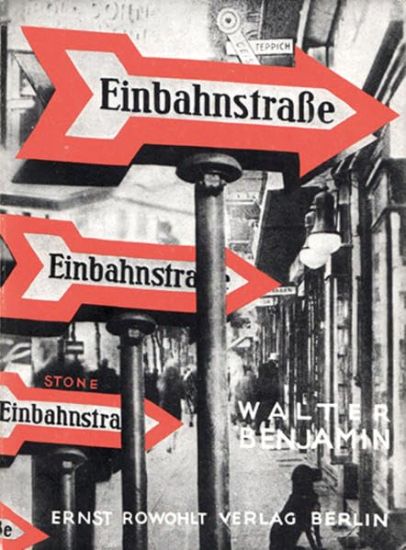
Walter Benjamin was one of the most original and important critical voices of the twentieth century, but until now only a few of his writings have been available in English. Harvard University Press has now undertaken to publish a significant portion of his work in definitive translation, under the general editorship of Michael W. Jennings. This volume, the first of three, will at last give readers of English a true sense of the man and the many facets of his thought. (The magnum opus of Benjamin’s Paris years, The Arcades Project, has been published in a separate volume.) Walter Benjamin emerged from the head-on collision of an idealistic youth movement and the First World War, which Benjamin and his close friends thought immoral. He walked away from the wreck scarred yet determined “to be considered as the principal critic of German literature.” But the scene, as he found it, was dominated by “talented fakes,” so—to use his words—“only a terrorist campaign would I suffice” to effect radical change. This book offers the record of the first phase of that campaign, culminating with “One Way Street,” one of the most significant products of the German avant-garde of the Twenties. Against conformism, homogeneity, and gentrification of all life into a new world order, Benjamin made the word his sword. Volume I of the Selected Writings brings together essays long and short, academic treatises, reviews, fragments, and privately circulated pronouncements. Fully five-sixths of this material has never before been translated into English. The contents begin in 1913, when Benjamin, as an undergraduate in imperial Germany, was president of a radical youth group, and take us through 1926, when he had already begun, with his explorations of the world of mass culture, to emerge as a critical voice in Weimar Germany’s most influential journals. The volume includes a number of his most important works, including “Two Poems by Friedrich Hölderlin,” “Goethe’s Elective Affinities,” “The Concept of Criticism in German Romanticism,” “The Task of the Translator,” and “One Way Street.” He is as compelling and insightful when musing on riddles or children’s books as he is when dealing with weightier issues such as the philosophy of language, symbolic logic, or epistemology. We meet Benjamin the youthful idealist, the sober moralist, the political theorist, the experimentalist, the translator, and, above all, the virtual king of criticism, with his magisterial exposition of the basic problems of aesthetics. Benjamin’s sentences provoke us to return to them again and again, luring us as though with the promise of some final revelation that is always being postponed. He is by turns fierce and tender, melancholy and ebullient; he is at once classically rooted, even archaic, in his explorations of the human psyche and the world of things, and strikingly progressive in his attitude toward society and what he likes to call the organs of the collective (its architectures, fashions, signboards). Throughout, he displays a far-sighted urgency, judging the present on the basis of possible futures. And he is gifted with a keen sense of humor. Mysterious though he may sometimes be (his Latvian love, Asia Lacis, once described him as a visitor from another planet), Benjamin remains perhaps the most consistently surprising and challenging of critical writers.
Charles Baudelaire

Charles Baudelaire

Walter Benjamin

Verso Books
1997
nidottu
Walter Benjamin, one of the foremost cultural commentators and theorists of this century, is perhaps best known for his analyses of the work of art in the modern age and the philosophy of history. Yet it was through his study of the social and cultural history of the late nineteenth-century Paris, examined particularly in relation to the figure of the great Parisian lyric poet Charles Baudelaire, that Benjamin tested and enriched some of his core concepts and themes. Contained within these pages are, amongst other insights, his notion of the flaneur, his theory of memory and remembrance, his assessment of the utopian Fourier and his reading of the modernist movement.
Valfrändskap

Valfrändskap

Johann Wolfgang von Goethe; Walter Benjamin; Birgitta Holm

Bokförlaget Faethon
2026
sidottu
Goethe fick av en dam höra vad hon tyckte om Valfrändskap: »Jag kan då rakt inte gilla den boken, herr von Goethe; den är verk­ligen omoralisk och jag råder inget fruntimmer att läsa den.« Heinrich Laube beskriver Goethes reaktion: »Därpå satt Goethe tyst och allvarlig en stund och sade till sist med stark känsla: Det smärtar mig, det är ju min bästa bok.« Valfrändskap är historien om äktenskapet mellan Edvard och Charlotte. De bor på sin lantegendom och sysselsätter sig med att ordna landskapsparker. När Edvards vän, Kaptenen, anlitas för att hjälpa till i arbetet förändras det gifta parets relation. Och då Charlottes niece Ottilie också anländer förändras fullständigt förbindelserna för dem alla. Kaptenen tar över landskapsarbetet, Ottilie tar över hushållet. Ordet valfrändskap myntades först inom kemin för att beskriva hur vissa föreningar upplöses och nya bildas. I romanen ställs de mänskliga lagarna parallellt med de naturvetenskapliga. De båda parens öden framstår i den meningen som oundvikliga. Valfrändskap anses av många vara Goethes yppersta verk, lika gåtfullt som svårklassificerbart. Denna utgåva innehåller även Walter Benjamins klassiska studie Goethes »Valfränd­skaperna«. Litteraturvetaren Birgitta Holm har skrivit förord. Britt G. Hallqvist har översatt Valfrändskap och Carl-Henning Wijkmark har översatt Goethes »Valfrändskaperna«.
Berlin Childhood around 1900

Berlin Childhood around 1900

Walter Benjamin; Theodor Adorno

Verso Books
2025
sidottu
Completed in exile in Paris, as the second World War was dawning, Walter Benjamin looks back at the city of his birth at the beginning of the century. The book is both a sensory memoir of childhood as well as a tour of the iconic spaces of city. These are 'expeditions into the depths of memory', moving through vignettes of domestic settings and classrooms, city squares, parks and streets. The memories of childhood merge with a city that is about to disappear into darkness. As his friend, Adorno, wrote, the work is 'illuminated by lightning flashes of immediate remembrance . . .the images this book unearths and brings strangely near are not idyllic and not contemplative. Over them lies the shadow of the Third Reich. And through them dreamily runs a shudder at the long forgotten.'
Dreams: Walter Benjamin

Dreams: Walter Benjamin

Walter Benjamin

Bierke Verlag
2025
nidottu
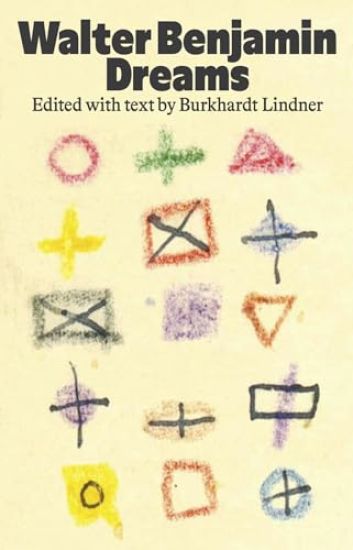
Though published during his lifetime, Walter Benjamin's dream notes and theoretical reflections on dreams are collected here for the first time in a single volume.Dreams highlights a dimension of Benjamin's thinking that was invaluable for his writing and thought but which has thus far received little attention.The first section, "Dream Notes," is a comprehensive and chronological collection of Benjamin's transcriptions of his own dreams and includes unpublished manuscript materials. The second section, "On Perception of Dreams. Awakening and Dream," features his theoretical reflections on dreams, ranging from short aphorisms and longer analyses of dream literature and the history of dreams to the political conception of a "dreaming collective" and its awakening.Editor Burkhardt Lindner describes Benjamin's literary approach to his own dreams in the epilogue and gives a sketch of Benjamin's own definition of the dream sphere, independent of and in contrast to Surrealism and Freud's interpretation of dreams.This pocket-size reader presents Benjamin as both a great dreamerand an important theorist of dreams.
Lille fotografihistorie, BB

Lille fotografihistorie, BB

Walter Benjamin

G. E. C. Gads Forlag
2025
nidottu
I Lille fotografihistorie (1931) undersøger Walter Benjamin, hvordan fotografiet ikke blot afbilder verden, men aktivt former vores syn på den. Med begrebet det optisk ubevidste – det kame¬raet fanger, men som undslipper det menneskelige blik – åbner Benjamin for nye perspektiver på perception og teknologiens rolle i vores erfaringsverden. Lille fotografihistorie er langt fra en traditionel fotografihistorie. Det er en refleksion over sin samtid, skrevet i en intens og nærmest manifestlignende stil; et essay, der former sig med filosofiske vendinger, giver kulturkritiske perspektiver og på sin egen måde introducerer fotografiets historie. Samtidig inviterer bogen til en stadig aktuel debat om, hvordan billeder former vores virkelighed.JACOB AUE SOBOLI sine kontrastfulde sort/hvide billeder insisterer Magnum-fotografen Jacob Aue Sobol (f. 1976) på deltagelse – en fotografi-praksis båret af ønsket om at forstå det usynlige bånd mellem os, og samtidigfølelsen af afmagt ved det uundgåelige i at stå udenfor. Sobols fotografier skaber i dette udvalg en visuel fortælling om nærhed og skrøbelighed. Ikke gennem et nostalgisk slør, men fastholdt i et intenst øjeblik – i en kærlig omfavnelse eller et blik, der åbner sig.Billedserien står som et selvstændigt, visuelt spor, men kan også ses i relation til Benjamins tekst.Walter Benjamin (1892-1940) var en tysk-jødisk filosof og kulturkritiker, hvis tænkning har haft stor betydning for eftertidens filosofi og kulturteori. Med filosofisk dybde og politisk engagement og indignation beskæftigede han sig med emner som æstetik og modernitet.Blandt hans mest kendte værker er Kunstværket i dets tekniske reproducerbarheds tidsalder, der i sin tematik læner sig op ad Lille fotografihistorie. Og til de mere omfattende værker hører Barndom i Berlin omkring år 1900 og Passageværket, samt Ensrettet gade, der også er udkommet på A Mock Book. Alle bøger, der er både smukke og komplekse i deres blanding af filosofi og litteratur, metafysik og sansekonkretion – kendetegn for Benjamins stil og tankegang i det hele taget.Benjamin flygtede fra først Tyskland og siden Frankrig under krigen og endte med at tage sit eget liv ved grænsen til Spanien i 1940.
On Goethe

On Goethe

Walter Benjamin

STANFORD UNIVERSITY PRESS
2025
sidottu
On Goethe contains the full range of Walter Benjamin's reflections on the central figure in modern German culture. The writings in this volume—newly translated, fully annotated, and framed by an extensive introduction—display a variety of styles and cover a vast array of topics. The collection revolves around two strikingly different essays. Whereas "Goethe's Elective Affinities" develops a theory of critique in which a work is illuminated wholly from within itself, an article Benjamin wrote on Goethe for the Soviet Encyclopedia represents his first large-scale attempt to elaborate a historical-materialist methodology. The other thirty translations stand in similarly productive tension with one another. Some are concerned with concepts of beauty and categories of the aesthetic, others with the relation of art to politics and the status of "classical authors" in contemporary culture, and still others with what remains of humanistic traditions in the wake of their disappearance under fascist regimes and what synthesis is required for the construction of a historical object. The volume provides a glimpse into the laboratory of Benjamin's thought, while granting readers a series of insights into the epochal phenomena that gather around the name "Goethe."
On Goethe

On Goethe

Walter Benjamin

STANFORD UNIVERSITY PRESS
2025
pokkari
On Goethe contains the full range of Walter Benjamin's reflections on the central figure in modern German culture. The writings in this volume—newly translated, fully annotated, and framed by an extensive introduction—display a variety of styles and cover a vast array of topics. The collection revolves around two strikingly different essays. Whereas "Goethe's Elective Affinities" develops a theory of critique in which a work is illuminated wholly from within itself, an article Benjamin wrote on Goethe for the Soviet Encyclopedia represents his first large-scale attempt to elaborate a historical-materialist methodology. The other thirty translations stand in similarly productive tension with one another. Some are concerned with concepts of beauty and categories of the aesthetic, others with the relation of art to politics and the status of "classical authors" in contemporary culture, and still others with what remains of humanistic traditions in the wake of their disappearance under fascist regimes and what synthesis is required for the construction of a historical object. The volume provides a glimpse into the laboratory of Benjamin's thought, while granting readers a series of insights into the epochal phenomena that gather around the name "Goethe."
Das Kunstwerk im Zeitalter seiner technischen Reproduzierbarkeit
Benjamin analysiert die sthetischen und politischen Implikationen dieser Verschiebung, wobei er das revolution re Potenzial des Kinos als Instrument zur kollektiven Bewusstseinsbildung betont. Seine Untersuchung ber hrt Themen wie sinnliche Wahrnehmung, die Beziehung zwischen Faschismus und der sthetisierung von Gewalt und die Rolle der Kunst in Industriegesellschaften. In den 1930er Jahren verfasst, bleibt der Text ein Eckpfeiler der Kultur- und Medienwissenschaft und bietet einen kritischen Rahmen zum Verst ndnis zeitgen ssischer Fragestellungen der digitalen Kultur und visuellen Medien. Diese Ausgabe enth lt oft Kommentare, die Benjamins Denken innerhalb der intellektuellen Landschaft der Frankfurter Schule und hinsichtlich seiner modernen Relevanz kontextualisieren. Leser, die sich f r kritische Theorie, Kunstgeschichte oder moderne Medien interessieren, finden eine prophetische Analyse der Spannungen zwischen technologischer Innovation und der Bewahrung k nstlerischer Bedeutung.
Unpacking My Library

Unpacking My Library

Walter Benjamin

PENGUIN BOOKS LTD
2025
nidottu
90 Classic titles celebrating 90 years of Penguin Books‘Every sort of passion verges on chaos, I know, but what the collecting passion verges on is a chaos of memories.’From intimate musings on his book collection, to a dream-like trip through the bustling streets of Marseille, each of these essays offers a compelling journey into the mind of one of the twentieth century’s most influential philosophers.