

Kirjailija
Walter Cummins
Kirjat ja teokset yhdessä paikassa: 14 kirjaa, julkaisuja vuosilta 2006-2022, suosituimpien joukossa The End of the Circle. Vertaile teosten hintoja ja tarkista saatavuus suomalaisista kirjakaupoista.
14 kirjaa
Kirjojen julkaisuhaarukka 2006-2022.

Which reproduction of Rembrandt's "Old Man with a Golden Chain" comes closest to capturing the real painting? Have the three centuries since it sat on Rembrandt's easel altered the tones of the oils so that the original no longer exists? Will I ever be able to know the authentic work of art?The essays in this collection were first published at various points over a decade or more. Each was written separately with an individual focus. But when I gathered them and reread, I discovered they were united by a common theme and that, unaware, I've been addressing variations of the question of authenticity.What is the authentic way of seeing a painting, listening to music, getting a college education, grieving, working, recognizing animal rights, and more? These essays consider the possibilities, without answering the questions. I hope that's enough for them to be interesting.Walter Cummins

Called "irresponsible" and "maladjusted" by a former governor of New Jersey for an editorial he wrote while a Rutgers undergraduate, Walter Cummins has compiled essays that document a lifetime of misadventures that began before kindergarten and continued through graduate school and beyond into his teaching career.
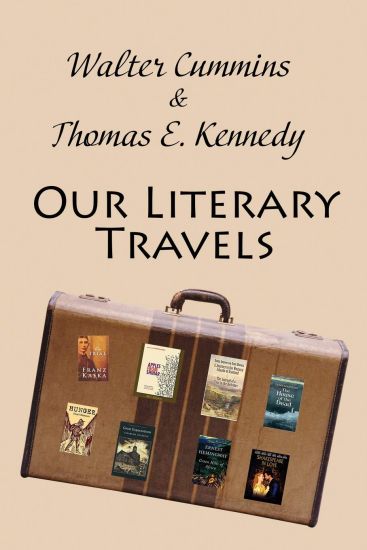
Our literary travels have taken us to Miami, Prague, the West of Ireland, Bruges/Brugge, Copenhagen, Broughton Castle, Bath, Haut-Koenigsbourg, Stockholm, Danish Prisons, Buonconvento, Paris, London, South Africa, Iceland, the Virgin Islands, and the Isle of Mull. Once there, we walked in the footsteps of Jane Austen, Ernest Hemingway, Fyodor Dostoevsky, James Boswell and Samuel Johnson, Charles Dickens, Virginia Woolf, George Bernard Shaw, William Butler Yeats, Knut Hamsun, Halld r Laxness, Giovanni Boccaccio, William Burroughs, Georges Rodenbach, Heinrich B ll, Hyam Plutzik, Franz Kafka, and many others. These twenty essays reveal our discoveries.
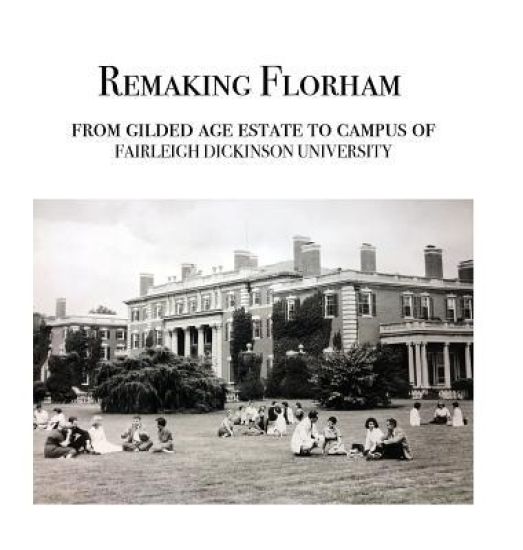
Remaking Florham: From gilded age estate to campus of Fairleigh Dickinson University
Walter Cummins; Carol Bere; Arthur T. Vanderbilt
Florham Books
2019
sidottu
Unlike many of the great American estates that no longer exist, Florham--the historic country home of the Vanderbilt Twomblys--was transformed into a campus of Fairleigh Dickinson University in 1958, Remaking Florham tells that story through words and pictures--from the purchase and conversion of the land and buildings to the experiences of students who attended in the initial years.

Olmsted's Vision: The Landscape of Florham
Walter Cummins; Arthur T. Vanderbilt
Florham Books
2018
sidottu
As significant as the mansion of a great Gilded Age estate like Florham, the New Jersey country home of Florence Vanderbilt Twombly, was its landscape. This book explores how that greatest of all landscape architects, Frederick Law Olmsted, visualized 1,200 acres of woodlands and scrub growth and swamps and transformed them into a magical country retreat for a family which could afford, and demanded, "the best of the best." The book includes planning drawings that illustrate specific concepts for the development of the estate and many paste and present photographs that show what was and what is.This historical record describes the origins of the estate and the people involved--from the landscape architects of Olmsted's firm to the men who dug and planted.

Walter Cummins learned very early on that the writer he knew as a person, no matter how well, is not the writer whose words he read. Even when the material is autobiographical, even based on incidents he's heard about in great detail, the written version is another reality and the voice or character experiencing the situations a much more complex being than the person who told him about them. So, what does it actually mean to know a writer?
From Pantyhose to Spandex: Writers on the Job Redux
Thomas E. Kennedy; Walter Cummins
Serving House Books
2017
nidottu

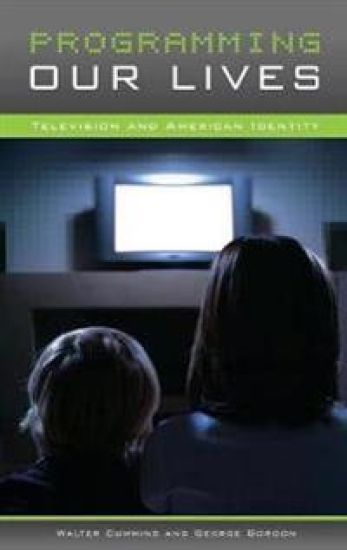
In this timely examination of television and American identity, Cummins and Gordon take readers on an informed walk through the changes that TV has already wrought-and those still likely to confront us.Commercial television in America is less than 60 years old, yet it has had an enormous impact on what we like, what we do, what we know, and how we think. A family transplanted from the 1940s to the present day would certainly be stunned by a fundamentally different world: instead of gathering in the living room for a shared evening of radio, they would be scattered around the house to indulge their individual interests on one of a hundred cable channels; instead of a society with rigid racial and ethnic divisions, they would see people of different ethnicities in passionate embraces; and certainly they would see very different sets of values reflected across the board. They would, in short, find themselves in an unrecognizable America, one both reflected in and shaped by television, a medium that has been shown to have an unprecedented influence on our lives both for better and for worse.By focusing on the development of television within the cultural context that surrounds it, and drawing on such phenomena as quiz shows, comedy hours, the Kennedy assassination, the Olympics, sitcoms, presidential ads, political debates, MTV, embedded journalism, and reality TV, the authors reveal television's impact on essential characteristics of American life. They cover topics as diverse as politics, crime, medicine, sports, our perceptions, our values, our assumptions about privacy, and our unquenchable need for more things. In addition, they consider the future of the medium in the light of the proliferation of programming options, the prevalence of cameras and receivers in our lives, the growing links between TV and computers, and the crossed boundaries of television throughout the world.