Kirjojen hintavertailu. Mukana 12 595 353 kirjaa ja 12 kauppaa.

Kirjailija

Walter E. Little

Kirjat ja teokset yhdessä paikassa: 4 kirjaa, julkaisuja vuosilta 2004-2026, suosituimpien joukossa La ütz Awäch?. Vertaile teosten hintoja ja tarkista saatavuus suomalaisista kirjakaupoista.

4 kirjaa

Kirjojen julkaisuhaarukka 2004-2026.

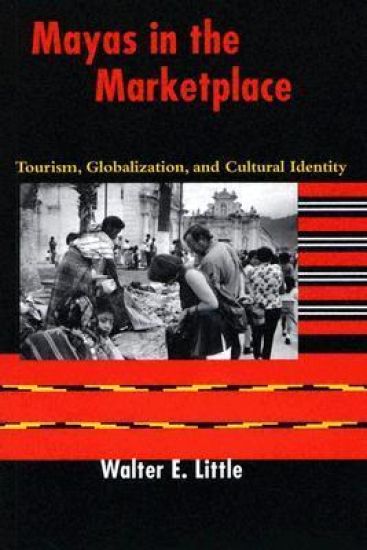
La ütz Awäch?

La ütz Awäch?

R. McKenna Brown; Judith M. Maxwell; Walter E. Little

University of Texas Press
2006
pokkari
Kaqchikel is one of approximately thirty Mayan languages spoken in Belize, Guatemala, Mexico, and, increasingly, the United States. Of the twenty-two Mayan languages spoken in Guatemala, Kaqchikel is one of the four "mayoritarios," those with the largest number of speakers. About half a million people living in the central highlands between Guatemala City and Lake Atitlán speak Kaqchikel. And because native Kaqchikel speakers are prominent in the field of Mayan linguistics, as well as in Mayan cultural activism generally, Kaqchikel has been adopted as a Mayan lingua franca in some circles.This innovative language-learning guide is designed to help students, scholars, and professionals in many fields who work with Kaqchikel speakers, in both Guatemala and the United States, quickly develop basic communication skills. The book will familiarize learners with the words, phrases, and structures used in daily communications, presented in as natural a way as possible, and in a logical sequence. Six chapters introduce the language in context (greetings, the classroom, people, the family, food, and life) followed by exercises and short essays on aspects of Kaqchikel life. A grammar summary provides in-depth linguistic analysis of Kaqchikel, and a glossary supports vocabulary learning from both Kaqchikel to English and English to Kaqchikel. These resources, along with sound files and other media on the Internet at ekaq.stonecenter.tulane.edu, will allow learners to develop proficiency in all five major language skills-listening comprehension, speaking, reading, writing, and sociocultural understanding.
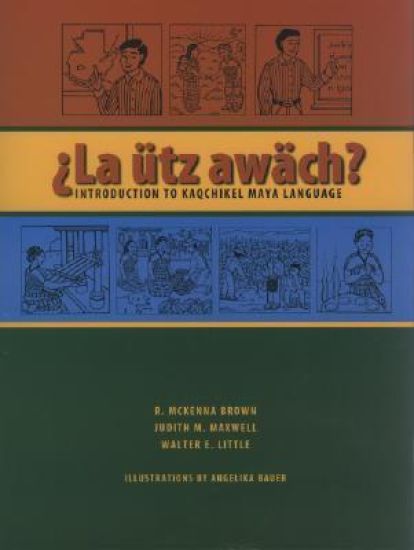
Kik'aslemal Ri Kaqchikela'

Kik'aslemal Ri Kaqchikela'

Walter E. Little; Judith M. Maxwell

UNIVERSITY OF TEXAS PRESS
2026
nidottu
An advanced Kaqchikel textbook that blends language learning with Maya culture. About half a million Maya in the highlands of Guatemala speak Kaqchikel, making it one of the most widely used Mayan languages. Kik’aslemal ri Kaqchikela’ offers guidance for advanced students. Unlike many language textbooks, it is designed with not only fluency but also cultural competency in mind. Inspired by conversations with native speakers, Kaqchikel teachers, and anthropologists focused on Maya communities, Kik’aslemal ri Kaqchikela’ supports language learning through readings on topics important to speakers in Guatemala, including Maya’ Nimab’äl K’u’x (Maya cosmology); Ri Tiko’n (agriculture); Yab’il rik’in Aq’om (disease and medicine); Samaj pa Jay, pa Tinamït (work at home and in town); and more. Chapters present readings on each theme, alongside worksheets, discussion questions framed around Maya history and culture, and a contextualizing essay in English. A Kaqchikel/Spanish/English glossary, extensive grammar appendix, and English translations of the readings support learning. The result is not the usual explanation of language mechanics but instead a nuanced lesson in communication across porous boundaries of cultural difference.
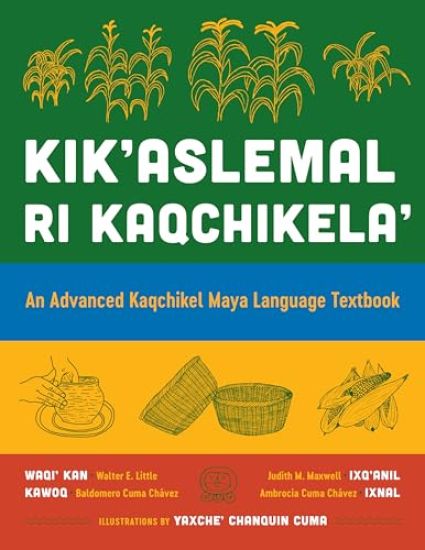
Kik'aslemal Ri Kaqchikela'

Kik'aslemal Ri Kaqchikela'

Walter E. Little; Judith M. Maxwell

UNIVERSITY OF TEXAS PRESS
2026
sidottu
An advanced Kaqchikel textbook that blends language learning with Maya culture. About half a million Maya in the highlands of Guatemala speak Kaqchikel, making it one of the most widely used Mayan languages. Kik’aslemal ri Kaqchikela’ offers guidance for advanced students. Unlike many language textbooks, it is designed with not only fluency but also cultural competency in mind. Inspired by conversations with native speakers, Kaqchikel teachers, and anthropologists focused on Maya communities, Kik’aslemal ri Kaqchikela’ supports language learning through readings on topics important to speakers in Guatemala, including Maya’ Nimab’äl K’u’x (Maya cosmology); Ri Tiko’n (agriculture); Yab’il rik’in Aq’om (disease and medicine); Samaj pa Jay, pa Tinamït (work at home and in town); and more. Chapters present readings on each theme, alongside worksheets, discussion questions framed around Maya history and culture, and a contextualizing essay in English. A Kaqchikel/Spanish/English glossary, extensive grammar appendix, and English translations of the readings support learning. The result is not the usual explanation of language mechanics but instead a nuanced lesson in communication across porous boundaries of cultural difference.
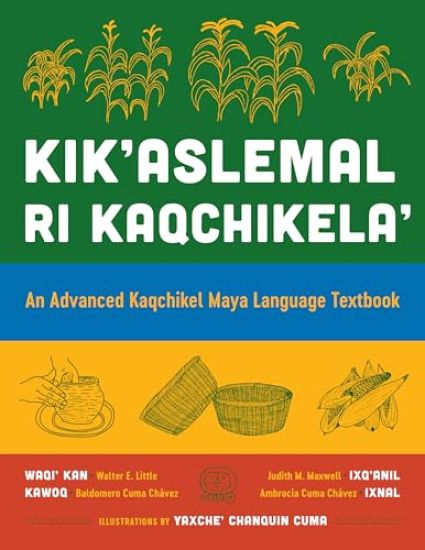
Mayas in the Marketplace

Mayas in the Marketplace

Walter E. Little

University of Texas Press
2004
pokkari
2005 — Best Book Award – New England Council of Latin American Studies Selling handicrafts to tourists has brought the Maya peoples of Guatemala into the world market. Vendors from rural communities now offer their wares to more than 500,000 international tourists annually in the marketplaces of larger cities such as Antigua, Guatemala City, Panajachel, and Chichicastenango. Like businesspeople anywhere, Maya artisans analyze the desires and needs of their customers and shape their products to meet the demands of the market. But how has adapting to the global marketplace reciprocally shaped the identity and cultural practices of the Maya peoples? Drawing on over a decade of fieldwork, Walter Little presents the first ethnographic study of Maya handicraft vendors in the international marketplace. Focusing on Kaqchikel Mayas who commute to Antigua to sell their goods, he explores three significant issues: how the tourist marketplace conflates global and local distinctions. how the marketplace becomes a border zone where national and international, developed and underdeveloped, and indigenous and non-indigenous come together. how marketing to tourists changes social roles, gender relationships, and ethnic identity in the vendors' home communities. Little's wide-ranging research challenges our current understanding of tourism's negative impact on indigenous communities. He demonstrates that the Maya are maintaining a specific, community-based sense of Maya identity, even as they commodify their culture for tourist consumption in the world market.