Kirjojen hintavertailu. Mukana 12 299 005 kirjaa ja 12 kauppaa.

Kirjailija

Walter Feinberg

Kirjat ja teokset yhdessä paikassa: 16 kirjaa, julkaisuja vuosilta 2000-2025, suosituimpien joukossa Walter Feinberg's Democratic Vision. Vertaile teosten hintoja ja tarkista saatavuus suomalaisista kirjakaupoista.

16 kirjaa

Kirjojen julkaisuhaarukka 2000-2025.

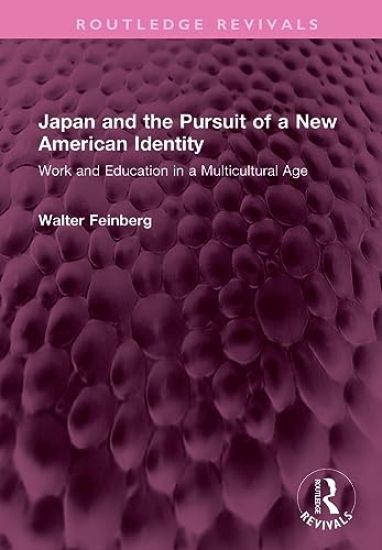
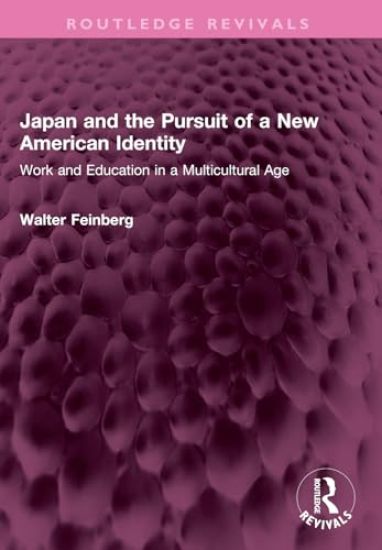
Japan and the Pursuit of a New American Identity

Japan and the Pursuit of a New American Identity

Walter Feinberg

TAYLOR FRANCIS LTD
2025
nidottu
First published in 1993, Japan and the Pursuit of a New American Identity is a sophisticated analysis of the mission of education in a multicultural age. Arguing that American education has been too long constrained by conservative discourse – which positions schools and students as weapons in an international competition with the Japanese – author Walter Feinberg assesses the cultural and philosophical limits of conservative vision as popularized by exponents Allan Bloom and E. D. Hirsch. Feinberg then develops a vision of education which accommodates the growing cultural diversity of American society and American schools. At the heart of Feinberg’s study is a unique philosophical analysis of Japanese and American attitudes towards work and education. Through a series of sensitively developed interview with American and Japanese workers, managers, parents, and teachers who have experienced life in one another’s culture, he examines the implications of our profound cultural differences with the Japanese for the development of a new American, multicultural identity. This book will be of interest to students of education, pedagogy, history and public policy.
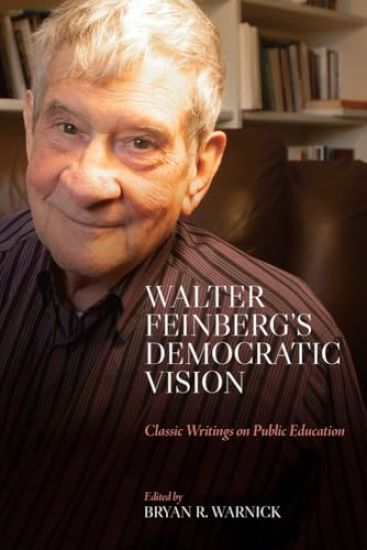
Walter Feinberg's Democratic Vision

Walter Feinberg's Democratic Vision

Walter Feinberg

STATE UNIVERSITY OF NEW YORK PRESS
2025
sidottu
Collects Walter Feinberg's classic writings on the meaning of democracy for public education. For over fifty years, Walter Feinberg has been a leader in interpreting democracy in and its meaning for public education. In this collection, Feinberg explores the question of how to study education, the necessary role of history and philosophy in this endeavor, and the need for educational theorists to engage with the lived realities of students, parents, and teachers through philosophical anthropology. He demonstrates a particular way of paying attention to public education that brings an interpretive sensitivity for others to the big philosophical questions of what public schooling should be in democratic societies. Feinberg explores many of the central questions that vex educational policy and practice: What should be the purpose of public schools? What should we think of school choice proposals? What are the relationships between religion and public schools? Should schools promote an American identity? How should we think about affirmative action? In this tour of educational ideas, democracy is the central concern, as it both presents questions that demand answers and becomes an approach to studying education with rigor and sensitivity.
Arguments for Learning

Arguments for Learning

Bill Cope; Walter Feinberg; Mary Kalantzis

UNIVERSITY OF ILLINOIS PRESS
2025
sidottu
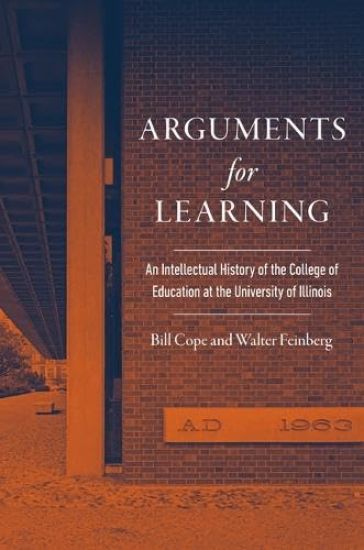
Almost every educational idea worth a thought has been considered at the University of Illinois, and anything worth trying has been tested. In this history of ideas, Bill Cope and Walter Feinberg chronicle the intellectual lives of education thinkers at the university while tracking the development of educational ideas and practices in general. Cope and Feinberg draw on conversations, narratives, and archival research that reveal how different generations explored their role in defining and carrying out the College’s multifaceted mission. Their account raises critical questions about the character of learning, the aims of teaching, and the nature of teaching as a profession. At the same time, the authors address issues that range from the role of schools in fostering individual and collective identity to the introduction of computer-mediated and online learning. Cope and Feinberg examine changes in self-understanding about fundamental ideas and chart how the College evolved from its original narrow mission of training children’s schoolteachers to embracing global perspectives. A wide-ranging portrait of an institution, Arguments for Learning uses the School of Education to tell the stories of thinkers dedicated to the idea that education can change the world for the better.
Japan and the Pursuit of a New American Identity

Japan and the Pursuit of a New American Identity

Walter Feinberg

TAYLOR FRANCIS LTD
2023
sidottu
First published in 1993, Japan and the Pursuit of a New American Identity is a sophisticated analysis of the mission of education in a multicultural age. Arguing that American education has been too long constrained by conservative discourse – which positions schools and students as weapons in an international competition with the Japanese – author Walter Feinberg assesses the cultural and philosophical limits of conservative vision as popularized by exponents Allan Bloom and E. D. Hirsch. Feinberg then develops a vision of education which accommodates the growing cultural diversity of American society and American schools. At the heart of Feinberg’s study is a unique philosophical analysis of Japanese and American attitudes towards work and education. Through a series of sensitively developed interview with American and Japanese workers, managers, parents, and teachers who have experienced life in one another’s culture, he examines the implications of our profound cultural differences with the Japanese for the development of a new American, multicultural identity. This book will be of interest to students of education, pedagogy, history and public policy.
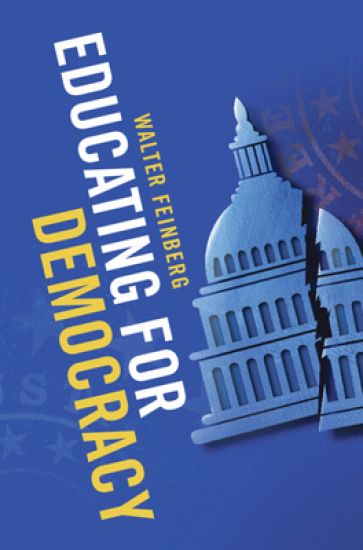
Educating for Democracy

Educating for Democracy

Walter Feinberg

Cambridge University Press
2023
sidottu
In our world of unceasing turmoil, an educated citizenry is the first and strongest line of defence for democratic renewal. Educating for Democracy shows how students can prepare for the responsibilities of 'the most important office in a democracy' – that of a citizen. Education can provide students with the dispositions and skills needed to exercise their role judiciously and responsibly, as a patriot who cares about democracy and as a custodian who cares for democracy. These two aspects of caring call for curriculum-wide reform. The outcome of this reform is a patriot who serves as custodian of democratic culture, where commitment and competence, heart and mind, love and intellect, are brought together for the sake of democratic renewal. While nations, as both instruments and proximal objects of care, have an important role to play in this renewal, the ultimate aim is the care and cultivation of a democratic culture.
Educating for Democracy

Educating for Democracy

Walter Feinberg

Cambridge University Press
2023
pokkari
In our world of unceasing turmoil, an educated citizenry is the first and strongest line of defence for democratic renewal. Educating for Democracy shows how students can prepare for the responsibilities of 'the most important office in a democracy' – that of a citizen. Education can provide students with the dispositions and skills needed to exercise their role judiciously and responsibly, as a patriot who cares about democracy and as a custodian who cares for democracy. These two aspects of caring call for curriculum-wide reform. The outcome of this reform is a patriot who serves as custodian of democratic culture, where commitment and competence, heart and mind, love and intellect, are brought together for the sake of democratic renewal. While nations, as both instruments and proximal objects of care, have an important role to play in this renewal, the ultimate aim is the care and cultivation of a democratic culture.
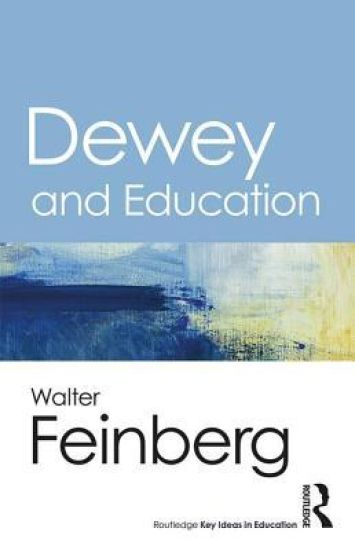
Dewey and Education

Dewey and Education

Walter Feinberg

Routledge
2018
sidottu
Dewey and Education presents Dewey’s perspectives on moral psychology and development, human nature, and democratic community-building as they inform the influential philosopher’s deep commitment to educational reform. In this personal yet far-reaching account, Walter Feinberg relates Dewey’s work both to contemporary social and political affairs and to his own philosophical and political commitments. Written for scholars and students of the Philosophy of Education, Educational Policy Studies, and Political Theory, this book is indispensable as a guide to Dewey’s influence on democratic education.
Dewey and Education

Dewey and Education

Walter Feinberg

Routledge
2018
nidottu
Dewey and Education presents Dewey’s perspectives on moral psychology and development, human nature, and democratic community-building as they inform the influential philosopher’s deep commitment to educational reform. In this personal yet far-reaching account, Walter Feinberg relates Dewey’s work both to contemporary social and political affairs and to his own philosophical and political commitments. Written for scholars and students of the Philosophy of Education, Educational Policy Studies, and Political Theory, this book is indispensable as a guide to Dewey’s influence on democratic education.
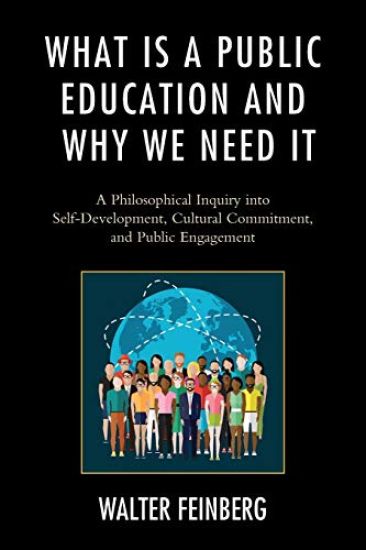
What Is a Public Education and Why We Need It

What Is a Public Education and Why We Need It

Walter Feinberg

Lexington Books
2017
nidottu
The unique mission of a public education is to reproduce a civic public. For the most part this will not happen in a vacuum and requires specific institutions, the most prominent of which are the public schools. Publicly supported schools have other functions as well. They socialize, train, produce a workforce, and, hopefully, promote individual growth and autonomy. Walter Feinberg argues that while all of these functions may be carried on by private or religious schools as well, public schools should have the additional responsibility of reproducing a civic public for a diverse pluralistic society. As Feinberg demonstrates, the problem is that in the context of neoliberal ideology, where all the other educational functions are reduced to economic ones within a market context ruled by competition—nation to nation, state to state, community to community, school to school, teacher to teacher, student to student—the public function becomes less and less central and more and more difficult to carry out. What Is a Public Education and Why We Need It suggests ways to change this by bringing the idea of a true public education back into focus.
What Is a Public Education and Why We Need It

What Is a Public Education and Why We Need It

Walter Feinberg

Lexington Books
2016
sidottu
The unique mission of a public education is to reproduce a civic public. For the most part this will not happen in a vacuum and requires specific institutions, the most prominent of which are the public schools. Publicly supported schools have other functions as well. They socialize, train, produce a workforce, and, hopefully, promote individual growth and autonomy. Walter Feinberg argues that while all of these functions may be carried on by private or religious schools as well, public schools should have the additional responsibility of reproducing a civic public for a diverse pluralistic society. As Feinberg demonstrates, the problem is that in the context of neoliberal ideology, where all the other educational functions are reduced to economic ones within a market context ruled by competition—nation to nation, state to state, community to community, school to school, teacher to teacher, student to student—the public function becomes less and less central and more and more difficult to carry out. What Is a Public Education and Why We Need It suggests ways to change this by bringing the idea of a true public education back into focus.
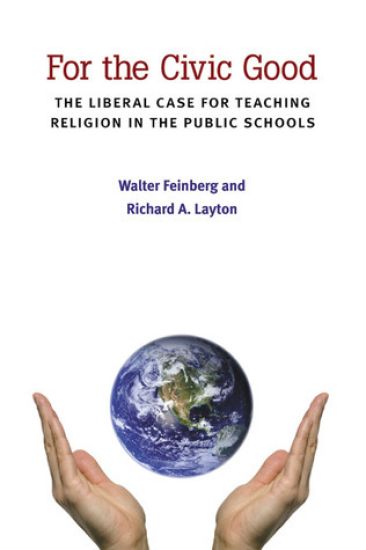
For the Civic Good

For the Civic Good

Walter Feinberg; Richard A. Layton

The University of Michigan Press
2014
nidottu
Why teach about religion in public schools? What educational value can such courses potentially have for students?In For the Civic Good, Walter Feinberg and Richard A. Layton offer an argument for the contribution of Bible and world religion electives. The authors argue that such courses can, if taught properly, promote an essential aim of public education: the construction of a civic public, where strangers engage with one another in building a common future. The humanities serve to awaken students to the significance of interpretive and analytic skills, and religion and Bible courses have the potential to add a reflective element to these skills. In so doing, students awaken to the fact of their own interpretive framework and how it influences their understanding of texts and practices. The argument of the book is developed by reports on the authors’ field research, a two-year period in which they observed religion courses taught in various public high schools throughout the country, from the “Bible Belt” to the suburban parkway. They document the problems in teaching religion courses in an educationally appropriate way, but also illustrate the argument for a humanities-based approach to religion by providing real classroom models of religion courses that advance the skills critical to the development of a civic public.
For the Civic Good

For the Civic Good

Walter Feinberg; Richard A. Layton

The University of Michigan Press
2014
sidottu
Why teach about religion in public schools? What educational value can such courses potentially have for students?In For the Civic Good, Walter Feinberg and Richard A. Layton offer an argument for the contribution of Bible and world religion electives. The authors argue that such courses can, if taught properly, promote an essential aim of public education: the construction of a civic public, where strangers engage with one another in building a common future. The humanities serve to awaken students to the significance of interpretive and analytic skills, and religion and Bible courses have the potential to add a reflective element to these skills. In so doing, students awaken to the fact of their own interpretive framework and how it influences their understanding of texts and practices. The argument of the book is developed by reports on the authors’ field research, a two-year period in which they observed religion courses taught in various public high schools throughout the country, from the “Bible Belt” to the suburban parkway. They document the problems in teaching religion courses in an educationally appropriate way, but also illustrate the argument for a humanities-based approach to religion by providing real classroom models of religion courses that advance the skills critical to the development of a civic public.
School and Society

School and Society

Walter Feinberg; Jonas F. Soltis

Teachers' College Press
2009
nidottu
This widely used text has been expanded to include the most important issues in contemporary schooling, including new end-of-chapter sections for Further Reading and new references added to the useful Additional Resources section.School and Society, Fifth Edition uses realistic case studies, dialogues, and open-ended questions designed to stimulate thinking about problems related to school and society, including curriculum reform, social justice, and competing forms of research. Written in a style that speaks directly to today’s educator, this book tackles such crucial questions as: Do schools socialize students to become productive workers? • Does schooling reproduce social class and pass on ethnic and gender biases? • Can a teacher avoid passing on dominant social and cultural values? • What besides subjects do students really learn in schools?School and Society is one of the five books in the highly regarded Teachers College Press Thinking About Education Series, now in its Fifth Edition. All of the books in this series are designed to help pre- and in-service teachers bridge the gap between theory and practice.
For Goodness Sake

For Goodness Sake

Walter Feinberg

Routledge
2006
nidottu
While the fierce debate over religion in public schools receives ample media attention, we rarely consider the implications of religious schools on moral education and liberal democracy. In this groundbreaking work, Walter Feinberg opens up a critical new dialogue to offer a complete discussion of the important role religious schools play in the formation of a democratic citizenry. Feinberg, a leading philosopher of education, approaches the subject of religious education with a rare evenhandedness, drawing on examples from Christian, Jewish, and Muslim schools and exploring topics as disparate as sex education and creationism. For Goodness Sake provides a much-needed take on a controversial topic, demonstrating that the relationship between religion and schooling is not simply the exclusive concern of members of a given religious community, but a relevant and vital issue for everyone who cares about education.
For Goodness Sake

For Goodness Sake

Walter Feinberg

Routledge
2006
sidottu
While the fierce debate over religion in public schools receives ample media attention, we rarely consider the implications of religious schools on moral education and liberal democracy. In this groundbreaking work, Walter Feinberg opens up a critical new dialogue to offer a complete discussion of the important role religious schools play in the formation of a democratic citizenry. Feinberg, a leading philosopher of education, approaches the subject of religious education with a rare evenhandedness, drawing on examples from Christian, Jewish, and Muslim schools and exploring topics as disparate as sex education and creationism. For Goodness Sake provides a much-needed take on a controversial topic, demonstrating that the relationship between religion and schooling is not simply the exclusive concern of members of a given religious community, but a relevant and vital issue for everyone who cares about education.
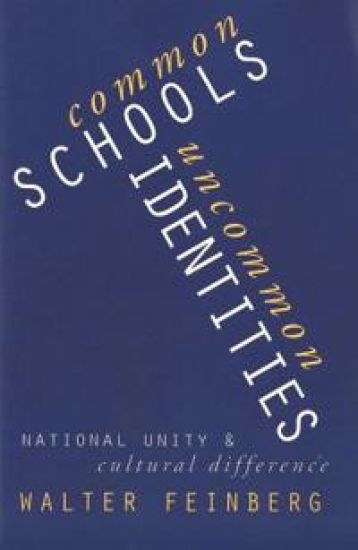
Common Schools/Uncommon Identities

Common Schools/Uncommon Identities

Walter Feinberg

Yale University Press
2000
pokkari
One of the most hotly debated issues in contemporary education concerns the tension between the demands of such groups as blacks, Latinos, gays, women, and the handicapped for a curriculum that recognizes their particular identity—and the competing position that the role of public education is to infuse children with a common American identity. In this book, a distinguished philosopher of education takes on that debate, indicating the underlying ethical issues on each side and showing how schools can promote both national and cultural identities. Walter Feinberg develops a theory of education that is twofold: it is sensitive to the concerns of parents and community members who want the public schools to reinforce their particular values and group identity, and it also maintains a commitment to the "principled reasons" for public education—the general ideals that public education shares with a liberal political philosophy, particularly equality of educational opportunity, freedom of association, and individual development. Feinberg develops an understanding of basic principles that schools should use in addressing cultural differences, tests these and shows how liberalism is indeed compatible with cultural recognition.