Kirjailija
Walter Horatio Pater
Kirjat ja teokset yhdessä paikassa: 38 kirjaa, julkaisuja vuosilta 2004-2025, suosituimpien joukossa Giordano Bruno. Vertaile teosten hintoja ja tarkista saatavuus suomalaisista kirjakaupoista.
38 kirjaa
Kirjojen julkaisuhaarukka 2004-2025.
Walter Horatio Pater (1839-1894) was an English essayist and art and literary critic. After graduating from Oxford he became acutely interested in literature, beginning to write articles and criticisms. The first of these to be printed was a brief essay upon Coleridge, contributed in 1866 to the Westminster Review. A few months later (January, 1867), his essay on Winckelmann, the first expression of his idealism, appeared in the same review. In the following year his study of Aesthetic Poetry appeared in the Fortnightly Review. By the time his philosophical novel Marius the Epicurean appeared, however, he had gathered quite a following. This, his chief contribution to literature, was published early in 1885.
Marius the Epicurean, Volume Two
Walter Horatio Pater
Createspace Independent Publishing Platform
2018
nidottu
This collection of literature attempts to compile many of the classic, timeless works that have stood the test of time and offer them at a reduced, affordable price, in an attractive volume so that everyone can enjoy them.

Marius the Epicurean Volume Two
Walter Horatio Pater
Createspace Independent Publishing Platform
2014
nidottu

Appreciations with an essay on style is a collection of reflective literary essays that examines the artistry of language and the delicate balance between form and feeling. Through a blend of criticism and philosophy, the work explores how prose and poetry intersect as expressive modes shaped by the writer's inner vision. It opens with a contemplative discussion of style, asserting that genuine artistry arises from sincerity and precision rather than rigid adherence to form. The collection then turns to analyses of various poets and critics, investigating how imagination, rhythm, and emotional depth transform language into art. Each essay reveals an underlying belief in aesthetic experience as a means of perceiving truth and individuality. The text celebrates artistic integrity, placing emphasis on beauty not as ornament but as the natural consequence of a writer's authentic response to life. Thoughtful and introspective, it encourages readers to view literature as an evolving expression of the human spirit rather than a fixed order of classifications.
Greek studies: A series of essays explores the depth and unity of ancient Greek culture through a collection of critical reflections that weave together mythology, art, religion, and philosophy. The essays reveal how these cultural forms collectively express the spiritual and artistic essence of Greek civilization. Through an analytical yet poetic lens, the work interprets mythology as a living reflection of human experience and the natural world, highlighting the continuous interplay between divine imagination and creative intellect. The exploration of the god Dionysus stands at the heart of this study, presenting the figure as a symbol of transformation, vitality, and the creative energy that binds nature and humanity. The essays move beyond simple historical interpretation to consider how artistic expression mirrored Greek thought and emotion. This synthesis of art, religion, and intellect demonstrates how ancient Greece cultivated a vision of beauty and balance that continues to shape modern understanding of art and philosophy.
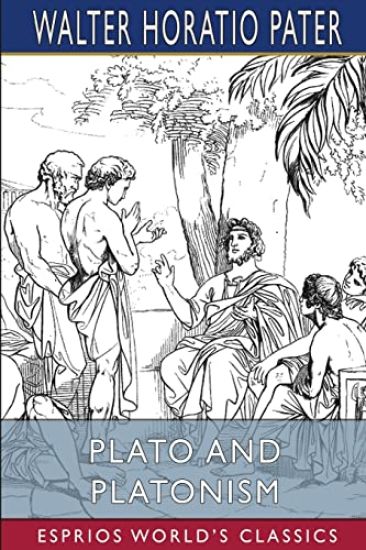
Plato and Platonism explores the evolution and interpretation of philosophical ideas associated with classical thought, presenting a nuanced study of how intellectual traditions shape enduring concepts. The work investigates foundational doctrines such as motion, rest, and the acquisition of knowledge, portraying these themes as part of an ongoing philosophical dialogue. The text does not isolate the thinker it examines but situates his ideas within a lineage of debate and reflection that connects earlier schools with later insights. Through careful analysis, it uncovers how arguments concerning change and permanence continue to define metaphysical inquiry. The author highlights the tension between the transient world of perception and the aspiration toward immutable truth, suggesting that philosophy progresses through the refinement of inherited ideas. This opening section frames inquiry as a cumulative endeavor rather than a series of isolated revelations, affirming continuity as central to intellectual advancement. With meditative prose and interpretive precision, the book draws connections between abstract reasoning and the enduring search for universality in human thought.
Essays from 'The Guardian' is a collection that presents critical reflections on literature, art, and philosophy. It examines the characteristics of prose and poetry through refined analytical thought and an appreciation for linguistic precision. The essays offer meditations on aspects of style, form, and emotional depth, combining intellectual rigor with subtle aesthetic inquiry. The opening discussion contrasts the clarity and directness of prose with the more fluid and expressive nature of poetry, illustrating the importance of discipline and artistry in written expression. Through comparisons of different literary periods and their prose traditions, the work explores the evolution of English writing and its power to convey both reason and beauty. Each piece emphasizes how craftsmanship and contemplation intertwine to form the foundation of lasting literature. The essays collectively reflect on the interplay between artistic expression and intellectual structure, showing a deep understanding of how thought and feeling shape the written word and revealing a broader philosophy of creative refinement.

The renaissance: Studies in art and poetry is a collection of essays that examines the cultural, artistic, and philosophical achievements of the Renaissance. Walter Pater explores the works of notable figures such as Botticelli and Michelangelo, emphasizing the importance of personal perception in appreciating beauty and artistic excellence. The essays encourage readers to engage with art and poetry through subjective experience, focusing on the unique impressions and emotions they evoke rather than abstract definitions. Pater highlights the interplay between classical revival and the humanist spirit, demonstrating how the Renaissance represented not only a flourishing of visual and literary art but also a broader cultural awakening. Early discussions consider the relativity of beauty and the significance of individual response, setting the stage for deeper studies of aesthetic experience. By examining historical figures, early French stories, and philosophical ideas, Pater illuminates the dynamic nature of the period, showing how art, poetry, and thought were intertwined. The work offers both critical insight and a celebration of the richness, complexity, and enduring influence of Renaissance culture.
Miscellaneous studies: A series of essays presents a reflective exploration of art, literature, and philosophy through a collection of writings that reveal a delicate balance between intellect and emotion. The essays examine the complexity of artistic creation and the inner life of the thinker, emphasizing how the aesthetic impulse shapes human understanding. Through meditations on figures such as Prosper M rim e and Raphael, the work studies the intersections of individuality, imagination, and the broader cultural spirit that defines creative expression. Pater's writing conveys the belief that beauty and thought are intertwined, suggesting that the appreciation of art becomes a moral and intellectual pursuit. Each essay moves fluidly between criticism and contemplation, offering insights into the way human experience finds meaning through artistic and philosophical engagement. The collection invites readers to consider art not merely as an object of admiration but as a living dialogue between the senses, the intellect, and the ideals of human existence.

Walter Horatio Pater (1839-1894) was an English essayist and art and literary critic. After graduating from Oxford he became acutely interested in literature, beginning to write articles and criticisms. The first of these to be printed was a brief essay upon Coleridge, contributed in 1866 to the Westminster Review. A few months later (January, 1867), his essay on Winckelmann, the first expression of his idealism, appeared in the same review. In the following year his study of Aesthetic Poetry appeared in the Fortnightly Review. By the time his philosophical novel Marius the Epicurean appeared, however, he had gathered quite a following. This, his chief contribution to literature, was published early in 1885.

Walter Horatio Pater (1839-1894) was an English essayist and art and literary critic. After graduating from Oxford he became acutely interested in literature, beginning to write articles and criticisms. The first of these to be printed was a brief essay upon Coleridge, contributed in 1866 to the Westminster Review. A few months later (January, 1867), his essay on Winckelmann, the first expression of his idealism, appeared in the same review. In the following year his study of Aesthetic Poetry appeared in the Fortnightly Review. By the time his philosophical novel Marius the Epicurean appeared, however, he had gathered quite a following. This, his chief contribution to literature, was published early in 1885.

Walter Horatio Pater (1839-1894) was an English essayist and art and literary critic. After graduating from Oxford he became acutely interested in literature, beginning to write articles and criticisms. The first of these to be printed was a brief essay upon Coleridge, contributed in 1866 to the Westminster Review. A few months later (January, 1867), his essay on Winckelmann, the first expression of his idealism, appeared in the same review. In the following year his study of Aesthetic Poetry appeared in the Fortnightly Review. By the time his philosophical novel Marius the Epicurean appeared, however, he had gathered quite a following. This, his chief contribution to literature, was published early in 1885.
Walter Horatio Pater (1839-1894) was an English essayist and art and literary critic. After graduating from Oxford he became acutely interested in literature, beginning to write articles and criticisms. The first of these to be printed was a brief essay upon Coleridge, contributed in 1866 to the Westminster Review. A few months later (January, 1867), his essay on Winckelmann, the first expression of his idealism, appeared in the same review. In the following year his study of Aesthetic Poetry appeared in the Fortnightly Review. By the time his philosophical novel Marius the Epicurean appeared, however, he had gathered quite a following. This, his chief contribution to literature, was published early in 1885.