
Kirjailija
Walter Lippmann
Kirjat ja teokset yhdessä paikassa: 90 kirjaa, julkaisuja vuosilta 1920-2025, suosituimpien joukossa Public Opinion. Vertaile teosten hintoja ja tarkista saatavuus suomalaisista kirjakaupoista.
90 kirjaa
Kirjojen julkaisuhaarukka 1920-2025.


Uolter Lippman (1889-1974) - amerikanskij pisatel, zhurnalist, sotsiolog, obschestvenno-politicheskij dejatel, dvazhdy laureat Pulittserovskoj premii, avtor teorii obschestvennogo mnenija i termina "kholodnaja vojna". Raboty Lippmana po vlijaniju propagandy i SMI na politicheskij diskurs i obschestvennoe mnenie vnesli znachitelnyj vklad v sovremennuju politologiju i teoriju SMI. V rabote "Obschestvennoe mnenie", napisannoj na osnove vsestoronnego analiza amerikanskoj pressy v period Pervoj mirovoj vojny, Uolter Lippman vpervye sformuliroval mysl o tom, chto svoe predstavlenie ob okruzhajuschem mire ljudi strojat na osnove mnenij, transliruemykh SMI. Bolshaja chast naselenija nakhoditsja v plenu stereotipov i zhivet v tak nazyvaemoj psevdosrede, sotkannoj iz obryvkov svedenij, postavljaemykh SMI. Sdelav eto otkrytie, Lippman nastaival na tom, chto obschestvo dolzhno projavljat bolshe kritichnosti v svoikh otsenkakh, a SMI - soznavat svoju otvetstvennost pered grazhdanami. V protivnom sluchae ves mir riskuet prevratitsja v odnu bolshuju illjuziju.
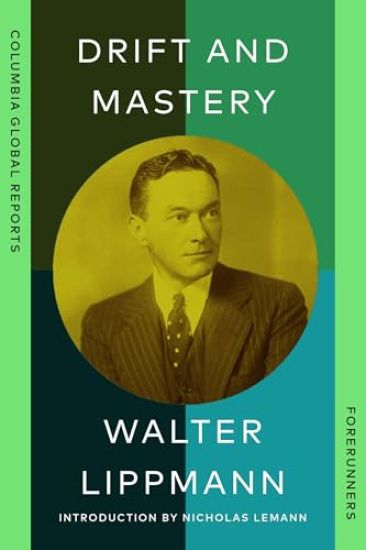
Celebrating a decade of Columbia Global Reports, the Forerunners series revives groundbreaking works of investigative journalism and incisive analysis published a century before CGR’s founding. These texts, once forgotten or underexplored, reflect CGR’s core mission: fearless reporting, global perspective, and intellectual rigor. Each selection remains strikingly relevant today, offering historical insights that challenge contemporary perspectives and reaffirm the power of journalism to shape the world. A landmark of progressive social thought, Walter Lippmann’s Drift and Mastery (first published in 1914) argues for a rational, scientific approach to governance as a counter to the inefficiencies of an increasingly chaotic society. Lippmann’s call for informed leadership and deliberate reform established him as a leading public intellectual—and his insights on democracy and political responsibility remain as urgent today as they were a century ago. With an introduction by Nicholas Lemann, dean emeritus of the Columbia Journalism School and staff writer for the New Yorker and director of Columbia Global Reports.
Walter Lippmann's "A Preface to Politics" remains a cornerstone of American political thought, offering a vital examination of social problems and the potential for social reform. A key text in the history of progressivism, this book delves into the core principles of political philosophy and their application to achieving meaningful social change in the United States. Lippmann's incisive analysis provides a framework for understanding the dynamics of American politics and the ongoing quest for a more just and equitable society. This meticulously prepared edition allows readers to engage with Lippmann's seminal work and consider its lasting relevance to contemporary discussions about social and political ideologies. Whether you are a student of political science or simply interested in the evolution of social thought, "A Preface to Politics" provides valuable insights into the complexities of governance and the enduring challenges of building a better world.This work has been selected by scholars as being culturally important, and is part of the knowledge base of civilization as we know it.This work is in the public domain in the United States of America, and possibly other nations. Within the United States, you may freely copy and distribute this work, as no entity (individual or corporate) has a copyright on the body of the work.Scholars believe, and we concur, that this work is important enough to be preserved, reproduced, and made generally available to the public. We appreciate your support of the preservation process, and thank you for being an important part of keeping this knowledge alive and relevant.
Walter Lippmann's "A Preface to Politics" remains a cornerstone of American political thought, offering a vital examination of social problems and the potential for social reform. A key text in the history of progressivism, this book delves into the core principles of political philosophy and their application to achieving meaningful social change in the United States. Lippmann's incisive analysis provides a framework for understanding the dynamics of American politics and the ongoing quest for a more just and equitable society. This meticulously prepared edition allows readers to engage with Lippmann's seminal work and consider its lasting relevance to contemporary discussions about social and political ideologies. Whether you are a student of political science or simply interested in the evolution of social thought, "A Preface to Politics" provides valuable insights into the complexities of governance and the enduring challenges of building a better world.This work has been selected by scholars as being culturally important, and is part of the knowledge base of civilization as we know it.This work is in the public domain in the United States of America, and possibly other nations. Within the United States, you may freely copy and distribute this work, as no entity (individual or corporate) has a copyright on the body of the work.Scholars believe, and we concur, that this work is important enough to be preserved, reproduced, and made generally available to the public. We appreciate your support of the preservation process, and thank you for being an important part of keeping this knowledge alive and relevant.
Public Opinion, est un livre classique et a t consid r comme important tout au long de l'histoire de l'humanit . Afin que ce livre ne soit jamais oubli , chez Alpha Editions, nous avons fait des efforts pour le pr server en le r ditant dans un format moderne pour les g n rations pr sentes et futures. Tout ce livre a t reformat , retap et con u. Ces livres ne sont pas constitu s de copies num ris es de leur oeuvre originale et le texte est donc clair et lisible.
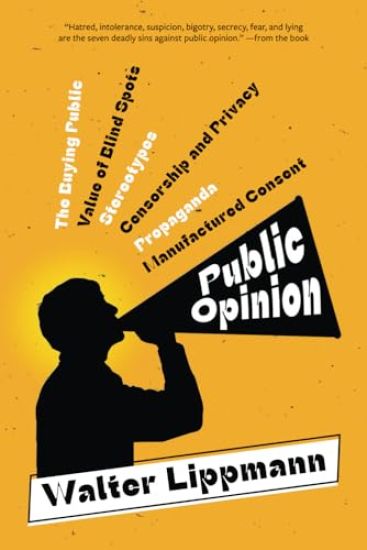
In his groundbreaking work Public Opinion (1922), Walter Lippmann, an eminent American writer and political commentator, delves into the intricate dynamics of democracy, shedding light on the pivotal role of citizens. He warns against the perils of propaganda, anticipating its sway on public perception. Lippmann challenges the efficacy of journalism in informing the populace, asserting that individuals tend to rely on preconceived notions rather than critical analysis. He calls the notion of a public competent to direct public affairs a "false ideal" and identifies the inherent biases in human cognition. Lippmann's insights into the importance of the dissemination of accurate information to a functioning democracy, the limitations of public engagement in governance, and the influence of media on shaping public opinion remain startlingly relevant in our time. Uncanny, prescient, and far-sighted, Public Opinion is an enduring cornerstone in political discourse and media studies. This Warbler Classics edition includes a detailed biographical timeline.
The Royal Pastime of Cock-fighting; The Art of breeding, feeding, fighting, and curing cocks of the game (Edition1)
Walter Lippmann
Alpha Editions
2024
nidottu
A Preface to Politics, a classical book, was published more than a century ago and has been considered important throughout the human history, and so that this work is never forgotten we at Alpha Editions have made efforts in its preservation by republishing this book in a modern format for present and future generations. This whole book has been reformatted, retyped and designed. These books are not made of scanned copies of their original work and hence the text is clear and readable.
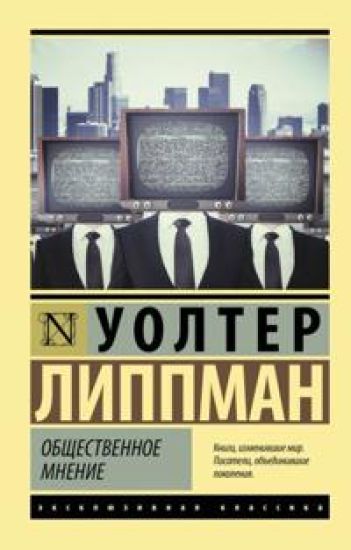
Uolter Lippman (1889-1974) - amerikanskij pisatel, zhurnalist, propagandist i sotsiolog, odin iz tvortsov sovremennogo amerikanskogo liberalizma, dvukratnyj laureat Pulittserovskoj premii. Prinimal aktivnoe uchastie v predvybornoj kampanii amerikanskogo prezidenta Vudro Vilsona i v razrabotke "Chetyrnadtsati punktov" - amerikanskoj programmy poslevoennogo razvitija mira. Vo vremja Pervoj mirovoj vojny zanimalsja voprosami propagandy i napisal besschetnoe kolichestvo listovok i statej, odnako pozzhe byl otstranen Vilsonom ot raboty iz-za ideologicheskikh raznoglasij. Ideja Lippmana o tom, chto propaganda dolzhna sluzhit ne stolko delu pobedy, skolko zakladyvaniju osnov spravedlivogo poslevoennogo mira, byla objavlena nepriemlemoj. V svoej rabote "Obschestvennoe mnenie" avtor obedinil filosofskij, psikhologicheskij, istoricheskij, sotsiologicheskij i politologicheskij analiz i vvel ponjatija psevdosredy i stereotipa, kotorye, na ego vzgljad, stavjat pod somnenie printsipialnuju vozmozhnost razvitija demokratii. Svoi vykladki avtor podkrepljaet mnogochislennymi primerami, kotorye porazhajut voobrazhenie sovremennogo chitatelja neprekhodjaschej aktualnostju. Perevodchik: Abaeva E.
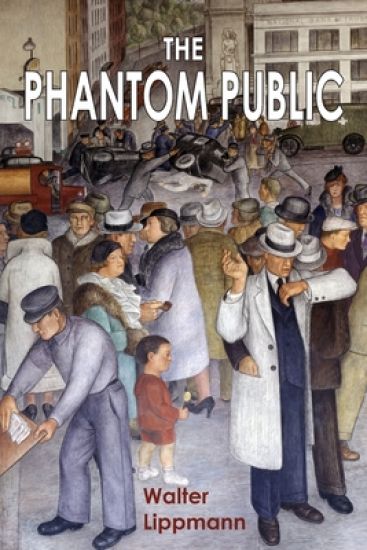
2022 Reprint of the 1925 Edition. Lippmann's The Phantom Public expresses the author's lack of faith in the democratic system by arguing that the public exists merely as an illusion, myth, and inevitably a phantom. As Carl Bybee wrote, "For Lippmann the public was a theoretical fiction and government was primarily an administrative problem to be solved as efficiently as possible, so that people could get on with their own individualistic pursuits". Lippmann posits that society is made up of two types of people: agents and bystanders (also referred to as insiders and outsiders). The agent is someone who can act "executively" on the basis of his own opinions to address the substance of an issue, and the bystander is the public, merely a spectator of action. Only those familiar enough with the substance of a problem are able to then analyze it and propose solutions, to take "executive action." Most of the time the public is just a "deaf spectator in the back row" because, for the most part, individuals are more interested in their private affairs and their individual relations than in those matters that govern society, the public questions about which they know very little. Remains an interesting discussion to this day. Contents: The disenchanted man -- The unattainable ideal -- Agents and bystanders -- What the public does -- The neutralization of arbitrary force -- The question Aristotle asked -- the nature of a problem -- Social contracts -- The two questions before the public -- The main value of public debate -- The defective rule -- The criteria of reform -- The principles of public opinion -- Society in its place -- Absentee rulers -- The realms of disorder.
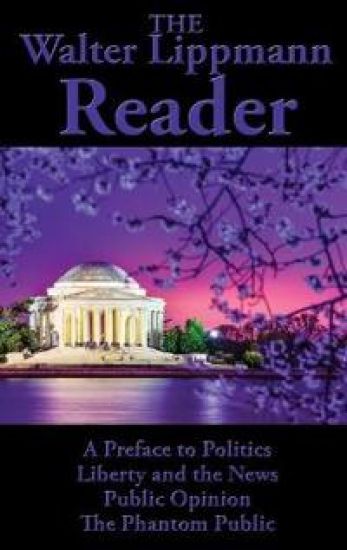
Collected in this massive 500+ page omnibus editions are Walter Lippman's four most important books. These four books are seminal texts in the fields of media studies, political science, and social psychology. The father of modern journalism, Walter Lippmann was a two-time Pulitzer Prize-winner and visionary. A Preface to Politics is most incisive comment on politics to-day is indifference. When men and women begin to feel that elections and legislatures do not matter very much, that politics is a rather distant and unimportant exercise, the reformer might as well put to himself a few searching doubts. Indifference is a criticism that cuts beneath oppositions and wranglings by calling the political method itself into question. In Liberty and the News Walter Lippmann offers us a stern warning about the importance of reliable news to the survival of a healthy democracy. He railed against bad journalism and drove home the point that the general public must be able to ascertain the truth or democracy is doomed. Public Opinion exposes how media can shape public perception and how that perception changes society. It is a critical assessment of functional democratic government, especially of the irrational and often self-serving social perceptions that influence individual behavior and prevent optimal societal cohesion. The detailed descriptions of the cognitive limitations people face in comprehending their sociopolitical and cultural environments, leading them to apply an evolving catalogue of general stereotypes to a complex reality, rendered Public Opinion The Phantom Public was Lippman's most towering achievement influencing political thought for decades to come. In it Lippman posits that the public exists merely as an illusion, myth, and inevitably a phantom; that the common man cannot be expected to know enough about events entirely beyond their control to cast an informed and meaningful vote.

Collected in this massive 500+ page omnibus editions are Walter Lippman's four most important books. These four books are seminal texts in the fields of media studies, political science, and social psychology. The father of modern journalism, Walter Lippmann was a two-time Pulitzer Prize-winner and visionary. A Preface to Politics is most incisive comment on politics to-day is indifference. When men and women begin to feel that elections and legislatures do not matter very much, that politics is a rather distant and unimportant exercise, the reformer might as well put to himself a few searching doubts. Indifference is a criticism that cuts beneath oppositions and wranglings by calling the political method itself into question. In Liberty and the News Walter Lippmann offers us a stern warning about the importance of reliable news to the survival of a healthy democracy. He railed against bad journalism and drove home the point that the general public must be able to ascertain the truth or democracy is doomed. Public Opinion exposes how media can shape public perception and how that perception changes society. It is a critical assessment of functional democratic government, especially of the irrational and often self-serving social perceptions that influence individual behavior and prevent optimal societal cohesion. The detailed descriptions of the cognitive limitations people face in comprehending their sociopolitical and cultural environments, leading them to apply an evolving catalogue of general stereotypes to a complex reality, rendered Public Opinion The Phantom Public was Lippman's most towering achievement influencing political thought for decades to come. In it Lippman posits that the public exists merely as an illusion, myth, and inevitably a phantom; that the common man cannot be expected to know enough about events entirely beyond their control to cast an informed and meaningful vote.
The Phantom Public was Lippman's most towering achievement influencing political thought for decades to come. In it Lippman posits that the public exists merely as an illusion, myth, and inevitably a phantom; that the common man cannot be expected to know enough about events entirely beyond their control to cast an informed and meaningful vote.
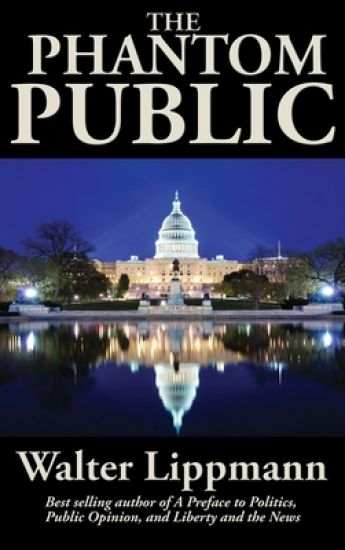
The Phantom Public was Lippman's most towering achievement influencing political thought for decades to come. In it Lippman posits that the public exists merely as an illusion, myth, and inevitably a phantom; that the common man cannot be expected to know enough about events entirely beyond their control to cast an informed and meaningful vote.