Kirjojen hintavertailu. Mukana 12 302 575 kirjaa ja 12 kauppaa.

Kirjailija

Walter Scott

Kirjat ja teokset yhdessä paikassa: 2 737 kirjaa, julkaisuja vuosilta 1922-2026, suosituimpien joukossa Harold l'Indomptable. Vertaile teosten hintoja ja tarkista saatavuus suomalaisista kirjakaupoista.

2 737 kirjaa

Kirjojen julkaisuhaarukka 1922-2026.

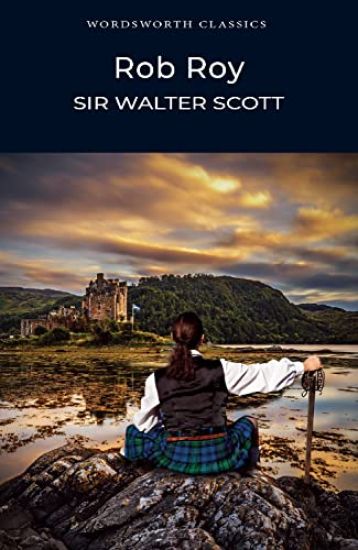
Rob Roy

Rob Roy

Walter Scott

Wordsworth Editions Ltd
1996
nidottu
With an Introduction and Notes by David Blair. From its first publication in 1816 Rob Roy has been recognised as containing some of Scott's finest writing and most engaging, fully realised characters. The outlaw Rob Roy MacGregor was already a legendary, disputed figure by the time Scott wrote - a heroic Scottish Robin Hood to some, an over-glamorised, unprincipled predator to others. Scott approaches Rob Roy indirectly, through the adventures of his fictional hero, Frank Osbaldistone, amid the political turmoil of England and Scotland in 1715. With characteristic care Scott reconstructs the period and settings so as to place Rob Roy and the Scotland he inhabits amid conflicting moral, economic and historical forces. This edition features, besides a new critical introduction and extensive explanatory notes, an essay outlining clearly the novel's historical context and a glossary of Scottish words and phrases used by Scott's colourful, vernacular characters.
Tales of a Grandfather

Tales of a Grandfather

Walter Scott

Northern Illinois University Press
1996
sidottu
An example of pre-professional history, the Tales of a Grandfather chronicles the French royalty's dynastic concerns and principal military-political engagements with foreign powers from 1412 to 1512. Scott's narrative opens with Henry V's preparations for war with France and an account of the persisting rivalry between the houses of Orleans and of Burgundy. Of particular interest is Scott's description of the murder of John the Fearless at Montereau in 1419 and his tracing of that event's disastrous effects through the fifteenth century.Scott drew on standard sources, but the interpretation of the material and the historical vision are his own. Modern readers will be especially engaged by his interpretation of the character of Joan of Arc. Readers will also be interested to compare Scott's treatment of history and its leading figures with his novels set in the same period and country, namely, Quentin Durward and Anne of Geierstein.
The Bride of Lammermoor

The Bride of Lammermoor

Walter Scott

Edinburgh University Press
1996
sidottu
The most haunting and Shakespearean of Scott's novels, The Bride of Lammermoor is a fast-paced tragedy set on the eve of the 1707 Union. The proud young Master of Ravenswood sees his estate pass to the astute Sir William Ashton. When Ravenswood falls in love with Ashton's daughter, her diabolical mother takes extreme measures to thwart the match - with tragic results. A story of immense gloomy power, infused by the unforgiving spirit of the North Sea. "The Edinburgh Edition respects Scott the artist by 'restoring' versions of the novels that are not quite what his first readers saw. Indeed, it returns to manuscripts that the printers never handled, as Scott's fiction before 1827 was transcribed before it reached the printshop. Each volume of the Edinburgh edition presents an uncluttered text of one work, followed by an Essay on the Text by the editor of the work, a list of the emendations that have been made to the first edition, explanatory notes and a glossary ! The editorial essays are histories of the respective texts. Some of them are almost 100 pages long; when they are put together they constitute a fascinating and lucid account of Scott's methods of compostion and his financial manoeuvres. This edition is for anyone who takes Scott seriously." Times Literary Supplement
A Legend of the Wars of Montrose

A Legend of the Wars of Montrose

Walter Scott

Edinburgh University Press
1996
sidottu
Against the background of Montrose's campaign of 1644-5, this spirited novel centres on one of Scott's most memorable creations - Sir Dugald Dalgetty of Drumthwacket. This hard-headed Aberdonian contrasts tellingly with the weird and passionate Highland feud in which he becomes perilously entangled, as the narrative moves from Dalgetty's unflinching encounter with the Duke of Argyll, to his dramatic escape from Inveraray Castle, to the battle of Inverlochy. "The Edinburgh Edition respects Scott the artist by 'restoring' versions of the novels that are not quite what his first readers saw. Indeed, it returns to manuscripts that the printers never handled, as Scott's fiction before 1827 was transcribed before it reached the printshop. Each volume of the Edinburgh edition presents an uncluttered text of one work, followed by an Essay on the Text by the editor of the work, a list of the emendations that have been made to the first edition, explanatory notes and a glossary ! The editorial essays are histories of the respective texts. Some of them are almost 100 pages long; when they are put together they constitute a fascinating and lucid account of Scott's methods of compostion and his financial manoeuvres. This edition is for anyone who takes Scott seriously." Times Literary Supplement
Saint Ronan's Well

Saint Ronan's Well

Walter Scott

Edinburgh University Press
1995
sidottu
Meg Dods, a sentimental virago, keeps a rundown inn in a derelict Tweedale village, while the young Laird is living way beyond his means. When a nearby spring becomes a Spa, life changes as a hotel and a troop of social climbers move in. But this is not a tale of antique virtue giving way to decadent ostentation: although the gang at the 'Well' dance the seven deadly sins, everyone in the book has feet of clay.
The Antiquary

The Antiquary

Walter Scott

Edinburgh University Press
1995
sidottu
The third of the Waverley Novels is dominated by two old men, Jonathan Oldbuck (the Antiquary of the title) and the beggar Edie Ochiltree. Together they apply their knowledge of the past to sort out the confusion of the present, and in doing so restore the fortunes of ancient houses. This was Scott's favourite among his novels, and presents a quizzical and amusing view of the profession of history and, by implication, of Scott's own practice as writer and collector.
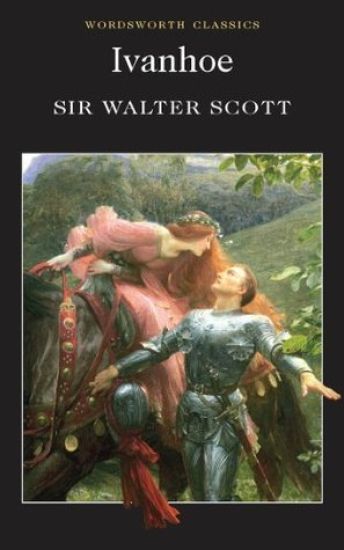
Ivanhoe

Ivanhoe

Walter Scott

Wordsworth Editions Ltd
1995
nidottu
Introduction and Notes by David Blair, University of Kent at Canterbury. Set in the reign of Richard I, Coeur de Lion, Ivanhoe is packed with memorable incidents - sieges, ambushes and combats - and equally memorable characters: Cedric of Rotherwood, the die-hard Saxon; his ward Rowena; the fierce Templar knight, Sir Brian de Bois-Gilbert; the Jew, Isaac of York, and his beautiful, spirited daughter Rebecca; Wamba and Gurth, jester and swineherd respectively. Scott explores the conflicts between the Crown and the powerful Barons, between the Norman overlords and the conquered Saxons, and between Richard and his scheming brother, Prince John. At the same time he brings into the novel the legendary Robin Hood and his band, and creates a brilliant, colourful account of the age of chivalry with all its elaborate rituals and costumes and its values of honour and personal glory.
The Heart of Mid-Lothian

The Heart of Mid-Lothian

Walter Scott

Penguin Classics
1994
pokkari
Jeanie Deans, a dairymaid, decides she must walk to London to gain an audience with the Queen. Her sister is to be executed for infanticide and, while refusing to lie to help her case, Jeanie is desperate for a reprieve. Set in the 1730s in a Scotland uneasily united with England, The Heart of Mid-Lothian dramatizes different kinds of justice - that meted out by the Edinburgh mob in the lynching of Captain Porteous, and that encountered by a terrified young girl suspected of killing her baby. Based on an anonymous letter Scot received in 1817, this is the seventh and finest of Scott's 'Waverley' novels. It was an international bestseller and inspired succeeding novelists from Balzac to George Eliot.
Kenilworth

Kenilworth

Walter Scott

Edinburgh University Press
1993
sidottu
In his ever-popular romance of Tudor England, Scott brilliantly recreates all the passion, brutality, verve and vitality of the Elizabethan world. Only two of his novels end tragically - Kenilworth ends with the death of Amy Robsart, who unwisely loved Queen Elizabeth's favourite, the Earl of Leicester.
The Tale of Old Mortality

The Tale of Old Mortality

Walter Scott

Edinburgh University Press
1993
sidottu
The Tale of Old Mortality describes the lives - and often violent deaths - the hopes, and the struggles, of the Covenanters in late seventeenth-century Scotland. A tale of extremism, bigotry and cruelty, it is redeemed by its characters' courage and loyalty, and their passionate belief in religious and civil liberty. Considered to be one of the greatest novels of the nineteenth century, its influence pervades European writing from Stendhal to Tolstoy.
The Black Dwarf

The Black Dwarf

Walter Scott

Edinburgh University Press
1993
sidottu
Set in south-west Scotland in the immediate aftermath of the 1707 Union, The Black Dwarf was intended to be a story about the first, abortive, Jacobite uprising of 1708. Instead it developed into a gothic tale of the supernatural. This new edition brings out the virtues in the story, long overlaid by Scott's embellishments in later editions.
Ivanhoe

Ivanhoe

Walter Scott

Hawk Press
1991
pokkari
In twelfth-century England, tensions between the Saxons and Normans are at an all-time high. Following the Third Crusade, Sir Wilfred Ivanhoe, a Saxon knight, offers his support to the Norman King Richard, which pits him against his father, Cedric. Ivanhoe is also in love with the beautiful Lady Rowena, whom Cedric has promised to another. Due to his actions, the knight loses his family claim and is left to fend for himself. Ivanhoe chooses to conceal his identity, entering a tournament to regain his honor and the admiration of Lady Rowena.A classic tale informed by historical events, Ivanhoe is one of Sir Walter Scott's most enduring stories due to its depiction of chivalry, adventure and treachery within the political hierarchy.
Ivanhoe

Ivanhoe

Walter Scott

Bantam USA
1988
pokkari
A stirring romantic tale of peril and rescue, chivalry and pageantry, Ivanhoe is the captivating tale of Sir Wilfred of Ivanhoe, a knight returning from the Crusades who finds himself disinherited and thwarted in the pursuit of the lady Rowena. Soon to be lavish presentation from A&E/BBC Television.
Waverley, or 'Tis Sixty Years Since

Waverley, or 'Tis Sixty Years Since

Walter Scott

Oxford University Press
1981
sidottu
"Edward Waverley is a young, cultured man whose sensibilities lead to his involvement in the Jacobite Rising of 1745. In his journey into Scotland, down to Derby, and back up again he explores the cultural and political geography of Great Britain." "Waverley; or, 'tis Sixty Years Since was Scott's first novel, but like its final chapter, 'A Postscript, which should have been a Preface', it appears as one of the last in this series, so that the full weight of experience gained from editing Scott's fiction can be brought to understanding his most influential novel, the one which gave its name to the Waverley Novels. To this edition, P. D. Garside brings new insights and new information, and he establishes a text which is significantly different from its predecessors."--BOOK JACKET.
Old Mortality

Old Mortality

Walter Scott

Bibliotech Press
1922
pokkari
Old Mortality is one of the Waverley novels by Walter Scott. Set in south west Scotland, it forms, along with The Black Dwarf, the 1st series of his Tales of My Landlord (1816). The novel deals with the period of the Covenanters, featuring their victory at Loudoun Hill and their defeat at Bothwell Bridge, both in June 1679; a final section is set in 1689 at the time of the royalist defeat at Killiekrankie.Scott's original title was The Tale of Old Mortality, but this is generally shortened in most references. On 30 April 1816 Scott signed a contract with William Blackwood for a four-volume work of fiction, and on 22 August James Ballantyne, Scott's printer and partner, indicated to Blackwood that it was to be entitled Tales of My Landlord, which was planned to consist of four tales relating to four regions of Scotland. In the event the second tale, Old Mortality, expanded to take up the final three volumes, leaving The Black Dwarf as the only story to appear exactly as intended. Scott completed The Black Dwarf in August, and composed Old Mortality during the next three months. (wikipedia.org)
Old Mortality

Old Mortality

Walter Scott

Bibliotech Press
1922
sidottu
Old Mortality is one of the Waverley novels by Walter Scott. Set in south west Scotland, it forms, along with The Black Dwarf, the 1st series of his Tales of My Landlord (1816). The novel deals with the period of the Covenanters, featuring their victory at Loudoun Hill and their defeat at Bothwell Bridge, both in June 1679; a final section is set in 1689 at the time of the royalist defeat at Killiekrankie.Scott's original title was The Tale of Old Mortality, but this is generally shortened in most references. On 30 April 1816 Scott signed a contract with William Blackwood for a four-volume work of fiction, and on 22 August James Ballantyne, Scott's printer and partner, indicated to Blackwood that it was to be entitled Tales of My Landlord, which was planned to consist of four tales relating to four regions of Scotland. In the event the second tale, Old Mortality, expanded to take up the final three volumes, leaving The Black Dwarf as the only story to appear exactly as intended. Scott completed The Black Dwarf in August, and composed Old Mortality during the next three months. (wikipedia.org)
The Surgeon's Daughter

The Surgeon's Daughter

Walter Scott

Bibliotech Press
1922
pokkari
The Surgeon's Daughter is part of Chronicles of the Canongate which is a collection of stories by Sir Walter Scott, published in 1827 and 1828 in the Waverley novels series. They are named after the Canongate, in Edinburgh. After his financial ruin at the beginning of 1826, Scott committed himself to writing works that would produce funds for the Trustees of James Ballantyne & Co., including the massive Life of Napoleon. However, he retained the right to produce less substantial works for his own benefit, and the first result was the collection of shorter fiction known as Chronicles of the Canongate. This was in two volumes, rather than the three occupied by most of the Waverley Novels, and its disparate nature meant that it would not interfere with his official writing project. The first mention of the two-volume publication actually envisages it being totally occupied by the tale which was to be entitled The Surgeon's Daughter: in his diary for 12 May 1826 Robert Cadell records a proposal from Scott to write 'a small Eastern Tale', which he agreed to publish as part of his strategy to set up as an independent publisher after the crash which had ruined Archibald Constable, Ballantyne, Scott, and himself. In the event The Surgeon's Daughter was to share the two volumes of the first series of Chronicles of the Canongate with 'Chrystal Croftangry's Narrative' and two short stories, 'The Highland Widow' and 'The Two Drovers'. The 'Narrative' and more than half of 'The Highland Widow' were composed between May and July 1826, but for almost a year Scott then devoted his full energies to the Life of Napoleon which he finished on 7 June 1827. He apparently resumed 'The Highland Widow' on the 20th and finished it before the end of the month, as well as writing an Introduction in his own name (he had officially acknowledged his authorship of the Waverley novels on 23 February). 'The Two Drovers' was probably composed in the first half of July, completing the first volume, but while he was waiting at the end of June to find out how long that story needed to be, he had already begun The Surgeon's Daughter, the sole occupant of the second volume, resuming it on 27 July and completing it on 16 September. (wikipedia.org)