Kirjojen hintavertailu. Mukana 12 390 323 kirjaa ja 12 kauppaa.

Kirjailija

Wannes Meert

Kirjat ja teokset yhdessä paikassa: 4 kirjaa, julkaisuja vuosilta 2021-2024, suosituimpien joukossa Efficient Execution of Irregular Dataflow Graphs. Vertaile teosten hintoja ja tarkista saatavuus suomalaisista kirjakaupoista.

4 kirjaa

Kirjojen julkaisuhaarukka 2021-2024.

Efficient Execution of Irregular Dataflow Graphs

Efficient Execution of Irregular Dataflow Graphs

Nimish Shah; Wannes Meert; Marian Verhelst

Springer International Publishing AG
2023
sidottu
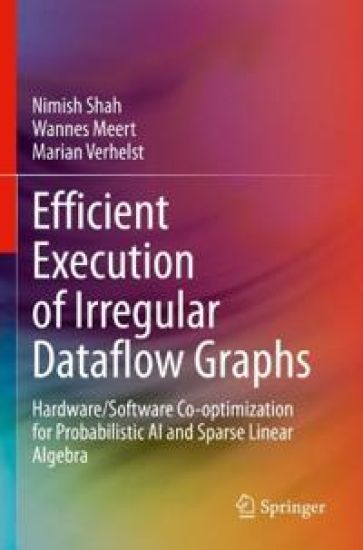
This book focuses on the acceleration of emerging irregular sparse workloads, posed by novel artificial intelligent (AI) models and sparse linear algebra. Specifically, the book outlines several co-optimized hardware-software solutions for a highly promising class of emerging sparse AI models called Probabilistic Circuit (PC) and a similar sparse matrix workload for triangular linear systems (SpTRSV). The authors describe optimizations for the entire stack, targeting applications, compilation, hardware architecture and silicon implementation, resulting in orders of magnitude higher performance and energy-efficiency compared to the existing state-of-the-art solutions. Thus, this book provides important building blocks for the upcoming generation of edge AI platforms.
Hardware-Aware Probabilistic Machine Learning Models

Hardware-Aware Probabilistic Machine Learning Models

Laura Isabel Galindez Olascoaga; Wannes Meert; Marian Verhelst

Springer Nature Switzerland AG
2022
nidottu
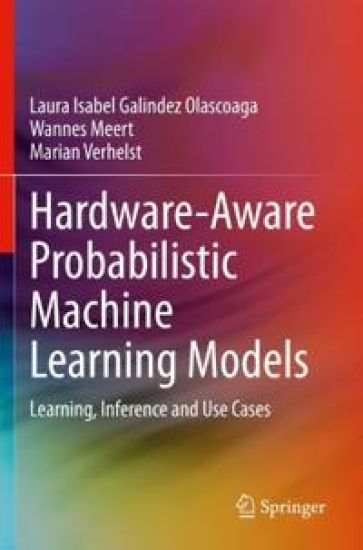
This book proposes probabilistic machine learning models that represent the hardware properties of the device hosting them. These models can be used to evaluate the impact that a specific device configuration may have on resource consumption and performance of the machine learning task, with the overarching goal of balancing the two optimally. The book first motivates extreme-edge computing in the context of the Internet of Things (IoT) paradigm. Then, it briefly reviews the steps involved in the execution of a machine learning task and identifies the implications associated with implementing this type of workload in resource-constrained devices. The core of this book focuses on augmenting and exploiting the properties of Bayesian Networks and Probabilistic Circuits in order to endow them with hardware-awareness. The proposed models can encode the properties of various device sub-systems that are typically not considered by other resource-aware strategies, bringing about resource-saving opportunities that traditional approaches fail to uncover. The performance of the proposed models and strategies is empirically evaluated for several use cases. All of the considered examples show the potential of attaining significant resource-saving opportunities with minimal accuracy losses at application time. Overall, this book constitutes a novel approach to hardware-algorithm co-optimization that further bridges the fields of Machine Learning and Electrical Engineering.
Hardware-Aware Probabilistic Machine Learning Models

Hardware-Aware Probabilistic Machine Learning Models

Laura Isabel Galindez Olascoaga; Wannes Meert; Marian Verhelst

Springer Nature Switzerland AG
2021
sidottu
This book proposes probabilistic machine learning models that represent the hardware properties of the device hosting them. These models can be used to evaluate the impact that a specific device configuration may have on resource consumption and performance of the machine learning task, with the overarching goal of balancing the two optimally. The book first motivates extreme-edge computing in the context of the Internet of Things (IoT) paradigm. Then, it briefly reviews the steps involved in the execution of a machine learning task and identifies the implications associated with implementing this type of workload in resource-constrained devices. The core of this book focuses on augmenting and exploiting the properties of Bayesian Networks and Probabilistic Circuits in order to endow them with hardware-awareness. The proposed models can encode the properties of various device sub-systems that are typically not considered by other resource-aware strategies, bringing about resource-saving opportunities that traditional approaches fail to uncover. The performance of the proposed models and strategies is empirically evaluated for several use cases. All of the considered examples show the potential of attaining significant resource-saving opportunities with minimal accuracy losses at application time. Overall, this book constitutes a novel approach to hardware-algorithm co-optimization that further bridges the fields of Machine Learning and Electrical Engineering.