Kirjojen hintavertailu. Mukana 12 215 943 kirjaa ja 12 kauppaa.

Kirjailija

Warren Bennis

Kirjat ja teokset yhdessä paikassa: 16 kirjaa, julkaisuja vuosilta 1996-2015, suosituimpien joukossa Douglas McGregor, Revisited. Vertaile teosten hintoja ja tarkista saatavuus suomalaisista kirjakaupoista.

16 kirjaa

Kirjojen julkaisuhaarukka 1996-2015.

Douglas McGregor, Revisited

Douglas McGregor, Revisited

Gary Heil; Warren Bennis; Deborah C. Stephens

John Wiley Sons Inc
2000
sidottu
"With every passing year, McGregor’s message becomes ever more relevant, more timely, and more important."—Peter F. Drucker"The world that Douglas McGregor spoke of is here. . . . Those businesses that thrive today are not necessarily those with the most valuable resources, the greatest market share, or the most capital (though none of these hurt); rather, those businesses that are able to tap their human potential in the most productive manner are the ones who enjoy enduring success. This is the world that Douglas McGregor envisioned."— from Douglas McGregor, RevisitedThe words of Douglas McGregor, one of the fore-fathers of management theory and one of the top business thinkers of all time, cannot and should not be ignored. McGregor’s vision of a more humanistic workplace may not have been widely accepted over three decades ago, but technological advancements that McGregor himself anticipated have paradoxically helped companies become more human. Viewing employees not as cogs in the machine but as living beings with individual goals—what McGregor called "the human side of the enterprise"—has proven to provide a remarkable competitive advantage.Now, with the rise of the networked economy, the growing power of frontline workers, and the shift in power from mass producer to individual consumer, authors Gary Heil, Warren Bennis, and Deborah Stephens assert that McGregor’s ideas are more important and relevant than ever before.Douglas McGregor, Revisited emphasizes McGregor’s lasting influence and updates his thinking with new concepts, fresh strategies, and modern implementation. This timely work traces McGregor’s original thinking, which has emerged in current approaches that stress distributed leadership, open-minded appraisal techniques, and employee/customer commitment.Highlighted throughout with gems of wisdom in McGregor’s own words, the book describes the value of his theories for today’s managers. The authors carefully outline how to put McGregor’s thinking into practice in your own business so you can:*Devise a better performance management system*Form and supervise effective management teams*Build cooperation instead of internal competition*Cultivate an intrinsically motivating, values-driven workplace*Create a cause worthy of employee commitmentAlso featured are examples from a host of companies and leaders who have flourished under McGregor’s approach. Authoritative and highly instructive, Douglas McGregor, Revisited offers new generations of managers important lessons from history and from the field.Praise for Douglas McGregor, Revisited"This book revisits in a contemporary manner the most important question facing management today: given what we know about human nature, how should work be managed so as to unleash the vast creative potential of human beings? The evidence is overwhelming that many people either come to an organization or can be appropriately led to exhibit the behavior McGregor characterized as ‘Theory Y.’ This book provides a ‘how-to’ approach for developing people at work and for establishing high performance organizations."—Joseph A. Maciariello, Horton Professor of ManagementPeter F. Drucker Graduate School of Management, Claremont Graduate University and Claremont McKenna College. Author of Lasting Value: Lessons from a Century of Agility at Lincoln ElectricDouglas McGregor’s seminal works, The Human Side of the Enterprise and The Professional Manager, debunked Taylorism and described a revolutionary way to manage people. He was the first to apply the findings in behavioral science to the world of business. Based on what had been learned about human behavior, McGregor explored the implications of managing people in a different manner than tradition dictated.The nature of work today makes McGregor’s ideas more relevant than ever before. This important book applies his thinking to today’s business world, proving again that the human aspect of work is crucial to organizational effectiveness. It also suggests how you can change your thinking and implement his ideas in your own business and workplace.
Plain Talk

Plain Talk

Ken Iverson; Warren Bennis

John Wiley Sons Inc
1997
sidottu
A renowned business leader who remains CEO of the steel industry giant he created shares his ideas and observations on how to grow a world-class organization and the principles behind his very successful management style.
The Essential Bennis

The Essential Bennis

Warren Bennis

John Wiley Sons Inc
2015
nidottu
"Looking over a lifetime of work, I see that certain themes have always fascinated me. Early on, I felt that bureaucracy was doomed and that something flatter and more collegial would triumph. The need for candor and transparency has been a frequent cry, because I saw how warped organizations become without them. I've long known that organizational decisions inevitably have a moral dimension. The vital role that great followers play in successful leadership has grown ever more obvious. I am increasingly aware how crucial rhetoric and other performing arts are in making a compelling leader?good or bad. That leaders are inevitably shaped by personal crucibles has been confirmed by hundreds of interviews. And it is clear to me now that the process of becoming a leader and the process of becoming a fully integrated human being are one and the same, both grounded in self-discovery." ?from the Introduction by WARREN BENNIS Join Us at Josseybass.com Register at www.josseybass.com/email for more information on our publications, authors, and to receive special offers.
The Art and Adventure of Leadership

The Art and Adventure of Leadership

Warren Bennis; Steven B. Sample; Rob Asghar

John Wiley Sons Inc
2015
sidottu
For the first time, a top leadership scholar and a top leadership practitioner explore the true duties, demands, and privileges of leadership. Intellectual sparks flew when Warren Bennis, the “father” of modern leadership studies and Steven B. Sample, one of the most accomplished university presidents in recent history, came together for candid explorations of the forces that shape successful leaders and unsuccessful ones. The Art and Adventure of Leadership, their final collab­oration, reveals the profound insights that the authors gained together over the 16 years in which they co-taught one of the most popular leadership courses in America. Here, each brings his own distinct vantage point as they address the mechanics and mysteries of leadership. The result is a unique examination of the journey of great leaders from momentary setbacks to ultimate success. It offers profound lessons on what determines the difference between failure and redemption for leaders. And it illu­minates important and overlooked dimensions of great leaders ranging from Winston Churchill to Steve Jobs. Together, they explore why: A mature leader must grasp when it’s healthy to risk failure, and when failure can’t be tolerated at any costLeadership isn’t for everyone and requires a particular set of skills and competencies that are often glossed over in most management literatureTo succeed in an uncertain and fast-changing world, a shrewd leader must understand which aspects of human society change—and which aspects never changeA mature, wise leader must seek a balance between high-minded ideals and the gritty realities and compromises that leaders face in their daily livesAbove all, meaningful leadership remains a matter of character With incredible insight, this book examines why George Washington, Abraham Lincoln, and other giants were able to recover from failures, learn resilience, and prepare themselves for their moments of destiny. In so doing, it demonstrates and helps cultivate the leadership skills that you need to create your own most meaningful legacy. The Art and Adventure of Leadership is a unique look at lead­ership, and a critical resource for the leaders of tomorrow.
Leading with Sense

Leading with Sense

Valérie Gauthier; Warren Bennis

Stanford University Press
2014
sidottu
Today's business environment demands a new approach to leadership, one that effectively connects individuals and organizations in the midst of change. Leading with Sense offers a new, practical approach to meeting this challenge. Drawing on her experience as a poetic translator and her expertise in cross-cultural leadership, Valérie Gauthier outlines the tenets of savoir-relier: a framework for building sensible, trustworthy, and lasting relationships that enables leaders to value difference, work across boundaries, and navigate complex systems. Savoir-relier teaches leaders to tap into their senses in the midst of strategizing, allowing them to act intuitively and rationally at once. Few leaders dare to claim that their "gut feelings" are critical to their decisions. But, by engaging their intuition, they are able to draw on experience, better appreciate their environment, build confidence, and summon the courage to tackle the task at hand. Leading with Sense trains readers to be poets and translators in the business context. With savoir-relier, we can write our own stories, deciphering the challenges that we face with acumen, humility, and respect. Using real-world examples of this pioneering approach, Gauthier provides readers with methods and tools for cultivating a savoir-relier mindset to build positive relationships, nurture diversity, drive mindful innovation, and foster success.
Transparency

Transparency

Warren Bennis; Daniel Goleman; James O'Toole

John Wiley Sons Inc
2014
nidottu
In Transparency, the authors–a powerhouse trio in the field of leadership–look at what conspires against "a culture of candor" in organizations to create disastrous results, and suggest ways that leaders can achieve healthy and honest openness. They explore the lightning-rod concept of "transparency"–which has fast become the buzzword not only in business and corporate settings but in government and the social sector as well. Together Bennis, Goleman, and O'Toole explore why the containment of truth is the dearest held value of far too many organizations and suggest practical ways that organizations, their leaders, their members, and their boards can achieve openness. After years of dedicating themselves to research and theory, at first separately, and now jointly, these three leadership giants reveal the multifaceted importance of candor and show what promotes transparency and what hinders it. They describe how leaders often stymie the flow of information and the structural impediments that keep information from getting where it needs to go. This vital resource is written for any organization–business, government, and nonprofit–that must achieve a culture of candor, truth, and transparency.
The Leader's Change Handbook

The Leader's Change Handbook

Warren Bennis

John Wiley Sons Inc
2012
nidottu
A Stunning Achievement in Change ManagementIn October of 1997, the nation's top business theorists and practitioners met at a conference cosponsored by USC's Leadership Institute and the Center for Effective Organizations. The group was challenged to present their most advanced ideas regarding leadership and change management. This guide is the stunning result of their collective efforts. Charged with fascinating case studies, action strategies, and unbeatable advice, The Leader's Change Handbook features fresh works by Christopher Bartlett, Michael Beer, John Kotter, David Nadler, Ron Heifetz, Susan Mohrman, Bob Quinn and other distinguished contributors. What it offers is a uniquely coherent, cutting-edge approach to leading today's organizations -- an approach only this elite group, working together toward a common vision, could offer.
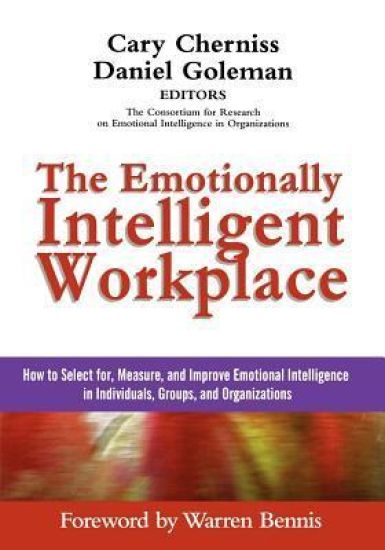
The Emotionally Intelligent Workplace

The Emotionally Intelligent Workplace

Warren Bennis

John Wiley Sons Inc
2011
nidottu
How does emotional intelligence as a competency go beyond the individual to become something a group or entire organization can build and utilize collectively? Written primarily by members of the Consortium for Research on Emotional Intelligence in Organizations, founded by recognized EI experts Daniel Goleman and Cary Cherniss, this groundbreaking compendium examines the conceptual and strategic issues involved in defining, measuring and promoting emotional intelligence in organizations. The book's contributing authors share fifteen models that have been field-tested and empirically validated in existing organizations. They also detail twenty-two guidelines for promoting emotional intelligence and outline a variety of measurement strategies for assessing emotional and social competence in organizations.
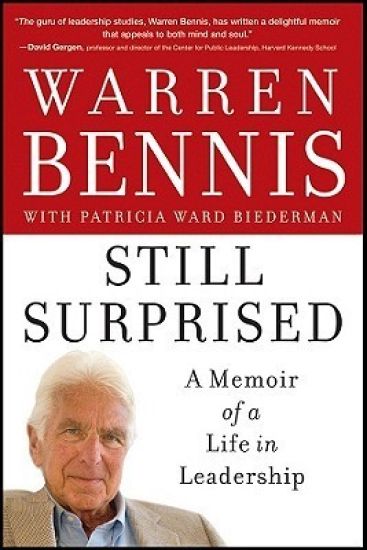
Still Surprised

Still Surprised

Warren Bennis

John Wiley Sons Inc
2010
sidottu
An intimate look at the founding father of the modern leadership movement Warren Bennis is an acclaimed American scholar, successful organizational consultant and author, and an expert in the field of leadership. His much awaited memoir is filled with insights about the successes and failures from his long and storied life and career. Bennis' life and career have traversed eight decades of first-hand experience with tumultuous episodes of recent history-from Jewish child in a gentile town in the 30's, a young army recruit in the Battle of the Bulge to a college student in the one of the first progressive precursors to the civil rights movement to a patient undergoing daily psychoanalysis for five years, and later a university provost during the Vietnam protests. Reveals the triumphs and struggles of the man who is considered the pioneer in the contemporary field of leadership studiesBennis is the author of 27 books including the bestseller On Becoming a Leader This is first book to examine the extraordinary life of Warren Bennis by the man himself.
The Age of Heretics

The Age of Heretics

Art Kleiner; Warren Bennis; Steven Wheeler; Walt McFarland

John Wiley Sons Inc
2008
sidottu
In this second edition of his bestselling book, author Art Kleiner explores the nature of effective leadership in times of change and defines its importance to the corporation of the future. He describes a heretic as a visionary who creates change in large-scale companies, balancing the contrary truths they can’t deny against their loyalty to their organizations. The Age of Heretics reveals how managers can get stuck in counterproductive ways of doing things and shows why it takes a heretical point of view to get past the deadlock and move forward.
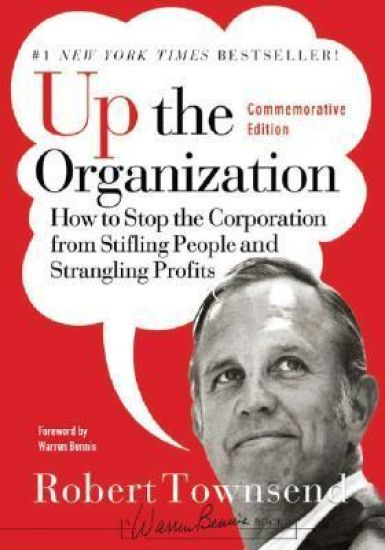
Up the Organization

Up the Organization

Robert C. Townsend; Warren Bennis

Jossey-Bass Inc.,U.S.
2007
sidottu
Although it was first published more than thirty-five years ago, Up the Organization continues to top the lists of best business books by groups as diverse as the American Management Association, Strategy + Business (Booz Allen Hamilton), and The Wharton Center for Leadership and Change Management. 1-800-CEO-READ ranks Townsend’s bestseller first among eighty books that “every manager must read.” This commemorative edition offers a new generation the benefit of Robert Townsend’s timeless wisdom as well as reflections on his work and life by those who knew and worked with him. This groundbreaking book continues to remind us not to get mired in all those sacred organizational routines that stifle people and strangle both profits and profitability. He shows a way to humanize business and a way to have fun while making it all work better than it ever worked before.
Moral Leadership

Moral Leadership

Warren Bennis

Jossey-Bass Inc.,U.S.
2006
sidottu
Moral Leadership brings together in one comprehensive volume essays from leading scholars in law, leadership, psychology, political science, and ethics to provide practical, theoretical policy guidance. The authors explore key questions about moral leadership such as: How do leaders form, sustain, and transmit moral commitments?Under what conditions are those processes most effective?What is the impact of ethics officers, codes, training programs, and similar initiatives?How do standards and practices vary across context and culture?What can we do at the individual, organizational, and societal level to foster moral leadership? Throughout the book, the contributors identify what people know, and only think they know, about the role of ethics in key decision-making positions. The essays focus on issues such as the definition and importance of moral leadership and the factors that influence its exercise, along with practical strategies for promoting ethical behavior. Moral Leadership addresses the dynamics of moral leadership, with particular emphasis on major obstacles that stand in its way: impaired judgment, self-interest, and power. Finally, the book explores moral leadership in a variety of contexts?business and the professions, nonprofit organizations, and the international arena.
Maslow on Management

Maslow on Management

Abraham H. Maslow; Warren Bennis

John Wiley Sons Inc
1998
sidottu
A seminal work onhuman behavior in the workplace-now completely updated "At last! We have all been quoting Maslow for years and to now have such an excellent compilation of his seminal thoughts on management and organization comes like a timely gift from heaven. The values and principles he taught decades ago are even more relevant today."—Stephen Covey, author, The Seven Habits of Highly Successful People "Maslow's book is a readable, impressionistic masterpiece that extolled the virtues of collaborative, synergistic management decades ahead of its time. This edition reveals just how much the management thinkers of our day, including Peter Drucker, W. Edwards Deming, and Peter Senge, owe to Maslow, and how much, at the dawn of the twenty-first century, management can still learn from his insights."—Andrea Gabor, author, The Man Who Discovered Quality "Maslow's brilliant and humane perspectives are made easily accessible in this exceptional book. It's also quite humbling-why haven't we yet actualized the truths about human nature and the nature of work?"—Margaret J. Wheatley, author, Leadership and the New Science and A Simpler Way "Maslow's profound concept of self-actualization could generate a Copernican Revolution of work and society, catapulting us out of what future generations will look back on as the dark ages of management."—Jim Collins, coauthor, Built to Last
Why Leaders Can't Lead

Why Leaders Can't Lead

Warren Bennis

Jossey-Bass Inc.,U.S.
1997
nidottu
A Selection of the Executive Program and Fortune Book Clubs Leaders beware. There's an unconscious conspiracy afoot, aiming to sabotage your plans and undermine your vision. Entrenched bureaucracy, ominous social trends, and mind-numbing routine are among its members?and their proliferation is an unfortunate sign of our times. But take heart. In this highly acclaimed work, legendary management consultant Warren Bennis unmasks the culprits, analyzes their tactics, and offers new insights for change agents struggling to take charge in an era that conspires against effective leadership. The best book on how leaders can lead. --Peter Drucker Bennis teaches leaders to maximize their virtues, correct their faults, face change successfully, and love their work. Leaders will win, but so will their organizations: Bennis advocates a collaborative leadership that empowers employees and enhances organizational effectiveness. A priceless gift to those seeking to be accountable leaders. --Max De Pree, author of Leading Without Power So learn why leaders can't lead. Then learn how they can lead. This book--alive with warmth and wisdom--is essential reading both for leaders and for the human resource professionals who teach them.
Beyond Leadership

Beyond Leadership

Warren Bennis; Jagdish Parikh; Ronnie Lessem

Blackwell Publishers
1996
nidottu
Beyond Leadership has been written to enable practitioners and students of leadership to manage uncertainty, diversity, conflict, and complexity. Its lead authors are American, Asian and Afro-European, and this range of perspective is reflected in the individual chapters. The unique appeal of this book is its global approach to management as the next evolutionary step beyond the major western (American) and eastern (Japanese) perspectives.