Kirjojen hintavertailu. Mukana 12 390 323 kirjaa ja 12 kauppaa.

Kirjailija

Wassily Kandinsky

Kirjat ja teokset yhdessä paikassa: 49 kirjaa, julkaisuja vuosilta 1912-2025, suosituimpien joukossa Punkt und Linie zu Fläche (Mit Original-Zeichnungen). Vertaile teosten hintoja ja tarkista saatavuus suomalaisista kirjakaupoista.

49 kirjaa

Kirjojen julkaisuhaarukka 1912-2025.

Wassily Kandinsky

Wassily Kandinsky

Wassily Kandinsky

PRINCETON UNIVERSITY PRESS
2025
sidottu
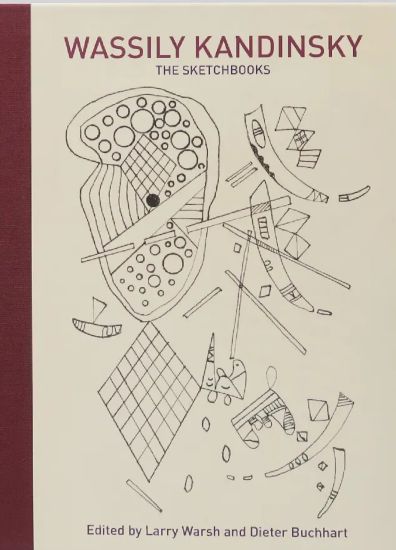
A revelatory collection of the artist’s sketches and preparatory drawings, featuring many that have never been published beforeThe great Russian modernist painter and theorist Wassily Kandinsky was one of the pioneers of abstraction in Western art. Few documents provide more insight into his evolution from figural to abstract art—or into the development of abstraction in the early twentieth century—than the pages of his sketchbooks. Featuring previously unpublished drawings, Wassily Kandinsky: The Sketchbooks is a comprehensive selection of hundreds of sketches from twelve notebooks Kandinsky kept between 1889 and 1935. Beginning with early figure studies, architectural sketches, and landscapes, the notebooks reveal a process of exploration that would lead Kandinsky from his first experiments in geometric abstraction to paintings that reshaped modernism.Demonstrating Kandinsky’s mastery of color, line, shape, composition, and movement, the book includes notes and preparatory studies for major paintings, such as the “analytical drawing” for Composition VII (1913), the first study for Several Circles (1926), and Study for Composition IX, a preliminary working of his 1936 masterpiece. Visually stunning, the book offers a remarkable, intimate look at how Kandinsky sought to discover nothing less than a spiritually transcendent form of art.
Concerning the Spiritual in Art

Concerning the Spiritual in Art

Wassily Kandinsky

Penguin Classics
2024
pokkari
A seminal text in the history of modern art, from one of the most famous artists of the twentieth century‘Art is the language that speaks to the soul’Why do we make art? In Concerning the Spiritual in Art Wassily Kandinsky, one of the earliest and most famous abstract painters, argued against ‘art for art’s sake’. Exploring form and colour, spirituality and tradition, Kandinsky instead predicted a future for painting in its potential to redirect the attention of viewers away from the shallow materialism of the modern world toward the more profound intellectual and emotional concerns of their interior lives. His revolutionary work became a landmark in modern art history, helping to usher in the age of non-representational painting. This new translation also includes Kandinsky’s later essay, ‘The Question of Form’, in which he interrogates and sharpens many of his earlier ideas.A new translation by Ruth Ahmedzai KempWith an introduction by Lisa Florman
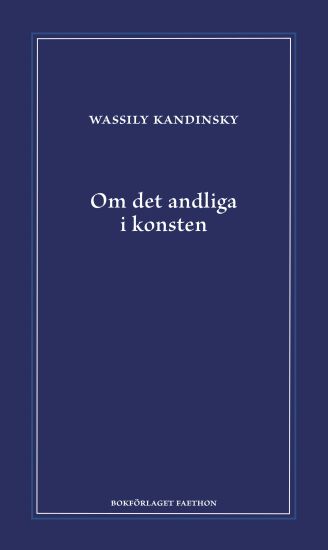
Om det andliga i konsten

Om det andliga i konsten

Wassily Kandinsky; Annika Öhrner

Bokförlaget Faethon
2023
sidottu
Wassily Kandinskys Om det andliga i konsten tillhör 1900-talets viktigaste teoretiska texter om konst. Den skapade ett stort intresse för abstraktion och anknyter trots sin modernism till äldre tiders traktat om måleri. Här presenteras den återigen på svenska, i Ulf Lindes och Sonja Martinssons översättning. Lindes företal, liksom alla Kandinskys träsnitt i inlagan, ingår. Konstvetaren Annika Öhrner har skrivit ett efterord till utgåvan.
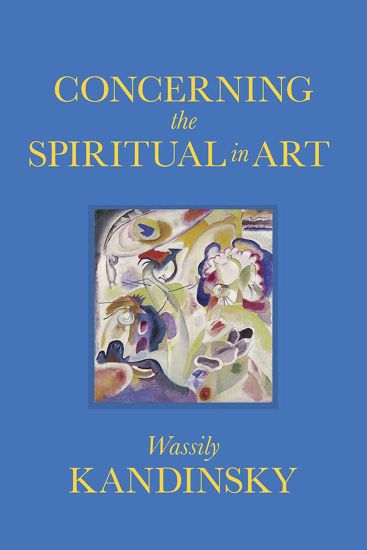
Concerning the Spiritual in Art

Concerning the Spiritual in Art

Wassily Kandinsky

Dover Publications Inc.
2021
sidottu
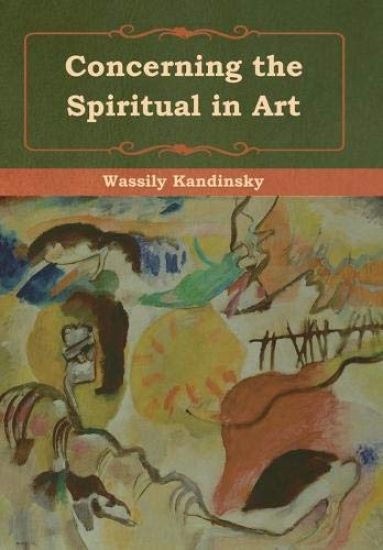
Artists and thinkers alike will treasure this special hardcover edition of one of the most important documents in the history of modern art. A pioneering work in the movement to free art from its traditional bonds to material reality, and written by the famous nonobjective painter Wassily Kandinsky (1866-1944), it explains Kandinsky's own theory of painting and crystallizes the ideas that were influencing many other modern artists of the period. Along with his own groundbreaking paintings, this book had a tremendous impact on the development of modern art.
Concerning the Spiritual in Art

Concerning the Spiritual in Art

Wassily Kandinsky

e-artnow
2020
nidottu
Kandinsky in this book defines the three types of painting; impressions, improvisations and compositions. While impressions are based on an external reality that serves as a starting point, improvisations and compositions depict images emergent from the unconscious, though composition is developed from a more formal point of view. Kandinsky compares the spiritual life of humanity to a pyramid-the artist has a mission to lead others to the pinnacle with his work. The point of the pyramid is those few, great artists. It is a spiritual pyramid, advancing and ascending slowly even if it sometimes appears immobile. During decadent periods, the soul sinks to the bottom of the pyramid; humanity searches only for external success, ignoring spiritual forces.
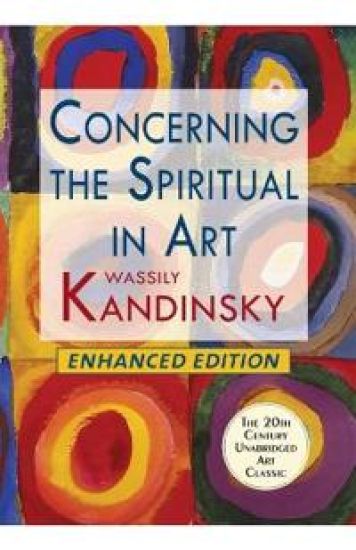
Concerning the Spiritual in Art (Enhanced)

Concerning the Spiritual in Art (Enhanced)

Wassily Kandinsky

Echo Point Books Media, LLC
2020
pokkari
Pioneering and Exploring the Spiritual Revolution in Modern ArtIn the early 20th century, the pioneering and celebrated painter Wassily Kandinsky (1866-1944) wrote this groundbreaking work advocating a powerful role for spirituality in driving the creation of modern art. Voicing his own strong opinions as well as the philosophical passions of his peers, Kandinsky urged traditional artists to break free from the limiting restraints of the material world in their work. By faithfully using their own uninhibited thoughts and inner emotions for inspiration-essentially channeling the human spirit instead of representing material concerns-he believed that artists could transcend the norms of the time to reach new levels of abstract expression and aesthetic beauty. Likewise, he also challenged the viewing public to admire art with a fierce spiritual hunger. With insightful explorations of form and color theory, creative inspiration, psychology, religion, music, ethics, and even politics, Kandinsky makes a strong case for his artistic revolution. The movement he inspired with his theories played a pivotal role in the development of modern art, particularly in the growth and evolution of abstract painting. Featuring an enlightening introduction by the book's translator, Michael T. H. Sadler, providing generational and cultural context for Kandinsky and his work, Concerning the Spiritual in Art gives testimony to the mind and creative expression of Kandinsky and other artists of his generation. This seminal and thought-provoking book exploring the heart of the artistic endeavor belongs in the library of every serious artist and student of modern art.
Concerning the Spiritual in Art

Concerning the Spiritual in Art

Wassily Kandinsky

Echo Point Books Media
2020
sidottu
Pioneering and Exploring the Spiritual Revolution in Modern ArtIn the early 20th century, the pioneering and celebrated painter Wassily Kandinsky (1866-1944) wrote this groundbreaking work advocating a powerful role for spirituality in driving the creation of modern art. Voicing his own strong opinions as well as the philosophical passions of his peers, Kandinsky urged traditional artists to break free from the limiting restraints of the material world in their work. By faithfully using their own uninhibited thoughts and inner emotions for inspiration-essentially channeling the human spirit instead of representing material concerns-he believed that artists could transcend the norms of the time to reach new levels of abstract expression and aesthetic beauty. Likewise, he also challenged the viewing public to admire art with a fierce spiritual hunger. With insightful explorations of form and color theory, creative inspiration, psychology, religion, music, ethics, and even politics, Kandinsky makes a strong case for his artistic revolution. The movement he inspired with his theories played a pivotal role in the development of modern art, particularly in the growth and evolution of abstract painting. Featuring an enlightening introduction by the book's translator, Michael T. H. Sadler, providing generational and cultural context for Kandinsky and his work, Concerning the Spiritual in Art gives testimony to the mind and creative expression of Kandinsky and other artists of his generation. This seminal and thought-provoking book exploring the heart of the artistic endeavor belongs in the library of every serious artist and student of modern art. This work is also available from Echo Point Books in a paperback edition; just look for ISBN 1-63561-906-8.
Sounds

Sounds

Wassily Kandinsky

Yale University Press
2019
pokkari
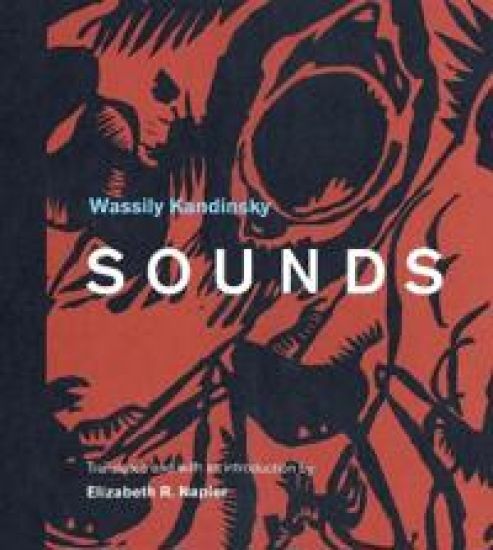
A dazzling yet little-known artist’s book that distills the painter’s seminal interests in abstraction and the unity of the arts Wassily Kandinsky (1866–1944) was a Russian pioneer of abstract painting whose work has influenced generations of artists. His Sounds (Klänge) of 1912 is one of the earliest, most beautiful examples of a 20th-century artist’s book. Its “sound poems” are alternately narrative and expressive, witty and simple in form. They treat questions of space, color, physical design, and the act of seeing in a world that offers multiple and often contradictory possibilities. The woodcut illustrations that accompany the poems range from representational designs to abstract vignettes. In its fusion of image and word, Sounds epitomizes the artist’s move toward abstraction and his aspiration to a synthesis of the arts. This updated edition of Sounds includes all of the book’s poems in English and German and its woodcuts, twelve of which appear in color for greater fidelity to the original. The translator’s introduction offers close formal examination of the poems and situates Sounds in the context of Kandinsky’s oeuvre. Although it was prized by prominent 20th-century artists, Sounds is one of the least known of Kandinsky’s major writings, and this remains the most authoritative English version.
Concerning the Spiritual in Art

Concerning the Spiritual in Art

Wassily Kandinsky

Bibliotech Press
2019
pokkari
Excerpt from translator's introduction: ... Picasso and Kandinsky make an interesting parallel, in that they have developed the art respectively of Cezanne and Gauguin, in a similar direction. On the decision of Picasso's failure or success rests the distinction between Cezanne and Gauguin, the realist and the symbolist, the painter of externals and the painter of religious feeling. Unless a spiritual value is accorded to Cezanne's work, unless he is believed to be a religious painter (and religious painters need not paint Madonnas), unless in fact he is paralleled closely with Gauguin, his follower Picasso cannot claim to stand, with Kandinsky, as a prophet of an art of spiritual harmony.
Concerning the Spiritual in Art

Concerning the Spiritual in Art

Wassily Kandinsky; M T H Sadler

Bibliotech Press
2019
sidottu
Excerpt from translator's introduction: ... Picasso and Kandinsky make an interesting parallel, in that they have developed the art respectively of Cezanne and Gauguin, in a similar direction. On the decision of Picasso's failure or success rests the distinction between Cezanne and Gauguin, the realist and the symbolist, the painter of externals and the painter of religious feeling. Unless a spiritual value is accorded to Cezanne's work, unless he is believed to be a religious painter (and religious painters need not paint Madonnas), unless in fact he is paralleled closely with Gauguin, his follower Picasso cannot claim to stand, with Kandinsky, as a prophet of an art of spiritual harmony.
Concerning the Spiritual in Art

Concerning the Spiritual in Art

Wassily Kandinsky

Digireads.com
2019
nidottu
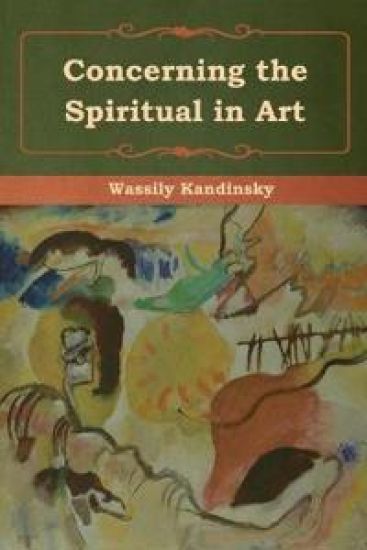
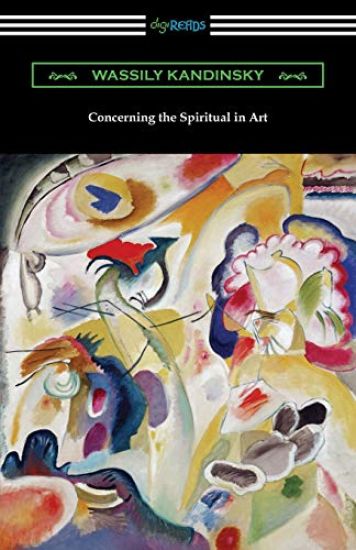
First published in Munich in 1911, Wassily Kandinsky's "Concerning the Spiritual in Art" explores the artist's ideas on the different forms of art and what role art plays in the spiritual life of mankind. Considered to have painted the first truly abstract work of art, Kandinsky was a highly influential and important pioneer in the modern art movement. "Concerning the Spiritual in Art" is organized into two parts. In the first part titled "About General Aesthetic", Kandinsky makes the argument that art should transition from being an exact and realistic representation of the material world to becoming instead an abstract reflection of the inner mind of the artist. In the second part, titled "About Painting", the artist describes the different psychological and emotional meanings of colors and the social and spiritual responsibilities of the artist. Kandinsky believed that humanity was a pyramid and at the top are the greatest of artists and those artists had the ability and duty to lead society to its spiritual pinnacle. Over a hundred years later, Kandinsky's work continues to be a valuable and illuminating read into the artistic mind of Wassily Kandinsky. This edition follows the 1912 translation of Michael T. H. Sadler and is printed on premium acid-free paper.
Concerning the Spiritual in Art

Concerning the Spiritual in Art

Wassily Kandinsky

Createspace Independent Publishing Platform
2018
nidottu
Kandinsky sees the spiritual life of humanity as a pyramid. The artist must lead the layman to the top of this pyramid through the soulful exercise of art. Kandinsky differentiates between the superficial pleasure art inspires and the inner resonance created when art is considered attentively and allowed to touch the soul. The artist is allowed absolute freedom in order to express their soul's art, but they must not abuse this freedom if they are not expressing a personal inner resonance. Once the artwork is complete, the mystic quality they have poured into it become independent of them and filled with a spiritual breath.
Concerning the Spiritual in Art

Concerning the Spiritual in Art

Wassily Kandinsky

Createspace Independent Publishing Platform
2018
nidottu
Kandinsky sees the spiritual life of humanity as a pyramid. The artist must lead the layman to the top of this pyramid through the soulful exercise of art. Kandinsky differentiates between the superficial pleasure art inspires and the inner resonance created when art is considered attentively and allowed to touch the soul. The artist is allowed absolute freedom in order to express their soul's art, but they must not abuse this freedom if they are not expressing a personal inner resonance. Once the artwork is complete, the mystic quality they have poured into it become independent of them and filled with a spiritual breath.