Kirjojen hintavertailu. Mukana 12 595 353 kirjaa ja 12 kauppaa.

Kirjailija

Wayne Flynt

Kirjat ja teokset yhdessä paikassa: 19 kirjaa, julkaisuja vuosilta 1982-2026, suosituimpien joukossa For the Love of Alabama. Vertaile teosten hintoja ja tarkista saatavuus suomalaisista kirjakaupoista.

19 kirjaa

Kirjojen julkaisuhaarukka 1982-2026.

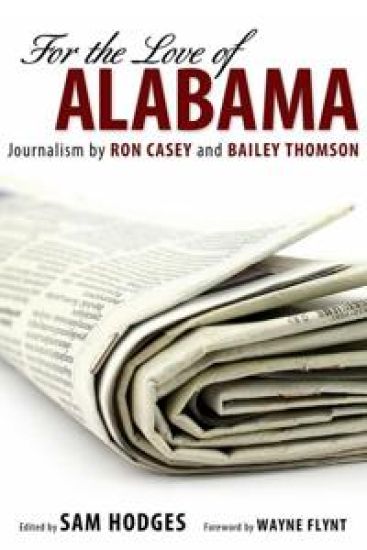
For the Love of Alabama

For the Love of Alabama

Ron Casey; Bailey Thomson; Wayne Flynt

The University of Alabama Press
2011
nidottu
Normal0falsefalsefalseMicrosoftInternetExplorer4For the Love of Alabama is a compilation of the most poignant and trenchant writing--editorials, reportage, and columns--by two of Alabama's most committed and reform-minded journalists. Ron Casey and Bailey Thomson both died young: Casey at forty-eight and Thomson at fifty-four. Nevertheless, through their work at the Birmingham News and the Mobile Press-Register, respectively, they labored tirelessly to illuminate and confront the state's chronic and interrelated problems of race, government, education, and poverty. Both journalists attended The University of Alabama shortly after George Wallace stood in the schoolhouse door, and their subsequent work tackled the tumultuous politics of that era. Casey and Thomson soon became voices of statewide reform movements. As such, they attacked the 1901 Constitution for its stagnating effects on the laboring class, race relations, education, and healthcare; allowances for special-interest influence; and impediments to fair taxes--an ongoing crusade that spawned, among much other work, Casey's Pulitzer Prize-winning series of editorials "What They Won't Tell You About Your Taxes" and Thomson's series "Dixie's Broken Heart," which won the Distinguished Writing Award from the American Society of Newspaper Editors. Compiled here are the writings that challenged not only the en- trenched corruption of the times, but also the apathy toward that corruption. It is a testament to the process of reform Casey and Thomson hoped would improve the lives of all Alabamians. It is also a volume of strong personal convictions, uncompromised religious beliefs, and a grounded devotion to community--all displayed in the clear, concise prose of two friends driven to change, for the better, the state that they loved.

Duncan Upshaw Fletcher

Duncan Upshaw Fletcher

Wayne Flynt

THE UNIVERSITY OF ALABAMA PRESS
2026
nidottu
A Southern senator at the crossroads of change. Duncan Upshaw Fletcher: Dixie's Reluctant Progressive is the definitive portrait of one of Florida's most influential yet overlooked political figures. Serving in the U.S. Senate from 1909 to 1936, Fletcher bridged the gap between Wilsonian progressivism and Roosevelt's New Deal, shaping landmark legislation such as the Federal Farm Loan Act, the Shipping Act, and major banking reforms. Far from a demagogue, Fletcher was a methodical, pragmatic leader who championed moderation, urban progressivism, and economic development while resisting racial and religious extremism. Wayne Flynt's deeply researched biography illuminates Fletcher's paradoxical career—a Unitarian in a fundamentalist state, a reformer who later embraced conservatism, and a Southern Democrat who became a loyal New Dealer. Through vivid analysis of Florida's turbulent political landscape, the book explores themes of coalition-building, economic modernization, and the South's evolving role in national politics. This work will captivate readers interested in Southern history, political biography, and the roots of modern progressivism. Scholars of the New Deal, reform movements, and Florida history will find it indispensable, while general readers will appreciate its lucid style and insights into a leader whose story resonates with today's debates over moderation, governance, and social change.
Cracker Messiah

Cracker Messiah

Wayne Flynt

THE UNIVERSITY OF ALABAMA PRESS
2026
nidottu
The definitive biography of Sidney J. Catts—Florida's fiery governor who fused pulpit rhetoric with populist politics in the early twentieth century. Cracker Messiah by Wayne Flynt is a riveting portrait of Sidney J. Catts, one of the most controversial figures in Southern political history. Catts rose from Baptist pulpits and Chautauqua stages to Florida's governor's mansion in 1916, riding a wave of rural populism, prohibition fervor, and anti-Catholic rhetoric. His fiery oratory and outsider persona electrified "Florida crackers" at a time when industrial and urban forces were reshaping the South. Yet Catts was more than a demagogue. His administration championed progressive reforms—good roads, penal improvements, vocational education, and even women's political participation—while his career oscillated between idealism and opportunism. Wayne Flynt's meticulously documented biography illuminates this complicated politician, tracing Catts's battles with the Democratic establishment, his failed Senate bid, and his later flirtations with gambling and real estate during Florida's boom years. Drawing on interviews, archival sources, and legislative records, Cracker Messiah illuminates the tensions between nativism and reform, faith and hypocrisy, populism and progressivism in the early twentieth-century South. This new edition will appeal to readers of Southern history, political biography, and Progressive Era studies, as well as anyone interested in the roots of American populism and the enduring complexities of cultural and political identity in the Deep South.
Afternoons with Harper Lee

Afternoons with Harper Lee

Wayne Flynt

UNIVERSITY OF GEORGIA PRESS
2022
sidottu
Imagine sitting with an esteemed writer on his or her front porch somewhere in the world and swapping life stories. Dr. Wayne Flynt got the opportunity to do just this with Nelle Harper Lee. In a friendship that blossomed over a dozen years starting when Lee relocated back to Alabama after having had a stroke, Flynt and his wife Dartie became regular visitors at the assisted living facility that was Lee’s new home. And there the conversation began. It began where it always begins with Southern storytellers, with an invitation to “Come in, sit down, and stay a while."The stories exchanged ranged widely over the topics of Alabama history, Alabama folklore, family genealogy, and American literature, of course. On the way from beginning to end there were many detours: talks about Huntingdon College; The University of Alabama; New York City; the United Kingdom; Garden City, Kansas; and Mobile, Alabama, to name just a few. Wayne and his wife were often joined by Alice Lee, the oldest Lee sister, a living encyclopedia on the subject of family genealogy, and middle sister Louise Lee Conner. The hours spent visiting, in intimate closeness, are still cherished by Wayne Flynt. They yielded revelations large and small, which have been shaped into Afternoons with Harper Lee. Part memoir, part biography, this book offers a unique window into the life and mind and preoccupations of one of America’s best-loved writers. Flynt and Harper Lee and her sisters learned a great deal from each other, and though this is not a history book, their shared interest in Alabama and its history made this extraordinary work possible.
Southern Religion and Christian Diversity in the Twentieth Century

Southern Religion and Christian Diversity in the Twentieth Century

Wayne Flynt; Charles A. Israel; John Giggie

The University of Alabama Press
2021
nidottu
Southern Religion and Christian Diversity in the Twentieth Century is a collection of fifteen essays by award-winning scholar Wayne Flynt that explores and reveals the often-forgotten religious heterogeneity of the American South. Throughout its dramatic history, the American South has wrestled with issues such as poverty, social change, labor reform, civil rights, and party politics, and Flynt’s writing reaffirms religion as the lens through which southerners understand and attempt to answer these contentious questions. In Southern Religion and Christian Diversity in the Twentieth Century, however, Flynt gently but persuasively dispels the myth—comforting to some and dismaying to others—of religion in the South as an inert cairn of reactionary conservatism. Flynt introduces a wealth of stories about individuals and communities of faith whose beliefs and actions map the South’s web of theological fault lines. In the early twentieth century, North Carolinian pastor Alexander McKelway became a relentless crusader against the common practice of child labor. In 1972, Rev. Dr. Ruby Kile, in a time of segregated churches led by men, took the helm of the eight-member Powderly Faith Deliverance Center in Jefferson County, Alabama and built the fledgling group into a robust congregation with more than 700 black and white worshippers. Flynt also examines the role of religion in numerous pivotal court cases, such as the US Supreme Court school prayer case Engel v. Vitale, whose majority opinion was penned by Justice Hugo Black, an Alabamian. These fascinating case studies and many more illuminate a religious landscape of far more varied texture and complexity than is commonly believed. Southern Religion and Christian Diversity in the Twentieth Century offers much to readers and scholars interested in the South, religion, and theology. Writing with his hallmark wit, warmth, and erudition, Flynt’s Southern Religion and Christian Diversity in the Twentieth Century is a vital record of gospel-inspired southerners whose stories revivify sclerotic assumptions about the narrow conformity of southern Christians.
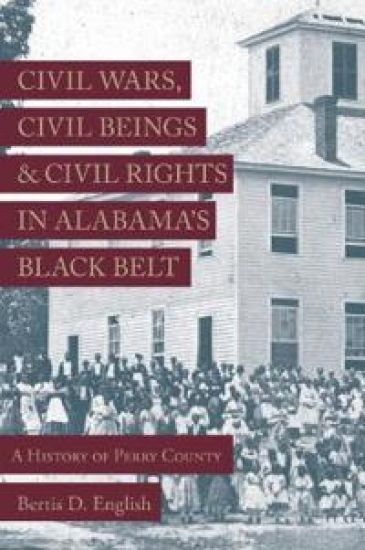
Civil Wars, Civil Beings, and Civil Rights in Alabama's Black Belt

Civil Wars, Civil Beings, and Civil Rights in Alabama's Black Belt

Bertis D. English; Wayne Flynt

The University of Alabama Press
2020
sidottu
How the 1863 elections in Perry County changed the course of Alabama’s role in the Civil War In his fascinating, in-depth study, Bertis D. English analyzes why Perry county, situated in the heart of a violence-prone subregion, enjoyed more peaceful race relations and less bloodshed than several neighboring counties. Choosing an atypical locality as central to his study, English raises questions about factors affecting ethnic disturbances in the Black Belt and elsewhere in Alabama. He also uses Perry County, which he deems an anomalous county, to caution against the tendency of some scholars to make sweeping generalizations about entire regions and subregions. English contends Perry County was a relatively tranquil place with a set of extremely influential African American businessmen, clergy, politicians, and other leaders during Reconstruction. Together with egalitarian or opportunistic white citizens, they headed a successful campaign for black agency and biracial cooperation that few counties in Alabama matched. English also illustrates how a significant number of educational institutions, a high density of African American residents, and an unusually organized and informed African American population were essential factors in forming Perry’s character. He likewise traces the development of religion in Perry, the nineteenth-century Baptist capital of Alabama, and the emergence of civil rights in Perry, an underemphasized center of activism during the twentieth century. This well-researched and comprehensive volume illuminates Perry County’s history from the various perspectives of its black, interracial, and white inhabitants, amplifying their own voices in a novel way. The narrative includes rich personal details about ordinary and affluent people, both free and unfree, creating a distinctive resource that will be useful to scholars as well as a reference that will serve the needs of students and general readers.
Alabama

Alabama

William Warren Rogers; Robert David Ward; Leah Rawls Atkins; Wayne Flynt

The University of Alabama Press
2018
nidottu
A new and up-to-date edition of Alabama’s history to celebrate the state’s bicentennial.Alabama: The History of a Deep South State, Bicentennial Edition is a comprehensive narrative account of the state from its earliest days to the present. This edition, updated to celebrate the state’s bicentennial year, offers a detailed survey of the colorful, dramatic, and often controversial turns in Alabama’s evolution. Organized chronologically and divided into three main sections—the first concluding in 1865, the second in 1920, and the third bringing the story to the present—makes clear and interprets the major events that occurred during Alabama’s history within the larger context of the South and the nation.Once the home of aboriginal inhabitants, Alabama was claimed and occupied by a number of European nations prior to becoming a permanent part of the United States in 1819. A cotton and slave state for more than half of the nineteenth century, Alabama seceded in 1861 to join the Confederate States of America, and occupied an uneasy and uncertain place in America’s post-Civil War landscape. Alabama’s role in the twentieth century has been equally tumultuous and dramatic.General readers as well as scholars will welcome this up-to-date and scrupulously researched history of Alabama, which examines such traditional subjects as politics, military history, economics, race, and class. It contains essential accounts devoted to Native Americans, women, and the environment, as well as detailed coverage of health, education, organized labor, civil rights, and the many cultural developments, from literature to sport, that have enriched Alabama’s history. The stories of individual leaders, from politicians to creative artists, are also highlighted. A key facet of this landmark historical narrative is the strong emphasis placed on the common everyday people of Alabama, those who have been rightly described as the “bone and sinew” of the state.
Alabama

Alabama

William Warren Rogers; Robert David Ward; Leah Rawls Atkins; Wayne Flynt

The University of Alabama Press
2018
sidottu
A new and up-to-date edition of Alabama’s history to celebrate the state’s bicentennial.Alabama: The History of a Deep South State, Bicentennial Edition is a comprehensive narrative account of the state from its earliest days to the present. This edition, updated to celebrate the state’s bicentennial year, offers a detailed survey of the colorful, dramatic, and often controversial turns in Alabama’s evolution. Organized chronologically and divided into three main sections—the first concluding in 1865, the second in 1920, and the third bringing the story to the present—makes clear and interprets the major events that occurred during Alabama’s history within the larger context of the South and the nation.Once the home of aboriginal inhabitants, Alabama was claimed and occupied by a number of European nations prior to becoming a permanent part of the United States in 1819. A cotton and slave state for more than half of the nineteenth century, Alabama seceded in 1861 to join the Confederate States of America, and occupied an uneasy and uncertain place in America’s post-Civil War landscape. Alabama’s role in the twentieth century has been equally tumultuous and dramatic.General readers as well as scholars will welcome this up-to-date and scrupulously researched history of Alabama, which examines such traditional subjects as politics, military history, economics, race, and class. It contains essential accounts devoted to Native Americans, women, and the environment, as well as detailed coverage of health, education, organized labor, civil rights, and the many cultural developments, from literature to sport, that have enriched Alabama’s history. The stories of individual leaders, from politicians to creative artists, are also highlighted. A key facet of this landmark historical narrative is the strong emphasis placed on the common everyday people of Alabama, those who have been rightly described as the “bone and sinew” of the state.
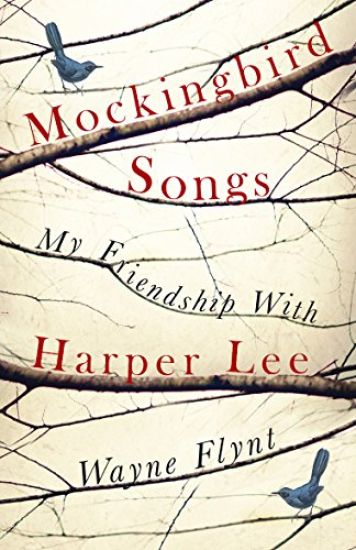
Mockingbird Songs: My Friendship with Harper Lee
An indelible portrait of one of the most famous and beloved authors in the canon of American literature--a collection of letters between Harper Lee and one of her closest friends that reveals the famously private writer as never before, in her own words.The violent racism of the American South drove Wayne Flynt away from his home state of Alabama, but the publication of To Kill a Mockingbird, Harper Lee's classic novel about courage, community, and equality, inspired him to return in the early 1960s and craft a career documenting and teaching Alabama history. His writing resonated with many Alabamians, in particular three sisters: Louise, Alice, and Nelle Harper Lee. Beginning with their first meeting in 1983, a mutual respect and affection for the state's history and literature matured into a deep friendship between two families who can trace their roots there back more than five generations. Flynt and Nelle Harper Lee began writing to one other while she was living in New York--heartfelt, insightful, and humorous letters in which they swapped stories, information, and opinions on topics both personal and professional: their families, books, Alabama history and social values, health concerns, and even their fears and accomplishments. Though their earliest missives began formally--"Dear Dr. Flynt"--as the years passed and their mutual admiration grew, their exchanges became more intimate and emotional, opening with "Dear Friend" and closing with "I love you, Nelle." Through their enduring correspondence, the Lees and the Flynts became completely immersed in each other's lives.Beautifully written, intelligent, and telling, this remarkable compendium of their letters--a correspondence that lasted for a quarter century, from 1992 until Harper Lee's death in February 2016--offers an incisive and compelling look into the mind, heart, and work of one of the most beloved authors in modern literary history.
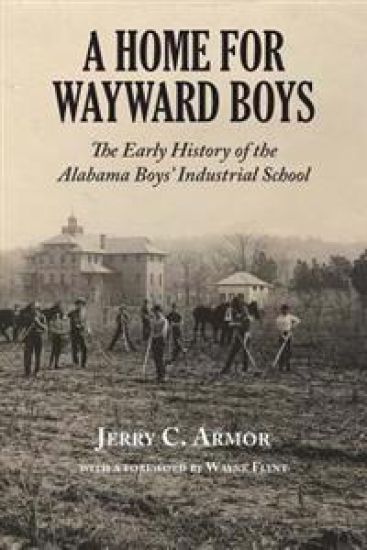
Home for Wayward Boys, A

Home for Wayward Boys, A

Jerry C. Armor; Wayne Flynt

UNIVERSITY OF GEORGIA PRESS
2015
nidottu
As Elizabeth Johnston walked among the convicts in an Alabama prison mining camp, she was stunned to see teenage boys working alongside hardened criminals. As a result of that disturbing experience, she vowed to remove youngsters from such wretched conditions by establishing a home for wayward boys. With the support of women across the state, she persuaded the Alabama legislature to establish the Alabama Boys’ Industrial School in 1900. After several difficult years, Johnston and her all-female board made a once-in-a-lifetime decision by hiring a young couple from Tennessee, David and Katherine Weakley, as superintendent and matron. United by their Christian faith, their love for the boys, and some basic principles on how the boys should be molded into men, Johnston and the Weakleys labored together for decades to make the school one of the nation’s premier institutions of its kind. A Home for Wayward Boys is the inspiring story of the school, its leaders, and the youngsters who lived there. The book’s audience is not limited to those professionally interested in the social sciences and cultural history, but also to social workers, youth leaders, teachers, and parents—in fact, to anyone interested in the transforming power of love.
Professor-Politician

Professor-Politician

Geni Certain; Wayne Flynt

UNIVERSITY OF GEORGIA PRESS
2012
pokkari
Professor-Politician challenges common depictions of politics as a constant struggle of good-versus-evil and heroes-versus-villains, with “dirty politics” usually winning. The truth is that good government can prevail in Montgomery and Washington.Journalist Geni Certain recounts Glen Browder’s civic adventures as one of Alabama’s prominent scholars and public officials over the past half-century. This is a story of practical and reform politics told by someone specially positioned to comment on the Alabama government and American democracy.Certain interviewed knowledgeable people, researched public records, and scoured the Browder Collection at Jacksonville State University for this intriguing and inspiring biography of a civic-oriented leader.
Keeping the Faith

Keeping the Faith

Wayne Flynt

The University of Alabama Press
2011
sidottu
This historical memoir by the widely recognised scholar, Wayne Flynt, chronicles the inner workings of his academic career at Samford and Auburn Universities, as well as his many contributions to the general history of Alabama. Flynt has travelled the state and the South lecturing and teaching both lay and academic groups, calling on his detailed knowledge of both the history and power structures in Alabama to reveal uncomfortable truths wherever he finds them, whether in academic institutions that fall short of their stated missions, in government and industry leaders who seek and hold power by playing to the fears and prejudices of the public, or in religious groups who abandon their original missions and instead seek financial and emotional comfort in lip service only. In doing so he has not only energised those who think the State of Alabama can and must do better, but also has earned the enmity of those who prosper, profit, and prevaricate for their own selfish ends. Nevertheless, Flynt utilises a lifetime of learning and reflection to voice the conscience of his community. Keeping the Faith: Ordinary People, Extraordinary Lives tells the story of his life and his courageous battles against an indifferent or hostile hierarchy with modesty and honesty. In doing so he tells us how Alabama institutions really are manipulated and, more importantly, why we should care.
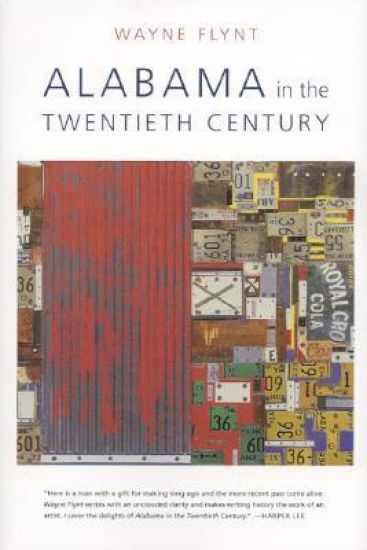
Alabama in the Twentieth Century

Alabama in the Twentieth Century

Wayne Flynt

The University of Alabama Press
2006
nidottu
The vast range and complexity of Alabama's triumphs and low points in a defining century. Wayne Flynt is Distinguished University Professor of History at Auburn University and author or coauthor of 11 books, including Alabama Baptists: Southern Baptists in the Heart of Dixie, Poor But Proud: Alabama's Poor Whites, Alabama: The History of a Deep South State, and Taking Christianity to China: Alabama Missionaries in the Middle Kingdom, 1850-1950. He has been recognized by numerous awards and honors, including the Lillian Smith Award for nonfiction, the Clarence Cason Nonfiction Award, the James F. Sulzby Jr. Book Award (twice), and the Alabama Library Association Award for nonfiction (twice).
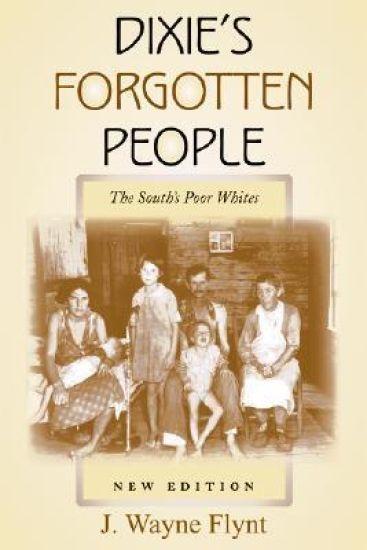
Dixie's Forgotten People, New Edition

Dixie's Forgotten People, New Edition

Wayne Flynt

Indiana University Press
2004
pokkari
"The best sort of introductory study . . . packed with enlightening information." —The Times Literary Supplement Poor whites have been isolated from mainstream white Southern culture and have been in turn stereotyped as rednecks and Holy Rollers, discriminated against, and misunderstood. In their isolation, they have developed a unique subculture and defended it with a tenacity and pride that puzzles and confuses the larger society. Written 25 years ago, this book was one scholar's attempt to understand these people and their culture. For this new edition, Wayne Flynt has provided a new retrospective introduction and an up-to-date bibliography.
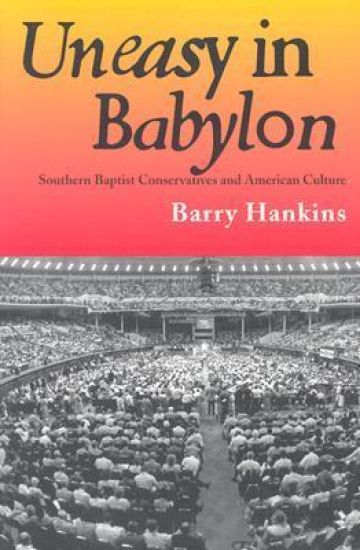
Uneasy in Babylon

Uneasy in Babylon

Barry Hankins; David Edwin Harrell; Wayne Flynt; Edith L. Blumhofer

The University of Alabama Press
2003
nidottu
Uneasy in Babylon is based on extensive interviews with the most important Southern Baptist conservatives who have assumed control of the Southern Baptist Convention (SBC). Known to many Americans from their appearances on national TV talk shows, such as Larry King Live and Fox News, they advocate a return to traditional values throughout the country. Hankins shows how differing cultural perceptions help explain the great chasm that developed between fundamentalists in the SBC and the moderates who preceded them as leaders of the denomination.
Uneasy in Babylon

Uneasy in Babylon

Barry Hankins; David Edwin Harrell; Wayne Flynt; Edith L. Blumhofer

The University of Alabama Press
2002
sidottu
Uneasy in Babylon is based on extensive interviews with the most important Southern Baptist conservatives who have wrested control of the Southern Baptist Convention (SBC) away from moderates. Known to many Americans from their appearances on national TV talk shows, such as Larry King Live, they advocate a return to traditional values throughout the country. Women should be submissive to their husbands, Disney World should be boycotted because of its tacit support of homosexuality, and multiculturalism is the death knell for the American way of life, these culture warriors aver. Almost 40 years earlier, historian Rufus Spain published At Ease in Zion: Social History of Southern Baptists, 1877-1914, showing how Southern Baptists had built a culture of their own in the South in which they were very comfortable. At the end of the 20th century, however, the new Southern Baptist conservatives live in a very different South where they are not at ease and do not dwell in Zion. Rather, asserts Hankins, because they are uneasy in a culture that to them resembles wicked Babylon, they intend to lead the orthodox side of the looming culture war in America. Hankins shows how differing cultural perceptions help explain the great chasm that developed between conservatives in the SBC and the moderates who preceded them as leaders of the denomination. The book covers the elite leaders of Southern Baptist conservatism from the 1960s to the present, focusing especially on how their views were formed as they studied and lived outside the South, how those cultural perceptions functioned in the 1980s and 1990s as they became highly visible activists in American culture, and how their writings have influenced journalists in both the religious and secular media. As the first mainstream historical treatment of SBC conservatism, Uneasy in Babylon will be valuable for religious and academic libraries, southern historians, and theologians, as well as general readers knowledgeable about the century-long battle within the Southern Baptist Convention.
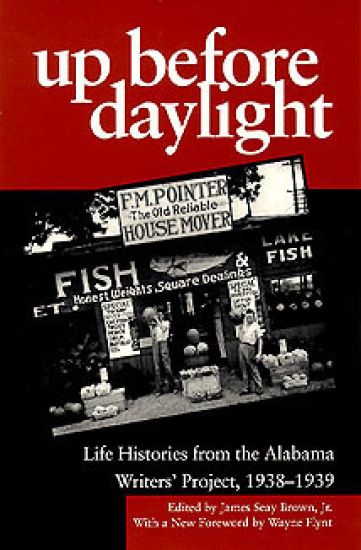
Up Before Daylight

Up Before Daylight

Wayne Flynt

The University of Alabama Press
1982
nidottu
These life histories - accounts of hard times and hard work - are a selection of 28 from more than 100, written throughout the state of Alabama by workers and farmers under the Federal Writer's Project of the 1930's.