Kirjojen hintavertailu. Mukana 12 657 676 kirjaa ja 12 kauppaa.
Kirjailija
Wayne Koestenbaum
Kirjat ja teokset yhdessä paikassa: 22 kirjaa, julkaisuja vuosilta 2001-2027, suosituimpien joukossa Andy Warhol. Vertaile teosten hintoja ja tarkista saatavuus suomalaisista kirjakaupoista.
'Properly analytical ... always entertaining' TIME OUT'Should tempt both those generally familiar with Andy Warhol and, even more, young people who have trouble imagining how popular art can challenge the status quo' L A TIMESPainter, filmmaker, photographer, philosopher, all-round celebrity, Andy Warhol is an outstanding cultural icon. He revolutionised art by bringing to it images from popular culture - such as the Campbell's soup can and Marilyn Monroe's face - while his studio, the Factory, where his free-spirited cast of 'superstars' mingled with the rich and famous, became the place of origin for every groundswell shaping American culture.In many ways he can be seen as the precursor to today's 'celebrity artists' such as Tracey Emin and Damian Hirst. But what of the man behind the white wig and dark glasses? Koestenbaum gives a fascinating, revealing and thought-provoking picture of pop art's greatest icon.
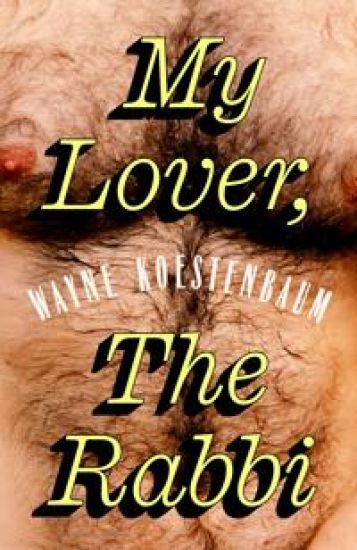
To the untrained eye, the rabbi is far from desirable. He is lofty and unkempt, he is ageing and his congregation is ever diminishing. But to one man, he is the object of obsession. Our narrator adores the rabbi and worships the universe between his legs. But so too does he bristle at being relegated to the peripheries of the rabbi's life. When they're apart, he manically contemplates every element of the rabbi's being: his absent husband; his first (and only) wife and child, both now deceased; his unstable, yet alluring, adopted son. Until, in a bid to help sustain their relationship, our narrator embarks on an increasingly urgent quest to better understand his mercurial lover - one which threatens to upturn the lives of both men. Lavish and lascivious, My Lover, the Rabbi is an exuberant exploration of devotion and desire, as well as a careening Catherine wheel of a novel about queer family-making, one which is attuned to the mysterious constellations and patterns that shape our lives.
A psychosexual relationship between a rabbi and the man devoted to him goes off the rails in this explosive novel. The rabbi is, to the untrained eye, far from desirable. Lofty and disorderly, aging and constantly losing members of his flock, he is nonetheless the singular object of obsession for the self-abjecting narrator of My Lover, the Rabbi. From the start of their psychosexual affair, the two men torment, pleasure, and manipulate each other with ardor. When they're apart, the narrator manically contemplates every element of the rabbi's being: his alluring adopted son, his false erudition, his patrilineage, his broken-down Pontiac, his out-of-state husband (who the narrator has also slept with), and, maybe most of all, the universe between the rabbi's legs. Spending time together in the narrator's bed, in a tiny town near Hoboken, New Jersey, that our narrator is "devastated to admit is my personal address," a tender, volatile intimacy brews and curdles. To sustain it, the narrator continues on an unrelenting, increasingly urgent quest to understand the mercurial, ardent rabbi's mysterious past--that is, until he begins to question reality itself. In the process, conflicting truths about the rabbi emerge, with drastic consequences for both men and those around them. The first novel in nearly twenty years from one of our most acclaimed stylists, Wayne Koestenbaum's My Lover, the Rabbi is a sui generis spiral of lascivious thrills and uncanny hilarity, exposing in delirious detail the dangers--and spoils--of true love.
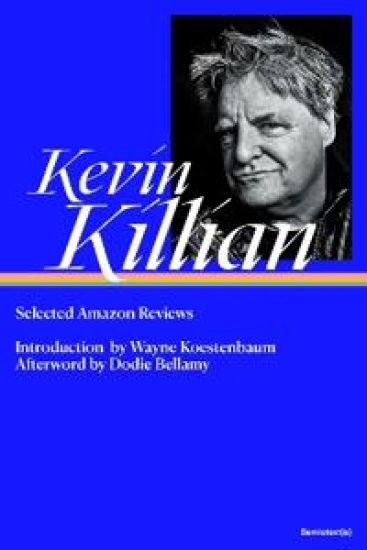
A book-length selection from Kevin Killian's legendary corpus of more than two thousand product reviews posted on Amazon.com. An enchanting roll of duct tape. Love Actually on Blu-ray Disc. The Toaster Oven Cookbook, The Biography of Stevie Nicks, and an anthology of poets who died of AIDS. In this only book-length selection from his legendary corpus of more than two thousand product reviews posted on Amazon.com, sagacious shopper Kevin Killian holds forth on these household essentials and many, many, many others. The beloved author of more than a dozen volumes of innovative poetry, fiction, drama, and scholarship, Killian was for decades a charismatic participant in San Francisco's New Narrative writing circle. From 2003-2019, he was also one of Amazon's most prolific reviewers, rising to rarefied "Top 100" and "Hall of Fame" status on the site. Alternately hilarious and heartfelt, Killian's commentaries consider an incredible variety of items, each review a literary escapade hidden in plain sight amongst the retailer's endless pages of user-generated content. Selected Amazon Reviews at last gathers an appropriately wide swath of this material between two covers, revealing the project to be a unified whole and always more than a lark. Some for "verified purchases," others for products enjoyed in theory, Killian's reviews draw on the influential strategies of New Narrative, his unrivaled fandom for both elevated and popular culture, and the fine art of fabulation. Many of them are ingeniously funny--flash-fictional riffs on the commodity as talismanic object, written by a cast of personas worthy of Pessoa. And many others are serious, even scholarly--earnest tributes to contemporaries, and to small-press books that may not have received attention elsewhere, offered with exemplary attention. All of Killian's reviews subvert the Amazon platform, queering it to his own play with language, identity, genre, critique. Killian's prose is a consistent pleasure throughout Selected Amazon Reviews, brimming with wit, lyricism, and true affection. As the Hall of Famer himself reflected on this form-of-his-own-invention shortly before his untimely passing in 2019: "They're reviews of a sort, but they also seem like novels. They're poems. They're essays about life. I get a lot of my kinks out there, on Amazon."
Wild new adventures in word-infatuated fl nerie from a celebrated literary provocateur. This book of thirty-six poetic bulletins by the humiliation-advice-giver Wayne Koestenbaum will teach you how to cruise, how to dream, how to decode a crowded consciousness, how to find nuggets of satisfaction in unaccustomed corners, and how to sew a language glove roomy enough to contain materials gathered while meandering. Koestenbaum wrote many of these poems while walking around New York City. He'd jot down phrases in a notebook or dictate them into his phone. At home, he'd incorporate these fragmented gleanings into overflowing quasi sonnets. Therefore each poem functions as a coded diary entry, including specific references to sidewalk events and peripatetic perceptions. Flirting, remembering, eavesdropping, gazing, squeezing, sequestering: Koestenbaum invents a novel way to cram dirty liberty into the tight yet commodious space of the sonnet, a fourteen-lined cruise ship that contains ample suites for behavior modification, libidinal experiment, aura-filled memory orgies, psychedelic Bildungsromane, lap dissolves, archival plunges, and other mental saunterings that conjure the unlikely marriage of Kenneth Anger and Marianne Moore. Carnal pudding, anyone? These engorged lyrics don't rhyme; and though each builds on a carapace of fourteen lines, many of the lines spawn additional, indented tributaries, like hoop earrings dangling from the stanzas' lobes. Koestenbaum's poems are comic, ribald, compressed, symphonic. They take liberties with ordinary language, and open up new pockets for sensation in the sorrowing overcoat of the "now." Imagine: the training wheels have been removed from poetry's bicycle, and the wheeling fl neur is finally allowed a word pie equal to fantasy's appetite. Stubble--a libidinal detail--matters when you're stranded on the archipelago of your most unsanctioned yet tenaciously harbored impulses.
The chromatic, linguistically playful, erotic conclusion to Wayne Koestenbaum’s acclaimed trance poem trilogy. Ultramarine distills gleanings from four years of Koestenbaum’s trance notebooks (2015-2019) into a series of tightly-sewn collage-poems, filled with desiring bodies, cultural touchstones, and salty memories. Beyond Proust’s madeleine we head toward a “deli” version of utopia, crafted from hamantaschen, cupcake, and cucumber. Interludes in Rome, Paris, and Cologne permit spells of fevered play with Italian, French, and German. Painting and its processes bring bright colors to the surface, as if the poet were trying to figure out anew the nature of blue, pink, orange. Ultramarine reaches across memory, back to Europe, beyond the literal world into dream-habitats conjured through language’s occult structures.
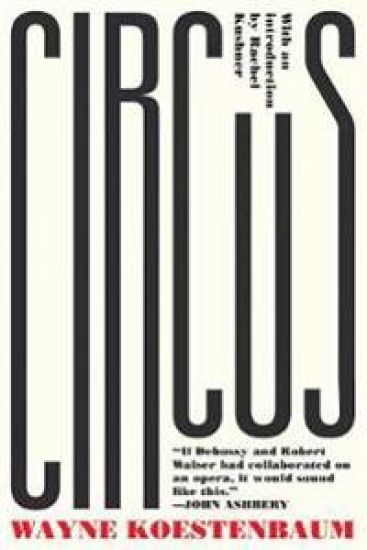
"If Debussy and Robert Walser had collaborated on an opera, it would sound like this."-John Ashbery "The mad genius of Pale Fire with the florid outlaw sexuality of Jean Genet"-Kirkus ReviewsFor five years, concert pianist Theo Mangrove has been living at his family's home in East Kill, New York, recovering from a nervous breakdown that derailed his career, and attempting to relieve his relentless polysexual appetite in the company of male hustlers, random strangers, music students, his aunt, and occasionally his wife. As he prepares for a comeback recital in Aigues-Mortes, a walled medieval town in southern France, he becomes obsessed with the idea that the Italian circus star Moira Orfei must join him there to perform alongside him. Extravagantly (and tragicomically) describing his hallucinatory plans in a series of twenty-five notebooks, he assembles an incantatory meditation on performance, failure, fame, decay, and delusion. A new edition of a "dazzlingly seductive" fever dream written in "brilliant poetic vernacular" (Bookforum) by a beloved poet and cultural critic, now with an introduction by Rachel Kushner.
Sigmund Freud and Josef Breuer on hysteria, J.A. Symonds and Havelock Ellis on sexuality, a novel by Ford Madox Ford and Joseph Conrad, The Waste Land of T.S. Eliot (and Ezra Pound), even the Lyrical Ballads of Wordsworth and Coleridge: men making books together. Wayne Koestenbaum's startling interpretation of literary collaboration focuses on homosexual desire: men write together, he argues, in order either to express or to evade homosexual feelings. Their writing becomes a textual intercourse, the book at once a female body they can share and the child of their partnership. These man-made texts steal a generative power that women's bodies seem to represent.Seen as the site of a struggle between homosexual and homophobic energies, the texts Koestenbaum explores – works of psychoanalysis, sexology, fiction, and poetry – emerge as more complex, more revealing. They crystallize and refract the anxiety of male sexuality at the end of the last century, and open up a deeper understanding of connections today between the erotic and the literary. Drawing upon the work of feminist critics, Koestenbaum connects male collaboration and the exchange of women within patriarchy: he peers into both medical texts and imaginative literature, disturbing our ready acceptance of the co-authored work. This strong and unsettling book transforms our understanding of the creative process, providing a new sense of what both collaborative and solitary artistry mean.
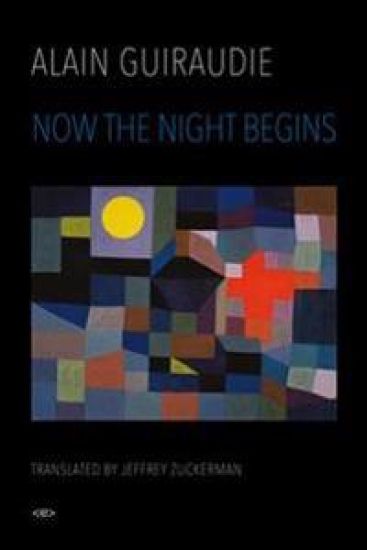
A novel that is a meditation on friendship, love, obsession, power, and abuse, by turns hyperrealist and phantasmagoric, recalling the work of Sade and Bataille.And he leaves. I'm not happy, I'm pretty upset at myself, I wasn't satisfied with him but I wouldn't have been any better without him. I sit on the couch and think. I'm not actually thinking, it's already been thought, I have to call Grampa... I need to hear his voice. I miss him.-from Now the Night BeginsAt the tail end of summer vacation, Gilles Heurtebise drifts between lazy afternoons, swimming, cruising the shores of a nearby lake, and absentmindedly hooking up with old lovers. He has yet to achieve material or romantic stability. He is forty, facing a precarious future with unformed fears and regrets. The one thing that seems solid is Grampa, the ninety-year-old patriarch of a family Gilles has befriended. Gilles grows obsessed by the old man, and a strange sexual bond grows between the two. When the police get involved, and Gilles is witness to a murder, the banality of interhuman violence is brought to a paroxysmal climax.The winner of France's prestigious Prix Sade, Now the Night Begins is a meditation on friendship, love, power, and abuse in a world where social relations have radically disintegrated. Interwoven with swaths of Occitan, the language of troubadours and love, and by turns hyperrealist and phantasmagoric, the novel recalls Georges Bataille's dark surrealism and the unvarnished violence of Bret Easton Ellis. It proves Alain Guiraudie's status as the preeminent writer of the vulnerability underlying our contemporary malaise."The genial perversity of Alain Guiraudie's Now the Night Begins is something rare and fascinatingly energized, a metaphysical and moral slapstick that points to the arbitrariness of all authority and the fluidity of all desires. In its way, the most elegant, certainly the most hilarious brief for anarchy that anyone has written in a long time."-Gary Indiana"Raw, sexual, and scatological, Alain Guiraudie's novel evokes Sade and Bataille."-Elisabeth Philippe
Camp Marmalade takes the freedoms of trance utterance—unfettered verbal association, explicit auto-ethnography, erotic bricolage—and applies a more stringent sense of time-as-emergency to this liberation-oriented poetic method. Part diary, part collage, part textbook for a new School of Impulse, Camp Marmalade assembles a perverse and giddy cultural archive, a Ferris wheel of aphorisms, depicting a queer body amidst a dizzying flow of sensations, dreams, and sex-and-death distillations—whether sugary, fruity, bitter, expired, or freshly jarred. “Like an impossible love child from a late-night, drunken three-way between Joan Didion, Roland Barthes, and Susan Sontag, Wayne Koestenbaum inherited all their stylistic wonder and laser-beam smarts, but with the added point-blank jolt of sex.”—Bruce Hainley, Bidoun
Sigmund Freud and Josef Breuer on hysteria, J.A. Symonds and Havelock Ellis on sexuality, a novel by Ford Madox Ford and Joseph Conrad, The Waste Land of T.S. Eliot (and Ezra Pound), even the Lyrical Ballads of Wordsworth and Coleridge: men making books together. Wayne Koestenbaum's startling interpretation of literary collaboration focuses on homosexual desire: men write together, he argues, in order either to express or to evade homosexual feelings. Their writing becomes a textual intercourse, the book at once a female body they can share and the child of their partnership. These man-made texts steal a generative power that women's bodies seem to represent.Seen as the site of a struggle between homosexual and homophobic energies, the texts Koestenbaum explores – works of psychoanalysis, sexology, fiction, and poetry – emerge as more complex, more revealing. They crystallize and refract the anxiety of male sexuality at the end of the last century, and open up a deeper understanding of connections today between the erotic and the literary. Drawing upon the work of feminist critics, Koestenbaum connects male collaboration and the exchange of women within patriarchy: he peers into both medical texts and imaginative literature, disturbing our ready acceptance of the co-authored work. This strong and unsettling book transforms our understanding of the creative process, providing a new sense of what both collaborative and solitary artistry mean.
The Pink Trance Notebooks is the product of the year Wayne Koestenbaum stopped keeping the traditional journal he had maintained for three decades and began a series of "trance notebooks" as a way to reflect an intensified, unmoored consciousness. The resulting sequence of 34 assemblages reflects Koestenbaum's unfettered musings, findings, and obsessions. Freed from the conventions of prose, this concatenation of the author's intimate observations and desires lets loose a poetics of ecstatic praxis - voiced with aplomb and always on point. "Wayne Koestenbaum is one of the most original and relentlessly obsessed cultural spies writing today. His alarmingly focused attention to detail goes beyond lunacy into hilarious and brilliant clarity." - John Waters
An intimate depiction of the visionary who revolutionized the art world A man who created portraits of the rich and powerful, Andy Warhol was one of the most incendiary figures in American culture, a celebrity whose star shone as brightly as those of the Marilyns and Jackies whose likenesses brought him renown. Images of his silvery wig and glasses are as famous as his renderings of soup cans and Brillo boxes—controversial works that elevated commerce to high art. Warhol was an enigma: a partygoer who lived with his mother, an inarticulate man who was a great aphorist, an artist whose body of work sizzles with sexuality but who considered his own body to be a source of shame. In critic and poet Wayne Koestenbaum’s dazzling look at Warhol’s life, the author inspects the roots of Warhol’s aesthetic vision, including the pain that informs his greatness, and reveals the hidden sublimity of Warhol’s provocative films. By looking at many facets of the artist’s oeuvre—films, paintings, books, “Happenings”—Koestenbaum delivers a thought-provoking picture of pop art’s greatest icon.
Wayne Koestenbaum returns with a zesty and hyper-literate collection of personal and critical essays on the 1980s, including essays on major cultural figures such as Andy Warhol and Brigitte Bardot. Wayne Koestenbaum has been described as "an impossible lovechild from a late-night, drunken three-way between Joan Didion, Roland Barthes, and Susan Sontag" (Bidoun). In My 1980s and Other Essays, a collection of extravagant range and style, he rises to the challenge of that improbable description. My 1980s and Other Essays opens with a series of manifestos--or, perhaps more appropriately, a series of impassioned disclosures, intellectual and personal. It then proceeds to wrestle with a series of major cultural figures, the author's own lodestars and lodestones: literary (John Ashbery, Roberto Bola o, James Schuyler), artistic (Diane Arbus, Cindy Sherman, Andy Warhol), and simply iconic (Brigitte Bardot, Cary Grant, Lana Turner). And then there is the personal--the voice, the style, the flair--that is unquestionably Koestenbaum. It amounts to a kind of intellectual autobiography that culminates in a string of passionate calls to creativity; arguments in favor of detail and nuance, and attention; a defense of pleasure, hunger, and desire in culture and experience. Koestenbaum is perched on the cusp of being a true public intellectual--his venues are more mainstream than academic, his style is eye-catching, his prose unfailingly witty and passionate, his interests profoundly wide-ranging and popular. My 1980s should be the book that pushes Koestenbaum off that cusp and truly into the public eye.
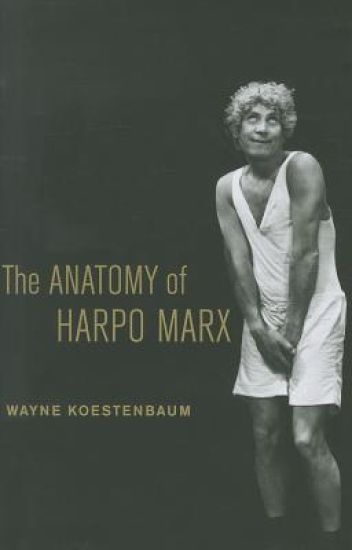
"The Anatomy of Harpo Marx" is a luxuriant, detailed play-by-play account of Harpo Marx's physical movements as captured on screen. Wayne Koestenbaum guides us through the thirteen Marx Brothers films, from "The Cocoanuts" in 1929 to "Love Happy" in 1950, to focus on Harpo's chief and yet heretofore unexplored attribute - his profound and contradictory corporeality. Koestenbaum celebrates the astonishing range of Harpo's body - its kinks, sexual multiplicities, somnolence, Jewishness, "cute" pathos, and more. In a virtuosic performance, Koestenbaum's text moves gracefully from insightful analysis to cultural critique to autobiographical musing, and provides Harpo with a host of odd bedfellows, including Walter Benjamin and Barbra Streisand.
"The Anatomy of Harpo Marx" is a luxuriant, detailed play-by-play account of Harpo Marx's physical movements as captured on screen. Wayne Koestenbaum guides us through the thirteen Marx Brothers films, from "The Cocoanuts" in 1929 to "Love Happy" in 1950, to focus on Harpo's chief and yet heretofore unexplored attribute - his profound and contradictory corporeality. Koestenbaum celebrates the astonishing range of Harpo's body - its kinks, sexual multiplicities, somnolence, Jewishness, "cute" pathos, and more. In a virtuosic performance, Koestenbaum's text moves gracefully from insightful analysis to cultural critique to autobiographical musing, and provides Harpo with a host of odd bedfellows, including Walter Benjamin and Barbra Streisand.
Wayne Koestenbaum considers the meaning of humiliation in this eloquent work of cultural critique and personal reflection.The lives of people both famous and obscure are filled with scarlet-letter moments when their dirty laundry sees daylight. In these moments we not only witness the reversibility of "success," of prominence, but also come to visceral terms with our own vulnerable selves. We can't stop watching the scene of shame, identifying with it and absorbing its nearness, and relishing our imagined immunity from its stain, even as we acknowledge the universal, embarrassing predicament of living in our own bodies. With an unusual, disarming blend of autobiography and cultural commentary, noted poet and critic Wayne Koestenbaum takes us through a spectrum of mortifying circumstances in history, literature, art, current events, music, film, and his own life. His generous disclosures and brilliant observations go beyond prurience to create a poetics of abasement. Inventive, poignant, erudite, and playful, "Humiliation "plunges into one of the most disquieting of human experiences, with reflections at once emboldening and humane."
"Jackie Under My Skin "is a passionate investigation of the ways Jacqueline Kennedy Onassis transformed America's definition of celebrity, identity, and style. In a gallery of fantasies and tableaux, Wayne Koestenbaum explains the late first lady's hold on Americans by examining the myths and metaphors that we've attached to her. An exuberant paean to a great star, "Jackie Under My Skin" is also a meditation on fame, mortality, and the difficulty of defining desire.