Kirjojen hintavertailu. Mukana 12 595 353 kirjaa ja 12 kauppaa.
Kirjailija
Weidong Liu
Kirjat ja teokset yhdessä paikassa: 5 kirjaa, julkaisuja vuosilta 2011-2026, suosituimpien joukossa Introduction to Geobiology. Vertaile teosten hintoja ja tarkista saatavuus suomalaisista kirjakaupoista.
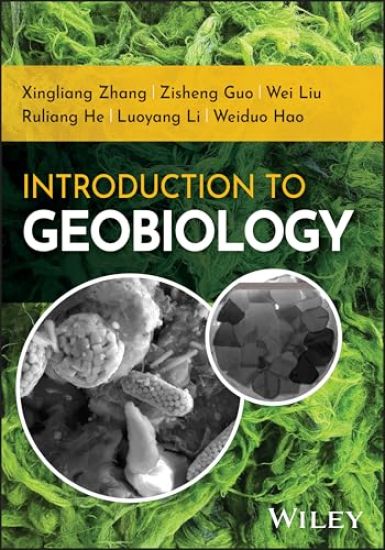
An introduction to how microbial life has colonized and shaped the Earth, turning it into the habitable planet of today Exploring the geological basis for life on Earth,Introduction to Geobiology systematically examines the interaction between the geosphere and the biosphere, including its evolutionary history. In this didactically written text, readers will learn about the various modes of interaction between living and inorganic environments, emphasizing the geological significance of metabolism and the basis of life in extreme environments, the geobiological role and geological record of microbial ecosystems, and the material and energy cycles between the geosphere and the biosphere. The book also explores the geological imprint of biological processes such as biomineralization, biosedimentary diagenesis, and biological weathering of minerals and rocks, as well as the co-evolution process between organisms and the environment. Based on a highly successful course taught by the authors for more than 20 years, Introduction to Geobiology includes information on: Domains and kingdoms of cellular life, classification of organisms according to their metabolism Ecological and metabolic diversity in marine and terrestrial environments, including extreme environments Using microbial ecosystems as a model for exploring life beyond earth Oxygen, carbon, nitrogen, sulfur, phosphorus, and iron cycles Bioerosion, macroborers and microborers, biological and lichen weathering, and soil development Introduction to Geobiology is an excellent textbook for senior undergraduate and graduate students in geology or microbiology seeking to learn about geobiology and the origin of life on Earth. It also provides a strong foundation for the study of astrobiology: the conditions under which life on other planets may develop.
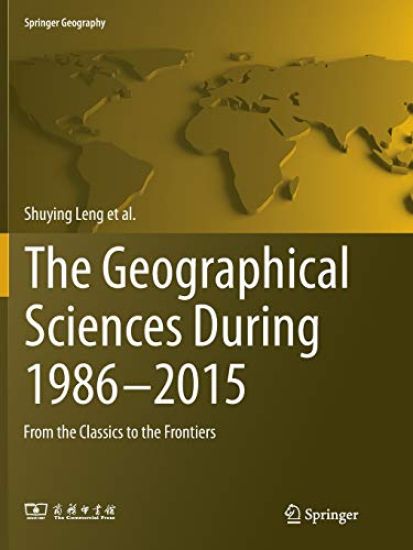
In four chapters and an introduction, this book systematically helps readers understand the development of the Geographical Sciences both in China and in the world during the past 30 years. Through data analysis of methodologies including CiteSpace, TDA, qualitative analysis, questionnaires, data mining and mathematical statistics, the book explains the evolution of research topics and their driving factors in the Geographical Sciences and its four branches, namely Physical Geography, Human Geography, Geographical Information Science and Environmental Geography. It also identifies the role of the Geographical Sciences in the analysis of strategic issues such as global change and terrestrial ecosystems, terrestrial water cycle and water resources, land change, global cryosphere evolution and land surface processes on the Tibetan Plateau, economic globalization and local responses, regional sustainable development, remote sensing modelling and parameter inversion, spatial analysis and simulation, and tempo-spatial processes and modelling of environmental pollutants. It then discusses research development and inadequacy of Chinese Geographical Sciences in the above-mentioned topics, as well as in the fields including Geomorphology and Quaternary environmental change, Ecohydrology, ecosystem services, the urbanization process and mechanism, medical and health geography, international rivers and transboundary environment and resources, detection and attribution of changes in land surface sensitive components, and uncertainty of spatial information and spatial analysis. It shows that the NSFC has driven the development in all these topics and fields. In addition, the book summarises trends of the Geographical Sciences in China and the research level in major countries of the world through an overview of geographical education in colleges and universities, the analysis of publications, citations and author networks of SCI/SSCI and CSCD indexed articles, and the description of Sino-USA, Sino-UK and Sino-German cooperation. This book serves as an important reference to anyone interested in geographical sciences and related fields.
The people of China and its (widely differing) regions have not all benefited equally from the country’s rapid increase in prosperity, and the speed and timing of increases have varied across time and space. However, China has managed to help those left behind to catch up. These outcomes reflect a specific social model embedded in China’s cultural and political milieu. Exploring the Chinese Social Model presents new analysis and fresh research on how China deals with unequal development and inequality in the context of its surging economic growth. The book sheds new light on the workings of China’s social model, going beyond binary notions of market and state, and considers the new facets of its socialist market economy. In exploring these questions, the authors consider what is special about China and what the Chinese model is all about.
This book presents the art of advanced MOSFET modeling for integrated circuit simulation and design. It provides the essential mathematical and physical analyses of all the electrical, mechanical and thermal effects in MOS transistors relevant to the operation of integrated circuits. Particular emphasis is placed on how the BSIM model evolved into the first ever industry standard SPICE MOSFET model for circuit simulation and CMOS technology development.The discussion covers the theory and methodology of how a MOSFET model, or semiconductor device models in general, can be implemented to be robust and efficient, turning device physics theory into a production-worthy SPICE simulation model.Special attention is paid to MOSFET characterization and model parameter extraction methodologies, making the book particularly useful for those interested or already engaged in work in the areas of semiconductor devices, compact modeling for SPICE simulation, and integrated circuit design.