Kirjojen hintavertailu. Mukana 12 390 323 kirjaa ja 12 kauppaa.
Kirjailija
Wendy Brown
Kirjat ja teokset yhdessä paikassa: 39 kirjaa, julkaisuja vuosilta 1995-2026, suosituimpien joukossa Capital. Vertaile teosten hintoja ja tarkista saatavuus suomalaisista kirjakaupoista.
Politics and Vision is a landmark work by one of the great thinkers of the twentieth century. This is a significantly expanded edition of one of the greatest works of modern political theory. Sheldon Wolin's Politics and Vision inspired and instructed two generations of political theorists after its appearance in 1960. Substantially expanded for republication in 2004, it is both a sweeping survey of Western political thought and a powerful account of contemporary predicaments of power and democracy. In lucid and compelling prose, Sheldon Wolin offers original, subtle, and often surprising interpretations of political theorists from Plato to Rawls. Situating them historically while sounding their depths, he critically engages their diverse accounts of politics, theory, power, justice, citizenship, and institutions. The new chapters, which show how thinkers have grappled with the immense possibilities and dangers of modern power, are themselves a major theoretical statement. They culminate in Wolin's remarkable argument that the United States has invented a new political form, "inverted totalitarianism," in which economic rather than political power is dangerously dominant. In this expanded edition, the book that helped to define political theory in the late twentieth century should energize, enlighten, and provoke generations of scholars to come. Wolin originally wrote Politics and Vision to challenge the idea that political analysis should consist simply of the neutral observation of objective reality. He argues that political thinkers must also rely on creative vision. Wolin shows that great theorists have been driven to shape politics to some vision of the Good that lies outside the existing political order. As he tells it, the history of theory is thus, in part, the story of changing assumptions about the Good. Acclaimed as a tour de force when it was first published, and a major scholarly event when the expanded edition appeared, Politics and Vision will instruct, inspire, and provoke for generations to come.
Tracing neoliberalism's devastating erosions of democratic principles, practices, and cultures. Neoliberal rationality-ubiquitous today in statecraft and the workplace, in jurisprudence, education, and culture-remakes everything and everyone in the image of homo oeconomicus. What happens when this rationality transposes the constituent elements of democracy into an economic register? In Undoing the Demos, Wendy Brown explains how democracy itself is imperiled. The demos disintegrates into bits of human capital; concerns with justice bow to the mandates of growth rates, credit ratings, and investment climates; liberty submits to the imperative of human capital appreciation; equality dissolves into market competition; and popular sovereignty grows incoherent. Liberal democratic practices may not survive these transformations. Radical democratic dreams may not either.In an original and compelling argument, Brown explains how and why neoliberal reason undoes the political form and political imaginary it falsely promises to secure and reinvigorate. Through meticulous analyses of neoliberalized law, political practices, governance, and education, she charts the new common sense. Undoing the Demos makes clear that for democracy to have a future, it must become an object of struggle and rethinking.
We invoke the ideal of tolerance in response to conflict, but what does it mean to answer conflict with a call for tolerance? Is tolerance a way of resolving conflicts or a means of sustaining them? Does it transform conflicts into productive tensions, or does it perpetuate underlying power relations? To what extent does tolerance hide its involvement with power and act as a form of depoliticization? Wendy Brown and Rainer Forst debate the uses and misuses of tolerance, an exchange that highlights the fundamental differences in their critical practice despite a number of political similarities. Both scholars address the normative premises, limits, and political implications of various conceptions of tolerance. Brown offers a genealogical critique of contemporary discourses on tolerance in Western liberal societies, focusing on their inherent ties to colonialism and imperialism, and Forst reconstructs an intellectual history of tolerance that attempts to redeem its political virtue in democratic societies. Brown and Forst work from different perspectives and traditions, yet they each remain wary of the subjection and abnegation embodied in toleration discourses, among other issues. The result is a dialogue rich in critical and conceptual reflections on power, justice, discourse, rationality, and identity.
We invoke the ideal of tolerance in response to conflict, but what does it mean to answer conflict with a call for tolerance? Is tolerance a way of resolving conflicts or a means of sustaining them? Does it transform conflicts into productive tensions, or does it perpetuate underlying power relations? To what extent does tolerance hide its involvement with power and act as a form of depoliticization? Wendy Brown and Rainer Forst debate the uses and misuses of tolerance, an exchange that highlights the fundamental differences in their critical practice despite a number of political similarities. Both scholars address the normative premises, limits, and political implications of various conceptions of tolerance. Brown offers a genealogical critique of contemporary discourses on tolerance in Western liberal societies, focusing on their inherent ties to colonialism and imperialism, and Forst reconstructs an intellectual history of tolerance that attempts to redeem its political virtue in democratic societies. Brown and Forst work from different perspectives and traditions, yet they each remain wary of the subjection and abnegation embodied in toleration discourses, among other issues. The result is a dialogue rich in critical and conceptual reflections on power, justice, discourse, rationality, and identity.
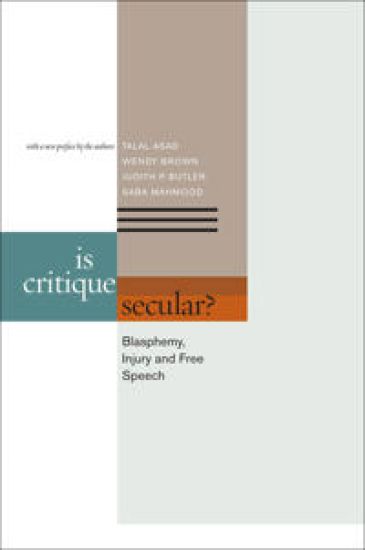
This volume interrogates settled ways of thinking about the seemingly interminable conflict between religious and secular values in our world today. What are the assumptions and resources internal to secular conceptions of critique that help or hinder our understanding of one of the most pressing conflicts of our times? Taking as their point of departure the question of whether critique belongs exclusively to forms of liberal democracy that define themselves in opposition to religion, these authors consider the case of the "Danish cartoon controversy" of 2005. They offer accounts of reading, understanding, and critique for offering a way to rethink conventional oppositions between free speech and religious belief, judgment and violence, reason and prejudice, rationality and embodied life. The book, first published in 2009, has been updated for the present edition with a new Preface by the authors.
This volume interrogates settled ways of thinking about the seemingly interminable conflict between religious and secular values in our world today. What are the assumptions and resources internal to secular conceptions of critique that help or hinder our understanding of one of the most pressing conflicts of our times? Taking as their point of departure the question of whether critique belongs exclusively to forms of liberal democracy that define themselves in opposition to religion, these authors consider the case of the "Danish cartoon controversy" of 2005. They offer accounts of reading, understanding, and critique for offering a way to rethink conventional oppositions between free speech and religious belief, judgment and violence, reason and prejudice, rationality and embodied life. The book, first published in 2009, has been updated for the present edition with a new Preface by the authors.
"Is it meaningful to call oneself a democrat? And if so, how do you interpret the word?" In responding to this question, eight iconoclastic thinkers prove the rich potential of democracy, along with its critical weaknesses, and reconceive the practice to accommodate new political and cultural realities. Giorgio Agamben traces the tense history of constitutions and their coexistence with various governments. Alain Badiou contrasts current democratic practice with democratic communism. Daniel Bensaid ponders the institutionalization of democracy, while Wendy Brown discusses the democratization of society under neoliberalism. Jean-Luc Nancy measures the difference between democracy as a form of rule and as a human end, and Jacques Ranciere highlights its egalitarian nature. Kristin Ross identifies hierarchical relationships within democratic practice, and Slavoj Zizek complicates the distinction between those who desire to own the state and those who wish to do without it. Concentrating on the classical roots of democracy and its changing meaning over time and within different contexts, these essays uniquely defend what is left of the left-wing tradition after the fall of Soviet communism. They confront disincentives to active democratic participation that have caused voter turnout to decline in western countries, and they address electoral indifference by invoking and reviving the tradition of citizen involvement. Passionately written and theoretically rich, this collection speaks to all facets of modern political and democratic debate.
Vi lever i en tid som sägs vara präglad av fria flöden, allt öppnare gränser och en allt tätare sammanbunden värld. Hur kommer det sig då att vi samtidigt ser en explosionsartad utbredning av murar och barriärer längs samma nationsgränser som påstås vara på väg att försvinna? I Inhägnade stater, avtagande suveränitet undersöker Wendy Brown hur det alltmer intensiva murbyggandet hänger samman med nationalstaternas försvagade suveränitet. Med utgångspunkt i denna skenbara paradox analyserar Brown hur statens jakt på legitimitet och människors sökande efter säkerhet strålar samman i spektakulära men i slutänden ineffektiva manifestationer av statlig suveränitet. De nya murarna representerar en längtan efter stabila horisonter i ett sammanhang där de flesta sådana horisonter tenderar att upplösas. Wendy Brown är professor i statsvetenskap vid Universitetet i Berkeley, Kalifornien. Hon är författare till ett flertal uppmärksammade böcker, bland vilka märks States of Injury och Regulating Aversion. På svenska finns sedan tidigare artikelsamlingen Att vinna framtiden åter.
"Is it meaningful to call oneself a democrat? And if so, how do you interpret the word?" In responding to this question, eight iconoclastic thinkers prove the rich potential of democracy, along with its critical weaknesses, and reconceive the practice to accommodate new political and cultural realities. Giorgio Agamben traces the tense history of constitutions and their coexistence with various governments. Alain Badiou contrasts current democratic practice with democratic communism. Daniel Bensaid ponders the institutionalization of democracy, while Wendy Brown discusses the democratization of society under neoliberalism. Jean-Luc Nancy measures the difference between democracy as a form of rule and as a human end, and Jacques Ranciere highlights its egalitarian nature. Kristin Ross identifies hierarchical relationships within democratic practice, and Slavoj Zizek complicates the distinction between those who desire to own the state and those who wish to do without it. Concentrating on the classical roots of democracy and its changing meaning over time and within different contexts, these essays uniquely defend what is left of the left-wing tradition after the fall of Soviet communism. They confront disincentives to active democratic participation that have caused voter turnout to decline in western countries, and they address electoral indifference by invoking and reviving the tradition of citizen involvement. Passionately written and theoretically rich, this collection speaks to all facets of modern political and democratic debate.
Det talas i dag om politikens död. Tron på en kollektiv politisk befrielse har ersatts av individuella livsstilar och riskhantering. Det som en gång sades vara politikens förlängning, kriget, blivit det ord som i stället för politik ska uttrycka kollektiv handlingskraft. Men om politiken i dag är allt annat än politik – var kan man då finna »det politiska« i politiken? Men om samtiden kännetecknas av politik som är allt annat än politik – var kan man då finna en politik som är politisk? Vad är ”det politiska” i politiken? Det är denna grundläggande frågeställning som Fronesis nr 19-20 vill undersöka, genom att vända sig till en rad samtida internationella politisk-filosofiska debatter. Innehåll i Fronesis nr 19-20 (237 sidor): • Leila Brännström, Klas Gustavsson, Johan Lindgren och Magnus Wennerhag: Den postpolitiska eran? • Leila Brännström: På spaning efter den politik som flytt • Wendy Brown: Moralism som antipolitik • Slavoj Zizek: Carl Schmitt i den postpolitiska tidsåldern • Thomas Lemke: Immunologik – till kritiken av den politiska anatomin • Luka Arsenjuk: Introduktion till Jacques Rancière • Jacques Rancière: Tio teser om politik • Fredrika Spindler: Multitudens ontologi • Warren Montag: Spinoza – politik i en värld utan trancendens • Étienne Balibar: Spinoza, anti-Orwell • Ernesto Laclau och Roy Bhaskar: Diskursteori kontra kritisk realism • Thomas Brante: Några ord om realismen, Bhaskar och Laclau • Anders Kalat: Kommentar till diskussionen mellan Laclau och Bhaskar • Chamsy el-Ojeili: "Röra sig framåt utan auktoritet"
Finns det någon mening med att kalla sig "demokrat" i en samtid där praktiskt taget alla kallar sig demokrater? Kan ett begrepp som tycks kunna betyda både allt och inget fortfarande ha ett meningsfullt politiskt innehåll? I föreliggande bok åtar sig några av vår tids mest namnkunniga politiska teoretiker att besvara denna provokativa fråga. Svaren de presenterar formuleras utifrån skilda utgångspunkter och leder i flera fall till helt olika slutsatser. Samtidigt förenas de alla av ett gemensamt grundantagande: "demokrati" kan inte vara namnet på en redan förverkligad samhällsmodell eller en metod för att med jämna mellanrum utse politiska ledare. Tvärtom fortsätter demokratibegreppet att vara föremål för kamp och fungera som kärna åt politikens mest centrala frågor.
Why do nation-states wall themselves off despite widespread proclamations of global connectedness?Why do walls marking national boundaries proliferate amid widespread proclamations of global connectedness and despite anticipation of a world without borders? Why are barricades built of concrete, steel, and barbed wire when threats to the nation today are so often miniaturized, vaporous, clandestine, dispersed, or networked?In Walled States, Waning Sovereignty, Wendy Brown considers the recent spate of wall building in contrast to the erosion of nation-state sovereignty. Drawing on classical and contemporary political theories of state sovereignty in order to understand how state power and national identity persist amid its decline, Brown considers both the need of the state for legitimacy and the popular desires that incite the contemporary building of walls. The new walls-dividing Texas from Mexico, Israel from Palestine, South Africa from Zimbabwe-consecrate the broken boundaries they would seem to contest and signify the ungovernability of a range of forces unleashed by globalization. Yet these same walls often amount to little more than theatrical props, frequently breached, and blur the distinction between law and lawlessness that they are intended to represent. But if today's walls fail to resolve the conflicts between globalization and national identity, they nonetheless project a stark image of sovereign power. Walls, Brown argues, address human desires for containment and protection in a world increasingly without these provisions. Walls respond to the wish for horizons even as horizons are vanquished.
Har dagens feministiska och vänsterprogressiva rörelser förlorat förmågan att föreställa sig en framtid bortom kapitalismens och könets principer? Hur kan radikala politiska projekt göra motstånd mot de maktstrukturer som de samtidigt är en del av? Utifrån vilka positioner kan kollektiva visioner formuleras? I Att vinna framtiden åter diskuterar Wendy Brown politiska former bortom den melankoli och brist på revolutionära horisonter som har kommit över såväl feminismen som vänstern i stort.
Tolerance is generally regarded as an unqualified achievement of the modern West. Emerging in early modern Europe to defuse violent religious conflict and reduce persecution, tolerance today is hailed as a key to decreasing conflict across a wide range of other dividing lines-- cultural, racial, ethnic, and sexual. But, as political theorist Wendy Brown argues in Regulating Aversion, tolerance also has dark and troubling undercurrents. Dislike, disapproval, and regulation lurk at the heart of tolerance. To tolerate is not to affirm but to conditionally allow what is unwanted or deviant. And, although presented as an alternative to violence, tolerance can play a part in justifying violence--dramatically so in the war in Iraq and the War on Terror. Wielded, especially since 9/11, as a way of distinguishing a civilized West from a barbaric Islam, tolerance is paradoxically underwriting Western imperialism. Brown's analysis of the history and contemporary life of tolerance reveals it in a startlingly unfamiliar guise. Heavy with norms and consolidating the dominance of the powerful, tolerance sustains the abjection of the tolerated and equates the intolerant with the barbaric. Examining the operation of tolerance in contexts as different as the War on Terror, campaigns for gay rights, and the Los Angeles Museum of Tolerance, Brown traces the operation of tolerance in contemporary struggles over identity, citizenship, and civilization.
Edgework brings together seven of Wendy Brown's most provocative recent essays in political and cultural theory. They range from explorations of politics post-9/11 to critical reflections on the academic norms governing feminist studies and political theory. Edgework is also concerned with the intellectual and political value of critique itself. It renders contemporary the ancient jurisprudential meaning of critique as krisis, in which a tear in the fabric of justice becomes the occasion of a public sifting or thoughtfulness, the development of criteria for judgment, and the inauguration of political renewal or restoration. Each essay probes a contemporary problem--the charge of being unpatriotic for dissenting from U.S. foreign policy, the erosion of liberal democracy by neoliberal political rationality, feminism's loss of a revolutionary horizon--and seeks to grasp the intellectual impasse the problem signals as well as the political incitement it may harbor.
What happens to left and liberal political orientations when faith in progress is broken, when both the sovereign individual and sovereign states seem tenuous, when desire seems as likely to seek punishment as freedom, when all political conviction is revealed as contingent and subjective? Politics Out of History is animated by the question of how we navigate the contemporary political landscape when the traditional compass points of modernity have all but disappeared. Wendy Brown diagnoses a range of contemporary political tendencies--from moralistic high-handedness to low-lying political despair in politics, from the difficulty of formulating political alternatives to reproaches against theory in intellectual life--as the consequence of this disorientation. Politics Out of History also presents a provocative argument for a new approach to thinking about history--one that forsakes the idea that history has a purpose and treats it instead as a way of illuminating openings in the present by, for example, identifying the haunting and constraining effects of past injustices unresolved. Brown also argues for a revitalized relationship between intellectual and political life, one that cultivates the autonomy of each while promoting their interlocutory potential. This book will be essential reading for all who find the trajectories of contemporary liberal democracies bewildering and are willing to engage readings of a range of thinkers--Freud, Marx, Nietzsche, Spinoza, Benjamin, Derrida--to rethink democratic possibility in our time.
Whether in characterizing Catharine MacKinnon's theory of gender as itself pornographic or in identifying liberalism as unable to make good on its promises, Wendy Brown pursues a central question: how does a sense of woundedness become the basis for a sense of identity? Brown argues that efforts to outlaw hate speech and pornography powerfully legitimize the state: such apparently well-intentioned attempts harm victims further by portraying them as so helpless as to be in continuing need of governmental protection. "Whether one is dealing with the state, the Mafia, parents, pimps, police, or husbands," writes Brown, "the heavy price of institutionalized protection is always a measure of dependence and agreement to abide by the protector's rules." True democracy, she insists, requires sharing power, not regulation by it; freedom, not protection. Refusing any facile identification with one political position or another, Brown applies her argument to a panoply of topics, from the basis of litigiousness in political life to the appearance on the academic Left of themes of revenge and a thwarted will to power. These and other provocations in contemporary political thought and political life provide an occasion for rethinking the value of several of the last two centuries' most compelling theoretical critiques of modern political life, including the positions of Nietzsche, Marx, Weber, and Foucault.