
Kirjojen hintavertailu. Mukana 12 595 353 kirjaa ja 12 kauppaa.

Kirjailija

Wendy Cadge

Kirjat ja teokset yhdessä paikassa: 9 kirjaa, julkaisuja vuosilta 2004-2024, suosituimpien joukossa Spiritual Care. Vertaile teosten hintoja ja tarkista saatavuus suomalaisista kirjakaupoista.

9 kirjaa

Kirjojen julkaisuhaarukka 2004-2024.

Chaplaincy and Seafarers

Chaplaincy and Seafarers

Helen Sampson; Nelson Turgo; Wendy Cadge; Sophie Gilliat-Ray

Oxford University Press
2024
sidottu
This book explores the faith, work, and lives of port chaplains and seafarers. It draws on archive materials, fieldwork in ports and on cargo ships, and interviews with chaplains in the UK and overseas. The volume presents a detailed picture of seafarers' attitudes to working in mixed faith crews, their understandings of their own faith and its role and negotiation in a life at sea, and their needs with regard to faith and more general welfare support. In addition, it describes the daily life and work of port chaplains, how they understand their roles in relation to their own faith, and how they manage their work in a multi-faith environment. In producing this rich account, the perspectives of relevant stakeholders and the historical underpinnings of port chaplaincy have also been considered, alongside the ways in which port chaplaincy compares with other forms of chaplaincy about which rather more has, hitherto, been known.
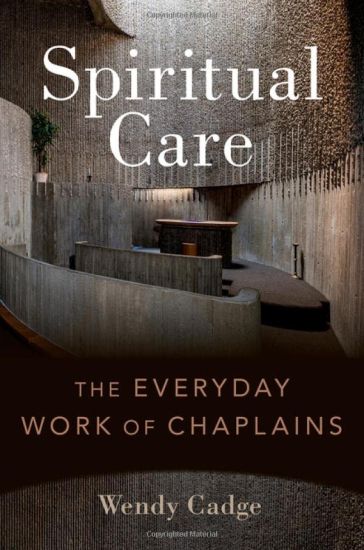
Spiritual Care

Spiritual Care

Wendy Cadge

OXFORD UNIVERSITY PRESS INC
2023
nidottu
Chaplains are America's hidden religious leaders. Required in the military, federal prisons, and Veterans Administration Medical Centers, chaplains also work in two-thirds of hospitals, most hospices, many institutions of higher education, and a growing range of other settings. The chaplains of the U.S. House and Senate regularly engage with national leaders through public prayer and private conversation. Chaplains have been present at national protests, including the racial justice protests that took place across the country in 2020. A national survey conducted in the United States in 2019 found that 21% of the Americans public had contact with a chaplain in the prior two years. Contact with chaplains likely increased with the COVID-19 pandemic, which thrust chaplains into the spotlight, as they cared for patients, family members, and exhausted and traumatized medical staff fighting the pandemic in real time. Wendy Cadge steps back to ask who chaplains are, what they do across the United States, how that work is connected to the settings where they do it, and how they have responded to and helped to shape contemporary shifts in the American religious landscape. She focuses on Boston as a case study to show how chaplains have been, and remain, an important part of institutional religious ecologies, both locally and nationally. She has combed through the archives of major Boston institutions including the city government, police and fire department, hospitals, universities, rest and rehabilitation centers, the Catholic church, and several Protestant denominations, as well as the Boston Globe, to chart the work of chaplains historically. Cadge also interviewed over one hundred chaplains who work in greater Boston and shadowed them whenever possible, going on board container ships, walking through homeless shelters, and attending religious services at local prisons. The result is a rich study of a little-noticed but essential group of religious leaders.
Spiritual Care

Spiritual Care

Wendy Cadge

OXFORD UNIVERSITY PRESS INC
2022
sidottu
Chaplains are America's hidden religious leaders. Required in the military, federal prisons, and Veterans Administration Medical Centers, chaplains also work in two-thirds of hospitals, most hospices, many institutions of higher education, and a growing range of other settings. The chaplains of the U.S. House and Senate regularly engage with national leaders through public prayer and private conversation. Chaplains have been present at national protests, including the racial justice protests that took place across the country in 2020. A national survey conducted in the United States in 2019 found that 21% of the Americans public had contact with a chaplain in the prior two years. Contact with chaplains likely increased with the COVID-19 pandemic, which thrust chaplains into the spotlight, as they cared for patients, family members, and exhausted and traumatized medical staff fighting the pandemic in real time. Wendy Cadge steps back to ask who chaplains are, what they do across the United States, how that work is connected to the settings where they do it, and how they have responded to and helped to shape contemporary shifts in the American religious landscape. She focuses on Boston as a case study to show how chaplains have been, and remain, an important part of institutional religious ecologies, both locally and nationally. She has combed through the archives of major Boston institutions including the city government, police and fire department, hospitals, universities, rest and rehabilitation centers, the Catholic church, and several Protestant denominations, as well as the Boston Globe, to chart the work of chaplains historically. Cadge also interviewed over one hundred chaplains who work in greater Boston and shadowed them whenever possible, going on board container ships, walking through homeless shelters, and attending religious services at local prisons. The result is a rich study of a little-noticed but essential group of religious leaders.
Transforming Chaplaincy

Transforming Chaplaincy

Wendy Cadge

Wipf Stock Publishers
2021
pokkari
Evidence-based medicine has transformed contemporary medical practice. For over twenty-five years, George Fitchett has been a pioneering advocate of the view that evidence-based spiritual care can, and should, equally transform chaplaincy. This book collects a key selection from his ground-breaking research. As models of good research practice, these papers demonstrate the real-world value of research and introduce their readers to issues that have continuing importance to spiritual care and professional chaplaincy. As such, this collection offers an ideal introduction to spiritual-care research. The collection is complemented by three essays, specially commissioned from observers well-positioned to comment on future directions for both professional chaplaincy and spiritual-care research.
Paging God

Paging God

Wendy Cadge

University of Chicago Press
2013
sidottu
While the modern science of medicine often seems nothing short of miraculous, religion still plays an important role in the past and present of many hospitals. When three-quarters of Americans believe that God can cure people who have been given little or no chance of survival by their doctors, how do today's technologically sophisticated health care organizations address spirituality and faith? Through a combination of interviews with nurses, doctors, and chaplains across the United States and close observation of their daily routines, Wendy Cadge takes readers inside major academic medical institutions to explore how today's doctors and hospitals address prayer and other forms of religion and spirituality. From chapels to intensive care units to the morgue, hospital caregivers speak directly in these pages about how religion is part of their daily work in visible and invisible ways. In "Paging God", Cadge shifts attention away from the ongoing controversy about whether faith and spirituality should play a role in health care and back to the many ways that these powerful forces already function in healthcare today.
Paging God

Paging God

Wendy Cadge

University of Chicago Press
2013
nidottu
While the modern science of medicine often seems nothing short of miraculous, religion still plays an important role in the past and present of many hospitals. When three-quarters of Americans believe that God can cure people who have been given little or no chance of survival by their doctors, how do today's technologically sophisticated health care organizations address spirituality and faith? Through a combination of interviews with nurses, doctors, and chaplains across the United States and close observation of their daily routines, Wendy Cadge takes readers inside major academic medical institutions to explore how today's doctors and hospitals address prayer and other forms of religion and spirituality. From chapels to intensive care units to the morgue, hospital caregivers speak directly in these pages about how religion is part of their daily work in visible and invisible ways. In Paging God, Cadge shifts attention away from the ongoing controversy about whether faith and spirituality should play a role in health care and back to the many ways that these powerful forces already function in healthcare today.
Heartwood

Heartwood

Wendy Cadge

University of Chicago Press
2004
sidottu
Theravada is one of the three main branches of Buddhism. In Asia it is practiced widely in Thailand, Laos, Burma, Sri Lanka, and Cambodia. This fascinating ethnography opens a window onto two communities of Theravada Buddhists in contemporary America: one outside Philadelphia that is composed largely of Thai immigrants and one outside Boston that consists mainly of white converts.Wendy Cadge first provides a historical overview of Theravada Buddhism and considers its specific origins here in the United States. She then brings her findings to bear on issues of personal identity, immigration, cultural assimilation, and the nature of religion in everyday life. Her work is the first systematic comparison of the ways in which immigrant and convert Buddhists understand, practice, and adapt the Buddhist tradition in America. The men and women whom Cadge meets and observes speak directly to us in this work, both in their personal testimonials and as they meditate, pray, and practice Buddhism.Creative and insightful, Heartwood will be of enormous value to sociologists of religion and anyone wishing to understand the rise of Buddhism in the Western world.
Heartwood

Heartwood

Wendy Cadge

University of Chicago Press
2004
nidottu
Theravada is one of the three main branches of Buddhism. In Asia it is practiced widely in Thailand, Laos, Burma, Sri Lanka, and Cambodia. This fascinating ethnography opens a window onto two communities of Theravada Buddhists in contemporary America: one outside Philadelphia that is composed largely of Thai immigrants and one outside Boston that consists mainly of white converts. Wendy Cadge first provides a historical overview of Theravada Buddhism and considers its specific origins here in the United States. She then brings her findings to bear on issues of personal identity, immigration, cultural assimilation, and the nature of religion in everyday life. Her work is the first systematic comparison of the ways in which immigrant and convert Buddhists understand, practice, and adapt the Buddhist tradition in America. The men and women whom Cadge meets and observes speak directly to us in this work, both in their personal testimonials and as they meditate, pray, and practice Buddhism. Creative and insightful, Heartwood will be of enormous value to sociologists of religion and anyone wishing to understand the rise of Buddhism in the Western world.