Kirjojen hintavertailu. Mukana 12 153 050 kirjaa ja 12 kauppaa.

Kirjailija

Wendy Doniger

Kirjat ja teokset yhdessä paikassa: 38 kirjaa, julkaisuja vuosilta 1998-2026, suosituimpien joukossa Mahabharata. Vertaile teosten hintoja ja tarkista saatavuus suomalaisista kirjakaupoista.

38 kirjaa

Kirjojen julkaisuhaarukka 1998-2026.

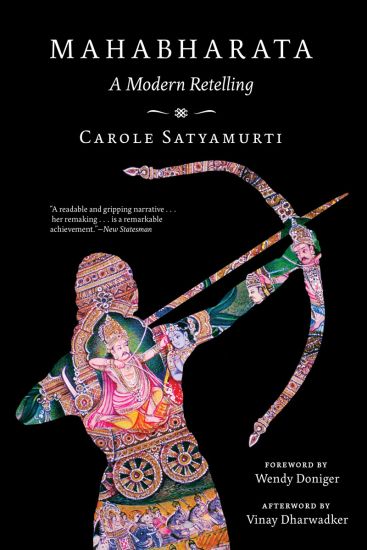
Mahabharata

Mahabharata

Carole Satyamurti; Wendy Doniger; Vinay Dharwadker

WW Norton Co
2016
nidottu
The Mahabharata, originally composed some two thousand years ago is an epic masterpiece, "a hundred times more interesting" than the Iliad and the Odyssey (Wendy Doniger), it is a timeless work that evokes a world of myth, passion and warfare while exploring eternal questions of duty, love and spiritual freedom. A seminal Hindu text, it is one of the most important and influential works in the history of world civilisation. This new English retelling, innovatively composed in blank verse, covers all the books of the Mahabharata. It masterfully captures the beauty, excitement and profundity of the original Sanskrit poem as well as its magnificent architecture and extraordinary scope.
Mahabharata

Mahabharata

Carole Satyamurti; Vinay Dharwadker; Wendy Doniger

WW Norton Co
2015
sidottu
The Mahabharata, originally composed some two thousand years ago is an epic masterpiece, "a hundred times more interesting" than the Iliad and the Odyssey (Wendy Doniger), it is a timeless work that evokes a world of myth, passion and warfare while exploring eternal questions of duty, love and spiritual freedom. A seminal Hindu text, it is one of the most important and influential works in the history of world civilisation. This new English retelling, innovatively composed in blank verse, covers all the books of the Mahabharata. It masterfully captures the beauty, excitement and profundity of the original Sanskrit poem as well as its magnificent architecture and extraordinary scope.
Shamanism

Shamanism

Mircea Eliade; Wendy Doniger

PRINCETON UNIVERSITY PRESS
2026
pokkari
The foundational work on shamanism from an influential historian of religion Shamanism is an essential account of this mysterious and fascinating phenomenon. The founder of the modern study of the history of religion, Mircea Eliade surveys the shamanic tradition through two and a half millennia of human history, moving from Siberia and Central Asia—where shamanism was first observed—to North and South America, Indonesia, Tibet, China, and beyond. This authoritative account illuminates the magico-religious life of societies that give primacy to the figure of the shaman—at once magician and medicine man, healer and miracle-doer, priest, mystic, and poet. Synthesizing the approaches of psychology, sociology, and ethnology, Shamanism is an essential study of an important practice.
Shamanism

Shamanism

Mircea Eliade; Wendy Doniger

PRINCETON UNIVERSITY PRESS
2026
sidottu
The foundational work on shamanism from an influential historian of religion Shamanism is an essential account of this mysterious and fascinating phenomenon. The founder of the modern study of the history of religion, Mircea Eliade surveys the shamanic tradition through two and a half millennia of human history, moving from Siberia and Central Asia—where shamanism was first observed—to North and South America, Indonesia, Tibet, China, and beyond. This authoritative account illuminates the magico-religious life of societies that give primacy to the figure of the shaman—at once magician and medicine man, healer and miracle-doer, priest, mystic, and poet. Synthesizing the approaches of psychology, sociology, and ethnology, Shamanism is an essential study of an important practice.
Mõista antud ämblik. Poliitika ja teoloogia müütides

Mõista antud ämblik. Poliitika ja teoloogia müütides

Wendy Doniger

Tartu ülikooli kirjastus
2025
nidottu
Wendy Donigeri "Mõista antud ämblik" on esiteks raamat võrdleva meetodi kasutamisest usundiloos. Donigeri huvi keskmes on müüdid ehk lood, mida inimesed läbi ajastute on jutustanud. Lugusid, mis tegelevad religioossete teemadega, nimetab ta müüdiks ning religioossena mõistab ta omakorda küsimusi, mis tegelevad universaalsete inimkogemustega. Siit tuleb ka välja tema võrdleva meetodi suurem eesmärk, milleks on õppida müütidest midagi olulist ja ajatut inimeseks olemise kohta."Mõista antud ämblik" põhjendab võrdlemise vajalikkust ning kirjeldab võrdleva meetodi erinevaid võimalusi nagu ka miinuseid. Tema meetodi aluseks on mikro- ja makromüüdi eristus, mis võimaldab uurida nii loo kultuurideülest struktuuri kui ka ajaloolist konteksti. Siiski pole tegu vaid metodoloogilise käsiraamatuga, vaid mõtisklusega kultuurist ja inimeseks olemisest, mille juures Doniger toetub suurele hulgale religioossetele, mütoloogilistele ja kirjanduslikele näidetele.Järelsõna raamatule on kirjutanud Erki Lind
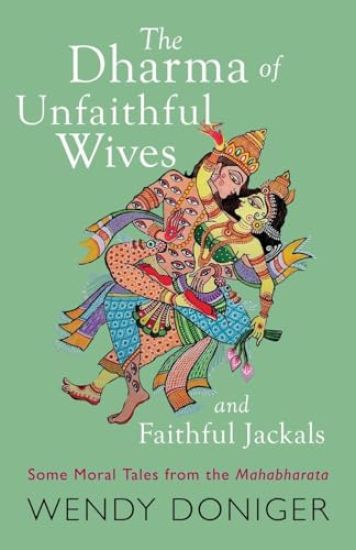
The Dharma of Unfaithful Wives and Faithful Jackals

The Dharma of Unfaithful Wives and Faithful Jackals

Wendy Doniger

Speaking Tiger Publishing Private Limited
2024
pokkari
How did Brahma create alluring women, and for what purpose? Why didthe righteous King Bhangashvana choose womanhood? How did the sageMarkandeya's pupil prevent his guru's wife from committing adultery? Whatrole did Indra play in the births of Vishvamitra and Parashu Rama? How weredeath, diseases, desire and anger created? Why and how did the institutionof kingship come about? What can one learn from the mouse who escapedthe cat, the owl, the mongoose and the hunter; or the wise jackal who wasbetrayed by the lion king? Why did Shiva swallow Shukra, the guru of theAsuras?Embedded within the lengthy discourse on dharma in the Shanti andAnushasana Parvans of the Mahabharata are answers to a whole range of suchquestions-moral lessons from a dying Bhishma to King Yudhishthira, onlife, death and everything in between. The Dharma of Unfaithful Wives andFaithful Jackals is a highly entertaining selection of these tales-tangled attimes, insightful at others, yet always quirky-about women, both goodand bad, fathers and sons, kings, gods and kings of gods, and fables. Theperceptive translations by Wendy Doniger, hailed as 'the greatest livingmythologist', are a treat for anyone fascinated by the bewildering complexityof Hindu myth and lore.
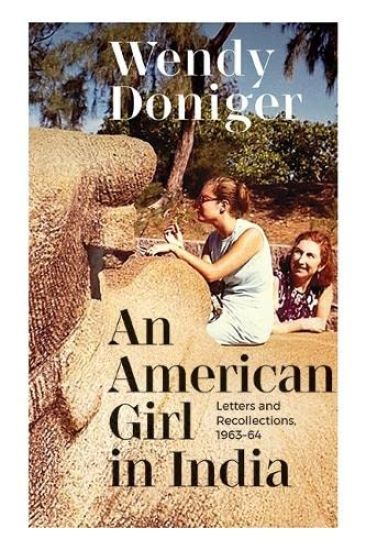
An American Girl in India

An American Girl in India

Wendy Doniger

STATE UNIVERSITY OF NEW YORK PRESS
2023
pokkari
Offers a portrait of India as seen through the eyes of a sensitive, sharp-eyed, and witty young scholar in the early 1960s.Twenty-two-year-old Wendy Doniger arrived in Calcutta in August 1963 on a scholarship to study Sanskrit and Bengali. It was her first visit to the country. Over the coming year-a lot of it spent in Tagore's Shantiniketan-she would fall completely in love with the place she had, until then, known only through books.The India she describes in her letters back home to her parents is young, like her, still finding its feet and learning to come to terms with the violence of Partition. But it is also a mature civilization that allows Vishnu to be depicted on the walls in a temple to Shiva; a culture of contradictions where extreme eroticism is tied to extreme chastity; and a land of the absurd where sociable station masters don't let train schedules stand in the way of hospitality. The country comes alive though her vivid prose-introspective and yet playful-and her excitement is on full display whether she is telling of the paradoxes of Indian life, the picturesque countryside, the peculiarities of Indian languages, or simply the mechanics of a temple ritual that she doesn't understand.Those who have read and admired Wendy Doniger will be delighted to find much of her later work anticipated in these letters, and the few who haven't will get to see, through her keen eyes and able pen, India as they have never seen it before.
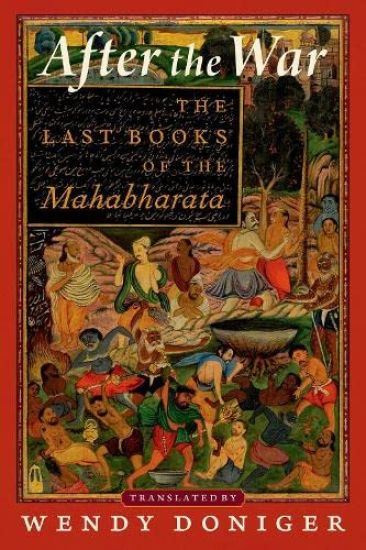
After the War

After the War

Wendy Doniger

OXFORD UNIVERSITY PRESS INC
2022
nidottu
After the War is a new translation of the final part of the Mahabharata, the great Sanskrit Epic poem about a devastating fraternal war. In this aftermath of the great war, the surviving heroes find various deaths, ranging from a drunken debacle in which they kill many of their own comrades to suicide through meditation and, finally, magical transportation to both heaven and hell. Bereaved mothers and widows on earth are comforted when their dead sons and husbands are magically conjured up from heaven and emerge from a river to spend one glorious night on earth with their loved ones. Ultimately, the bitterly opposed heroes of both sides are reconciled in heaven, but only when they finally let go of the vindictive masculine pride that has made each episode of violence give rise to another. Throughout the text, issues of truth and reconciliation, of the competing beliefs in various afterlives, and of the ultimate purpose of human life are debated. This last part of the Mahabharata has much to tell us both about the deep wisdom of Indian poets during the centuries from 300 BCE to 300 CE (the dates of the recension of this enormous text) and about the problems that we ourselves confront in the aftermath of our own genocidal and internecine wars. The author, a distinguished translator of Sanskrit texts (including the Rig Veda, the Laws of Manu, and the Kamasutra), puts the text into clear, flowing, contemporary prose, with a comprehensive but unintrusive critical apparatus. This book will delight general readers and enlighten students of Indian civilization and of great world literature.
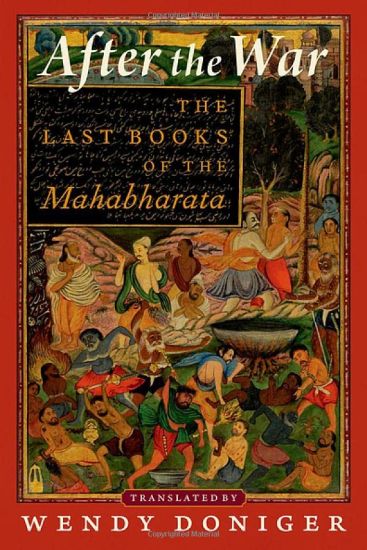
After the War

After the War

Wendy Doniger

OXFORD UNIVERSITY PRESS INC
2022
sidottu
After the War is a new translation of the final part of the Mahabharata, the great Sanskrit Epic poem about a devastating fraternal war. In this aftermath of the great war, the surviving heroes find various deaths, ranging from a drunken debacle in which they kill many of their own comrades to suicide through meditation and, finally, magical transportation to both heaven and hell. Bereaved mothers and widows on earth are comforted when their dead sons and husbands are magically conjured up from heaven and emerge from a river to spend one glorious night on earth with their loved ones. Ultimately, the bitterly opposed heroes of both sides are reconciled in heaven, but only when they finally let go of the vindictive masculine pride that has made each episode of violence give rise to another. Throughout the text, issues of truth and reconciliation, of the competing beliefs in various afterlives, and of the ultimate purpose of human life are debated. This last part of the Mahabharata has much to tell us both about the deep wisdom of Indian poets during the centuries from 300 BCE to 300 CE (the dates of the recension of this enormous text) and about the problems that we ourselves confront in the aftermath of our own genocidal and internecine wars. The author, a distinguished translator of Sanskrit texts (including the Rig Veda, the Laws of Manu, and the Kamasutra), puts the text into clear, flowing, contemporary prose, with a comprehensive but unintrusive critical apparatus. This book will delight general readers and enlighten students of Indian civilization and of great world literature.
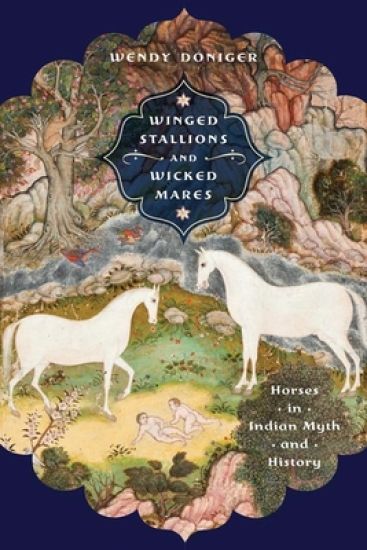
Winged Stallions and Wicked Mares

Winged Stallions and Wicked Mares

Wendy Doniger

University of Virginia Press
2021
sidottu
Horses are not indigenous to India. They had to be imported, making them expensive and elite animals. How then did Indian villagers who could not afford horses and often had never even seen a horse create such wonderful horse stories and brilliant visual images of horses? In Winged Stallions and Wicked Mares, Wendy Doniger, called ""the greatest living mythologist,"" examines the horse's significance throughout Indian history from the arrival of the Indo-Europeans, followed by the people who became the Mughals (who imported Arabian horses) and the British (who imported thoroughbreds and Walers). Along the way, we encounter the tensions between Hindu stallion and Arab mare traditions, the imposition of European standards on Indian breeds, the reasons why men ride mares to weddings, the motivations for murdering Dalits who ride horses, and the enduring myth of foreign horses who emerge from the ocean to fertilize native mares.
The Donigers of Great Neck – A Mythologized Memoir

The Donigers of Great Neck – A Mythologized Memoir

Wendy Doniger

Dartmouth College Press
2019
sidottu
"Many memories, many myths"-this is how Wendy Doniger begins the story of her parents' origins in Europe and sharply bifurcated life in America. Recalling their contrasting attitudes toward Judaism and religion in general-and acknowledging the mythologized narratives that keep bubbling up in those recollections-Doniger tells the story of their childhoods, their unusual marriage, their life in the post–World War II Jewish enclave of Great Neck, New York, and her own complex relationship with each of them.
The Donigers of Great Neck – A Mythologized Memoir

The Donigers of Great Neck – A Mythologized Memoir

Wendy Doniger

Dartmouth College Press
2019
nidottu
"Many memories, many myths"-this is how Wendy Doniger begins the story of her parents' origins in Europe and sharply bifurcated life in America. Recalling their contrasting attitudes toward Judaism and religion in general-and acknowledging the mythologized narratives that keep bubbling up in those recollections-Doniger tells the story of their childhoods, their unusual marriage, their life in the post–World War II Jewish enclave of Great Neck, New York, and her own complex relationship with each of them.
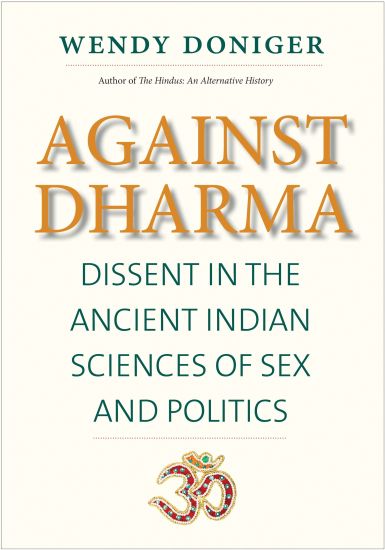
Against Dharma

Against Dharma

Wendy Doniger

Yale University Press
2018
sidottu
An esteemed scholar of Hinduism presents a groundbreaking interpretation of ancient Indian texts and their historic influence on subversive resistance Ancient Hindu texts speak of the three aims of human life: dharma,artha, and kama. Translated, these might be called religion, politics, and pleasure, and each is held to be an essential requirement of a full life. Balance among the three is a goal not always met, however, and dharma has historically taken precedence over the other two qualities in Hindu life. Here, historian of religions Wendy Doniger offers a spirited and close reading of ancient Indian writings, unpacking a long but unrecognized history of opposition against dharma. Doniger argues that scientific disciplines (shastras) have offered lively and continuous criticism of dharma, or religion, over many centuries. She chronicles the tradition of veiled subversion, uncovers connections to key moments of resistance and voices of dissent throughout Indian history, and offers insights into the Indian theocracy’s subversion of science by religion today.
The Ring of Truth

The Ring of Truth

Wendy Doniger

Oxford University Press Inc
2017
sidottu
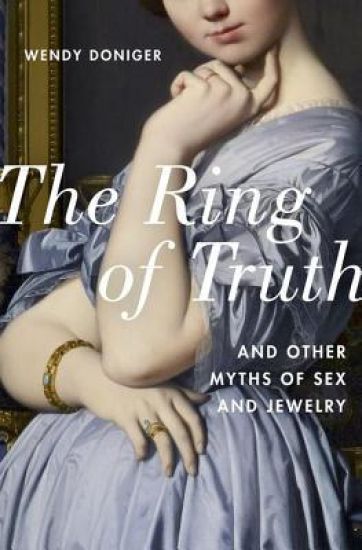
According to north Indian legend, there was once a Shah whose daughter was to marry a minister of the state of Sialkot. When the King heard of the girl's great beauty he tried to seduce her, but failed; he then planted his signet ring in her bed to trick her fiancé into thinking that he'd spoiled her chastity. Years later, the minister learned of the King's trickery, and decided to beg the forgiveness of the woman he had refused to marry--however, on his way to see her he fell dead. The Shah's daughter found out about his death, and her own vindication in his eyes, and went to lie with him on his funeral pyre--the site of their cremation is now a temple where the goddess Shila Mata is worshipped. The themes of this story--the spiteful king, the innocent woman, trickery, adultery (in this case presumed), and, above all, the ring symbolizing a sexual encounter--reverberate across time and cultures, so much so that you might think you've heard this story before, even if you've never heard of the goddess whose origin it describes. Why are sex and jewelry, particularly rings, so often connected? Why do rings keep appearing in stories about marriage and adultery, love and betrayal, loss and recovery, identity and masquerade? What is the mythology that makes finger rings symbols of true (or, as the case may be, untrue) love? In seeking answers to these questions, each chapter of this book, like a separate charm on a charm bracelet, considers a different constellation of stories. Most of the rings in the stories originally belong to men; indeed, just about all the jewelry that women have, they get from men. But it is the women who put the jewelry to work in the plots, and that is what this book is about. Beginning with a series of her own personal anecdotes about jewelry, Wendy Doniger expertly unfolds the cultural and historical significance of rings. The book does not move in a linear fashion but expands outward, as if from a prism, touching on ancient Sanskrit myth, Celtic lore, fairytales, literature, and modern song lyrics, to form a collection of stories as multifaceted as a diamond. The stories are all different but linked through a common cluster of meanings: the mutual imitation of real and fake, legal and illegal, marital and extra-marital jewelry; the circular form of rings and bracelets, miming the circle of eternity, which persists in the face of human ephemera. The Ring of Truth tells the story of jewelry that preserves (and sometimes erases) true and false memories, making promises that come true and that lie.
Redeeming the Kamasutra

Redeeming the Kamasutra

Wendy Doniger

Oxford University Press Inc
2016
sidottu
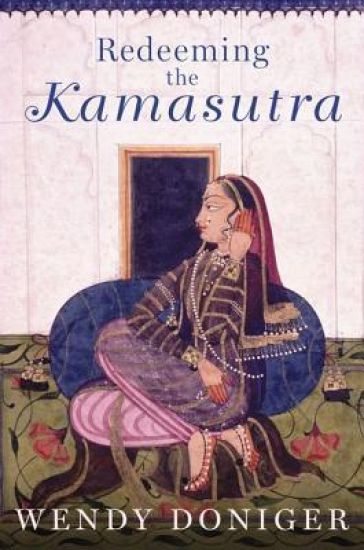
The Kamasutra, composed in the third century CE, is the world's most famous textbook of erotic love. There is nothing remotely like it even today, and for its time it was astonishingly sophisticated. Yet, it is all but ignored as a serious work in its country of origin--sometimes taken as a matter of national shame rather than pride--and in the rest of the world it is a source of amused amazement, and inspires magazine articles that offer "mattress-quaking sex styles" such as "the backstairs boogie" and "the spider web". In this scholarly and superbly readable book, one of the world's foremost authorities on ancient Indian texts seeks to restore the Kamasutra to its proper place in the Sanskrit canon, as a landmark of India's secular literature. She reveals fascinating aspects of the Kamasutra as a guide to the art of living for the cosmopolitan beau monde of ancient India: its emphasis on grooming and etiquette (including post-coital conversation), the study and practice of the arts (ranging from cooking and composing poetry to coloring one's teeth and mixing perfumes), and discretion and patience in conducting affairs (especially adulterous affairs). In its encyclopedic social and psychological narratives, it also displays surprisingly modern ideas about gender and role-playing, female sexuality, and homosexual desire. Even as she draws our attention to the many ways in which the Kamasutra challenges the conventions of its time (and often ours)--in dismissing fertility as the aim of sex, for instance--Doniger also shows us how it perpetuates attitudes that have continued to darken human intercourse: passages that twin passion with violence, for example, and those that explain away women's protests and exclamations of pain as ploys to excite their male partners. In these attitudes, as in its more enlightened observations on sexual love, we see the nearly two- thousand-year-old Kamasutra mirror twenty-first-century realities. In investigating and helping us understand a much celebrated but under-appreciated text, Wendy Doniger has produced a rich and compelling text of her own that will interest, delight, and surprise scholars and lay readers alike.
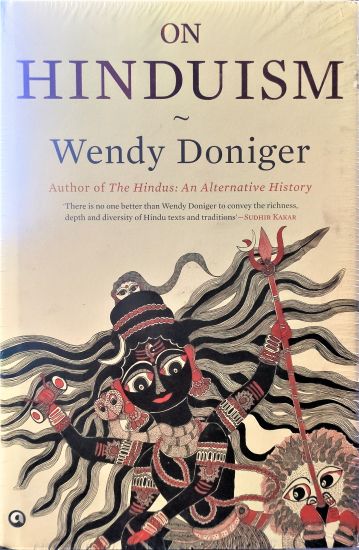
On Hinduism

On Hinduism

Wendy Doniger

Oxford University Press Inc
2016
nidottu
In this magisterial volume of essays, Wendy Doniger enhances our understanding of the ancient and complex religion to which she has devoted herself for half a century. This series of interconnected essays and lectures surveys the most critically important and hotly contested issues in Hinduism over 3,500 years, from the ancient time of the Vedas to the present day. The essays contemplate the nature of Hinduism; Hindu concepts of divinity; attitudes concerning gender, control, and desire; the question of reality and illusion; and the impermanent and the eternal in the two great Sanskrit epics, the Ramayana and the Mahabharata. Among the questions Doniger considers are: Are Hindus monotheists or polytheists? How can atheists be Hindu, and how can unrepentant Hindu sinners find salvation? Why have Hindus devoted so much attention to the psychology of addiction? What does the significance of dogs and cows tell us about Hinduism? How have Hindu concepts of death, rebirth, and karma changed over the course of history? How and why does a pluralistic faith, remarkable for its intellectual tolerance, foster religious intolerance? Doniger concludes with four concise autobiographical essays in which she reflects on her lifetime of scholarship, Hindu criticism of her work, and the influence of Hinduism on her own philosophy of life. On Hinduism is the culmination of over forty years of scholarship from a renowned expert on one of the world's great faiths.
On Hinduism

On Hinduism

Wendy Doniger

Oxford University Press Inc
2014
sidottu
In this magisterial volume of essays, Wendy Doniger enhances our understanding of the ancient and complex religion to which she has devoted herself for half a century. This series of interconnected essays and lectures surveys the most critically important and hotly contested issues in Hinduism over 3,500 years, from the ancient time of the Vedas to the present day. The essays contemplate the nature of Hinduism; Hindu concepts of divinity; attitudes concerning gender, control, and desire; the question of reality and illusion; and the impermanent and the eternal in the two great Sanskrit epics, the Ramayana and the Mahabharata. Among the questions Doniger considers are: Are Hindus monotheists or polytheists? How can atheists be Hindu, and how can unrepentant Hindu sinners find salvation? Why have Hindus devoted so much attention to the psychology of addiction? What does the significance of dogs and cows tell us about Hinduism? How have Hindu concepts of death, rebirth, and karma changed over the course of history? How and why does a pluralistic faith, remarkable for its intellectual tolerance, foster religious intolerance? Doniger concludes with four concise autobiographical essays in which she reflects on her lifetime of scholarship, Hindu criticism of her work, and the influence of Hinduism on her own philosophy of life. On Hinduism is the culmination of over forty years of scholarship from a renowned expert on one of the world's great faiths.
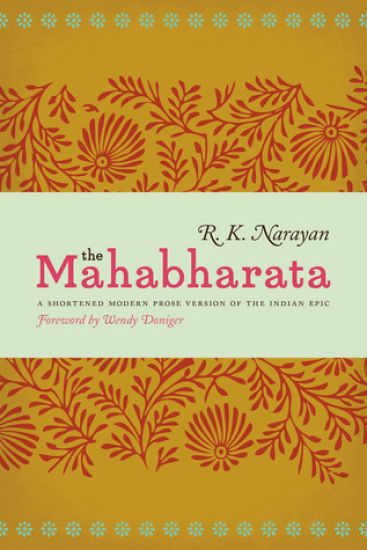
The Mahabharata

The Mahabharata

R K Narayan; Wendy Doniger

University of Chicago Press
2013
pokkari
The Mahabharata tells a story of such violence and tragedy that many people in India refuse to keep the full text in their homes, fearing that if they do, they will invite a disastrous fate upon their house. Covering everything from creation to destruction, this ancient poem remains an indelible part of Hindu culture and a landmark in ancient literature. Centuries of listeners and readers have been drawn to The Mahabharata, which began as disparate oral ballads and grew into a sprawling epic. The modern version is famously long, and at more than 1.8 million words--seven times the combined lengths of the Iliad and Odyssey--it can be incredibly daunting. Contemporary readers have a much more accessible entry point to this important work, thanks to R. K. Narayan's masterful translation and abridgement of the poem. Now with a new foreword by Wendy Doniger, as well as a concise character and place guide and a family tree, The Mahabharata is ready for a new generation of readers. As Wendy Doniger explains in the foreword, "Narayan tells the stories so well because they're all his stories." He grew up hearing them, internalizing their mythology, which gave him an innate ability to choose the right passages and their best translations. In this elegant translation, Narayan ably distills a tale that is both traditional and constantly changing. He draws from both scholarly analysis and creative interpretation and vividly fuses the spiritual with the secular. Through this balance he has produced a translation that is not only clear, but graceful, one that stands as its own story as much as an adaptation of a larger work.