Kirjojen hintavertailu. Mukana 12 390 323 kirjaa ja 12 kauppaa.

Kirjailija

Wendy Kozol

Kirjat ja teokset yhdessä paikassa: 4 kirjaa, julkaisuja vuosilta 2006-2024, suosituimpien joukossa Rethinking Global Security. Vertaile teosten hintoja ja tarkista saatavuus suomalaisista kirjakaupoista.

4 kirjaa

Kirjojen julkaisuhaarukka 2006-2024.

Rethinking Global Security

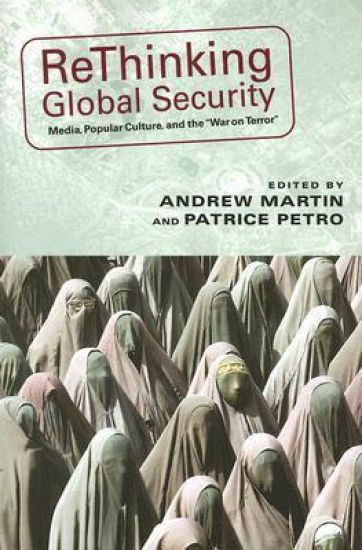
Rethinking Global Security

Wendy Kozol; Marcus Bullock; James Castonguay; Mary Layoun; Rebecca Decola; Patricia Mellencamp; Tony Grajeda; Mike Allen; Robert Ricigliano; Doug Davis; Lisa Parks

Rutgers University Press
2006
nidottu
Analysts today routinely look toward the media and popular culture as a way of understanding global security. Although only a decade ago, such a focus would have seemed out of place, the proliferation of digital technologies in the twenty-first century has transformed our knowledge of near and distant events so that it has become impossible to separate the politics of war, suffering, terrorism, and security from the practices and processes of the media.This book brings together ten path-breaking essays that explore the ways our notions of fear, insecurity, and danger are fostered by intermediary sources such as television, radio, film, satellite imaging, and the Internet. The contributors, from a wide range of disciplines, show how both fictional and fact-based threats to global security have helped to create and sustain a culture that is deeply distrustful. Topics range from the Patriot Act, to the censorship of media personalities, to the role that television programming plays as an interpretative frame for current events.Designed to promote strategic thinking about the relationships between media, popular culture, and global security, this book is essential reading for scholars of international relations, technology, and media studies.
The War in-Between

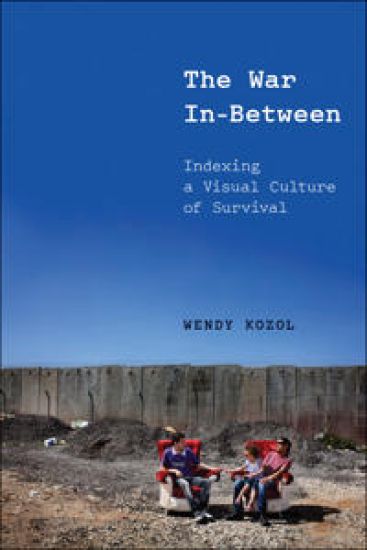
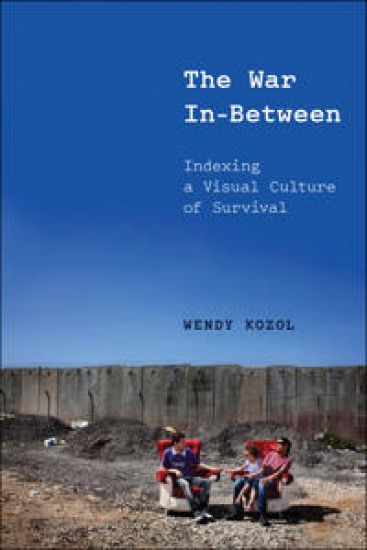
The War in-Between

Wendy Kozol

FORDHAM UNIVERSITY PRESS
2024
pokkari
Explores the ambiguities and contradictions that disrupt the assumed boundaries of battle zones Against the fabric of suffering that unfolds around more spectacular injuries and deaths, The War In-Between studies visual depictions of banal, routine, or inscrutable aspects of militarized violence. Spaces of the in-between are both broader and much less visible than battlefields, even though struggles for survival arise out of the same conditions of structural violence. Visual artifacts including photographs, video, data visualizations, fabric art, and craft projects provide different vantage points on the quotidian impacts of militarism, whether it is the banality of everyday violence for non-combatants or the daily struggles of soldiers living with physical and emotional trauma. Three interrelated concepts frame the book's attempt to "stay" in the moment of looking at visual cultures of survival. First, the concept of the war in-between captures those interstitial spaces of war where violence and survival persist side-by-side. Second, this book expands the concept of indexicality to consider how images of the in-between rely on a range of indexical traces to produce alternative visualities about survival and endurance. Third, the book introduces an asymptotic analysis to explore the value in getting close to the diverse experiences that comprise the war in-between, even if the horizon line of experience is always just out of reach. Exploring the capaciousness of survival reveals that there is more to feel and engage in war images than just mangled bodies, collapsing buildings, and industrialized death. The War In-Between, Kozol argues, offers not a better truth about war but an accounting of visualities that arise at the otherwise unthinkable junction of conflict and survival.
The War in-Between

The War in-Between

Wendy Kozol

FORDHAM UNIVERSITY PRESS
2024
sidottu
Explores the ambiguities and contradictions that disrupt the assumed boundaries of battle zones Against the fabric of suffering that unfolds around more spectacular injuries and deaths, The War In-Between studies visual depictions of banal, routine, or inscrutable aspects of militarized violence. Spaces of the in-between are both broader and much less visible than battlefields, even though struggles for survival arise out of the same conditions of structural violence. Visual artifacts including photographs, video, data visualizations, fabric art, and craft projects provide different vantage points on the quotidian impacts of militarism, whether it is the banality of everyday violence for non-combatants or the daily struggles of soldiers living with physical and emotional trauma. Three interrelated concepts frame the book's attempt to "stay" in the moment of looking at visual cultures of survival. First, the concept of the war in-between captures those interstitial spaces of war where violence and survival persist side-by-side. Second, this book expands the concept of indexicality to consider how images of the in-between rely on a range of indexical traces to produce alternative visualities about survival and endurance. Third, the book introduces an asymptotic analysis to explore the value in getting close to the diverse experiences that comprise the war in-between, even if the horizon line of experience is always just out of reach. Exploring the capaciousness of survival reveals that there is more to feel and engage in war images than just mangled bodies, collapsing buildings, and industrialized death. The War In-Between, Kozol argues, offers not a better truth about war but an accounting of visualities that arise at the otherwise unthinkable junction of conflict and survival.
Distant Wars Visible

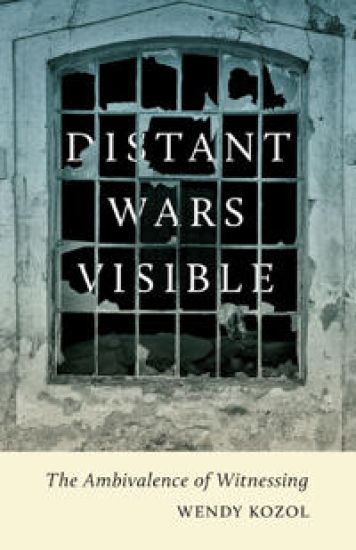
Distant Wars Visible

Wendy Kozol

University of Minnesota Press
2014
nidottu
In our wired world, visual images of military conflict and political strife are ubiquitous. Far less obvious, far more elusive, is how we see such images, how witnessing military violence and suffering affects us. Distant Wars Visible brings a new perspective to such enduring questions about conflict photography and other forms of visual advocacy, whether in support of U.S. military objectives or in critique of the nation at war. At the book’s center is what author Wendy Kozol calls an analytic of ambivalence-a critical approach to the tensions between spectacle and empathy provoked by gazing at military atrocities and trauma. Through this approach, Distant Wars Visible uses key concepts such as the politics of recoil, the notion of looking elsewhere, skeptical documents, and ethical spectatorship to examine multiple visual cultural practices depicting war, on and off the battlefield, from the 1999 NATO bombings in Kosovo to the present.Kozol’s analysis draws from collections of family photographs, human rights photography, independent film production, photojournalism, and other examples of war’s visual culture, as well as extensive visual evidence of the ways in which U.S. militarism operates to maintain geopolitical dominance-from Fallujah and Abu Ghraib to the most recent drone strikes in Pakistan. Throughout, Kozol reveals how factors such as gender, race, and sexuality construct competing visualizations of identity in a range of media from graphic narrative and film to conflict photography and battlefield souvenirs-and how contingencies and contradictions in visual culture shape the politics and ethics of witnessing.