

Kirjailija
Wendy Lesser
Kirjat ja teokset yhdessä paikassa: 10 kirjaa, julkaisuja vuosilta 1998-2026, suosituimpien joukossa Berlin Before and After: A Cautionary Mirror for Our Times. Vertaile teosten hintoja ja tarkista saatavuus suomalaisista kirjakaupoista.
10 kirjaa
Kirjojen julkaisuhaarukka 1998-2026.
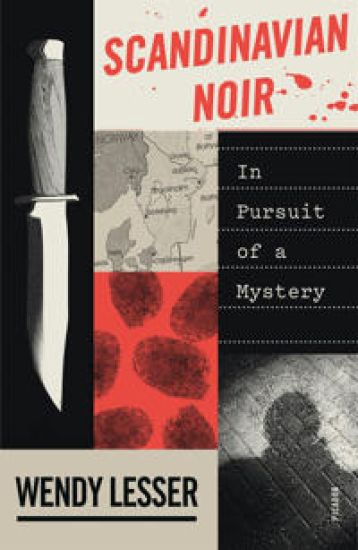
For nearly four decades, Wendy Lesser's primary source of information about three Scandinavian countries - Sweden, Norway, and Denmark - was mystery and crime novels, and the murders committed and solved in their pages. Having never visited the region, Lesser constructed a fictional Scandinavia, something between a map, a portrait, and a cultural history of a place that both existed and did not exist. With vivid storytelling and an astonishing command of the literature, Wendy Lesser's Scandinavian Noir: In Pursuit of a Mystery illuminates the vast, peculiar world of this imagined Scandinavia - first as it appears on the page, then as it grows in her mind, and finally as it exists in reality.
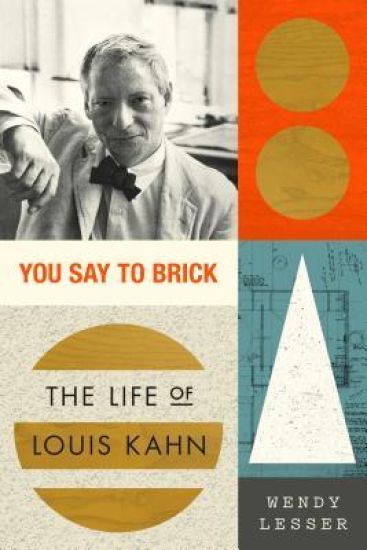
Born to a Jewish family in Estonia in 1901 and brought to America in 1906, the architect Louis Kahn grew up in poverty in Philadelphia; by the time of his death in 1974, he was widely recognised as one of the greatest architects of his era. Yet this enormous reputation was based on only a handful of masterpieces, all built during the last fifteen years of his life. Perfectly complementing Nathaniel Kahn’s award-winning documentary, My Architect, Wendy Lesser’s You Say to Brick is a major exploration of the architect’s life and work. Kahn, perhaps more than any other twentieth-century American architect, was a “public” architect. Eschewing the usual corporate skyscrapers, hotels, and condominiums, he focused on medical and educational research facilities, government centers, museums, libraries, parks, religious buildings, and other structures that would serve the public good. Yet this warm, captivating person, beloved by students and admired by colleagues, was also a secretive and mysterious character hiding behind a series of masks. Drawing on extensive original research; lengthy interviews with his children, his colleagues, and his students; and travel to the far-flung sites of his career-defining buildings, Lesser has written a landmark biography of this elusive man, which reveals the mind behind some of the twentieth century's most celebrated architecture.
"Wendy Lesser's extraordinary alertness, intelligence, and curiosity have made her one of America's most significant cultural critics," writes Stephen Greenblatt. In "Why I Read," Lesser draws on a lifetime of pleasure reading and decades of editing one of the most distinguished literary magazines in the country, "The Threepenny Review," to describe her love of literature. As Lesser writes in her prologue, "Reading can result in boredom or transcendence, rage or enthusiasm, depression or hilarity, empathy or contempt, depending on who you are and what the book is and how your life is shaping up at the moment you encounter it." Here the reader will discover a definition of literature that is as broad as it is broad-minded. In addition to novels and stories, Lesser explores plays, poems, and essays along with mysteries, science fiction, and memoirs. As she examines these works from such perspectives as "Character and Plot," "Novelty," "Grandeur and Intimacy," and "Authority," "Why I Read "sparks an overwhelming desire to put aside quotidian tasks in favor of reading. Lesser's passion for this pursuit resonates on every page, whether she is discussing the book as a physical object or a particular work's influence. "Reading literature is a way of reaching back to something bigger and older and different," she writes. "It can give you the feeling that you belong to the past as well as the present, and it can help you realize that your present will someday be someone else's past. This may be disheartening, but it can also be strangely consoling at times." A book in the spirit of E. M. Forster's "Aspects of the Novel "and Elizabeth Hardwick's "A View of My Own," "Why I Read "is iconoclastic, conversational, and""full of insight. It will delight those who are already""avid readers as well as neophytes in search of sheer""literary fun.""
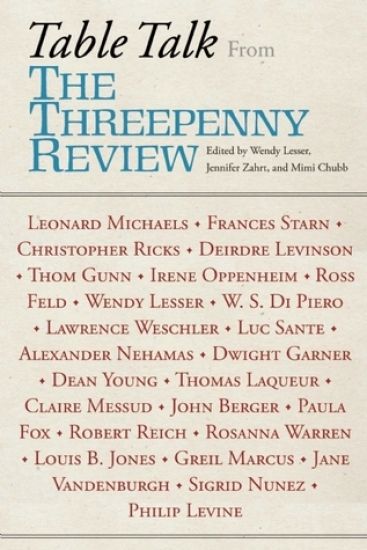
Table Talk is a portable dinner party and a book to read alone while laughing out loud. Table Talk is a salon attended by your smartest friends and by all of the wittiest people they know. Table Talk is a collection of brief but critically acclaimed, half serious/half tongue-in-cheek pieces that borrow the format of The New Yorker's  Talk of the Town" column. Selected from several decades of The Threepenny Review, known colloquially as the West Coast's New York Review of Books, these anecdotal essays debate the historical, artistic, and technological developments of our time.Released to coincide with the 35th anniversary of The Threepenny Review in January 2015, Table Talk, edited by Wendy Lesser, Mimi Chubb and Jennifer Zahrt, includes essays by Christopher Ricks, who unfolds a dazzling literary history of the phrase  Table Talk"; Leonard Michaels on why the waltz should be viewed as an aggressive, imperialist dance; and Claire Messud on the art of digression in fiction and conversation. Sigrid Nunez engages with the contemporary vogue for memoir and autobiography, while Luc Sante draws conclusions about postmodern art from a stray bit of graffiti glimpsed on a New York street. Other contributions include Alexander Nehamas on the NEA controversy that roiled the culture wars of the 1990s and Paula Fox's tips for interacting with difficult children.Ninety-nine pieces become a garden of literary delights, as Table Talk takes an irreverent walk on the wild side of philosophical and cultural speculation that will resonate with readers of any age.
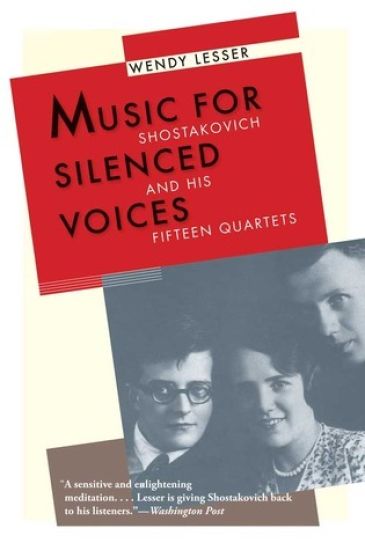
A new biography of Shostakovich that views him through the intimate music of his string quartets Most previous books about Dmitri Shostakovich have focused on either his symphonies and operas, or his relationship to the regime under which he lived, or both, since these large-scale works were the ones that attracted the interest and sometimes the condemnation of the Soviet authorities. Music for Silenced Voices looks at Shostakovich through the back door, as it were, of his fifteen quartets, the works which his widow characterized as a "diary, the story of his soul." The silences and the voices were of many kinds, including the political silencing of adventurous writers, artists, and musicians during the Stalin era; the lost voices of Shostakovich's operas (a form he abandoned just before turning to string quartets); and the death-silenced voices of his close friends, to whom he dedicated many of these chamber works.Wendy Lesser has constructed a fascinating narrative in which the fifteen quartets, considered one at a time in chronological order, lead the reader through the personal, political, and professional events that shaped Shostakovich's singular, emblematic twentieth-century life. Weaving together interviews with the composer's friends, family, and colleagues, as well as conversations with present-day musicians who have played the quartets, Lesser sheds new light on the man and the musician. One of the very few books about Shostakovich that is aimed at a general rather than an academic audience, Music for Silenced Voices is a pleasure to read; at the same time, it is rigorously faithful to the known facts in this notoriously complicated life. It will fill readers with the desire to hear the quartets, which are among the most compelling and emotionally powerful monuments of the past century's music.
Fifteen outstanding writers answered editor Wendy Lesser's call for original essays on the subject of language-the one they grew up with, and the English in which they write.Despite American assumptions about polite Chinese discourse, Amy Tan believes that there was nothing discreet about the Chinese language with which she grew up. Leonard Michaels spoke only Yiddish until he was five, and still found its traces in his English language writing. Belgian-born Luc Sante loved his French Tintin and his Sartre, but only in English could he find -words of one syllable- that evoke American bars and bus stops. And although Louis Begley writes novels in English and addresses family members in Polish, he still speaks French with his wife-the language of their courtship. As intimate as one's dreams, as private as a secret identity, these essays examine and reveal the writers' pride, pain, and pleasure in learning a new tongue, revisiting an old one, and reconciling the joys and frustrations of each.
Revisiting her favorite books after 20 or 30 years, Lesser is stirred by the changes she finds--in the books, in herself, and in the wider world.
In this unusual memoir of the life of the mind, the founding editor of The Threepenny Review reflects upon the choices she has made in pursuit of her vocation as a self-described "eighteenth-century man of letters." Wendy Lesser, one of our shrewdest cultural observers, describes how her education, her experiences, and the works of her favorite writers, artists, and performers have shaped and deepened her understanding of the world. She shows us how she has created an independent life as a writer, editor, and critic, free to follow her enthusiasms where they lead her. Whether her subject is Mark Morris's choreography, the delights of e-mail, the odd assortment of words that were born the same year she was, or the moral implications of giving to beggars (pondered by way of Charles Dickens and Henry James), Lesser's acute wisdom and elegant prose render a beguiling portrait of a remarkable mind at work.
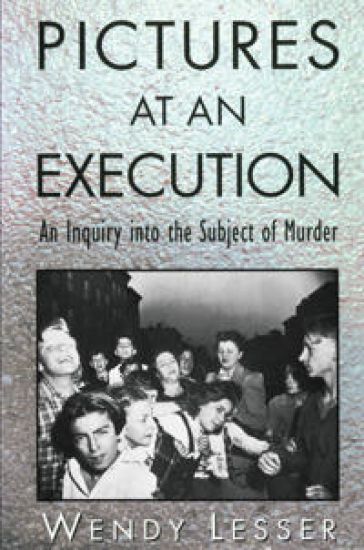
This book is about murder—in life and in art—and about how we look at it and feel about it. At the center of Wendy Lesser’s investigation is a groundbreaking legal case in which a federal court judge was asked to decide whether a gas chamber execution would be broadcast on public television. Our grim and seemingly endless fascination with murder gets its day in court as Lesser conducts us through the proceedings, pausing along the way to reflect on the circumstances of violent death in our culture. Her book, itself a murder mystery of sorts, circling suspensefully around a central point, is also a meditation on murder in a civilized society—what we make of it in law, morality, and art.Lesser narrates the trial with a sharp eye for detail and an absorbing sense of character. Questions that arise in the courtroom conjure other, broader ones: why are we drawn to murder, as an act and as a spectacle? Who in a murder story are we drawn to—victim, murderer, detective? Is such interest, even pleasure, morally suspect? Lesser’s reflections on these questions follow the culture in its danse macabre, from Norman Mailer’s Executioner’s Song to the Jacobean play The Changeling, from Errol Morris’s documentary The Thin Blue Line to Crime and Punishment, from Janet Malcolm’s The Journalist and the Murderer to Jim Thompson’s The Killer Inside Me, from Weegee’s photographs to television’s movie of the week. Always anchored in the courtroom, where the question of murder as theater is being settled in immediate, human terms, this circle of thought widens outward to the increasingly blurred borderline between real and fictional murder, between event and story, between murder as news and as art. As gripping as its subject, Pictures at an Execution ultimately brings us face to face with our own most disturbing cultural impulses.