Kirjojen hintavertailu. Mukana 12 448 606 kirjaa ja 12 kauppaa.

Kirjailija

Wendy Wolford

Kirjat ja teokset yhdessä paikassa: 4 kirjaa, julkaisuja vuosilta 2010-2025, suosituimpien joukossa This Land Is Ours Now. Vertaile teosten hintoja ja tarkista saatavuus suomalaisista kirjakaupoista.

4 kirjaa

Kirjojen julkaisuhaarukka 2010-2025.

The Plantation Ideal

The Plantation Ideal

Wendy Wolford

University of California Press
2025
pokkari
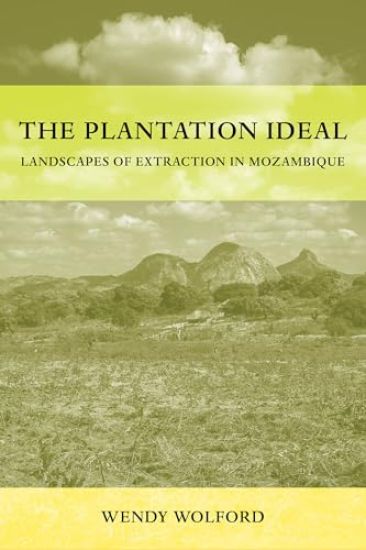
Despite never having delivered sustained economic or social benefits, plantations have been the privileged tool of extraction and development in Mozambique for more than one hundred years. Drawing on extensive archival and qualitative contemporary research, The Plantation Ideal explores ProSavana, the 2009 trilateral megaproject between Brazil, Japan, and Mozambique, which was intended to reorganize rural land and labor for the benefit of large-scale commodity production. Offering new insights into plantation economies, histories, and landscapes, Wendy Wolford tells the story of how the largely failed pursuit of a plantation ideal has shaped agricultural science, government rule, life on the land, and community development in Mozambique from the harshest years of Portuguese colonization to the present.
The Plantation Ideal

The Plantation Ideal

Wendy Wolford

University of California Press
2025
sidottu
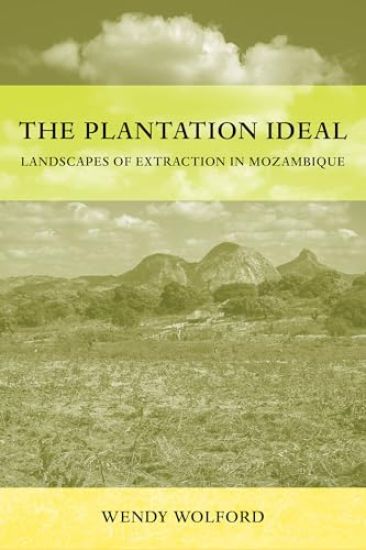
Despite never having delivered sustained economic or social benefits, plantations have been the privileged tool of extraction and development in Mozambique for more than one hundred years. Drawing on extensive archival and qualitative contemporary research, The Plantation Ideal explores ProSavana, the 2009 trilateral megaproject between Brazil, Japan, and Mozambique, which was intended to reorganize rural land and labor for the benefit of large-scale commodity production. Offering new insights into plantation economies, histories, and landscapes, Wendy Wolford tells the story of how the largely failed pursuit of a plantation ideal has shaped agricultural science, government rule, life on the land, and community development in Mozambique from the harshest years of Portuguese colonization to the present.
This Land Is Ours Now

This Land Is Ours Now

Wendy Wolford

Duke University Press
2010
pokkari
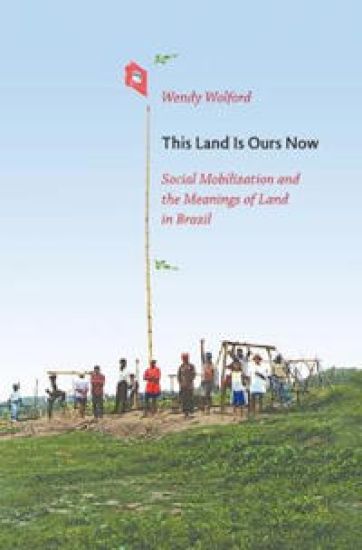
In This Land Is Ours Now, Wendy Wolford presents an original framework for understanding social mobilization. She argues that social movements are not the politically coherent, bounded entities often portrayed by scholars, the press, and movement leaders. Instead, they are constantly changing mediations between localized moral economies and official movement ideologies. Wolford develops her argument by analyzing how a particular social movement works: Brazil’s Rural Landless Workers’ Movement, known as the Movimento Sem Terra (MST). Founded in the southernmost states of Brazil in the mid-1980s, this extraordinary grassroots agrarian movement grew dramatically in the ensuing years. By the late 1990s it was the most dynamic, well-organized social movement in Brazilian history. Drawing on extensive ethnographic research, Wolford compares the development of the movement in Brazil’s southern state of Santa Catarina and its northeastern state of Pernambuco. As she explains, in the south, most of the movement’s members were sons and daughters of small peasant farmers; in the northeast, they were almost all former plantation workers, who related awkwardly to the movement’s agenda of accessing “land for those who work it.” The MST became an effective presence in Pernambuco only after the local sugarcane economy had collapsed. Worldwide sugarcane prices dropped throughout the 1990s, and by 1999 the MST was a prominent political organizer in the northeastern plantation region. Yet fewer than four years later, most of the region’s workers had dropped out of the movement. By delving into the northeastern workers’ motivations for joining and then leaving the MST, Wolford adds nuance and depth to accounts of a celebrated grassroots social movement, and she highlights the contingent nature of social movements and political identities more broadly.
This Land Is Ours Now

This Land Is Ours Now

Wendy Wolford

Duke University Press
2010
sidottu
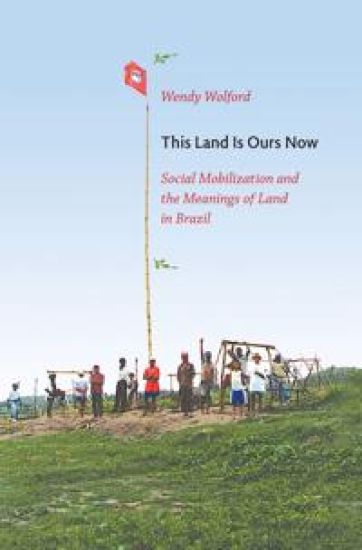
In This Land Is Ours Now, Wendy Wolford presents an original framework for understanding social mobilization. She argues that social movements are not the politically coherent, bounded entities often portrayed by scholars, the press, and movement leaders. Instead, they are constantly changing mediations between localized moral economies and official movement ideologies. Wolford develops her argument by analyzing how a particular social movement works: Brazil’s Rural Landless Workers’ Movement, known as the Movimento Sem Terra (MST). Founded in the southernmost states of Brazil in the mid-1980s, this extraordinary grassroots agrarian movement grew dramatically in the ensuing years. By the late 1990s it was the most dynamic, well-organized social movement in Brazilian history. Drawing on extensive ethnographic research, Wolford compares the development of the movement in Brazil’s southern state of Santa Catarina and its northeastern state of Pernambuco. As she explains, in the south, most of the movement’s members were sons and daughters of small peasant farmers; in the northeast, they were almost all former plantation workers, who related awkwardly to the movement’s agenda of accessing “land for those who work it.” The MST became an effective presence in Pernambuco only after the local sugarcane economy had collapsed. Worldwide sugarcane prices dropped throughout the 1990s, and by 1999 the MST was a prominent political organizer in the northeastern plantation region. Yet fewer than four years later, most of the region’s workers had dropped out of the movement. By delving into the northeastern workers’ motivations for joining and then leaving the MST, Wolford adds nuance and depth to accounts of a celebrated grassroots social movement, and she highlights the contingent nature of social movements and political identities more broadly.