Kirjojen hintavertailu. Mukana 12 250 341 kirjaa ja 12 kauppaa.

Kirjailija

Wenwu Zhu

Kirjat ja teokset yhdessä paikassa: 9 kirjaa, julkaisuja vuosilta 2013-2026, suosituimpien joukossa Video Grounding and Its Generalization. Vertaile teosten hintoja ja tarkista saatavuus suomalaisista kirjakaupoista.

9 kirjaa

Kirjojen julkaisuhaarukka 2013-2026.

Video Grounding and Its Generalization

Video Grounding and Its Generalization

Xin Wang; Xiaohan Lan; Wenwu Zhu

Springer International Publishing AG
2025
sidottu
This book consists of two parts: Part I Methodologies for Video Grounding and Part II Generalized Video Grounding and Trending Directions. To make this book self-contained and cutting edge, Part I will cover basic and advanced methodologies for Video Grounding, discussing key comparisons with several representative Vision-Language learning tasks including multimodal understanding and generation. Part II will cover our insights for Generalized Video Grounding and the development of Video Grounding in the era of large foundation models, discussing future directions such as Out-of-Distribution settings which deserve further investigations. Discussions on Video Grounding will cover both the task of Video Grounding and other Vision-Language Task, as well as their relations. The basics and advances will touch Video Grounding from model to benchmark, from supervised learning to unsupervised pre-training, from single video grounding to video corpus grounding, and from in-distribution setting to out-of-distribution setting. As for Generalized Video Grounding, we discuss cross-modal grounding, event grounding for multi-modal tasks, various distribution shifts in out-of-distribution setting, explainable Video Grounding, and large foundation model for Video Grounding. We deeply hope this book can benefit interested readers from both academy and industry, covering needs from junior starters in research to senior practitioners in IT companies.
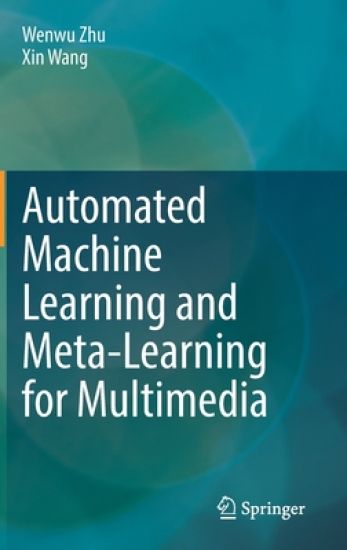
Automated Machine Learning and Meta-Learning for Multimedia

Automated Machine Learning and Meta-Learning for Multimedia

Wenwu Zhu; Xin Wang

Springer Nature Switzerland AG
2022
nidottu
This book disseminates and promotes the recent research progress and frontier development on AutoML and meta-learning as well as their applications on computer vision, natural language processing, multimedia and data mining related fields. These are exciting and fast-growing research directions in the general field of machine learning. The authors advocate novel, high-quality research findings, and innovative solutions to the challenging problems in AutoML and meta-learning. This topic is at the core of the scope of artificial intelligence, and is attractive to audience from both academia and industry.This book is highly accessible to the whole machine learning community, including: researchers, students and practitioners who are interested in AutoML, meta-learning, and their applications in multimedia, computer vision, natural language processing and data mining related tasks. The book is self-contained and designed for introductory and intermediate audiences. No special prerequisite knowledge is required to read this book.
Automated Machine Learning and Meta-Learning for Multimedia

Automated Machine Learning and Meta-Learning for Multimedia

Wenwu Zhu; Xin Wang

Springer Nature Switzerland AG
2021
sidottu
This book disseminates and promotes the recent research progress and frontier development on AutoML and meta-learning as well as their applications on computer vision, natural language processing, multimedia and data mining related fields. These are exciting and fast-growing research directions in the general field of machine learning. The authors advocate novel, high-quality research findings, and innovative solutions to the challenging problems in AutoML and meta-learning. This topic is at the core of the scope of artificial intelligence, and is attractive to audience from both academia and industry.This book is highly accessible to the whole machine learning community, including: researchers, students and practitioners who are interested in AutoML, meta-learning, and their applications in multimedia, computer vision, natural language processing and data mining related tasks. The book is self-contained and designed for introductory and intermediate audiences. No special prerequisite knowledge is required to read this book.
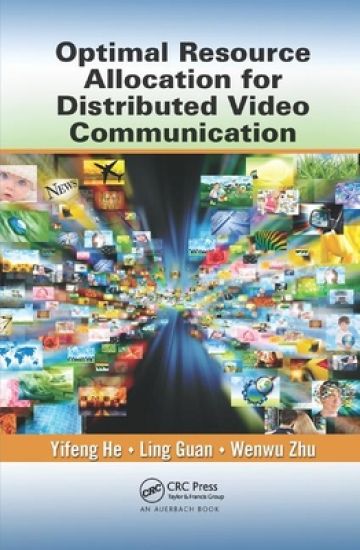
Optimal Resource Allocation for Distributed Video Communication
While most books on the subject focus on resource allocation in just one type of network, this book is the first to examine the common characteristics of multiple distributed video communication systems. Comprehensive and systematic, Optimal Resource Allocation for Distributed Video Communication presents a unified optimization framework for resource allocation across these systems. The book examines the techniques required for optimal resource allocation over Internet, wireless cellular networks, wireless ad hoc networks, and wireless sensor networks. It provides you with the required foundation in video communications, including Peer-to-Peer (P2P) networks, wireless networks, and visual sensor networks. Whether you’re in industry or academia, you’ll value how the book outlines current challenges facing the field and outlines a general solution framework for addressing these challenges. From problem formulations and theoretical analysis to practical algorithms, it facilitates the comprehensive understanding required to achieve optimized video and multimedia communications.Presents the resource allocation techniques for scalable video communications over Internet or wireless networksExamines two resource allocation problems—distributed throughput maximization for scalable P2P Video-on-Demand (VoD) systems and streaming capacity for P2P VoD systemsOutlines an optimal prefetching framework for reducing seeking delays in P2P VoD applicationsExamines distributed optimization techniques for unicast and multicast video streaming over wireless ad hoc networksConsiders the network lifetime maximization problem in wireless visual sensor networks Detailing methods that can immediately improve the performance of your video communication systems, this book presents multiple applications of optimal resource allocation. For each of the applications,
Optimal Resource Allocation for Distributed Video Communication

Optimal Resource Allocation for Distributed Video Communication

Yifeng He; Ling Guan; Wenwu Zhu

CRC Press Inc
2013
sidottu
While most books on the subject focus on resource allocation in just one type of network, this book is the first to examine the common characteristics of multiple distributed video communication systems. Comprehensive and systematic, Optimal Resource Allocation for Distributed Video Communication presents a unified optimization framework for resource allocation across these systems. The book examines the techniques required for optimal resource allocation over Internet, wireless cellular networks, wireless ad hoc networks, and wireless sensor networks. It provides you with the required foundation in video communications, including Peer-to-Peer (P2P) networks, wireless networks, and visual sensor networks. Whether you’re in industry or academia, you’ll value how the book outlines current challenges facing the field and outlines a general solution framework for addressing these challenges. From problem formulations and theoretical analysis to practical algorithms, it facilitates the comprehensive understanding required to achieve optimized video and multimedia communications.Presents the resource allocation techniques for scalable video communications over Internet or wireless networksExamines two resource allocation problems—distributed throughput maximization for scalable P2P Video-on-Demand (VoD) systems and streaming capacity for P2P VoD systemsOutlines an optimal prefetching framework for reducing seeking delays in P2P VoD applicationsExamines distributed optimization techniques for unicast and multicast video streaming over wireless ad hoc networksConsiders the network lifetime maximization problem in wireless visual sensor networks Detailing methods that can immediately improve the performance of your video communication systems, this book presents multiple applications of optimal resource allocation. For each of the applications,
Visual Question Answering

Visual Question Answering

Qi Wu; Peng Wang; Xin Wang; Xiaodong He; Wenwu Zhu

SPRINGER VERLAG, SINGAPORE
2023
nidottu
Visual Question Answering (VQA) usually combines visual inputs like image and video with a natural language question concerning the input and generates a natural language answer as the output. This is by nature a multi-disciplinary research problem, involving computer vision (CV), natural language processing (NLP), knowledge representation and reasoning (KR), etc. Further, VQA is an ambitious undertaking, as it must overcome the challenges of general image understanding and the question-answering task, as well as the difficulties entailed by using large-scale databases with mixed-quality inputs. However, with the advent of deep learning (DL) and driven by the existence of advanced techniques in both CV and NLP and the availability of relevant large-scale datasets, we have recently seen enormous strides in VQA, with more systems and promising results emerging. This book provides a comprehensive overview of VQA, covering fundamental theories, models, datasets, andpromising future directions. Given its scope, it can be used as a textbook on computer vision and natural language processing, especially for researchers and students in the area of visual question answering. It also highlights the key models used in VQA.
Visual Question Answering

Visual Question Answering

Qi Wu; Peng Wang; Xin Wang; Xiaodong He; Wenwu Zhu

SPRINGER VERLAG, SINGAPORE
2022
sidottu
Visual Question Answering (VQA) usually combines visual inputs like image and video with a natural language question concerning the input and generates a natural language answer as the output. This is by nature a multi-disciplinary research problem, involving computer vision (CV), natural language processing (NLP), knowledge representation and reasoning (KR), etc. Further, VQA is an ambitious undertaking, as it must overcome the challenges of general image understanding and the question-answering task, as well as the difficulties entailed by using large-scale databases with mixed-quality inputs. However, with the advent of deep learning (DL) and driven by the existence of advanced techniques in both CV and NLP and the availability of relevant large-scale datasets, we have recently seen enormous strides in VQA, with more systems and promising results emerging. This book provides a comprehensive overview of VQA, covering fundamental theories, models, datasets, andpromising future directions. Given its scope, it can be used as a textbook on computer vision and natural language processing, especially for researchers and students in the area of visual question answering. It also highlights the key models used in VQA.
Social Video Content Delivery

Social Video Content Delivery

Zhi Wang; Jiangchuan Liu; Wenwu Zhu

Springer International Publishing AG
2016
nidottu
This brief presents new architecture and strategies for distribution of social video content. A primary framework for socially-aware video delivery and a thorough overview of the possible approaches is provided. The book identifies the unique characteristics of socially-aware video access and social content propagation, revealing the design and integration of individual modules that are aimed at enhancing user experience in the social network context. The change in video content generation, propagation, and consumption for online social networks, has significantly challenged the traditional video delivery paradigm. Given the massive amount of user-generated content shared in online social networks, users are now engaged as active participants in the social ecosystem rather than as passive receivers of media content. This revolution is being driven further by the deep penetration of 3G/4G wireless networks and smart mobile devices that are seamlessly integrated with online social networking and media-sharing services. Despite increasingly abundant bandwidth and computational resources, the ever-increasing volume of data created by user-generated video content--along with the boundless coverage of socialized sharing--presents unprecedented challenges.