

Kirjailija
Wilhelm Grimm
Kirjat ja teokset yhdessä paikassa: 416 kirjaa, julkaisuja vuosilta 1812-2026, suosituimpien joukossa Old Danish Ballads. Vertaile teosten hintoja ja tarkista saatavuus suomalaisista kirjakaupoista.
416 kirjaa
Kirjojen julkaisuhaarukka 1812-2026.


Grimms Märchen: Gesammelte Kinder - und Hausmärchen (Voll Illustriert)
Jacob Grimm; Wilhelm Grimm
e-artnow
2023
nidottu


Unver nderter Nachdruck der Originalausgabe von 1878. Der Verlag Anatiposi gibt historische B cher als Nachdruck heraus. Aufgrund ihres Alters k nnen diese B cher fehlende Seiten oder mindere Qualit t aufweisen. Unser Ziel ist es, diese B cher zu erhalten und der ffentlichkeit zug nglich zu machen, damit sie nicht verloren gehen.



Grimms' Fairy Tales is a collection of German folk tales collected and published by Jacob and Wilhelm Grimm in two volumes in 1812 and 1815. The book contains over 200 stories that have become some of the most famous and enduring fairy tales in Western culture. The collection includes classic stories such as Cinderella, Snow White, Rapunzel, Hansel, and Gretel, as well as lesser-known tales like The Golden Bird and The Frog Prince. Many of the stories have become popularized through numerous adaptations, including Disney films. The tales in Grimms' Fairy Tales are often dark and contain elements of violence, cannibalism, and other adult themes. However, they also convey important moral lessons and reflect the cultural values and beliefs of 19th-century Germany. In addition to the tales themselves, the book also includes notes on the origins and sources of each story and commentaries on the stories' cultural significance. The Grimm brothers' work was instrumental in the preservation of German folklore and the development of the modern fairy tale genre.

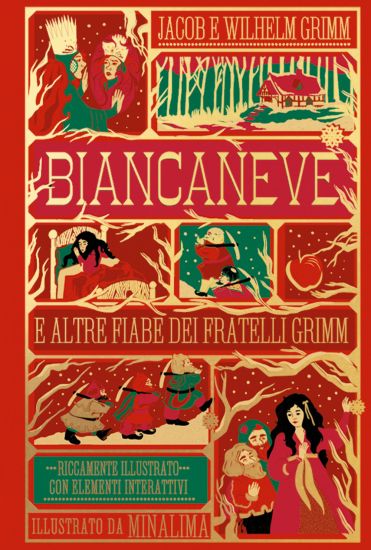
For most children, reading the fairy tales of the Brothers Grimm is an essential experience when growing up. Grimm’s Fairy Tales collects some of the best-known fairy and folk tales set down by the Brothers Grimm, including “Sleeping Beauty,” “Snow White and the Seven Dwarfs,” “Little Red Riding Hood,” “Hansel and Gretel,” “The Frog-Prince,” and “Rumpelstiltskin.”

Jacob and Wilhelm Grimm, commonly known as the Brothers Grimm, were not primarily writers but philologists whose names are still as well known in the field of linguistics as they are to readers of fairy tales. Grimm's Law is a basic rule in the study of Indo-European languages, and the dictionary of the German language is largely their work. Although the fairy tales were always intended to be read by children, they were also meant to represent German culture at its most fundamental level. The Grimms thought that culture at the level of the common people exists in its purest form and is the least influenced by foreign traditions.



Unver nderter Nachdruck der Originalausgabe von 1860.