Kirjojen hintavertailu. Mukana 12 281 596 kirjaa ja 12 kauppaa.

Kirjailija

William A. Corsaro

Kirjat ja teokset yhdessä paikassa: 6 kirjaa, julkaisuja vuosilta 2003-2024, suosituimpien joukossa Child's Play. Vertaile teosten hintoja ja tarkista saatavuus suomalaisista kirjakaupoista.

6 kirjaa

Kirjojen julkaisuhaarukka 2003-2024.

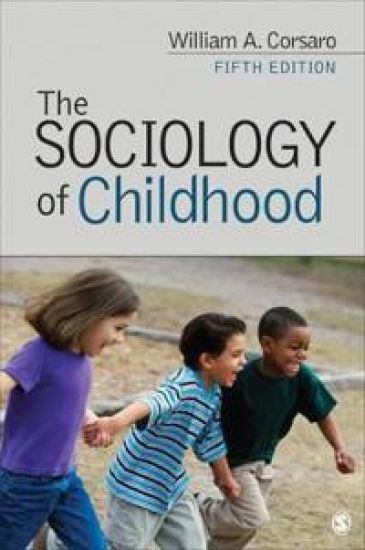
The Sociology of Childhood

The Sociology of Childhood

William A. Corsaro; Judson G. Everitt

SAGE PUBLICATIONS INC
2024
nidottu
The Sixth Edition of William A. Corsaro and Judson G. Everitt's groundbreaking text discusses children and childhood from a sociological perspective—providing in-depth coverage of social theories of childhood, the peer cultures and social issues of children and youth, and children and childhood within the frameworks of culture and history. This revised edition has been thoroughly updated to incorporate the latest research and the most pertinent information so readers can engage in powerful discussions on a wide array of topics.
The Sociology of Childhood

The Sociology of Childhood

William A. Corsaro

SAGE Publications (USA)
2017
nidottu
William A. Corsaro's groundbreaking work, The Sociology of Childhood, Fifth Edition discusses children and childhood from a sociological perspective - providing in-depth coverage of social theories of childhood, the peer cultures and social issues of children and youth, and children and childhood within the frameworks of culture and history.
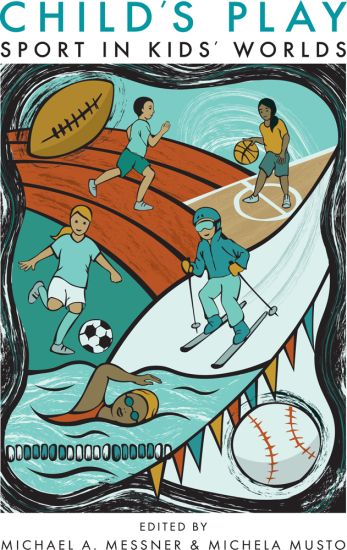
Child's Play

Child's Play

William A. Corsaro

Rutgers University Press
2016
sidottu
Is sport good for kids? When answering this question, both critics and advocates of youth sports tend to fixate on matters of health, whether condemning contact sports for their concussion risk or prescribing athletics as a cure for the childhood obesity epidemic. Child’s Play presents a more nuanced examination of the issue, considering not only the physical impacts of youth athletics, but its psychological and social ramifications as well. The eleven original scholarly essays in this collection provide a probing look into how sports—in community athletic leagues, in schools, and even on television—play a major role in how young people view themselves, shape their identities, and imagine their place in society. Rather than focusing exclusively on self-proclaimed jocks, the book considers how the culture of sports affects a wide variety of children and young people, including those who opt out of athletics. Not only does Child’s Play examine disparities across lines of race, class, and gender, it also offers detailed examinations of how various minority populations, from transgender youth to Muslim immigrant girls, have participated in youth sports. Taken together, these essays offer a wide range of approaches to understanding the sociology of youth sports, including data-driven analyses that examine national trends, as well as ethnographic research that gives a voice to individual kids. Child’s Play thus presents a comprehensive and compelling analysis of how, for better and for worse, the culture of sports is integral to the development of young people—and with them, the future of our society.
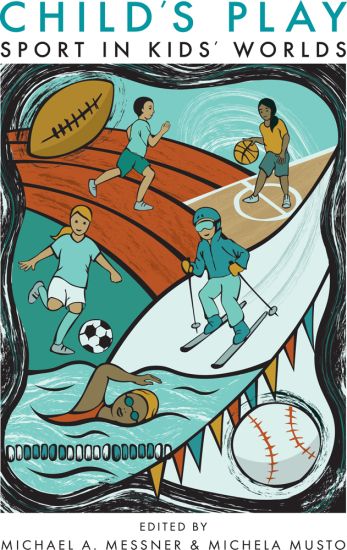
Child's Play

Child's Play

William A. Corsaro

Rutgers University Press
2016
nidottu
Is sport good for kids? When answering this question, both critics and advocates of youth sports tend to fixate on matters of health, whether condemning contact sports for their concussion risk or prescribing athletics as a cure for the childhood obesity epidemic. Child’s Play presents a more nuanced examination of the issue, considering not only the physical impacts of youth athletics, but its psychological and social ramifications as well. The eleven original scholarly essays in this collection provide a probing look into how sports—in community athletic leagues, in schools, and even on television—play a major role in how young people view themselves, shape their identities, and imagine their place in society. Rather than focusing exclusively on self-proclaimed jocks, the book considers how the culture of sports affects a wide variety of children and young people, including those who opt out of athletics. Not only does Child’s Play examine disparities across lines of race, class, and gender, it also offers detailed examinations of how various minority populations, from transgender youth to Muslim immigrant girls, have participated in youth sports. Taken together, these essays offer a wide range of approaches to understanding the sociology of youth sports, including data-driven analyses that examine national trends, as well as ethnographic research that gives a voice to individual kids. Child’s Play thus presents a comprehensive and compelling analysis of how, for better and for worse, the culture of sports is integral to the development of young people—and with them, the future of our society.
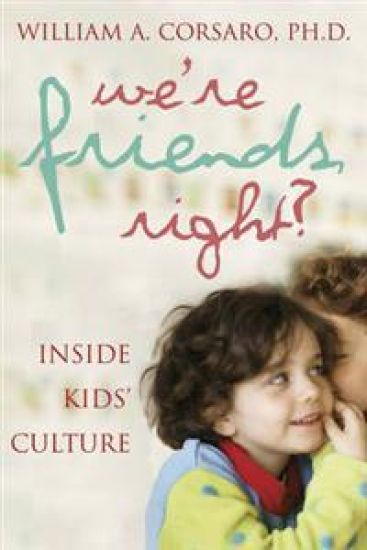
We're Friends, Right?

We're Friends, Right?

William A. Corsaro

Henry (Joseph) Press
2003
nidottu
Sociologists often study exotic cultures by immersing themselves in an environment until they become accepted as insiders. In this fascinating account by acclaimed researcher William A. Corsaro, a scientist "goes native" to study the secret world of children. Here, for the first time, are the children themselves, heard through an expert who knows that the only way to truly understand them is by becoming a member of their community. That's just what Corsaro did when he traded in his adult perspective for a seat in the sandbox alongside groups of preschoolers. Corsaro's journey of discovery is as fascinating as it is revealing. Living among and gaining the acceptance of children, he gradually comes to understand that a child's world is far more complex than anyone ever suspected. He documents a special culture, unique unto itself, in which children create their own social structures and exert their own influences. At a time when many parents fear that they don't spend enough time with their children, and experts debate the best path to healthy development, seeing childhood through the eyes of a child offers parents and caregivers fresh and compelling insights. Corsaro calls upon all adults to appreciate, embrace, and savor their children's culture. He asks us to take a cue from those we hold so precious and understand that "we're all friends, right?" Table of ContentsFront MatterIntroduction: The Importance and Autonomy of Kids' Culture1. “Yeah, You're Big Bill”: Entering Kids' Culture2. “We're Friends, Right?”: Sharing and Social Participation in Kids' Culture3. “You Wanna Know What Happend Because You're My Best Friend”: Making and Being Friends in Kids Culture4. “You Can't Talk If You're Dead”: Fantasy and Pretend Play5. “When I Grow Up and You Grow Up, We'll Be The Bosses”: Role-Play in Kids' Culture6. “Arriva La Banca”: Kids' Secondary Adjustments to Adult Roles7. “You Can't Come To My Birthday Party”: Conflict in Kids' Culture8. “Appreciating Childhood”: Suggestions for Supporting and Sharing in Kids' CultureNotesFurther ReadingIndex