Kirjojen hintavertailu. Mukana 12 595 353 kirjaa ja 12 kauppaa.

Kirjailija

William A. Dembski

Kirjat ja teokset yhdessä paikassa: 22 kirjaa, julkaisuja vuosilta 1998-2026, suosituimpien joukossa For a Greater Purpose. Vertaile teosten hintoja ja tarkista saatavuus suomalaisista kirjakaupoista.

Mukana myös kirjoitusasut: William A Dembski

22 kirjaa

Kirjojen julkaisuhaarukka 1998-2026.

For a Greater Purpose

For a Greater Purpose

Robert J Marks; William A Dembski; J P Moreland

Erasmus Press
2020
pokkari
Walter Bradley made a deal with God: he would unashamedly share his faith with students and faculty, and he would not let academic ambition prevent him from giving his faith and family the time they deserve. The day he could no longer keep that deal, he would leave the academy. He never had to.From his days as a determined graduate assistant sharing his love for Jesus with his first class, to becoming one of the most respected engineering professors in academia, Walter Bradley remained a man of integrity, dedicated to truth and love. He's made a difference in myriad ways from leading a small Bible study for students in his home to defending intelligent design before large crowds of his academic peers. He's equally comfortable performing ground-breaking research for NASA, serving as an expert witness in the courtroom, or empowering people in Africa with appropriate technologies. Through it all, one thing has remained true: Walter Bradley made a crucial difference for good in countless lives.In For a Greater Purpose: The Life and Legacy of Walter Bradley, authors Robert Marks and William Dembski detail the story of this remarkable man whose passion for God, science, higher education, and human empowerment provides an excellent model of someone who integrates faith and learning.

Introduction To Evolutionary Informatics

Introduction To Evolutionary Informatics

Robert J Marks Ii; William A Dembski; Winston Ewert

World Scientific Publishing Co Pte Ltd
2017
nidottu
Science has made great strides in modeling space, time, mass and energy. Yet little attention has been paid to the precise representation of the information ubiquitous in nature.Introduction to Evolutionary Informatics fuses results from complexity modeling and information theory that allow both meaning and design difficulty in nature to be measured in bits. Built on the foundation of a series of peer-reviewed papers published by the authors, the book is written at a level easily understandable to readers with knowledge of rudimentary high school math. Those seeking a quick first read or those not interested in mathematical detail can skip marked sections in the monograph and still experience the impact of this new and exciting model of nature's information.This book is written for enthusiasts in science, engineering and mathematics interested in understanding the essential role of information in closely examined evolution theory.
The Design Inference

The Design Inference

William A Dembski; Winston Ewert

Discovery Institute
2023
sidottu
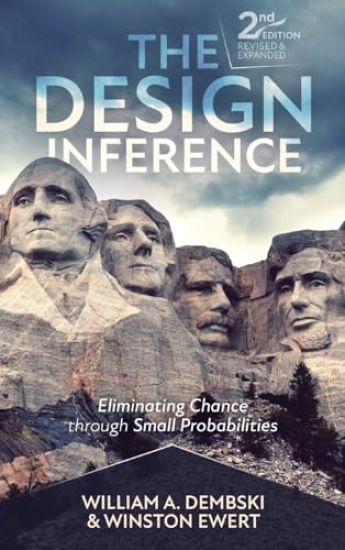
A landmark of the intelligent design movement, The Design Inference revolutionized our understanding of how we detect intelligent causation. Originally published twenty-five years ago, it has now been revised and expanded into a second edition that greatly sharpens its exploration of design inferences. This new edition tackles questions about design left unanswered by David Hume and Charles Darwin, navigating the intricate nexus of chance, probability, and design, and thereby offering a novel lens for understanding the world. Using modern concepts of probability and information, it exposes the inadequacy of undirected causes in scientific inquiry. It lays out how we infer design via events that are both improbable and specified. Amid controversial applications to biology, it makes a compelling case for intelligent design, challenging the prevalent neo-Darwinian evolutionary narrative. Dembski and Ewert have written a groundbreaking work that doesn't merely comment on contemporary scientific discourse but fundamentally transforms it.
The Design Inference

The Design Inference

William A Dembski; Winston Ewert

Discovery Institute
2023
pokkari
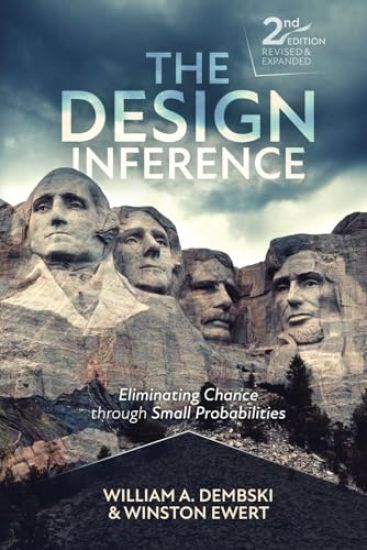
A landmark of the intelligent design movement, The Design Inference revolutionized our understanding of how we detect intelligent causation. Originally published twenty-five years ago, it has now been revised and expanded into a second edition that greatly sharpens its exploration of design inferences. This new edition tackles questions about design left unanswered by David Hume and Charles Darwin, navigating the intricate nexus of chance, probability, and design, and thereby offering a novel lens for understanding the world. Using modern concepts of probability and information, it exposes the inadequacy of undirected causes in scientific inquiry. It lays out how we infer design via events that are both improbable and specified. Amid controversial applications to biology, it makes a compelling case for intelligent design, challenging the prevalent neo-Darwinian evolutionary narrative. Dembski and Ewert have written a groundbreaking work that doesn't merely comment on contemporary scientific discourse but fundamentally transforms it.
The Comprehensive Guide to Science and Faith

The Comprehensive Guide to Science and Faith

William A. Dembski; Casey Luskin; Joseph M. Holden; Stephen C. Meyer

Harvest House Publishers,U.S.
2021
pokkari
Science and Faith Can—and Do—Support Each Other Science and Christianity are often presented as opposites, when in fact the order of the universe and the complexity of life powerfully testify to intelligent design. With this comprehensive resource that includes the latest research, you’ll witness how the findings of scientists provide compelling reasons to acknowledge the mind and presence of a creator. Featuring more than 45 entries by top-caliber experts, you’ll better understand… how scientific concepts like intelligent design are supported by evidencethe scientific findings that support the history and accounts found in the Biblethe biases that lead to scientific information being presented as a challenge—rather than a complement—to Christianity Whether you’re looking for answers to your own questions or seeking to explain the case for intelligent design to others, The Comprehensive Guide to Science and Faith is an invaluable apologetic tool that will help you explore and analyze the relevant facts, research, and theories in light of biblical truth.
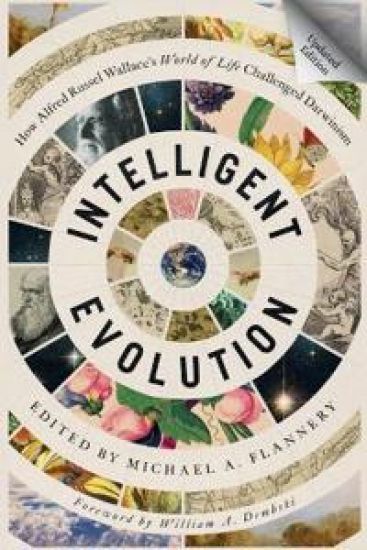
Intelligent Evolution

Intelligent Evolution

Michael A Flannery; Alfred Russel Wallace; William A Dembski

Erasmus Press
2020
pokkari
Alfred Russel Wallace (1823-1913), co-discoverer of natural selection, was second only to Charles Darwin as the 19th century's most noted English naturalist. Yet his belief in spiritualism caused him to be ridiculed and dismissed by many, leaving him a comparatively obscure and misunderstood figure. In this volume Wallace is finally allowed to speak in his own defense through his grand evolutionary synthesis The World of Life published over a century ago in 1910. More than just a reprinting of a near-forgotten work, Michael A. Flannery places Wallace in historical context and includes the very latest historiography relating to both Darwin and Wallace in his detailed introduction. Flannery exposes Charles Darwin's now-famous theory of evolution as little more than a naturalistic cover for an extreme philosophical materialism borrowed as a youth from Edinburgh radicals. This is juxtaposed by his sympathetic account of what he calls Wallace's intelligent evolution, a thoroughly teleological alternative to Darwin's stochastic processes. Though based upon very different formulations of natural selection, the Wallace/Darwin dispute as presented by Flannery shows a metaphysical clash of worldviews coextensive with modern evolutionary theory itself-design and purpose versus randomness and chance. This book is for anyone seeking to understand the historical and philosophical roots of a controversy that still rages today.This book contains an abridgment of Alfred Russel Wallace's The World of Life and Reverend John Magens Mello's essay, "The Mystery of Life and Mind."
The Patristic Understanding of Creation: An Anthology of Writings from the Church Fathers on Creation and Design

The Patristic Understanding of Creation: An Anthology of Writings from the Church Fathers on Creation and Design

William A. Dembski; Wayne J. Downs; Fr Justin B. a. Frederick

Erasmus Press
2019
nidottu
The Patristic Understanding of Creation encapsulates what the Church Fathers had to say, in their own words, on the topic of creation. Going back to Roman and Byzantine times, the writings of the Church Fathers are basic to Christian theology and provide a benchmark for how Christians have traditionally understood creation. This understanding of creation, however, faces tremendous challenges in our day, especially in discussions at the intersection of science and religion. Process theology and other efforts to reconceptualize creation have explicitly opposed key elements of the Christian doctrine of creation: creation ex nihilo, the transcendence and immanence of God in creation, "the absolute creatureliness and non-self-sufficiency of the world" (to use a phrase of Fr. Georges Florovsky), the goodness of creation, and the openness of the world to divine action. All of these the Church Fathers not only held but also ably defended. This anthology is therefore not merely of academic or historical interest. In reasserting a theologically sound understanding of creation, this anthology fills a need that is both practical and urgent.
Introduction To Evolutionary Informatics

Introduction To Evolutionary Informatics

Robert J Marks Ii; William A Dembski; Winston Ewert

World Scientific Publishing Co Pte Ltd
2017
sidottu
Science has made great strides in modeling space, time, mass and energy. Yet little attention has been paid to the precise representation of the information ubiquitous in nature.Introduction to Evolutionary Informatics fuses results from complexity modeling and information theory that allow both meaning and design difficulty in nature to be measured in bits. Built on the foundation of a series of peer-reviewed papers published by the authors, the book is written at a level easily understandable to readers with knowledge of rudimentary high school math. Those seeking a quick first read or those not interested in mathematical detail can skip marked sections in the monograph and still experience the impact of this new and exciting model of nature's information.This book is written for enthusiasts in science, engineering and mathematics interested in understanding the essential role of information in closely examined evolution theory.
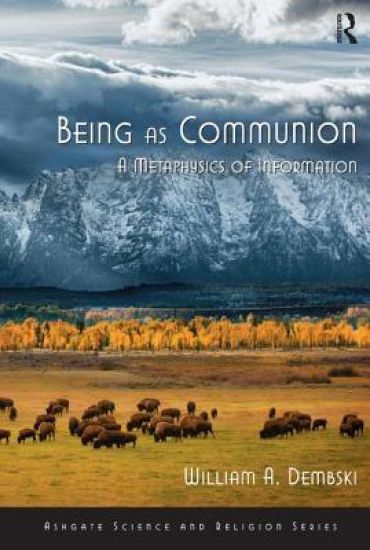
Being as Communion

Being as Communion

William A. Dembski

Ashgate Publishing Limited
2014
sidottu
For a thing to be real, it must be able to communicate with other things. If this is so, then the problem of being receives a straightforward resolution: to be is to be in communion. So the fundamental science, indeed the science that needs to underwrite all other sciences, is a theory of communication. Within such a theory of communication the proper object of study becomes not isolated particles but the information that passes between entities. In Being as Communion philosopher and mathematician William Dembski provides a non-technical overview of his work on information. Dembski attempts to make good on the promise of John Wheeler, Paul Davies, and others that information is poised to replace matter as the primary stuff of reality. With profound implications for theology and metaphysics, Being as Communion develops a relational ontology that is at once congenial to science and open to teleology in nature. All those interested in the intersections of theology, philosophy and science should read this book.
Being as Communion

Being as Communion

William A. Dembski

Ashgate Publishing Limited
2014
nidottu
For a thing to be real, it must be able to communicate with other things. If this is so, then the problem of being receives a straightforward resolution: to be is to be in communion. So the fundamental science, indeed the science that needs to underwrite all other sciences, is a theory of communication. Within such a theory of communication the proper object of study becomes not isolated particles but the information that passes between entities. In Being as Communion philosopher and mathematician William Dembski provides a non-technical overview of his work on information. Dembski attempts to make good on the promise of John Wheeler, Paul Davies, and others that information is poised to replace matter as the primary stuff of reality. With profound implications for theology and metaphysics, Being as Communion develops a relational ontology that is at once congenial to science and open to teleology in nature. All those interested in the intersections of theology, philosophy and science should read this book.
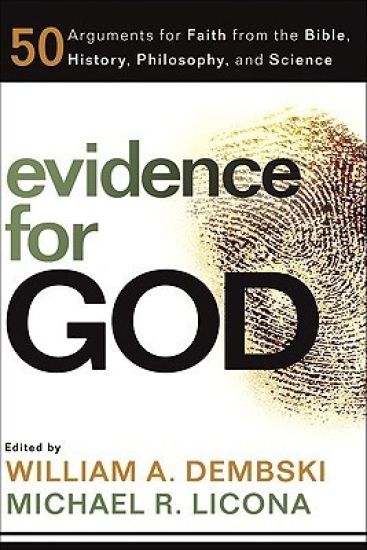
Evidence for God – 50 Arguments for Faith from the Bible, History, Philosophy, and Science

Evidence for God – 50 Arguments for Faith from the Bible, History, Philosophy, and Science

William A. Dembski; Michael R. Licona

Baker Academic, Div of Baker Publishing Group
2010
nidottu
There have always been challenges to belief in God as he is revealed in the Bible and each new year seems to add more questions to the doubter's arsenal. In Evidence for God, leading apologists provide compelling arguments that address the most pressing questions of the day about God, science, Jesus, the Bible, and more, including Is Intelligent Design really a credible explanation of the origins of our world? Did Jesus really exist? Is Jesus really the only way to God? What about those who have never heard the gospel? Is the Bible today what was originally written? What about recently publicized gospels that aren't in the Bible? and much more
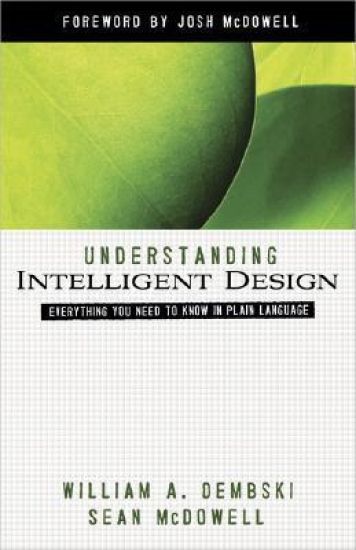
Understanding Intelligent Design

Understanding Intelligent Design

William A. Dembski; Sean McDowell; Josh McDowell

Harvest House Publishers,U.S.
2008
pokkari
This compact guide lays out the basics of Intelligent Design, popularly known as ID. William Dembski, the dean of the intelligent-design movement, and Sean McDowell especially target readers whose understanding may have been confused by educational bias and one-sided arguments and attacks. Commonsense and no-nonsense, with pointed examples, the authors explain the central theories of ID, showing why the presence of information and meaningful complexity require the involvement of intelligence why ID adheres to the scientific method and is a valid field of scientific inquiry why scientific evidence increasingly conflicts with evolutionary theories how both evolutionary theory and ID have religious/philosophical underpinnings, and why this causes so much controversy how both systems of thought have radical implications for our culture—and what readers can do about it Clarifying crucial issues, this key resource gives nonspecialists a solid grasp of one of today's foundational religious-scientific-cultural concepts.
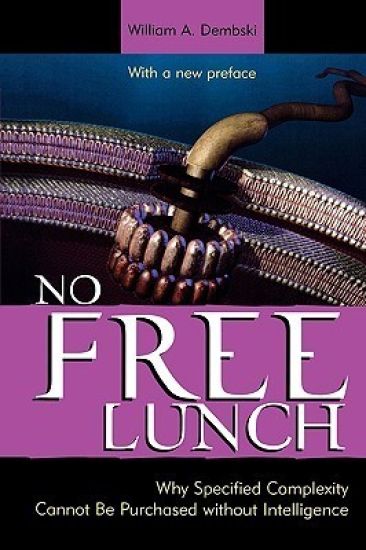
No Free Lunch

No Free Lunch

William A. Dembski

Rowman Littlefield Publishers
2007
nidottu
Darwin's greatest accomplishment was to show how life might be explained as the result of natural selection. But does Darwin's theory mean that life was unintended? William A. Dembski argues that it does not. In this book Dembski extends his theory of intelligent design. Building on his earlier work in The Design Inference (Cambridge, 1998), he defends that life must be the product of intelligent design. Critics of Dembski's work have argued that evolutionary algorithms show that life can be explained apart from intelligence. But by employing powerful recent results from the No Free Lunch Theory, Dembski addresses and decisively refutes such claims. As the leading proponent of intelligent design, Dembski reveals a designer capable of originating the complexity and specificity found throughout the cosmos. Scientists and theologians alike will find this book of interest as it brings the question of creation firmly into the realm of scientific debate.
The Design Inference

The Design Inference

William A. Dembski

Cambridge University Press
2006
pokkari
The design inference uncovers intelligent causes by isolating their key trademark: specified events of small probability. Just about anything that happens is highly improbable, but when a highly improbable event is also specified (i.e. conforms to an independently given pattern) undirected natural causes lose their explanatory power. Design inferences can be found in a range of scientific pursuits from forensic science to research into the origins of life to the search for extraterrestrial intelligence. This challenging and provocative 1998 book shows how incomplete undirected causes are for science and breathes new life into classical design arguments. It will be read with particular interest by philosophers of science and religion, other philosophers concerned with epistemology and logic, probability and complexity theorists, and statisticians.
The Design Revolution

The Design Revolution

William A Dembski

Inter-Varsity Press
2004
nidottu
As the Intelligent Design movement has gained momentum over recent years, questions have naturally arisen to challenge its provocative claims. With clarity and concision, William Dembski responds to the most vexing questions and objections raised by experts and non-experts.
What Darwin Didn't Know

What Darwin Didn't Know

Geoffrey Simmons; William A. Dembski

Harvest House Publishers,U.S.
2004
nidottu
Endorsed by William Dembski, Ph.D., the scientist at the forefront of the intelligent-design movement. Darwin might have thought twice about publishing his theories if he had had access to today's medical and microbiological discoveries. Drawing on years of research, Dr. Simmons demonstrates that the almost infinite complexity of the human anatomy simply could not have developed by chance. For example: the body runs on "battery power"...from the hundreds of mitochondria in each cell the two sexes-evolutionary theory cannot explain why they exist every cell is its own pharmacist, chemist, and metallurgist Accessible, clearly presented, and utterly fascinating, What Darwin Didn't Know shows the human body to be a marvelous system constructed by an infinitely wise Designer.
Intelligent Design – The Bridge Between Science Theology

Intelligent Design – The Bridge Between Science Theology

William A. Dembski; Michael Behe

Inter-Varsity Press,US
2002
nidottu
Voted a Book of the Year by Christianity Today The Intelligent Design movement is three things: a scientific research program for investigating intelligent causesan intellectual movement that challenges naturalistic evolutionary theoriesa way of understanding divine action Although the fast-growing movement has gained considerable grassroots support, many scientists and theologians remain skeptical about its merits. Scientists worry that it's bad science (merely creationism in disguise) and theologians worry that it's bad theology (misunderstanding divine action). In this book William Dembski addresses these concerns and brilliantly argues that intelligent design provides a crucial link between science and theology. Various chapters creatively and powerfully address intelligent discernment of divine action in nature, why the significane of miracles should be reconsidered, and the demise and unanswered questions of British natural theology. Effectively challenging the hegemony of naturalism and reinstating design within science, Dembski shows how intelligent design can be unpacked as a theory of information. Intelligent Design is a pivotal, synthesizing work from a thinker whom Phillip Johnson calls "one of the most important of the design theorists who are sparking a scientific revolution by legitimating the concept of intelligent design in science."