Kirjojen hintavertailu. Mukana 12 595 353 kirjaa ja 12 kauppaa.

Kirjailija

William A. Kerr

Kirjat ja teokset yhdessä paikassa: 15 kirjaa, julkaisuja vuosilta 1999-2023, suosituimpien joukossa North American Economic Integration. Vertaile teosten hintoja ja tarkista saatavuus suomalaisista kirjakaupoista.

15 kirjaa

Kirjojen julkaisuhaarukka 1999-2023.

North American Economic Integration

North American Economic Integration

Norris C. Clement; Gustavo del Castillo Vera; James Gerber; William A. Kerr; Alan J. MacFadyen; Stanford Shedd; Eduardo Zepeda; Diana Alarcón

Edward Elgar Publishing Ltd
2000
nidottu
This highly accessible book explains the theoretical, historical and political background of the North American Free Trade Agreement (NAFTA), its impact and the debates surrounding its existence. In addition the authors provide a brief introduction to the theory of economic integration as well as a succinct overview of the evolution of the global economy, and the institutions that manage it, in the post World War II period.Key issues examined include:how and why NAFTA emerged in the early 1990s and its performance since implementationthe economic development and commercial policy of each member country in the context of the rapidly changing global economyNAFTA's technical strengths and limitationsthe debates which still rage between its proponents and criticsThe team of US, Canadian and Mexican authors argue that while NAFTA has introduced novel social and environmental innovations in trade agreements, given Mexico's macroeconomic volatility, it provides a less than perfect approach for managing North America's rapidly expanding economic integration.North American Economic Integration can be used by a wide audience from students to professionals and academics from any discipline with an understanding of the basic principles of economics. Specifically, the book will be welcomed by students of international economics, political economy and international relations.
North American Economic Integration

North American Economic Integration

Norris C. Clement; Gustavo del Castillo Vera; James Gerber; William A. Kerr; Alan J. MacFadyen; Stanford Shedd; Eduardo Zepeda; Diana Alarcón

Edward Elgar Publishing Ltd
1999
sidottu
This highly accessible book explains the theoretical, historical and political background of the North American Free Trade Agreement (NAFTA), its impact and the debates surrounding its existence. In addition the authors provide a brief introduction to the theory of economic integration as well as a succinct overview of the evolution of the global economy, and the institutions that manage it, in the post World War II period.Key issues examined include:how and why NAFTA emerged in the early 1990s and its performance since implementationthe economic development and commercial policy of each member country in the context of the rapidly changing global economyNAFTA's technical strengths and limitationsthe debates which still rage between its proponents and criticsThe team of US, Canadian and Mexican authors argue that while NAFTA has introduced novel social and environmental innovations in trade agreements, given Mexico's macroeconomic volatility, it provides a less than perfect approach for managing North America's rapidly expanding economic integration.North American Economic Integration can be used by a wide audience from students to professionals and academics from any discipline with an understanding of the basic principles of economics. Specifically, the book will be welcomed by students of international economics, political economy and international relations.
Food Security

Food Security

William A. Kerr

EDWARD ELGAR PUBLISHING LTD
2023
sidottu
As the world population increases, food security is a major global issue. This book provides an in-depth examination of the three necessary conditions for the achievement of food security: (1) availability of food; (2) adequate incomes and (3) increasing agricultural productivity. The author draws lessons from history, explores these three conditions and discusses the prospect of feeding an expected nine billion people in 2050.The author discusses the major factors inhibiting food being available and explores how these constraints can be lifted. First, the book describes conditions necessary for food to be truly, consistently available. Second, adequate incomes and programs such as food stamps and foodbanks are explored. Third, the drivers of increasing agricultural productivity are examined.Agricultural economists and scientists, food policy practitioners in government and international organizations and food aid NGOs, and students of agriculture and public policy will find Food Security as thought-provoking as it is informative.
Biotechnology Regulation and Trade

Biotechnology Regulation and Trade

Stuart J. Smyth; William A. Kerr; Peter W. B Phillips

Springer International Publishing AG
2018
nidottu
This book discusses the regulatory and trade challenges facing the global adoption of biotechnological products and offers strategies for overcoming these obstacles and moving towards greater global food security. The first section of the book establishes the context of the conflict, discussing the challenges of global governance, international trade, and the history of regulation of genetically modified (GM) crops. In this section, the authors emphasize the shift from exclusively science-based regulation to the more socio-economically focused framework established by the Cartagena Protocol on Biosafety, which was adopted in 2000. The second section of the book provides a snapshot of the current state of international GM crop adoption and regulation, highlighting the US, Canada, and the EU. The final section of the book identifies options for breaking the gridlock of regulation and trade that presently exist. This book adds to the current literature by providing new information about innovative agricultural technologies and encouraging debate by providing an alternative to the narratives espoused by environmental non-governmental organizations. This book will appeal to students of economics, political science, and policy analysis, as well as members of regulatory agencies and agricultural industry firms.
Declining International Cooperation on Pesticide Regulation

Declining International Cooperation on Pesticide Regulation

May T. Yeung; William A. Kerr; Blair Coomber; Matthew Lantz; Alyse McConnell

Springer International Publishing AG
2017
sidottu
This Palgrave Pivot investigates barriers to international agricultural trade caused by a lack of standardized maximum residue levels (MRL) for pesticides. Given the preponderance of pesticide use in food production and the increasing disruptions to trade, a better understanding of the reasons for the decline in international cooperation, the trade impacts, and potential solutions is critical. This volume will contribute to that understanding. Through an analysis of the economics of MRL regulatory harmonization, select case studies, and a look at incentives and disincentives for government agencies and regulators, the authors move the conversation beyond the theoretical, and into current practices and advice for creating workable solutions. This Pivot is a valuable resource for those concerned with food security, trade policy, agricultural production and export supply chains, as well as those interested in broader issues related to science policy and societal trends.
Biotechnology Regulation and Trade

Biotechnology Regulation and Trade

Stuart J. Smyth; William A. Kerr; Peter W. B Phillips

Springer International Publishing AG
2017
sidottu
This book discusses the regulatory and trade challenges facing the global adoption of biotechnological products and offers strategies for overcoming these obstacles and moving towards greater global food security. The first section of the book establishes the context of the conflict, discussing the challenges of global governance, international trade, and the history of regulation of genetically modified (GM) crops. In this section, the authors emphasize the shift from exclusively science-based regulation to the more socio-economically focused framework established by the Cartagena Protocol on Biosafety, which was adopted in 2000. The second section of the book provides a snapshot of the current state of international GM crop adoption and regulation, highlighting the US, Canada, and the EU. The final section of the book identifies options for breaking the gridlock of regulation and trade that presently exist. This book adds to the current literature by providing new information about innovative agricultural technologies and encouraging debate by providing an alternative to the narratives espoused by environmental non-governmental organizations. This book will appeal to students of economics, political science, and policy analysis, as well as members of regulatory agencies and agricultural industry firms.
Conflict, Chaos and Confusion

Conflict, Chaos and Confusion

William A. Kerr

Edward Elgar Publishing Ltd
2010
sidottu
After 15 years the WTO is not functioning as envisioned and is faced with many new trade challenges - climate change, terrorism, pandemics, genetically modified organisms, food safety - which it is ill-equipped to handle. Conflict, Chaos and Confusion sheds light on this deep and acute crisis, focusing on contentious and complex new trade issues and how they will affect international trade in the future. William Kerr demonstrates that there is no obvious way forward out of the current antagonistic climate. In the absence of any constructive initiatives the system appears chaotic. Everyone from seasoned trade policy veterans, business people engaging in international transactions, to domestic politicians and voters seem confused and apprehensive given the complexity of the problems brought by globalization. In just over a decade, the WTO has gone from an institution that was imbued with considerable optimism to one in deep crisis. The author explores in detail the major issues confronting the international trading system that have hitherto not enjoyed a great deal of attention. He provides insights that will inform the debate and discounts some of the simplistic solutions that are all too often proffered.Informative, accessible and thought provoking, this book combines economic analysis with law, political science and institutional development within an historical context. As such, it will prove a fascinating read for a wide ranging audience encompassing academics and students of economics, international economics and international law, trade officials in both governments and NGOs, as well as trade policymakers in developing and developed countries.
Bilateral Trade Agreements in the Era of Globalization

Bilateral Trade Agreements in the Era of Globalization

Sangeeta Khorana; Nicholas Perdikis; May T. Yeung; William A. Kerr

Edward Elgar Publishing Ltd
2010
sidottu
This unique book provides an assessment of an Indian-EU agreement, drawing on the theory of preferential agreements, the history of India-European relations and the recent refocusing of the Indian economy. The authors explore both a broad overview of the agreement as well as a detailed examination of sensitive sectors. A preferential trade agreement between India and the EU fires the imagination. It encompasses one fifth of humanity, connecting a large developed single market together with a major developing economy, together representing sufficient scope and diversity to capture almost all the gains expected from globalization. After a broad discussion of the agreement, the book focuses on two sensitive sectors - clothing and footwear, including the results of a stakeholder survey regarding non-tariff barriers in these industries. The book concludes that realizing the potential benefits of an India-EU agreement will depend on a clear understanding of the existing barriers to trade, careful negotiations and the willingness to implement what has been agreed. Business executives in both Europe and India as well as officials in the Indian government and EU Commission will find this innovative book a fascinating read.
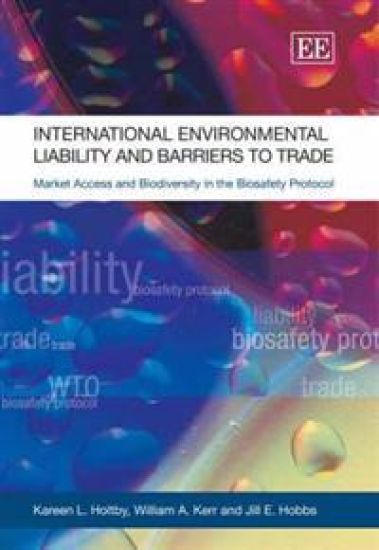
International Environmental Liability and Barriers to Trade

International Environmental Liability and Barriers to Trade

Kareen L. Holtby; William A. Kerr; Jill E. Hobbs

Edward Elgar Publishing Ltd
2007
sidottu
Trade and the environment has become a major issue in international relations, yet the surrounding debate remains polarised and hostile. This book answers the question: Can an international liability regime facilitate international trade while fostering environmental sustainability?On the one hand, the authors argue, international trade is perceived as a major threat to environmental sustainability, whilst on the other, trade and the economic development arising from it is seen as the prerequisite to stronger environmental protection. Nowhere is the debate more acrimonious than over trade in genetically modified organisms. The Biosafety Protocol has been negotiated to govern trade in genetically modified products and includes provisions for an international liability regime to facilitate trade - a subject that has been little studied. This valuable study explores the role, design and potential effectiveness of such a regulating body and addresses questions such as - what are the options for an international environmental liability regime? Why are some options unworkable? Is there a set of options that will achieve the dual goals of trade facilitation and environmental protection? Is international liability the best option for defusing the trade and environment debate?This illuminating book will be an essential read for scholars and students (senior undergraduate as well as postgraduate) of international trade policy, environmental economics, international politics and international law. Individuals working in international organizations, those employed by environmental NGOs and government policy makers will also find much to engage them within this book.
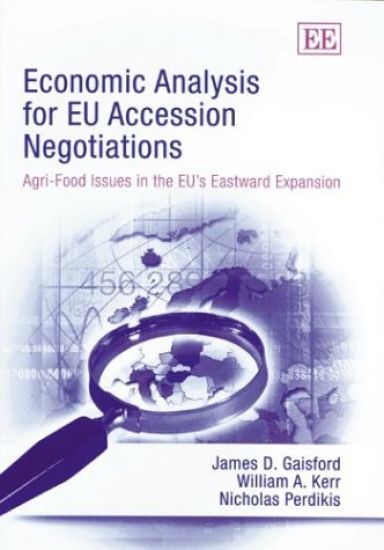
Economic Analysis for EU Accession Negotiations

Economic Analysis for EU Accession Negotiations

James D. Gaisford; William A. Kerr; Nicholas Perdikis

Edward Elgar Publishing Ltd
2003
sidottu
The expanding membership of the EU means significant changes for accession countries' international trade relations, affecting imports, exports, tax revenues, government expenditures and domestic regulatory regimes. There are also significant ramifications for the EU budget. This book is a valuable comprehensive tool kit for analysing the economic effect of EU accession, using examples from the most complex sector for both candidate countries and the EU itself - agriculture. The authors provide a complete set of market configurations with which to analyse harmonisation with the Common Agriculture Policy in both the long and short run. It also provides insights into the questions of regulatory harmonisation in areas of food safety, animal and plant health, the environment, animal welfare, technical standards and the protection of intellectual property. Background is provided on the EU and its policies, economic developments in transition economies and the accession process. The book also provides a unique insight into how negotiating positions can be developed.A wide audience will find this book of great value and interest including policymakers and analysts in governments and related think tanks, businesses and consultancy firms trading in the EU. Scholars and researchers of European studies, international trade and agriculture will also find the book invaluable.
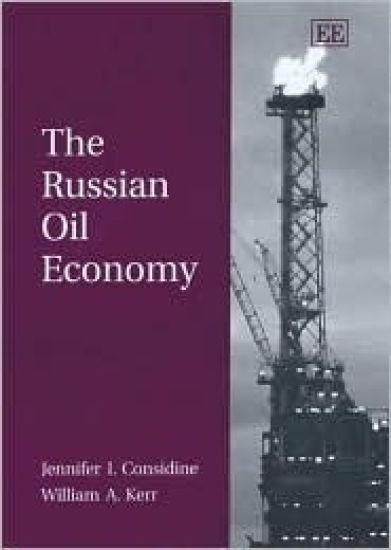
The Russian Oil Economy

The Russian Oil Economy

Jennifer I. Considine; William A. Kerr

Edward Elgar Publishing Ltd
2002
sidottu
In this unique work, Jennifer Considine and William Kerr contend that while OPEC currently dominates the international oil market, Russia will be a key player in the future international energy market. Indeed, Russia's petroleum resources rival those of Saudi Arabia.More than almost any other industry, future performance is often determined by the influence of decisions made in the past. This book provides a detailed history of the development of the Russian oil economy in order to build up a comprehensive and discerning picture of its future role and significance in the global energy market of the 21st century.The authors of this path-breaking treatment of the Russian oil economy present:an assessment of the effects of the political and macroeconomic development of the Russian Federation and former Soviet Union on the resources, reserves and infrastructure of the current oil industryan economic evaluation of the contemporary policies and institutions in the Russian Federation, including policy recommendations and forecastsdetailed statistics on all aspects of the Russian oil industry, including reserves, production, five-year planning targets, government policy, and tax rates, from 1860-2001.The Russian Oil Economy will be of enormous interest to a wide-ranging audience, encompassing oil industry executives and analysts, investment bankers, energy consultants, energy policymakers, and those involved in the study, teaching and research of energy, Russian history and transition.
The Economics of Biotechnology

The Economics of Biotechnology

James D. Gaisford; Jill E. Hobbs; William A. Kerr; Nicholas Perdikis; Marni D. Plunkett

Edward Elgar Publishing Ltd
2001
sidottu
The Economics of Biotechnology is a highly accessible book dealing with some of the most crucial issues to arise in this area. Special attention is paid to consumer, ethical and environmental concerns as well as questions relating to trade policy, intellectual property, who will receive the benefits, international development and the role of international institutions such as the WTO.The authors examine concerns arising from the application of biotechnology in the agri-food industrial complex, and many of the issues discussed also have implications for the medical and pharmaceutical aspects of biotechnology.Fundamental questions regarding the application of standard economic analysis to biotechnology are resolved using traditional neo-classical analyses as well as less mainstream methods. Through exploring a number of approaches, original and unexpected conclusions are reached.This coherent and relevant treatment of the myriad facets of biotechnology will be welcomed by academics, scholars, and economists with a specific interest in international economics or technology, international policymakers, and economic commentators.
Economic Analysis for International Trade Negotiations

Economic Analysis for International Trade Negotiations

James D. Gaisford; William A. Kerr

Edward Elgar Publishing Ltd
2001
sidottu
Trade negotiations are complex interactive processes that bring a combination of existing trade law, the pleadings of special interests and economic theory together in the give and take of compromise, bluff and strategic alliances.Trade disputes involving food and other agricultural products - controversial subjects such as genetically modified foods and Creutzfeldt-Jakob disease - are the subject of newspaper headlines almost daily. As developing countries demand improved access to European and US markets for their products, international trade has moved into a new era and is now at the heart of trade negotiations.Economic Analysis for International Trade Negotiations provides an analytical framework in which to examine the complex economic issues which arise in international trade negotiations. This framework is developed using examples arising from current contentious issues in the international trade in agricultural products including market access, subsidies, non-tariff barriers, health regulations and biotechnology. The volume concludes with a discussion on the future of trade.Providing a link between economic theory and the WTO, this comprehensive volume will be of great interest to academics specialising in international trade, international relations, agri-business and international business.
Regional Trading Blocs in the Global Economy

Regional Trading Blocs in the Global Economy

May T. Yeung; Nicholas Perdikis; William A. Kerr

Edward Elgar Publishing Ltd
1999
sidottu
The Asia-Pacific Rim is still potentially one of the most dynamic areas of the global economy, and the European Union (EU) is the world's most prosperous market. The development of relations between the EU and Association of South East Asian Nations (ASEAN) is vitally important for the future economic evolution of both regions. This book traces the relationship between the EU and ASEAN, considering the current and future position of trade relations.After discussing international commerce and trade at the beginning of the twenty-first century, the authors explore regionalism in the global economy and the establishment of regional trade organizations, in particular the EU and ASEAN. They then contrast the direct organization-to-organization approach which has characterized EU-ASEAN relations with that of APEC (Asia Pacific Economic Cooperation). The book concludes with a substantial discussion of the institutional and policy changes that the EU and ASEAN need to enhance their future trading relationship. In addition, the authors offer insights from the EU-ASEAN experience for relations among other regional trade organizations.Regional Trading Blocs in the Global Economy will be welcomed by scholars and students interested in international trade, regional economics, European and Asian studies.