Kirjojen hintavertailu. Mukana 12 390 323 kirjaa ja 12 kauppaa.

Kirjailija

William B. Dillingham

Kirjat ja teokset yhdessä paikassa: 5 kirjaa, julkaisuja vuosilta 1986-2020, suosituimpien joukossa Artistic Duplicity. Vertaile teosten hintoja ja tarkista saatavuus suomalaisista kirjakaupoista.

5 kirjaa

Kirjojen julkaisuhaarukka 1986-2020.

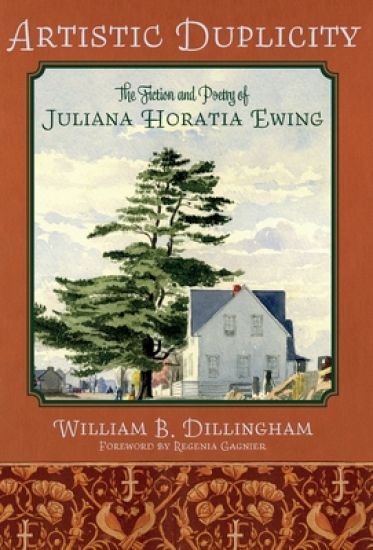
Artistic Duplicity

Artistic Duplicity

William B. Dillingham; Regenia Gagnier

Sacristy Press
2020
sidottu
Artistic Duplicity challenges the traditional status of Juliana Ewing in literary history as an author solely of children's writings. This book presents Ewing as a sophisticated conscious artist whose work deserves to be considered seriously by adult readers who value skill and profundity. Although she writes in a style often accessible to children of somewhat advanced reading ability, she possessed the extraordinary gift of addressing at the same time a more mature audience, conveying thereby not a simple moral but complex and striking ideas. Each chapter is divided into two sections, the first part a commentary on a particular work in the context of her life and writing career with special attention to her abilities that mark her as a sophisticated craftswoman of fiction and poetry and the second part the text of that work. The commentary for the final chapter covers five poems followed by the texts of those poems. The book is, then, an unusual combination of a scholarly study of a literary figure and a collection of ten writings by that author. As a scholarly book, it is based on original research and makes a notable contribution to the study of Ewing not merely as an author of children's literature but as a writer of mature, complex, skillful, and often profound works.
Melville and His Circle

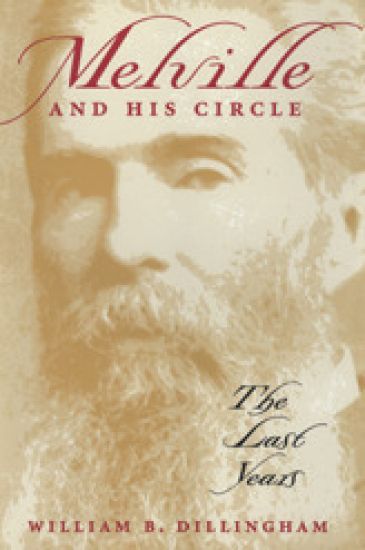
Melville and His Circle

William B. Dillingham

University of Georgia Press
2008
pokkari
Herman Melville is a towering figure in American literature—arguably the country's greatest nineteenth-century writer. Revising a number of entrenched misunderstandings about Melville in his later years, this is a remarkable and unprecedented account of the aged author giving himself over to a life of the mind. Focusing exclusively on a period usually associated with the waning of Melville's literary powers, William B. Dillingham shows that he was actually concentrating and intensifying his thoughts on art and creativity to a greater degree than ever before.Biographers have written little about Melville's deceptively "quiet" years after the publication of the long poem Clarel in 1876 and before his death in 1891. It was a time when he saw few friends or acquaintances, answered most of his letters as briefly as possible, and declined most social invitations. But for Melville, as for Emily Dickinson, such outward appearances belied an intense, engaged inner life. If for no other reason, Dillingham reminds us, this period merits more discerning attention because it was then that Melville produced Billy Budd as well as an impressive number of new and revised poems—while working full-time as a customs inspector for more than half of those years.What sustained Melville during that final period of ill health and near-poverty, says Dillingham, was his "circle," not of close friends but of works by a number of writers that he read with appreciative, yet discriminating, affinity, including Matthew Arnold, James Thomson, Arthur Schopenhauer, and Honore de Balzac. Dillingham relates these readings to Melville's own poetry and prose and to a rich variety of largely underappreciated topics relevant to Melville's later life, from Buddhism, the School of Pessimism, and New York intellectual life to Melville's job at the ever-corrupt customs house, his fear of disgrace and increased self-absorption, and his engagement with both the picturesque and the metaphorical power of roses in art and literature.This portrait of the great writer's final years is at once a biography, an intellectual history, and a discerning reading of his mature work. By showing that Melville's isolation was a conscious intellectual decision rather than a psychological quirk, Melville and His Circle reveals much that is new and challenging about Melville himself and about our notions of age and the persistence of imagination and creativity.
Melville's Short Fiction, 1853–1856

Melville's Short Fiction, 1853–1856

William B. Dillingham

University of Georgia Press
2008
pokkari
This study treats comprehensively the sixteen short works of fiction that Herman Melville wrote between 1853 and 1856, most of which were published in Harper's and Putnam's magazines. Concentrating on the writer's two basic motivations for writing as he did in these stories, Dillingham argues that Melville created a surface of almost inane congeniality in many of the works, an illusion of vapidity that camouflages a profundity often missed by his readers. He sought to to hide disturbing themes because the magazines for which he was writing would almost certainly have rejected his attempts to be more direct.Dillingham's method is not, however, confined to a reading of the texts. Melville's stories contain so many allusions to the contemporary scene that they constitute in themselves a cultural study. An important contribution of Melville's Short Fiction is its discussion of these allusions. Finally, Dillingham examines the relationship between the short fiction and Melville's own life. Much of the writer's frustration and struggle is concealed in these early works. Melville's friendship with Hawthorne, for example, an intense and yet in some ways disappointing relationship for both men, is explored as an important influence on several of the stories.
An Artist in the Rigging

An Artist in the Rigging

William B. Dillingham

University of Georgia Press
2008
pokkari
An Artist in the Rigging is a study of Herman Melville's early novels--Typee, Omoo, Mardi, Redburn, and White-Jacket. The author considers these fictions from the standpoint of thematic relationship rather than of chronological development. He shows that while the five hero-narrators are separate and distinct entities, they have much in common and can be seen as representing different facets of an emergent composite hero-from the sensitive and restless young man who leaves home to search hungrily for experience, to the wanderer immersed in a deep probing of himself and his world. The hero's thirst for psychological independence--what comes to be his overriding ambition--is never satisfied, and destruction becomes inevitable, culminating in a paradoxical "apotheosis" in which the narrator-hero achieves this independence, but only at the expense of his humanity.Dillingham persuasively demonstrates the interrelated qualities of these five novels, and in so doing he shows that the young Melville was a far greater literary artist than he gave himself credit for being. This fiction constitutes a powerful achievement in richness of texture, range of effect, and depth of characterization, as An Artist in the Rigging makes clear.
Melville's Later Novels

Melville's Later Novels

William B. Dillingham

University of Georgia Press
1986
sidottu
Herman Melville wrote out of a strong creative impulse closely tied to an even more imperative will to survive, to resist the ravages of despair and the urge toward self-annihilation that grew out of an all-too-clear vision of the world he saw around him. In his novels Melville wrote of this struggle to survive in a harsh, unyielding world, creating characters such as Ahab and Pierre, who thrash about blindly because of self-ignorance, and characters such as Ishmael and the confidence man, who seek instead the calm and the power that lie at the center of man's being. The final work in his critical trilogy on Melville's fiction, William Dillingham's study of the later novels delves into the writer's deepest and most vital concerns to trace the search for self-knowledge that guided the creation of Moby-Dick, Pierre, Israel Potter, The Confidence-Man, and Billy Budd, Sailor. Dillingham shows how Melville used the novels as a workshop for his own salvation by investing his characters with the ideas and philosophies that he found compelling or attractive.In Ahab, Melville located the Gnostic vision of life—a vision of alienation and isolation—that he felt powerfully drawn to yet knew would lead to his own destruction, while in Ishmael he created a character who pursues an alchemic quest for the purity to be found at the core of all men, of all nature. The blinding egotism that fueled Ahab's pursuit of his own destruction would in different ways afflict Pierre, Israel Potter, Claggart, and Vere, while Ishmael's determination not to separate himself from life and his search for self-understanding would be reflected in the transformations of the confidence man and in the luminescent purity of Billy Budd.Linking Melville's enigmatic narratives with the artist's own epic of self-exploration, Melville's Later Novels presents a rounded, deeply original portrait of a life sustained by art.