Kirjojen hintavertailu. Mukana 12 565 666 kirjaa ja 12 kauppaa.

Kirjailija

William B. Rouse

Kirjat ja teokset yhdessä paikassa: 33 kirjaa, julkaisuja vuosilta 1991-2026, suosituimpien joukossa Resilient Systems. Vertaile teosten hintoja ja tarkista saatavuus suomalaisista kirjakaupoista.

Mukana myös kirjoitusasut: William B Rouse

33 kirjaa

Kirjojen julkaisuhaarukka 1991-2026.

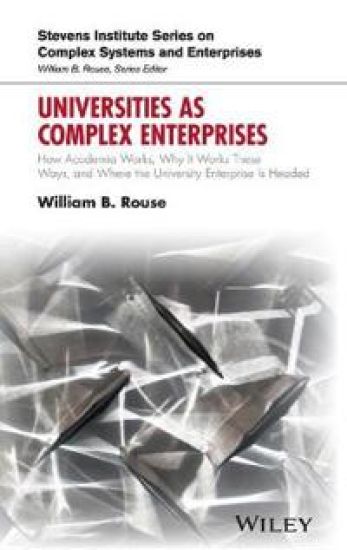
Universities as Complex Enterprises

Universities as Complex Enterprises

William B. Rouse

Wiley-Blackwell
2016
sidottu
Explores the nature of academic enterprises, including why they work the way they do and where such enterprises are headed, with the goal of gaining insights into where change can and will happen This book looks at universities from a whole-enterprise perspective. It explores the steady escalation of the costs of higher education and uses a computational economic model of complex academic enterprises. This model includes component models of research, teaching, administration, and brand value. Understanding the relationships among practices, processes, structure, and ecosystem provides the basis for transforming academia, leveraging its strengths and overcoming its limitations. More specifically, this architecture helps the reader understand how various elements of the enterprise system either enable or hinder other elements of the system, all of which are embedded in a complex behavioral and social ecosystem. Each topic is explored in terms of the levels of the architecture at which it primarily functions. Levers of change within each area are discussed, using many experiences of pursuing such issues in a range of academic enterprises. • Provides a new methodology by taking a more systems-oriented approach to education systems as a whole • Shows how various elements of the enterprise system either enable or hinder other elements of the system • Offers alternative strategies for transformation of academic enterprises Universities as Complex Enterprises: How Academia Works, Why It Works These Ways, and Where the University Enterprise Is Headed is a reference for systems scientists and engineers, economists, social scientists, and decision makers. William B. Rouse is the Alexander Crombie Humphreys Chair within the School of Systems & Enterprises and Director of the Center for Complex Systems and Enterprises at Stevens Institute of Technology, Hoboken, New Jersey. He is also Professor Emeritus, and former Chair, of the School of Industrial and Systems Engineering at the Georgia Institute of Technology, Atlanta, Georgia. Rouse has written hundreds of articles and book chapters, and has authored many books, including most recently Modeling and Visualization of Complex Systems and Enterprises (Wiley, 2015).
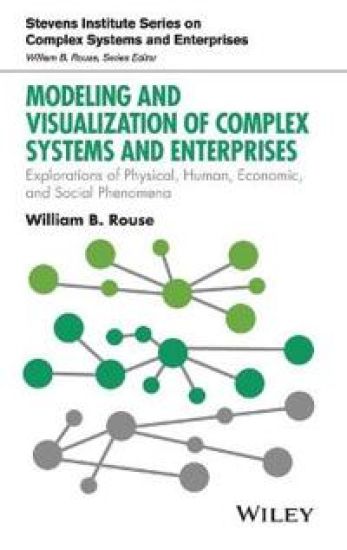
Modeling and Visualization of Complex Systems and Enterprises
Explains multi-level models of enterprise systems and covers modeling methodology This book addresses the essential phenomena underlying the overall behaviors of complex systems and enterprises. Understanding these phenomena can enable improving these systems. These phenomena range from physical, behavioral, and organizational, to economic and social, all of which involve significant human components. Specific phenomena of interest and how they are represented depend on the questions of interest and the relevant domains or contexts. Modeling and Visualization of Complex Systems and Enterprises examines visualization of phenomena and how understanding the relationships among phenomena can provide the basis for understanding where deeper exploration is warranted. The author also reviews mathematical and computational models, defined very broadly across disciplines, which can enable deeper understanding. Presents a 10 step methodology for addressing questions associated with the design or operation of complex systems and enterprisesExamines six archetypal enterprise problems including two from healthcare, two from urban systems, and one each from financial systems and defense systemsProvides an introduction to the nature of complex systems, historical perspectives on complexity and complex adaptive systems, and the evolution of systems practice Modeling and Visualization of Complex Systems and Enterprises is written for graduate students studying systems science and engineering and professionals involved in systems science and engineering, those involved in complex systems such as healthcare delivery, urban systems, sustainable energy, financial systems, and national security.
Human Detection and Diagnosis of System Failures

Human Detection and Diagnosis of System Failures

Jens Rasmussen; William B. Rouse

Springer-Verlag New York Inc.
2012
nidottu
This book includes all of the papers presented at the NATO Symposium on Human Detection and Diagnosis of System Failures held at Roskilde, Denmark on August 4-8, 1980. The Symposium was sponsored by the Scientific Affairs Division of NATO and the Rise National Laboratory of Denmark. The goal of the Symposium was to continue the tradition initiated by the NATO Symposium on Monitoring Behavior and Supervisory Control held in Berchtesgaden, F .R. Germany in 1976 and the NATO Symposium on Theory and Measurement of Mental Workload held in Mati, Greece in 1977. To this end, a group of 85 psychologists and engineers coming from industry, government, and academia convened to discuss, and to generate a "state-of-the-art" consensus of the problems and solutions associated with the human IS ability to cope with the increasing scale of consequences of failures within complex technical systems. The Introduction of this volume reviews their findings. The Symposium was organized to include brief formal presentations of papers sent to participants about two months in advance of the meeting, and considerable discussion both during plenary sessions and within more specialized workshops. Summaries of the discussions and workshop reports appear in this volume.
Economic Systems Analysis and Assessment

Economic Systems Analysis and Assessment

Andrew P. Sage; William B. Rouse

John Wiley Sons Inc
2011
sidottu
An Authoritative Introduction to a Major Subject in Systems Engineering and Management This important volume fills the need for a textbook on the fundamentals of economic systems analysis and assessment, illustrating their vital role in systems engineering and systems management. Providing extensive coverage on key topics, it assumes no prior background in mathematics or economics in order to comprehend the material. The book is comprised of five major parts: Microeconomics: a concise overview that covers production and the theory of the firm; theory of the consumer; market equilibria and market imperfections; and normative or welfare economics, including imperfect competition effects and consumer and producer surplus Program Management Economics: discusses economic valuation of programs and projects, including investment rates of return; cost-benefit and cost-effectiveness analysis; earned value management; cost structures and estimation of program costs and schedules; strategic and tactical pricing issues; and capital investment and options Cost Estimation: reviews cost-estimation technologies involving precedented and unprecedented development, commercial-off-the-shelf (COTS) software, software reuse, application generators, and fourth-generation languages Strategic Investments in an Uncertain World: addresses alternative methods for valuation of firms including Stern Stewart's EVA, Holt's CFROI, and various competing methodologies Contemporary Perspectives: covers ongoing extensions to theory and practice that enable satisfactory treatment of the increasing returns to scale, network effects, and path-dependent issues generally associated with contemporary ultra-large-scale telecommunications and information networks Also discussed in this comprehensive text are normative or welfare economics and behavioral economics; COCOMO I and II and COSYSMO as examples of a cost model; and options-based valuation models and valuation of information technology intensive enterprises. Economic Systems Analysis and Assessment serves as an ideal textbook for senior undergraduate and first-year graduate courses in economic systems analysis and assessment, as well as a valuable reference for engineers and managers involved with information technology intensive systems, professional economists, cost analysts, investment evaluators, and systems engineers.
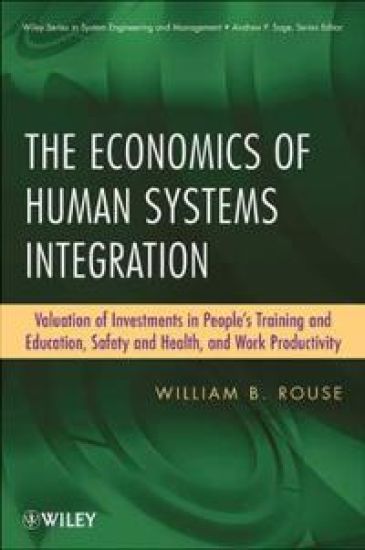
The Economics of Human Systems Integration

The Economics of Human Systems Integration

William B. Rouse

John Wiley Sons Inc
2010
sidottu
Fundamental Economic Principles, Methods, and Tools for Addressing Human Systems Integration Issues and Tradeoffs Human Systems Integration (HSI) is a new and fundamental integrating discipline designed to help move business and engineering cultures toward more human-centered systems. Integrating consideration of human abilities, limitations, and preferences into engineering systems yields important cost and performance benefits that otherwise would not have been accomplished. In order for this new discipline to be effective, however, a cultural change—starting with organizational leadership—is often necessary. The Economics of Human Systems Integration explains the difficulties underlying valuation of investments in people's training and education, safety and health, and work productivity. It provides an overview of how the field of economics addresses these difficulties, focusing on human issues associated with design, development, production, operations, maintenance, and sustainment of complex systems. The set of thought leaders recruited as contributors to this volume collectively provides a compelling set of data and principles for assessing the economic value of investing in people, not just in general but in specific investment situations. The early chapters provide the contexts for HSI and investment analysis, illustrating the enormous difference context makes in how issues are best framed and analyzed. A host of practical methods and tools for investment valuation are then presented. Provided are: A variety of real-world applications of economic analysis ranging from military acquisition and automotive investment to healthcare and high-tech investments in general, in both the U.S. and abroad A range of economics-based methods and tools for cost analysis, cost-benefit analysis, and investment analysis, as well as sources of data for performing such analyses Differing perspectives on economic decision-making, including a range of private sector points of view, as well as government and regulatory perspectives In addition, five real-world case studies illustrate how such valuations have been done and their major impacts on investment decisions. HSI professionals, systems engineers, and finance professionals who address investment analysis will appreciate the wide range of methods and real-life applications; senior undergraduates and masters-level graduate students will find this to be an excellent textbook that provides theory and supports practice.
Handbook of Systems Engineering and Management

Handbook of Systems Engineering and Management

Andrew P. Sage; William B. Rouse

John Wiley Sons Inc
2009
sidottu
The trusted handbook—now in a new edition This newly revised handbook presents a multifaceted view of systems engineering from process and systems management perspectives. It begins with a comprehensive introduction to the subject and provides a brief overview of the thirty-four chapters that follow. This introductory chapter is intended to serve as a "field guide" that indicates why, when, and how to use the material that follows in the handbook. Topical coverage includes: systems engineering life cycles and management; risk management; discovering system requirements; configuration management; cost management; total quality management; reliability, maintainability, and availability; concurrent engineering; standards in systems engineering; system architectures; systems design; systems integration; systematic measurements; human supervisory control; managing organizational and individual decision-making; systems reengineering; project planning; human systems integration; information technology and knowledge management; and more. The handbook is written and edited for systems engineers in industry and government, and to serve as a university reference handbook in systems engineering and management courses. By focusing on systems engineering processes and systems management, the editors have produced a long-lasting handbook that will make a difference in the design of systems of all types that are large in scale and/or scope.
People and Organizations

People and Organizations

William B. Rouse

John Wiley Sons Inc
2007
sidottu
This book is about people who operate, maintain, design, research, and manage complex systems, ranging from air traffic control systems, process control plants and manufacturing facilities to industrial enterprises, government agencies and universities. The focus is on the nature of the work these types of people perform, as well as the human abilities and limitations that usually enable and sometimes hinder their work. In particular, this book addresses how to best enhance abilities and overcome limitations, as well as foster acceptance of the means to these ends.
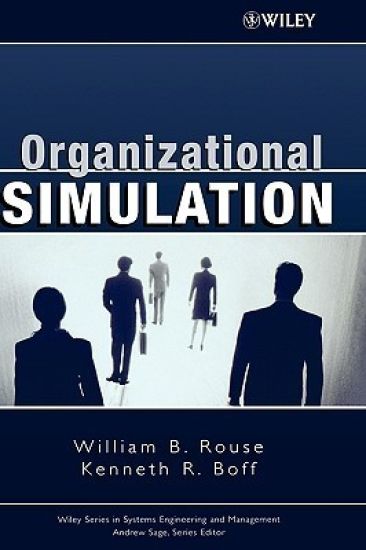
Organizational Simulation

Organizational Simulation

William B. Rouse; Kenneth R. Boff

John Wiley Sons Inc
2005
sidottu
From modeling and simulation to games and entertainment With contributions from leaders in systems and organizational modeling, behavioral and social sciences, computing and visualization, and gaming and entertainment, Organizational Simulation both articulates the grand vision of immersive environments and shows, in detail, how to realize it. This book offers unparalleled insight into the cutting edge of the field, since it was written by those who actually researched, designed, developed, deployed, marketed, sold, and critiqued today's best organizational simulations. The coverage is divided into four sections: * Introduction outlines the need for organizational simulation to support strategic thinking, design of unprecedented systems, and organizational learning, including the functionality and technology required to enable this support * Behaviors covers the state of knowledge of individual, group, and team behaviors and performance, how performance can best be supported, how performance is affected by national differences, and how organizational performance can best be measured * Modeling describes the latest approaches to modeling and simulating people, groups, teams, and organizations, as well as narrative contexts and organizational environments within which these entities act, drawing from a rich set of modeling methods and tools * Simulations and Games illustrates a wide range of fielded simulations, games, and entertainment, including the methods and tools employed for designing, developing, deploying, and evaluating these systems, as well as the social implications for the associated communities that have emerged Addressing all levels of organizational simulation architecture with theories and applications, and enabling technologies for each, Organizational Simulation offers students and professionals the premier reference and practical toolbox for this dynamic field.
Essential Challenges of Strategic Management

Essential Challenges of Strategic Management

William B. Rouse

John Wiley Sons Inc
2001
sidottu
Praise for Essential Challenges of Strategic Management "Bill Rouse provides helpful insight to make any business, and in particular any high- tech business, perform better."(Dennis A. Roberson, Senior Vice President & Chief Technology Officer Motorola) "A well-organized, easy-to-understand bible for all strategic managers and leaders."(Dr. Stanley G. Rosen, Director of Strategic Planning Boeing Satellite Systems) "A must-read for managers seeking clarity and focus as they lead organizations through chaotic times."(William C. Kessler, Vice President for Enterprise Productivity Lockheed Martin Aeronautics Company) From TQM to business process reengineering to knowledge management, the last several decades have witnessed the rise and fall of many a management panacea. As a consequence, a general feeling is now brewing among disillusioned managers worldwide that perhaps the time has come to abandon the impractical quest for an all-encompassing solution to management problems and get back to basics. Essential Challenges of Strategic Management takes a major step towards realizing that goal. Drawing upon the experiences of literally thousands of executives and senior managers working in all industry sectors, as well as government and nonprofit organizations, this book zeros in on the fundamental challenges faced by every senior manager, regardless of the business he or she is in, and describes a range of approaches to those challenges developed by women and men working at many of today’s leading organizations. Designed as a ready source of inspiration and ideas for busy executives and senior managers, Essential Challenges of Strategic Management consists of concise, independent chapters, each dedicated to a different strategic challenge. Throughout, celebrated entrepreneur, Fortune 500 consultant, author and educator, William Rouse uses fascinating and instructive case studies and vignettes to illustrate the best practices in strategic management and vividly describes various approaches, tools, and techniques. Additionally, he provides clear-cut guidelines for selecting and implementing the solutions most likely to succeed in a given situation.
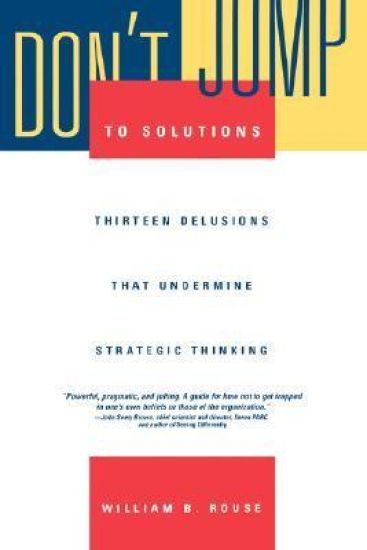
Don't Jump to Solutions

Don't Jump to Solutions

William B. Rouse

Jossey-Bass Inc.,U.S.
1998
sidottu
Strategic planning expert William Rouse cuts to the heart of the most common causes of failed business plans and strategies and shows how to overcome them. He encourages strategic thinkers and planners to spend much more time analyzing a situation instead of jumping to ready solutions. The tone is tongue-in-cheek, but the keen observations and sage advice Rouse offers aptly address a serious subject. It's a fast-track primer in critical thinking and evaluation planners and managers at every level can use to approach their work more effectively.
Catalysts for Change

Catalysts for Change

William B. Rouse

John Wiley Sons Inc
1993
sidottu
Of related interest Design for Success A Human-Centered Approach to Designing Successful Products and Systems William B. Rouse This groundbreaking book offers a comprehensive, methodological framework for the human-centered design of complex systems. This dynamic new approach to system design includes four phases — naturalist, marketing, engineering, and sales and service — which cover the entire product life cycle, including:*Evaluating users’ needs and preferences*Concept and market evaluation of alternative ways to satisfy these demands*Detailed design and engineering evaluation of products and systems*Fielding and ongoing in-use evaluationA wide variety of methods and tools is discussed within this methodological framework. Applications are illustrated with case studies of actual applications in a variety of industries. This book makes human-centered design very concrete and readily applicable to practical and realistically complex design problems. "How to" guidance is provided in the form of case histories and almost 100 figures and tables, as well as principles and guidelines for implementing the design "toolbox" outlined throughout the book. 1991 (0471-52483-2) 287 pp. Strategies for Innovation Creating Successful Products, Systems, and Organizations William B. Rouse Concentrating on technology-based businesses, Strategies for Innovation presents a comprehensive methodology for business planning and market development. The author demonstrates these principles with actual plans successfully implemented in his own innovative software company. In addition, he has included a wealth of real-life examples, case studies and vignettes, with which he explores marketing strategies, business techniques, and planning methodologies that have worked for companies ranging from technology-based Fortune 500 companies to small new venture start-ups. The book includes more than 100 figures and tables that provide easy access to critical information, and an extensive bibliography. This highly practical guide is an important resource for executives in technology-based businesses, as well as systems engineers and engineering managers. It is also an excellent text for MBA candidates and graduate students and teachers in areas related to the design and management of technology-based enterprises. 1992 (0-471-55904-0) 272 pp.
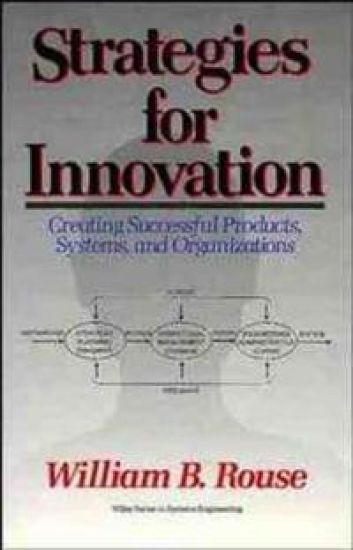
Strategies for Innovation

Strategies for Innovation

William B. Rouse

John Wiley Sons Inc
1992
sidottu
The principles of successful market-oriented and human-centered design are used to analyze the formation of a good business enterprise. Focusing on technology based enterprises, the author elaborates on the powerful methods for planning, organization and control; and on starting, growing and maturing organizations that create human-centered products and systems. Case studies include the aerospace, computer and electronics industries, as well as technology-oriented government institutions.
Design for Success

Design for Success

William B. Rouse

John Wiley Sons Inc
1991
sidottu
In the field of engineering like many others, foreign competitors are beating U.S. businesses to the punch in terms of bringing new products successfully to the marketplace. How can U.S. engineering companies compete? Simply by turning to this thought-provoking work which answers these and many other questions of successful design products and systems that are market driven and user oriented. Using a comprehensive methodological framework for human-centered design of complex systems, it covers four phases: naturalist, marketing, engineering, sales and service. A wide variety of tools and techniques are discussed within this framework, with illustrated case histories introduced early and developed throughout the chapters. This thorough and consistent framework for design, in combination with numerous ``how to'' tips, provides the reader with a self-contained, applications-oriented plan with which to pursue design concepts.