Kirjojen hintavertailu. Mukana 12 595 353 kirjaa ja 12 kauppaa.
Kirjailija
William Beinart
Kirjat ja teokset yhdessä paikassa: 16 kirjaa, julkaisuja vuosilta 1995-2021, suosituimpien joukossa A Long Way Home. Vertaile teosten hintoja ja tarkista saatavuus suomalaisista kirjakaupoista.
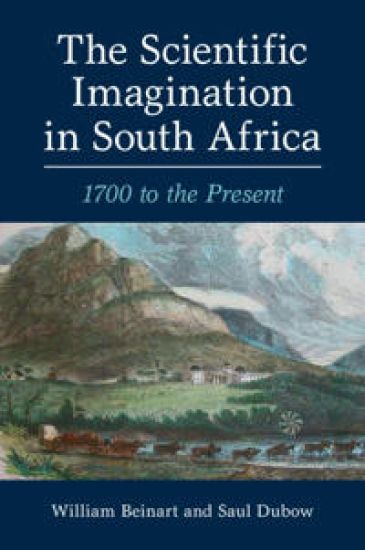
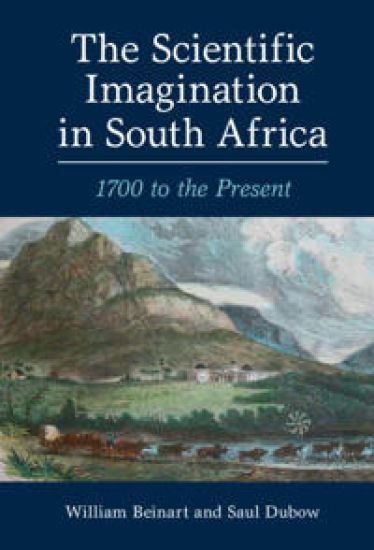
South Africa provides a unique vantage point from which to examine the scientific imagination over the last three centuries, when its position on the African continent made it a staging post for Portuguese, Dutch, and British colonialism. In the eighteenth century, South African plants and animals caught the imagination of visiting Europeans. In the nineteenth century, science became central to imperial conquest, devastating wars, agricultural intensification and the exploitation of rich mineral resources. Scientific work both facilitated, and offered alternatives to, the imposition of segregation and apartheid in the twentieth century. William Beinart and Saul Dubow offer an innovative exploration of science and technology in this complex, divided society. Bridging a range of disciplines from astronomy to zoology, they demonstrate how scientific knowledge shaped South Africa's peculiar path to modernity. In so doing, they examine the work of remarkable individual scientists and institutions, as well as the contributions of leading politicians from Jan Smuts to Thabo Mbeki.
The issue of land rights is an ongoing and complex topic of debate for South Africans. Rights to Land comes at a time when land redistribution by the government is underway. This book seeks to understand the issues around land rights and distribution of land in South Africa, and proposes that new policies and processes should be developed and adopted. It further provides an analysis of what went so wrong, and warns that a new phase of restitution may ignite conflicting ethnic claims and facilitate elite capture of land and rural resources. Rights to Land is published in partnership with Good Governance Africa (GGA).
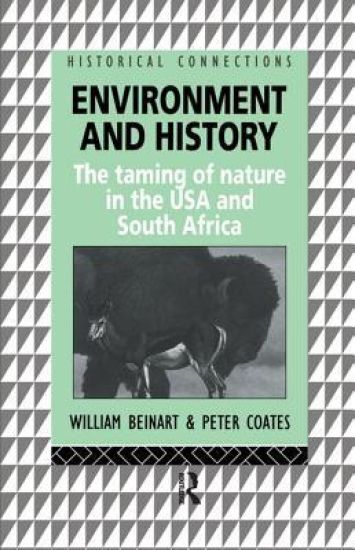
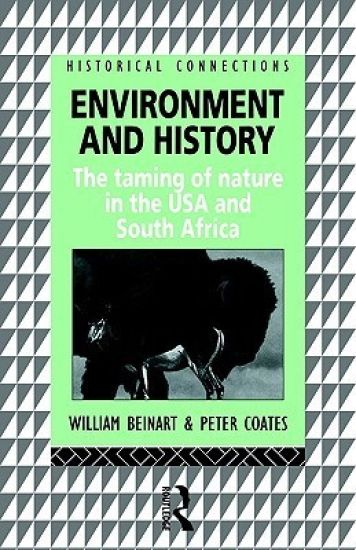
The influence of human economies and cultures on ecosystems is particularly striking in the new worlds into which Europeans have expanded over the past five hundred years. Using a comparative and multidisciplinary approach, Beinart and Coates examine this neglected aspect of the history of settler incursion and dominance in two frontier nations, the USA and South Africa. They also seek to explain change in indigenous ideas and practices towards the environment, and discuss the rise of popular environmentalism up to the present day.
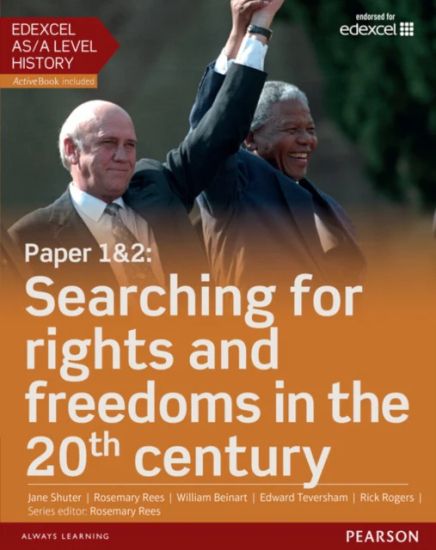
Exam Board: Edexcel Level: A level Subject: History First teaching: September 2015 First exams: June 2017 This book: covers the essential content in the new specifications in a rigorous and engaging way, using detailed narrative, sources, timelines, key words, helpful activities and extension material helps develop conceptual understanding of areas such as evidence, interpretations, causation and change, through targeted activities provides assessment support for both AS and A level with sample answers, sources, practice questions and guidance to help you tackle the new-style exam questions. It also comes with three years' access to ActiveBook, an online, digital version of your textbook to help you personalise your learning as you go through the course - perfect for revision.
William Beinart; Julia Charlton; David Coplan; Peter Delius; Jacob Dlamini; Patrick Harries; Michelle Hay; Deborah James; Sekibakiba Peter Lekgoathi; Jock McCulloch; Anitra Nettleton; Noor Nieftagodien; Laura Phillips; Dinah Rajak; Fiona Rankin-Smith; Micah Reddy; Jonny Steinberg
In no other society in the world have urbanisation and industrialisation been as comprehensively based on migrant labour as in South Africa. Rather than focusing on the well-documented narrative of displacement and oppression, A Long Way Home captures the humanity, agency and creative modes of self-expression of the millions of workers who helped to build and shape modern South Africa.The book spans a three-hundred-year history beginning with the exportation of slave labour from Mozambique in the eighteenth century and ending with the strikes and tensions on the platinum belt in recent years. It shows not only the age-old mobility of African migrants across the continent but also, with the growing demand for labour in the mining industry, the importation of Chinese slaves. The essays and visual materials traverse homesteads, chiefdoms and mining hostels in their portrayal of migrant workers’ and their families’ attempts to maintain contact across large distances and uphold their rural customs, traditions and rituals in new spaces and locations. Together, they provide multiple perspectives on the lived experience of migrant labourers and celebrate their extraordinary journeys. A Long Way Home was conceived during the planning of an art exhibition entitled `Ngezinyawo: Migrant Journeys’ at the Wits Art Museum. The interdisciplinary nature of the contributions and the extraordinary collection of images selected to complement and expand on the text make this a unique collection.
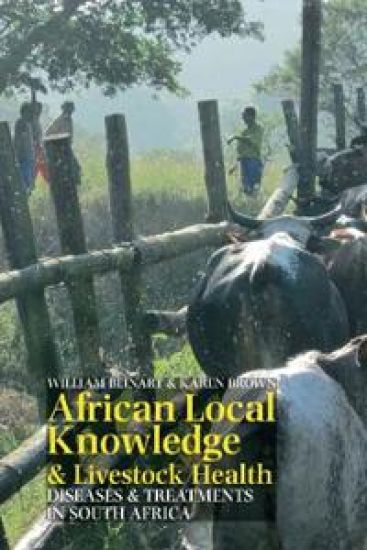
A much needed examination of contemporary approaches to animal healing in South Africa, and the role of local knowledge. Understanding local knowledge has become a central academic project among those interested in Africa and developing countries. In South Africa, land reform is gathering pace and African people hold an increasing proportion of thelivestock in the country. Animal health has become a central issue for rural development. Yet African veterinary medical knowledge remains largely unrecorded. This book seeks to fill that gap. It captures for the first time the diversity, as well as the limits, of a major sphere of local knowledge. Beinart and Brown argue that African approaches to animal health rest largely in environmental and nutritional explanations. They explore the widespread use of plants as well as biomedicines for healing. While rural populations remain concerned about supernatural threats, and many men think that women can harm their cattle, the authors challenge current ideas on the modernisation of witchcraft. They examine more ambient forms of supernatural danger expressed in little-known concepts such as mohato and umkhondo. They take the reader into the homesteads and kraals of rural black South Africans and engage with a key rural concern - vividly reporting the ideas of livestock owners. This is groundbreaking research which will have important implications for analyses of local knowledge more generally as well as effectivestate interventions and animal treatments in South Africa. William Beinart is Rhodes Professor of Race Relations, African Studies Centre, University of Oxford; Karen Brown is an ESRC Research Fellow at the Wellcome Unit for the History of Medicine, University of Oxford. Southern Africa (South Africa, Namibia, Lesotho, Zimbabwe and Swaziland): Wits University Press
While there are many studies of the global influence of crops and plants, this is perhaps the first social history based around a plant in South Africa. Plants are not quite historical actors in their own right, but their properties and potential help to shape human history. In turn, the trail of the prickly pear in South Africa has been profoundly affected by the plant's biological characteristics. Plants such as the prickly pear tend to be invisible to those who do not use them, or at least on the peripheries of people's consciousness. This book explains why they were not peripheral to many people in the Eastern Cape, and why a wild and sometimes invasive. plant from Mexico remains important to African women in shacks and small towns.
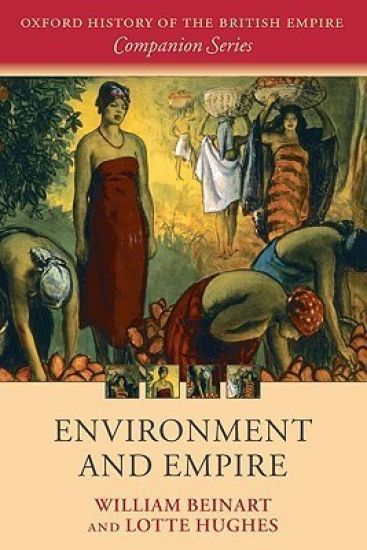
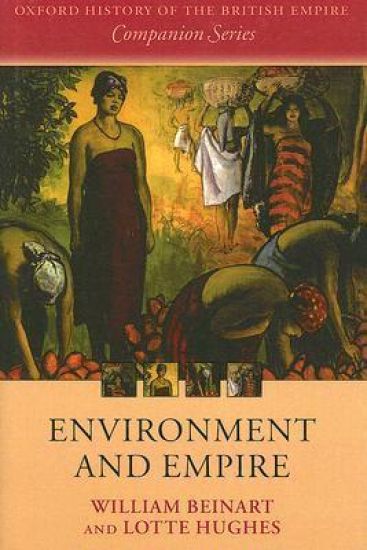
European imperialism was extraordinarily far-reaching: a key global historical process of the last 500 years. It locked disparate human societies together over a wider area than any previous imperial expansion; it underpinned the repopulation of the Americas and Australasia; it was the precursor of globalization as we now understand it. Imperialism was inseparable from the history of global environmental change. Metropolitan countries sought raw materials of all kinds, from timber and furs to rubber and oil. They established sugar plantations that transformed island ecologies. Settlers introduced new methods of farming and displaced indigenous peoples. Colonial cities, many of which became great conurbations, fundamentally changed relationships between people and nature. Consumer cultures, the internal combustion engine, and pollution are now ubiquitous. Environmental history deals with the reciprocal interaction between people and other elements in the natural world, and this book illustrates the diverse environmental themes in the history of empire. Initially concentrating on the material factors that shaped empire and environmental change, Environment and Empire discusses the way in which British consumers and manufacturers sucked in resources that were gathered, hunted, fished, mined, and farmed. Yet it is also clear that British settler and colonial states sought to regulate the use of natural resources as well as commodify them. Conservation aimed to preserve resources by exclusion, as in wildlife parks and forests, and to guarantee efficient use of soil and water. Exploring these linked themes of exploitation and conservation, this study concludes with a focus on political reassertions by colonised peoples over natural resources. In a post-imperial age, they have found a new voice, reformulating ideas about nature, landscape, and heritage and challenging, at a local and global level, views of who has the right to regulate nature.
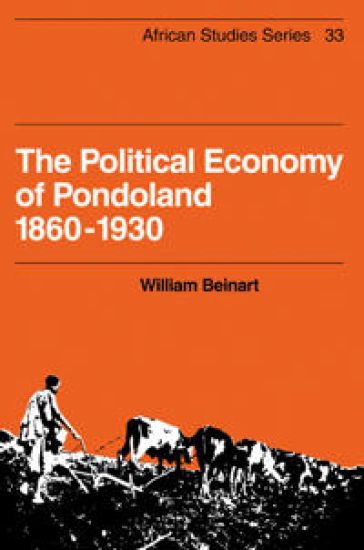
This book examines in detail how the people of one formerly independent African chiefdom were absorbed into the wider South African society during the late nineteenth and early twentieth centuries. The first two chapters discuss the nature of the pre-colonial polity, changes in agricultural production during the early stages of colonisation, colonial policy and the beginnings of mass labour migrancy up to about 1910. The last three chapters, focusing on the period between about 1910 and 1930, analyse changing patterns of rural production and labour migrancy, the changing form of African homesteads, the position of chiefs in rural South African and new patterns of rural differentiation. The book questions some of the assumptions in the literature on 'underdevelopment' in Africa.
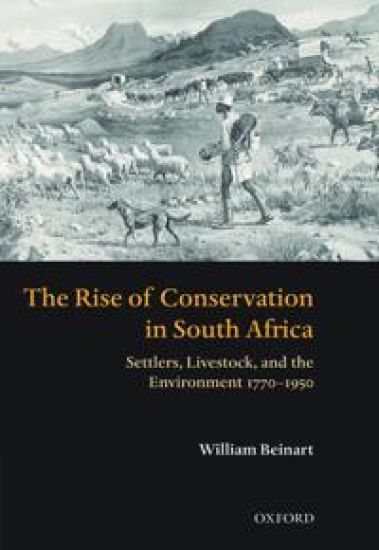
The Rise of Conservation in South Africa is an innovative contribution to the growing comparative field of environmental history. Beinart's major theme is the history of conservationist ideas in South Africa. He focuses largely on the livestock farming districts of the semi-arid Karoo and the neighbouring eastern Cape grasslands, conquered and occupied by white settlers before the middle of the nineteenth century. The Cape, like Australia, became a major exporter of wool. Vast numbers of sheep flooded its plains and rapidly transformed its fragile natural pastures. Cattle also remained vital for ox-wagon transport and internal markets. Concerns about environmental degradation reached a crescendo in the early decades of the twentieth century, when a Dust Bowl of kinds was predicted, and formed the basis for far-reaching state intervention aimed at conserving natural resources. Soil erosion, overstocking, and water supplies stood alongside wildlife protection as the central preoccupations of South African conservationists. The book traces debates about environmental degradation in successive eras of South African history. It offers a reinterpretation of South Africa's economic development, and of aspects of the Cape colonial and South African states. It expands the understanding of English-speaking South Africans and their role both as farmers and as protagonists of conservationist ideas. The book is also a contribution to the history of science, exploring the way in which new scientific knowledge shaped environmental understanding and formed a significant element in settler intellectual life. It paints an evocative picture of the post-conquest Karoo, analysing the impact of self-consciously progressive farmers and officials in their attempts to secure private property, curtail transhumance and kraaling, control animal diseases, enhance water supplies, eradicate jackals, destroy alien weeds such as the prickly pear, and combat drought. It concludes by analysing conservationist interventions in the African areas, and discussing evidence for a stabilization of environmental conditions over the longer term.
European imperialism was extraordinarily far-reaching: a key global historical process of the last 500 years. It locked disparate human societies together over a wider area than any previous imperial expansion; it underpinned the repopulation of the Americas and Australasia; it was the precursor of globalization as we now understand it. Imperialism was inseparable from the history of global environmental change. Metropolitan countries sought raw materials of all kinds, from timber and furs to rubber and oil. They established sugar plantations that transformed island ecologies. Settlers introduced new methods of farming and displaced indigenous peoples. Colonial cities, many of which became great conurbations, fundamentally changed relationships between people and nature. Consumer cultures, the internal combustion engine, and pollution are now ubiquitous. Environmental history deals with the reciprocal interaction between people and other elements in the natural world, and this book illustrates the diverse environmental themes in the history of empire. Initially concentrating on the material factors that shaped empire and environmental change, Environment and Empire discusses the way in which British consumers and manufacturers sucked in resources that were gathered, hunted, fished, mined, and farmed. Yet it is also clear that British settler and colonial states sought to regulate the use of natural resources as well as commodify them. Conservation aimed to preserve resources by exclusion, as in wildlife parks and forests, and to guarantee efficient use of soil and water. Exploring these linked themes of exploitation and conservation, this study concludes with a focus on political reassertions by colonised peoples over natural resources. In a post-imperial age, they have found a new voice, reformulating ideas about nature, landscape, and heritage and challenging, at a local and global level, views of who has the right to regulate nature.
This book is an innovative contribution to the growing comparative field of environmental history. Beinart's major theme is the history of conservationist ideas in South Africa. He focuses largely on the livestock farming districts of the semi-arid Karoo and the neighbouring eastern Cape grasslands, conquered and occupied by white settlers before the middle of the nineteenth century. The Cape, like Australia, became a major exporter of wool. Vast numbers of sheep flooded its plains and rapidly transformed its fragile natural pastures. Cattle also remained vital for ox-wagon transport and internal markets. Concerns about environmental degradation reached a crescendo in the early decades of the twentieth century, when a Dust Bowl of kinds was predicted, and formed the basis for far-reaching state intervention aimed at conserving natural resources. Soil erosion, overstocking, and water supplies stood alongside wildlife protection as the central preoccupations of South African conservationists. The book traces debates about environmental degradation in successive eras of South African history. It offers a reinterpretation of South Africa's economic development, and of aspects of the Cape colonial and South African states. It expands the understanding of English-speaking South Africans and their role both as farmers and as protagonists of conservationist ideas. The book is also a contribution to the history of science, exploring the way in which new scientific knowledge shaped environmental understanding and formed a significant element in settler intellectual life. It paints an evocative picture of the post-conquest Karoo, analysing the impact of self-consciously progressive farmers and officials in their attempts to secure private property, curtail transhumance and kraaling, control animal diseases, enhance water supplies, eradicate jackals, destroy alien weeds such as the prickly pear, and combat drought. It concludes by analysing conservationist interventions in the African areas, and discussing evidence for a stabilization of environmental conditions over the longer term.
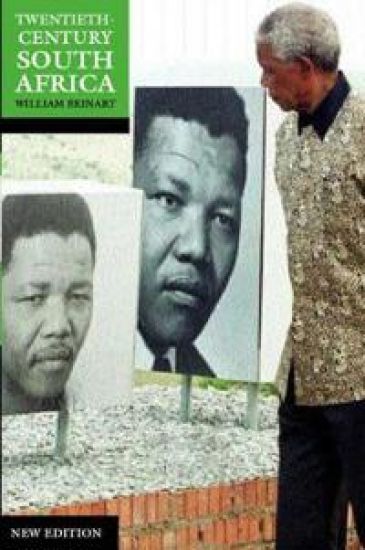
An innovative examination of the forces - both destructive and dynamic - which have shaped twentieth-century South Africa. This book provides a stimulating introduction to the history of South Africa in the twentieth century. It draws on the rich and lively tradition of radical history writing on that country and, to a greater extent than previous accounts, weaves economic and cultural history into the political narrative. Apartheid and industrialization, especially mining, are central theme, as is the rise of nationalism in the Afrikaner and African communities. But the author also emphasizes the neglected significance of rural experiences and local identities in shaping political consciousness. The roles played by such key figure as Smuts, Verwoerd, de Klerk, Plaatje, and Mandela are explored, while recent historiographical trends are reflected in analyses of rural protest, white cultural politics, the vitality of black urban life, and environmental decay. The book assesses the analysis of black reactions to apartheid, the rise of the ANC. The concluding chapter brings this seminal history up-to-date, tackling the issues and events from 1994-1999 - in particular the success of Mandela and the ANC in seeing through the end of apartheid rule. It also looks at the chances of a stable future for the new-found democracy in South Africa.
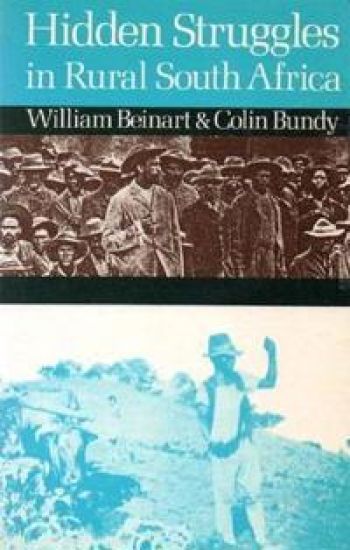
The authors argue that a larger role should be accorded to the lives and struggles of rural South Africans in the shaping of the country's past. Terence Ranger described ths book as a '...landmark in the historiography of southern Africa.' The book is an exercise in historical retrieval, focussed on a series of forgotten episodes in South Africa's history that were neglected in subsequent historical writing. North America: University of California Press
The influence of human economies and cultures on ecosystems is particularly striking in the new worlds into which Europeans have expanded over the past five hundred years. Using a comparative and multidisciplinary approach, Beinart and Coates examine this neglected aspect of the history of settler incursion and dominance in two frontier nations, the USA and South Africa. They also seek to explain change in indigenous ideas and practices towards the environment, and discuss the rise of popular environmentalism up to the present day.