Kirjojen hintavertailu. Mukana 12 207 321 kirjaa ja 12 kauppaa.

Kirjailija

William Burg

Kirjat ja teokset yhdessä paikassa: 9 kirjaa, julkaisuja vuosilta 2006-2019, suosituimpien joukossa Sacramento's K Street: Where Our City Was Born. Vertaile teosten hintoja ja tarkista saatavuus suomalaisista kirjakaupoista.

9 kirjaa

Kirjojen julkaisuhaarukka 2006-2019.

Wicked Sacramento

Wicked Sacramento

William Burg

History Press Library Editions
2019
sidottu
In the early 1900s, Sacramento became a battleground in a statewide struggle. On one side were Progressive political reformers and suffragettes. Opposing them were bars, dance halls, brothels and powerful business interests. Caught in the middle was the city's West End, a place where Grant "Skewball" Cross hosted jazz dances that often attracted police attention and Charmion performed her infamous trapeze striptease act before becoming a movie star. It was home to the "Queen of the Sacramento Tenderloin," Cherry de Saint Maurice, who met her untimely end at the peak of her success, and Ancil Hoffman, who ingeniously got around the city's dancing laws by renting riverboats for his soir es. Historian William Burg shares the long-hidden stories of criminals and crusaders from Sacramento's past.
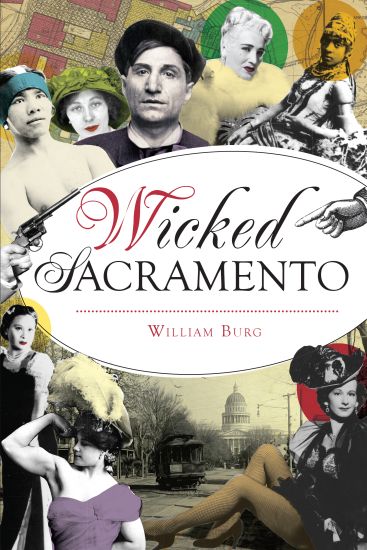
Wicked Sacramento

Wicked Sacramento

William Burg

History Press
2019
nidottu
In the early 1900s, Sacramento became a battleground in a statewide struggle. On one side were Progressive political reformers and suffragettes. Opposing them were bars, dance halls, brothels and powerful business interests. Caught in the middle was the c
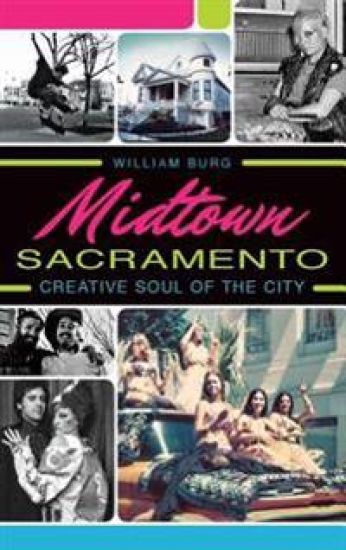
Midtown Sacramento: Creative Soul of the City

Midtown Sacramento: Creative Soul of the City

William Burg

History Press Library Editions
2014
sidottu
Though once scheduled for demolition, Midtown Sacramento battled back to become the city's geographic and cultural center--a beacon for offbeat artists, progressive thinkers and independent spirits. This eclectic neighborhood made history through social progress and artistic innovation. Through the hippie counterculture of the 1960s, the irreverent power of punk rock in the 1970s and '80s and the social and political consciousness of Generation X in the 1990s and beyond, Midtown always led the way. Now Sacramento historian and Midtown resident William Burg tells the story of the diverse generations of Sacramentans who shaped this trailblazing neighborhood.
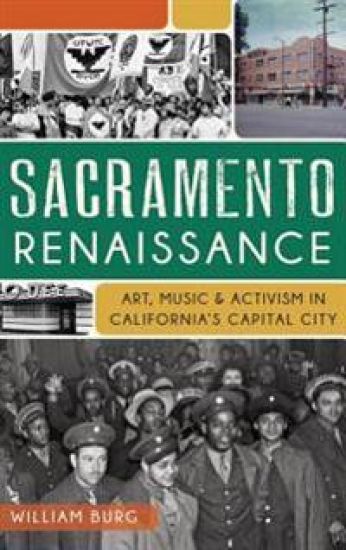
Sacramento Renaissance: Art, Music and Activism in California's Capital City
Touted as progress, postwar redevelopment spawned a new age in Sacramento, California. As city planners designated areas of urban blight and directed bulldozers to make way for commercial districts and pedestrian malls, the churches, jazz clubs and family homes of the West End and Japantown were upended and residents scattered. Displaced families and businesses reestablished themselves and redefined their communities around new cultural centers. Historian William Burg weaves oral histories with previously unpublished photographs to chronicle the resurgence of Sacramento's art, music and activism in the wake of redevelopment. Celebrate the individuals and organizations that defined an era: the beatniks and Black Panthers of Oak Park, Southside Park's League of Nations," George Raya of Lavender Heights and the Royal Chicano Air Force in Alkali Flat."
Sacramento's K Street: Where Our City Was Born
From its founding, K Street mirrored the entrepreneurial development of California's capital city. Initially the storefront for gold seekers trampling a path between the Sacramento River and Sutter's Fort, K Street soon became the hub of California's first stagecoach, railroad and riverboat networks. Over the years, K Street boasted saloons and vaudeville houses, the neon buzz of jazz clubs and movie theaters, as well as the finest hotels and department stores. For the postwar generation, K Street was synonymous with Christmas shopping and teenage cruising. From the Golden Eagle and Buddy Baer's to Weinstock's and the Alhambra Theatre, join historian William Burg as he chronicles the legacy of Sacramento's K Street, once a boulevard of aspirations and bustling commerce and now home to a spirit of renewal.
Sacramento's K Street: Where Our City Was Born

Sacramento's K Street: Where Our City Was Born

William Burg

History Press Library Editions
2012
sidottu
From its founding, K Street mirrored the entrepreneurial development of California's capital city. Initially the storefront for gold seekers trampling a path between the Sacramento River and Sutter's Fort, K Street soon became the hub of California's first stagecoach, railroad and riverboat networks. Over the years, K Street boasted saloons and vaudeville houses, the neon buzz of jazz clubs and movie theaters, as well as the finest hotels and department stores. For the postwar generation, K Street was synonymous with Christmas shopping and teenage cruising. From the Golden Eagle and Buddy Baer's to Weinstock's and the Alhambra Theatre, join historian William Burg as he chronicles the legacy of Sacramento's K Street, once a boulevard of aspirations and bustling commerce and now home to a spirit of renewal.
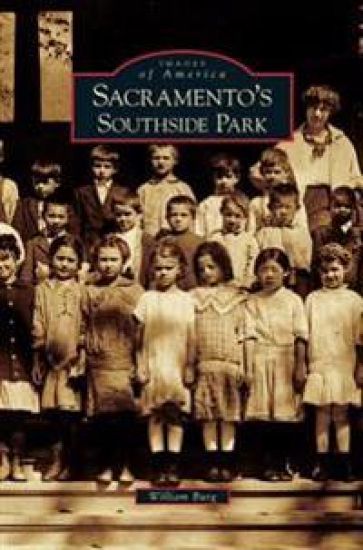
Sacramento's Southside Park

Sacramento's Southside Park

William Burg

Arcadia Publishing (SC)
2007
nidottu
Sacramento's Southside Park neighborhood sits south of California's state capitol and north of the Old City Cemetery. Built on a former slough, it was inhabited by generations of immigrants and working-class families. The neighborhood's many ethnic communities, including Portuguese, Italian, Mexican, and Japanese, came together in Southside Park, the neighborhood's namesake. Whether for fireworks displays on the Fourth of July, for a trip back to Gold Rush days at Roaring Camp, or simply to paddle the lake in a rented boat, Southside Park provided a place of respite and recreation in this bustling city. The neighborhood surrounding the park faced many challenges as Sacramento grew--including freewayconstruction, urban renewal and redevelopment, and problems with crime--but its residents faced these challenges with a tradition of political activism, community participation, and a strong sense of civic pride that is still evident today.