Kirjojen hintavertailu. Mukana 12 390 323 kirjaa ja 12 kauppaa.
Kirjailija
William Clark
Kirjat ja teokset yhdessä paikassa: 152 kirjaa, julkaisuja vuosilta 1983-2025, suosituimpien joukossa Original Journals Of The Lewis And Clark Expedition, 1804-1806; Printed From The Original Manuscripts In The Library Of The American Philosophical Society And By Direction Of Its Committee On Historical Documents, Together With Manuscript Material Of Lewis. Vertaile teosten hintoja ja tarkista saatavuus suomalaisista kirjakaupoista.
Tracing the transformation of early modern academics into modern researchers from the Renaissance to Romanticism, Academic Charisma and the Origins of the Research University uses the history of the university and reframes the "Protestant Ethic" to reconsider the conditions of knowledge production in the modern world. William Clark argues that the research university - which originated in German Protestant lands and spread globally in the nineteenth and twentieth centuries - developed in response to market forces and bureaucracy, producing a new kind of academic whose goal was to establish originality and achieve fame through publication. Drawing on an astonishing wealth of research, he investigates the origins and evolving fixtures of academic life: the lecture catalog, the library catalog, the grading system, the conduct of oral and written exams, the roles of conversation and the writing of research papers in seminars, the writing and oral defense of the doctoral dissertation, the ethos of "lecturing with applause" and "publish or perish," and the role of reviews and rumor. This is a grand, ambitious book that should be required reading for every academic.
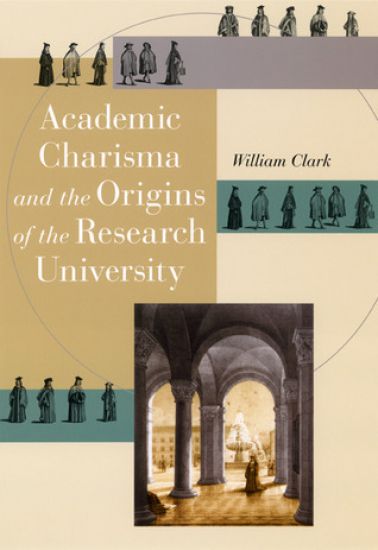
Tracing the transformation of early modern academics into modern researchers from the Renaissance to Romanticism. "Academic Charisma and the Origins of the Research University" uses the history of the university and reframes the "Protestant Ethic" to reconsider the conditions of knowledge production in the modern world. William Clark argues that the research university - which originated in German Protestant lands and spread globally in the nineteenth and twentieth centuries - developed in response to market forces and bureaucracy, producing a new kind of academic whose goal was to establish originality and achieve fame through publication. With an astonishing wealth of research, "Academic Charisma and the Origins of the Research University" investigates the origins and evolving fixtures of academic life: the lecture catalog, the library catalog, the grading system, the conduct of oral and written exams, the roles of conversation and the writing of research papers in seminars, the writing and oral defense of the doctoral dissertation, the ethos of "lecturing with applause" and "publish or perish," and the role of reviews and rumor. This is a grand, ambitious book that should be required reading for every academic.
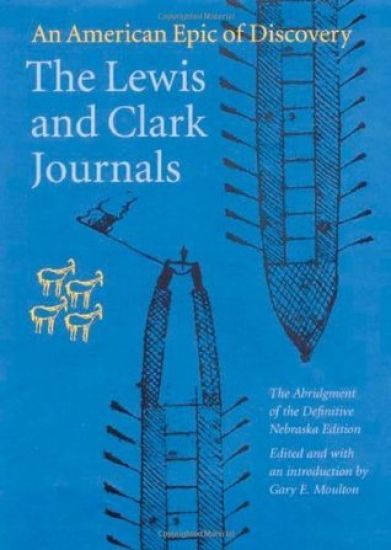
Following orders from President Thomas Jefferson, Captains Meriwether Lewis and William Clark set out from their wintering camp in Illinois in 1804 to search for a river passage to the Pacific Ocean. In this riveting account, editor Gary E. Moulton blends the narrative highlights of the Lewis and Clark journals so that the voices of the enlisted men and of Native peoples are heard alongside the words of the captains. All their triumphs and terrors are here—the thrill of seeing the vast herds of bison on the plains; the tensions and admiration in the first meetings with Indian peoples; Lewis's rapture at the stunning beauty of the Great Falls; the fear the captains felt when a devastating illness befell their Shoshone interpreter, Sacagawea; the ordeal of crossing the Continental Divide; the kidnapping and rescuing of Lewis's dog, Seaman; miserable days of cold and hunger; and Clark's joy at seeing the Pacific. The cultural differences between the corps and Native Americans make for living drama that at times provokes laughter but more often is poignant and, at least once, tragic.
This landmark volume contains the most complete listing and presentation of the plant specimens collected by the Lewis and Clark expedition. All but one of the plants were collected by Meriwether Lewis, the expedition's botanist. The collection, how-ever, was nearly lost over the years when it was scattered among various botanists who intended to catalog the expedition's scientific discoveries. Fortunately, for many years the specimens have been in the care of major institutions, principally the Academy of Natural Sciences in Philadelphia. The 239 extant items are brought together in one book for the first time. This indispensable volume will assist researchers and enthusiasts hoping to identify each plant's date and place of collection and other information such as plant habitat and ethnobotanical use.
In twelve remarkable volumes, Gary E. Moulton has edited the journals of the Lewis and Clark expedition of 1804–6, thus making clear and accessible to all readers the plethora of maps and words with which Meriwether Lewis and William Clark documented one of the greatest ventures of discovery in American history. With the Comprehensive Index, the thirteenth volume, Moulton completes his work—and offers everyone who consults the Journals a complete and detailed means of locating specific passages, references, and particular people or places within the larger work. Throughout the edition, his guiding principles have been clarity and ease of use. Consequently, the notes are indexed more thoroughly here than in most works and include modern place-names, modern denominations for Indian nations, and current popular and scientific names for various cited species. This volume also contains a list of corrections for earlier volumes.
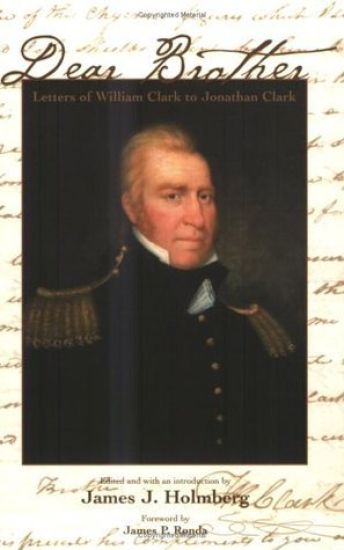
Over the course of his career, American explorer William Clark (1770–1838) wrote at least forty-five letters to his older brother Jonathan, including six that were written during the epic Lewis and Clark Expedition. This book publishes many of these letters for the first time, revealing important details about the expedition, the mysterious death of Meriwether Lewis, the status of Clark’s slave York (the first African American known to have crossed the continent from coast to coast), and other matters of historical significance.There are letters concerning the establishment of the Corps of Discovery’s first winter camp in December 1803, preparations for setting out into the country west of Fort Mandan in 1805, and Clark’s 1807 fossil dig at Big Bone Lick, Kentucky. There are also letters about Lewis’s disturbed final days that shed light on whether he committed suicide or was murdered. Still other letters chronicle the fate of York after the expedition; we learn the details of Clark and York’s falling out and subsequent alienation. Together the letters and the richly informative introductions and annotations by James J. Holmberg provide valuable insights into the lives of Lewis and Clark and the world of Jeffersonian America.Published in association with The Filson Historical Society
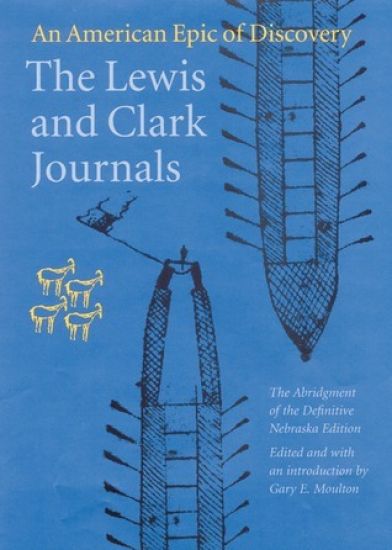
Two centuries ago, an American epic unfolded as Lewis and Clark's Corps of Discovery mapped the lands, described the natural wonders, and encountered the peoples of western North America. Following orders from President Thomas Jefferson, Captains Meriwether Lewis and William Clark set out from Saint Louis in 1804 to search for a river passage to the Pacific Ocean. In their own words, recorded in the famous journals of Lewis and Clark, the members of the Corps of Discovery tell their story with an immediacy and power missing from second-hand accounts. All their triumphs and terrors are here - the thrill of seeing the vast herds of bison on the plains, the tensions and admiration in the first meetings with Indian peoples, Lewis's rapture at the stunning beauty of the Great Falls, the fear the captains felt when a devastating illness befell Shoshone interpreter Sacagawea, the ordeal of crossing the Continental Divide, Clark's joy at seeing the Pacific, miserable days of cold and hunger, and the kidnapping and rescue of Lewis's dog, Seaman. The natural wonders of an unspoiled America are captured in these pages.The lives and customs of its Native peoples also come vividly to life: Lewis and Clark's friendship with the Mandans and the Nez Perces, a deadly fight with the Blackfeet, and a series of intricate interactions and negotiations with numerous northwestern tribes. The cultural differences between the corps and the Indians make for living drama that is sometimes comic but more often poignant and, at least once, tragic. In this riveting account, editor Gary E. Moulton blends the narrative highlights of his definitive Nebraska edition of the "Lewis and Clark" journals. For the first time, the voices of the enlisted men and of the Native Americans are heard alongside the words of the captains. New maps and illustrations enrich this American epic of discovery. Gary E. Moulton is Thomas C. Sorensen Professor of American History at the University of Nebraska. He is the recipient of the J. Franklin Jameson Award of the American Historical Association for the editing of the "Lewis and Clark" journals, and he won the Outstanding Research and Creative Activity Award from the University of Nebraska.
Lively and curious, possessing a keen eye for detail and a knack for skin-dressing, Private Joseph Whitehouse produced an account that stands as the only surviving record by any army private in the Corps of Discovery expedition. In simple and well-paced sentences he painted full portraits of the unusual group of men he accompanied on one of the greatest adventures in American history. Whitehouse's journal is published here in full for the first time—including entries from a second copy of his journal that extend the narrative for five months beyond previous editions. Although Whitehouse's career after the expedition was checkered and he disappeared after 1817, his vivid eyewitness account will long be remembered. Whitehouse's journal joins the celebrated Nebraska edition of the complete journals of the Lewis and Clark expedition, which feature a wide range of new scholarship dealing with all aspects of the expedition from geography to Indian cultures and languages to plants and animals.
An accomplished carpenter and boat builder, Patrick Gass proved to be an invaluable and well-liked member of the Lewis and Clark expedition. Promoted to sergeant after the death of Charles Floyd, Gass was almost certainly responsible for supervising the building of Forts Mandan and Clatsop. His records of those forts and of the earth lodges of the Mandans and Hidatsas are particularly detailed and useful. Gass was the last survivor of the Corps of Discovery, living until 1870—long enough to see trains cross a continent that he had helped open. His engaging and detailed journal became the first published account of the Lewis and Clark expedition. Gass's journal joins the celebrated Nebraska edition of the complete journals of the Lewis and Clark expedition, which feature a wide range of new scholarship dealing with all aspects of the expedition from geography to Indian cultures and languages to plants and animals.
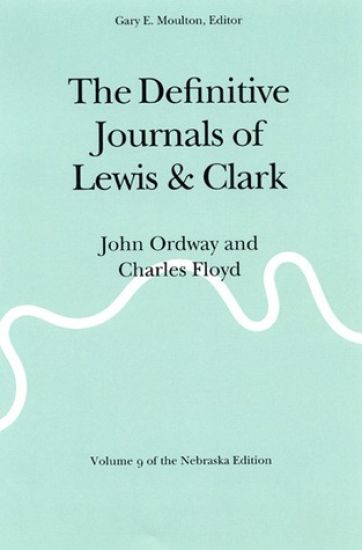
The dependable and matter-of-fact John Ordway was one of the mainstays of the Corps of Discovery, promoted early on to sergeant and serving as an able leader during the captains' absence. Fascinated by the peoples and places he encountered, Ordway became the most faithful journalist on the expedition—recording information not found elsewhere and making an entry for every day during the expedition. Ordway later married and became a prosperous owner of two plantations in Missouri. His honest and informative account, which remained undiscovered for a century, offers an unforgettable glimpse of an enlisted man's experiences and observations as he and the Corps of Discovery embarked on the journey of a lifetime. In contrast to Ordway's extensive chronicle stands the far-too-brief but intriguingly detailed eyewitness account of Sergeant Charles Floyd, the only member to die on the expedition. The journals of John Ordway and Charles Floyd are part of the celebrated Nebraska edition of the complete journals of the Lewis and Clark expedition, which feature a wide range of new scholarship on all aspects of the expedition from geography to Indian cultures and languages to plants and animals.
In 1803, when the United States purchased Louisiana from France, the great expanse of this new American territory was a blank--not only on the map but in our knowledge. President Thomas Jefferson keenly understood that the course of the nation's destiny lay westward and that a national Voyage of Discovery must be mounted to determine the nature and accessibility of the frontier. He commissioned his young secretary, Meriwether Lewis, to lead an intelligence-gathering expedition from the Missouri River to the northern Pacific coast and back. From 1804 to 1806, Lewis, accompanied by co-captain William Clark, the Shoshone guide Sacajawea, and thirty-two men, made the first trek across the Louisiana Purchase, mapping the rivers as he went, tracing the principal waterways to the sea, and establishing the American claim to the territories of Idaho, Washington, and Oregon. Together the captains kept a journal, a richly detailed record of the flora and fauna they sighted, the Indian tribes they encountered, and the awe-inspiring landscape they traversed, from their base camp near present-day St. Louis to the mouth of the Columbia River. In keeping this record they made an incomparable contribution to the literature of exploration and the writing of natural history.