Kirjojen hintavertailu. Mukana 12 595 353 kirjaa ja 12 kauppaa.

Kirjailija

William Craft

Kirjat ja teokset yhdessä paikassa: 27 kirjaa, julkaisuja vuosilta 1999-2026, suosituimpien joukossa Regenerative Built Environments. Vertaile teosten hintoja ja tarkista saatavuus suomalaisista kirjakaupoista.

27 kirjaa

Kirjojen julkaisuhaarukka 1999-2026.

Running a Thousand Miles for Freedom - The Escape of William and Ellen Craft from Slavery;With an Introductory Chapter by Frederick Douglass
William Craft (1824-1900) and Ellen Craft (1826-1891) were American slaves from Georgia who managed to escape to the North in 1848. Disguised as a white male painter (Ellen Craft) and servant (William Craft), they travelled openly by rail and river and arrived in Philadelphia on Christmas Day. Their exploit became well known and was covered widely in the press, which put their lives in danger and resulted in the pair moving to England, where they lived for almost twenty years and raised a family. First published in 1806, "Running a Thousand Miles for Freedom" contains their memoirs and represents one of the most influential slave narratives published prior to the Civil War. A fascinating and moving insight into the life and plight of American slaves not to be missed by those with an interest in American history. Read & Co. History is proudly republishing this classic memoir now in a new addition complete with an introductory chapter by Frederick Douglass.
Running a Thousand Miles for Freedom

Running a Thousand Miles for Freedom

Ellen Craft; William Craft

Digireads.com
2020
pokkari
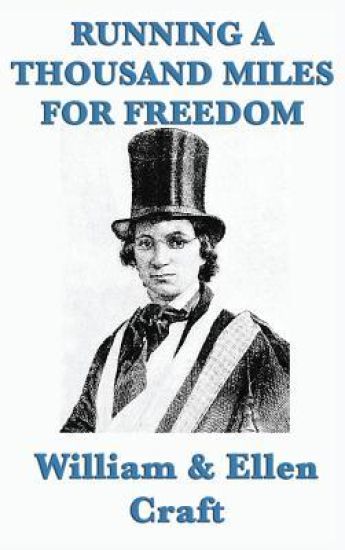
First published in 1860, "Running a Thousand Miles for Freedom", by William and Ellen Craft, is the fascinating true story of their escape from slavery in Georgia. Ellen was born into slavery in 1826 in Clinton, Georgia. As a result of her mother being a mixed-race slave and her father being a wealthy white plantation master, Ellen closely resembled her white half-siblings. William Craft was also born in Georgia and first met Ellen when he was 16 and he was sold to settle his owner's gambling debt. The pair married a few years later and planned their escape so they could raise a family. In 1848, Ellen posed as a white male planter and William as her personal servant and the pair travelled openly by train and steamboat to Philadelphia. Their bold escape was widely publicized and became a popular story. Sadly, the Crafts came to fear for their safety and freedom when the Fugitive Slave Act was passed in 1850 and the couple moved to England, where they went on to have five children. Their thrilling tale of bravery and determination continues to be a compelling story of race, class, and gender in nineteenth-century America. This edition is printed on premium acid-free paper.
Running a Thousand Miles for Freedom: The Escape of William and Ellen Craft From Slavery
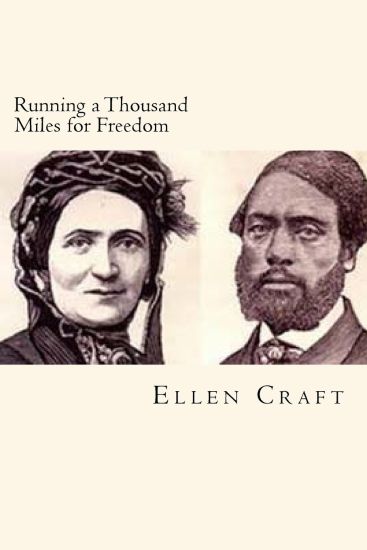
Running a Thousand Miles for Freedom" is a written account by Ellen Craft and William Craft first published in 1860. Their book reached wide audiences in Great Britain and the United States and it represents one of the most compelling of the many slave narratives published before the American Civil War. Ellen (1826–1891) and William Craft (1824 - 1900) were slaves from Macon, Georgia in the United States who escaped to the North in December 1848 by traveling openly by train and steamboat, arriving in Philadelphia on Christmas Day.
Running a Thousand Miles for Freedom

Running a Thousand Miles for Freedom

William Craft; Ellen Craft

Createspace Independent Publishing Platform
2018
nidottu
Husband and wife William and Ellen Craft's break from slavery in 1848 was perhaps the most extraordinary in American history. Numerous newspaper reports in the United States and abroad told of how the two -- fair-skinned Ellen disguised as a white slave master and William posing as her servant -- negotiated heart-pounding brushes with discovery while fleeing Macon, Georgia, for Philadelphia and eventually Boston. No account, though, conveyed the ingenuity, daring, good fortune, and love that characterized their flight for freedom better than the couple's own version, published in 1860, a remarkable authorial accomplishment only twelve years beyond illiteracy. Now their stirring first-person narrative and Richard Blackett's excellent interpretive pieces are brought together in one volume to tell the complete story of the Crafts.
Running a Thousand Miles for Freedom
This work has been selected by scholars as being culturally important, and is part of the knowledge base of civilization as we know it. This work was reproduced from the original artifact, and remains as true to the original work as possible. Therefore, you will see the original copyright references, library stamps (as most of these works have been housed in our most important libraries around the world), and other notations in the work.This work is in the public domain in the United States of America, and possibly other nations. Within the United States, you may freely copy and distribute this work, as no entity (individual or corporate) has a copyright on the body of the work.As a reproduction of a historical artifact, this work may contain missing or blurred pages, poor pictures, errant marks, etc. Scholars believe, and we concur, that this work is important enough to be preserved, reproduced, and made generally available to the public. We appreciate your support of the preservation process, and thank you for being an important part of keeping this knowledge alive and relevant.
Running a Thousand Miles for Freedom

Running a Thousand Miles for Freedom

S S Schoff; William Craft

Hansebooks
2017
pokkari
Running a Thousand Miles for Freedom - the escape of William and Ellen Craft from slavery is an unchanged, high-quality reprint of the original edition of 1860. Hansebooks is editor of the literature on different topic areas such as research and science, travel and expeditions, cooking and nutrition, medicine, and other genres. As a publisher we focus on the preservation of historical literature. Many works of historical writers and scientists are available today as antiques only. Hansebooks newly publishes these books and contributes to the preservation of literature which has become rare and historical knowledge for the future.
Running a Thousand Miles for Freedom

Running a Thousand Miles for Freedom

William Craft; Ellen Craft

Lulu.com
2017
sidottu
William and Ellen Craft were slaves from Macon who gained celebrity after a daring public escape in December 1848. The light-skinned Ellen Craft posed as a white woman traveling with her valet. The bold ruse worked and the couple were able to elude slave hunters and eventually cross the Mason-Dixon line. After many trials and tribulations, including pretending to be a married interracial couple, they eventually settled outside Savannah, Georgia where they were able to purchase land. Running a Thousand Miles for Freedom is a fast-paced, suspenseful account of their incredible journey.
Running a Thousand Miles for Freedom

Running a Thousand Miles for Freedom

William Craft; Ellen Craft

Lulu.com
2017
nidottu
William and Ellen Craft were slaves from Macon who gained celebrity after a daring public escape in December 1848. The light-skinned Ellen Craft posed as a white woman traveling with her valet. The bold ruse worked and the couple were able to elude slave hunters and eventually cross the Mason-Dixon line. After many trials and tribulations, including pretending to be a married interracial couple, they eventually settled outside Savannah, Georgia where they were able to purchase land. Running a Thousand Miles for Freedom is a fast-paced, suspenseful account of their incredible journey.
Running a Thousand Miles for Freedom

Running a Thousand Miles for Freedom

William Craft; Ellen Craft

Cambridge University Press
2013
pokkari
In this short work of 1860, William Craft (c.1825–1900), assisted by his wife Ellen (c.1825–91), recounts the remarkable story of how they escaped from slavery in America. Having married as slaves in Georgia, yet unwilling to raise a family in servitude, the couple came up with a plan to disguise the light-skinned Ellen as a man, with William acting as her slave, and to travel to the north in late 1848. This compelling narrative traces their successful journey to Philadelphia and their subsequent move to Boston, where they became involved in abolitionist activities. Later, the couple sought greater safety in England, where they lived for a number of years and had five children. A success upon its first appearance, the book touches on the themes of race, gender and class in mid-nineteenth-century America, offering modern readers a first-hand account of how barriers to freedom could be overcome.